Sourcing Silver Feather Jewelry St. Augustine: A 2026 Artisan Guide
Learn how to source, authenticate, and care for handcrafted silver feather jewelry St. Augustine artisans create, including coastal tarnish prevention.

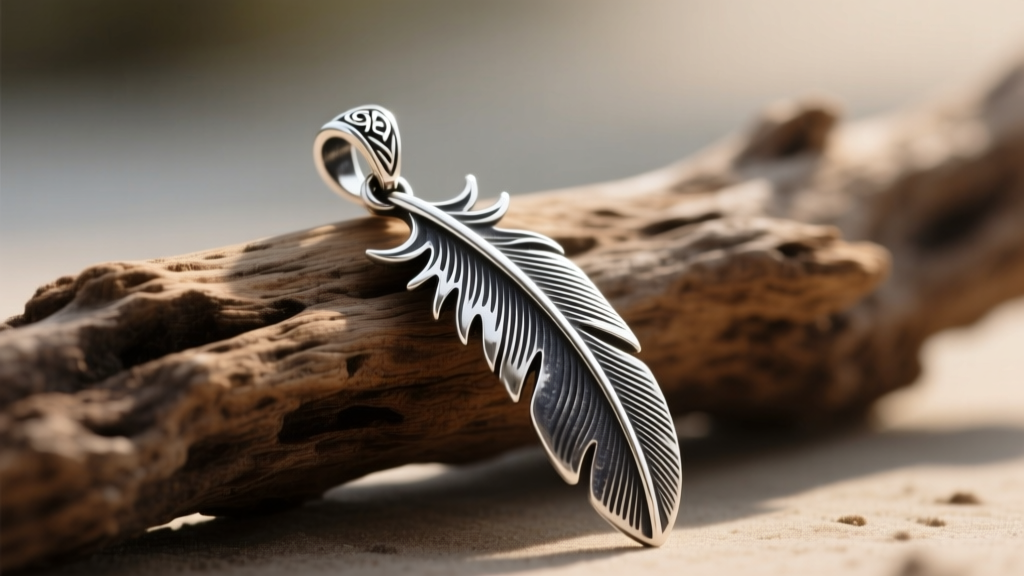
The Allure of Coastal Artisan Silver
St. Augustine, Florida, is not just the oldest continuously occupied European-established settlement in the continental United States; it is a vibrant hub for independent metalsmiths and jewelry artisans. The coastal, bohemian, and indigenous-inspired aesthetics of the region make it a premier destination for collectors of nature-motif adornments. When searching for authentic silver feather jewelry St. Augustine artisans craft, buyers are often drawn to the intricate symbolism of the feather—representing freedom, spiritual connection, and the region's rich coastal wildlife.
However, the historic city's bustling tourist market is also saturated with mass-produced, imported jewelry that mimics the handcrafted look. This comprehensive 2026 guide will walk you through the exact steps to source, authenticate, and maintain genuine 925 sterling silver feather jewelry in St. Augustine, ensuring your investment is as enduring as the city's historic coquina stone architecture.
Step 1: Navigating St. Augustine’s Artisan Districts
To find genuine hand-fabricated pieces, you must know where to walk. The geographic layout of St. Augustine's historic district heavily dictates the quality of the jewelry you will encounter.
Aviles Street vs. St. George Street
St. George Street is the main pedestrian artery. While it features beautiful historic buildings, it is heavily commercialized. Many shops here sell high-volume, cast silver jewelry imported from overseas manufacturing hubs. You can find authentic pieces here, but it requires a trained eye.
Conversely, Aviles Street is the oldest street in the nation and serves as the city's dedicated arts and crafts corridor. Here, you will find independent silversmiths working in open-front studios. When sourcing on Aviles Street, you are far more likely to find hand-stamped, repoussé, and chased silver feather pendants made on-site. Look for shops displaying raw silver grain, casting trees, or bench tools in the window.
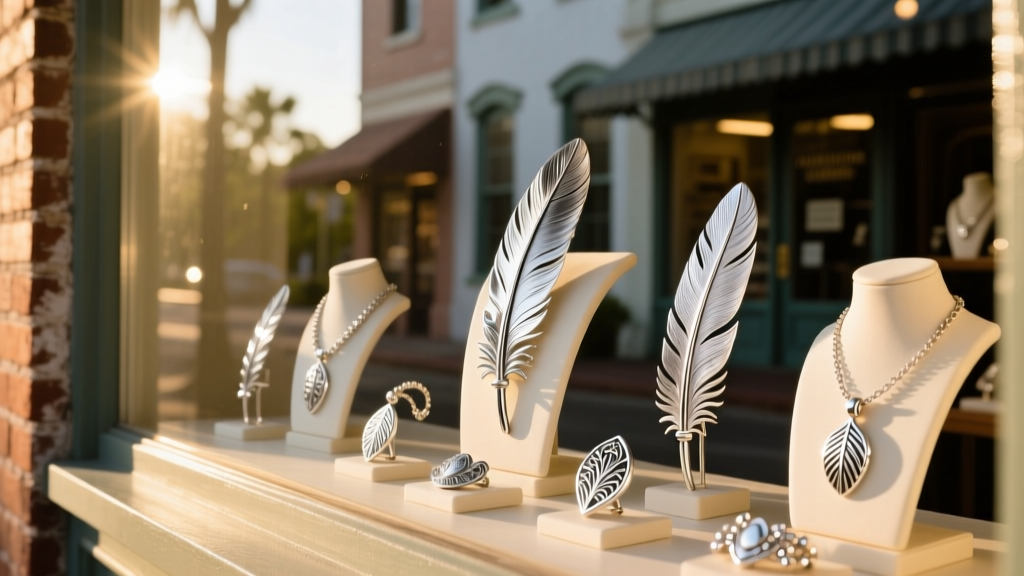
Step 2: Authenticating Handcrafted Silver Feathers
The feather motif is notoriously difficult to execute well in metal. A genuine artisan uses a combination of repoussé (hammering the silver from the reverse side to create a 3D curl) and chasing (refining the front details) to give the feather lifelike movement. Mass-produced items are typically 3D CAD-printed in wax and cast, resulting in stiff, uniform, and lifeless barbs.
"A true handcrafted silver feather will have asymmetrical barbs and a subtle, organic twist along the rachis (the central shaft). If the feather looks perfectly flat and symmetrical, it was likely cast in a rubber mold, not raised by a silversmith." — Master Metalsmith, Aviles Street Studio.
Material Verification: The 925 Standard
According to the Gemological Institute of America (GIA), genuine sterling silver must contain 92.5% pure silver and 7.5% alloy metals (usually copper) for structural integrity. Always inspect the bail or the back of the pendant for a "925", ".925", or "STER" hallmark, accompanied by a maker's mark (a unique symbol or initials of the artisan).
| Feature | Artisan Handcrafted (Aviles St.) | Mass-Produced Cast (Tourist Shops) |
|---|---|---|
| Thickness (Gauge) | 1.5mm - 2.5mm (15 to 10 gauge) | 0.8mm - 1.2mm (18+ gauge) |
| Texture & Detail | Deep, varied tool marks; organic asymmetry | Shallow, uniform lines; stiff symmetry |
| Oxidation | Hand-painted liver of sulfur, polished high | Chemical dip, often muddy or flaking |
| Average Price Range | $120 - $280+ | $25 - $45 |
Step 3: Beating the Coastal Tarnish Factor
St. Augustine's unique microclimate poses a significant challenge for silver collectors. The city is surrounded by salt marshes and experiences high year-round humidity. As noted by The Silver Institute, silver tarnishes when it reacts with hydrogen sulfide and moisture in the air to form silver sulfide. The organic decay in the surrounding coastal marshlands naturally elevates ambient sulfur compounds, meaning your silver feather jewelry will tarnish much faster here than in arid climates.
Proactive Storage & Wear Protocols
- Avoid Chlorine & Salt Water: Never wear your sterling silver feather pendant in the Atlantic Ocean or local chlorinated pools. Salt and chlorine cause rapid pitting and permanent structural damage to the copper alloys in 925 silver.
- Use Pacific Silvercloth: When storing your pieces in a humid Florida home, wrap them in Pacific Silvercloth. Unlike standard anti-tarnish strips that expire in 3-6 months, this specialized fabric traps sulfur gases and remains effective for years.
- Silica Gel Packets: Place a few desiccant silica packets inside your jewelry box to combat the oppressive coastal humidity, keeping the ambient moisture away from the metal's surface.
Step 4: Cleaning Oxidized Feather Details Safely
Artisan silver feather jewelry relies heavily on intentional oxidation—the darkening of the recessed grooves to make the intricate barbs and the central quill (calamus) pop against the polished high points. Using commercial silver dips or aggressive polishing pastes will strip this oxidation, leaving you with a flat, white, and featureless piece of metal.
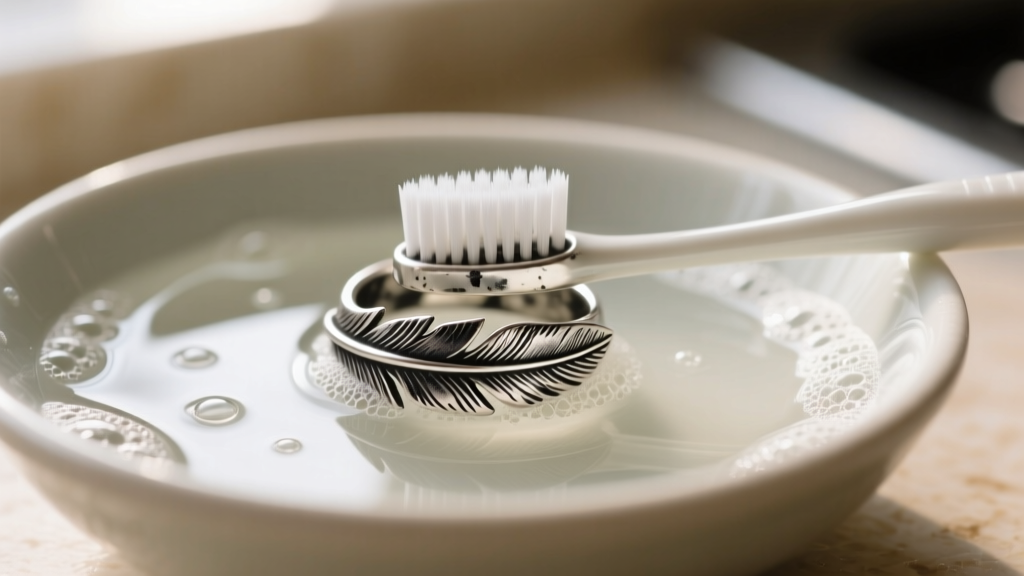
The Safe Cleaning Method
- Prepare a Mild Bath: Mix a few drops of phosphate-free, mild dish soap (like Dawn) into a bowl of lukewarm distilled water. Avoid tap water, as the trace minerals and chlorine can leave spots.
- Agitate Gently: Submerge the silver feather pendant for no more than 3 minutes. Use an extra-soft baby toothbrush to gently sweep along the grain of the feather's barbs. Never scrub against the grain, as this can lift the intentional oxidation.
- Rinse and Dry: Rinse thoroughly under distilled water. Immediately pat dry with a lint-free microfiber cloth. Do not air dry, as water spots will form in the deep crevices of the feather design.
- Targeted Polishing: Use a treated silver polishing cloth only on the raised, high-polish edges of the feather. Fold the cloth to avoid accidentally touching the darkened grooves.
Step 5: Pairing Chains and Styling
A hand-fabricated 925 sterling silver feather pendant is typically a substantial piece of metal, often weighing between 8 and 15 grams. Pairing it with a flimsy chain will result in broken links and a disproportionate aesthetic.
For pendants weighing over 10 grams, opt for a 1.5mm to 2.2mm sterling silver rope chain or a 2.0mm box chain. These weaves offer the tensile strength required to support the pendant while complementing the organic, textured look of the feather. For a true coastal St. Augustine aesthetic, layer your silver feather pendant with natural elements like polished coquina shell beads or locally sourced sea glass, creating a multi-textured, bohemian silhouette that perfectly captures the spirit of the First Coast.
Final Sourcing Checklist
Before finalizing your purchase in St. Augustine, run through this quick E-E-A-T verification checklist:
- Does the piece bear a clear "925" stamp and an identifiable maker's mark?
- Is the silver thick enough (at least 1.5mm) to support deep, hand-chased textures?
- Does the feather exhibit an organic, asymmetrical curve rather than a rigid, cast flatness?
- Has the artisan applied a high-contrast liver of sulfur oxidation to highlight the micro-details?
By prioritizing independent metalsmiths over high-volume tourist retailers, you ensure that your silver feather jewelry is not just a souvenir, but a wearable piece of St. Augustine's living artistic heritage.


