What Does 925 Mean on Jewelry? Value & Budget Assessment
Discover what does 925 mean on jewelry, how to assess sterling silver value, spot fakes, and make smart budget decisions when buying silver pieces.

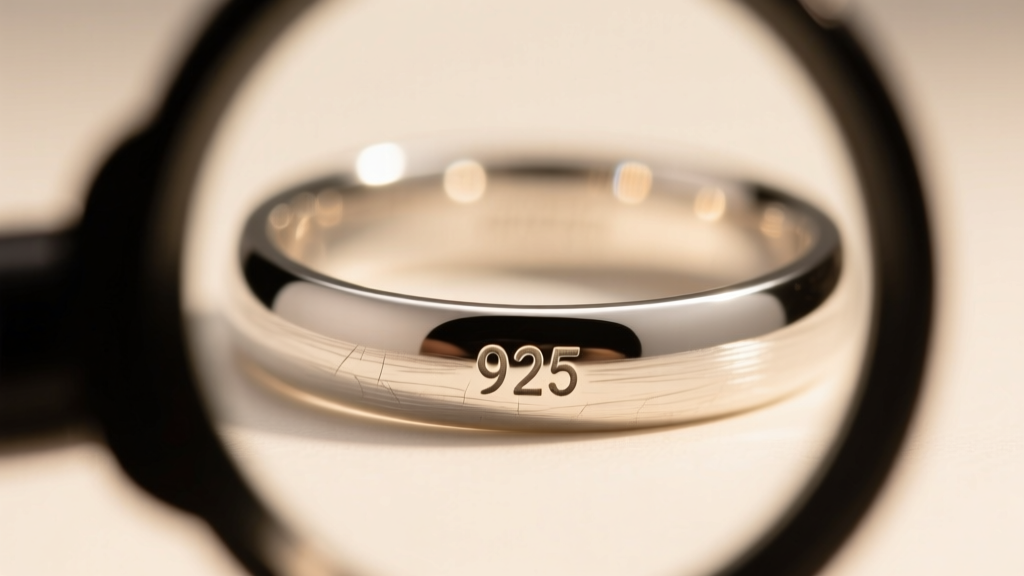
When budget-conscious collectors and everyday shoppers ask, "what does 925 mean on jewelry?" they are usually looking for more than just a metallurgical definition. They want to know if the price tag is justified, if the piece will hold its value, and how to avoid overpaying for disguised base metals. In the current market, understanding the 925 stamp is your primary defense against inflated retail markups and deceptive silver-plated fakes. This guide breaks down the exact financial and material realities of 925 sterling silver, providing a concrete framework for assessing value before you swipe your card.
The Metallurgical Baseline: Decoding the 925 Stamp
At its core, the 925 stamp signifies that a piece of jewelry is composed of 92.5% pure silver and 7.5% alloy metals. Pure silver (often stamped 999) is exceptionally soft, ranking just 2.5 on the Mohs hardness scale. If crafted into a ring or chain, pure silver would warp, scratch, and lose its structural integrity within days of regular wear. By alloying it with 7.5% copper—or in premium variants like Argentium silver, germanium and argon—the metal's durability increases significantly without sacrificing the brilliant white luster that makes silver so desirable.
According to the Gemological Institute of America (GIA), this specific 92.5% ratio is the globally recognized standard for "sterling silver." However, the presence of the stamp alone does not dictate the financial value of the piece. The 925 mark simply guarantees the raw material baseline; the actual market value is determined by weight, craftsmanship, brand premium, and current spot prices.
The Sterling Silver Pricing Matrix
To accurately assess value, you must separate the intrinsic melt value of the silver from the retail markup. Below is a structural breakdown of how 925 silver jewelry is priced across different market tiers. This matrix assumes a baseline raw silver spot price of approximately $28 to $32 per troy ounce, which translates to roughly $0.90 to $1.03 per gram of pure silver.
| Market Tier | Price Per Gram (Approx.) | Value Drivers & Budget Assessment |
|---|---|---|
| Raw Melt Value | $0.85 - $1.00 | The absolute floor value. Only relevant if selling scrap silver to a refinery or pawn shop. |
| Mass-Market Retail | $2.50 - $6.00 | Machine-made chains and simple bands. High volume, low labor. Budget buyers should target this tier for everyday staples. |
| Artisan / Handcrafted | $8.00 - $18.00 | Independent jewelers, cast pieces, intricate wire-wrapping. You are paying for labor and unique design, not just metal. |
| Luxury / Designer Brand | $25.00 - $80.00+ | Heritage brands (e.g., Tiffany & Co., David Yurman). Massive brand premium. Poor choice for strict budget or investment buyers. |
Budget Assessment: Calculating True Value Per Gram
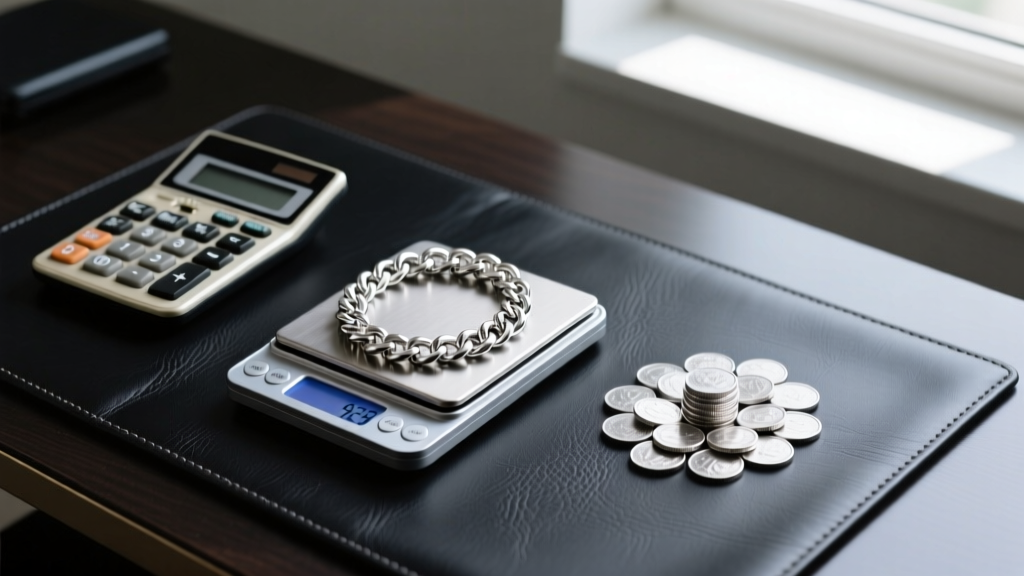
When evaluating a piece of 925 jewelry, the most effective budget strategy is to calculate the price-per-gram ratio. A standard medium-weight sterling silver rope chain might weigh 25 grams. At a mass-market retail rate of $4.00 per gram, a fair price would be around $100. If a boutique attempts to sell that same unbranded, machine-made chain for $350, you are paying an unjustified 250% markup purely for the store's overhead.
The Depreciation Reality: Solid 925 vs. Silver-Plated
A critical component of value assessment is understanding depreciation. Solid 925 sterling silver will always retain its intrinsic melt value. Even if a chain breaks or goes out of style, the raw material can be liquidated. Silver-plated jewelry, however, consists of a microscopic layer of silver electroplated over a base metal like brass or copper. Once the plating wears off—a process accelerated by friction, sweat, and polishing—the piece becomes virtually worthless. For budget buyers focused on long-term value, solid 925 is a mandatory requirement; silver-plated pieces should only be purchased as temporary, low-cost fashion accessories.
Red Flags: Overpaying for Stamped Fakes
The Federal Trade Commission (FTC) Jewelry Guides strictly regulate metal stamping, but the secondary market, fast-fashion e-commerce sites, and overseas marketplaces are flooded with counterfeit 925 stamps. Fraudulent manufacturers frequently stamp brass or nickel-silver (an alloy containing zero actual silver) with the 925 mark to deceive buyers.
Budget Buyer Rule of Thumb: If a heavy, complex 925-stamped piece is priced significantly below the raw melt value of its estimated weight, it is almost certainly a counterfeit. Scammers rely on buyers who do not understand the mathematical floor of silver pricing.
Another common deception is the "925" stamp on silver-plated items. Some manufacturers use the stamp to indicate that the plating solution was made from sterling silver, not that the item itself is solid. Always look for accompanying hallmarks, such as a maker's mark or a recognized assay office symbol, which provide a much higher guarantee of authenticity than a lone 925 stamp.
Actionable Value Testing for Budget Buyers
Before committing to a high-value purchase, especially in the secondary or vintage market, employ these specific testing methods to verify the 925 stamp:
- The Thermal Conductivity (Ice) Test: Silver has the highest thermal conductivity of any common metal. Place an ice cube directly on the silver piece. If it is genuine 925, the ice will begin melting almost instantly, far faster than it would on a steel or brass counterfeit, even at room temperature.
- The Neodymium Magnet Test: Pure silver and copper are paramagnetic (essentially non-magnetic). Slide a strong neodymium magnet down a silver chain or coin. It should slide slowly with no magnetic pull. If the magnet sticks or snaps to the metal, the core is ferrous (iron or steel), meaning it is a fake.
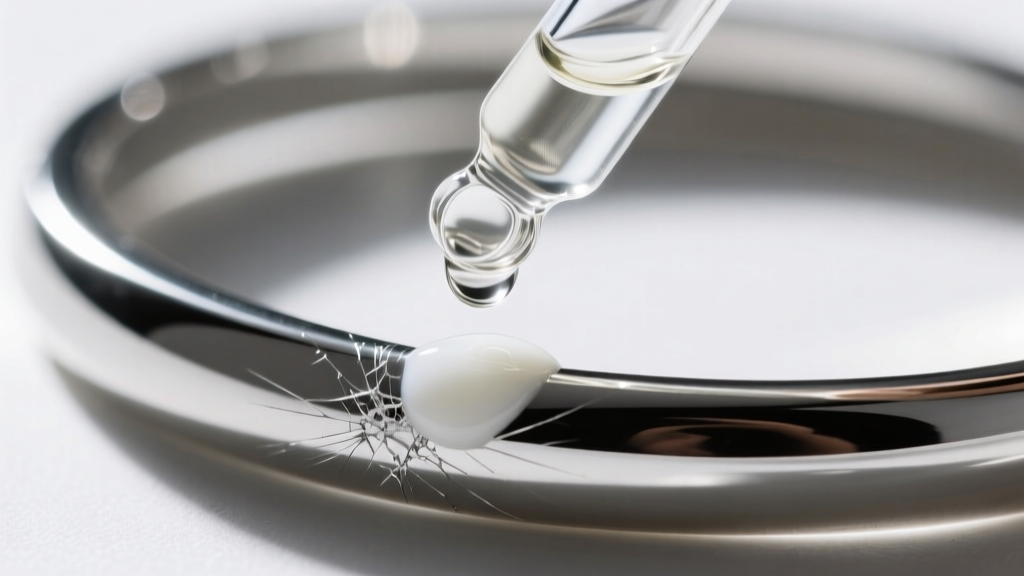
- The Nitric Acid Assay: For definitive proof, use a precious metal testing kit. File a tiny, discreet scratch into the metal and apply a drop of 18k gold testing acid (which contains nitric acid). Genuine 925 sterling silver will turn a creamy, milky white color. If the acid turns green, the item is heavily copper-based or silver-plated brass. If it turns clear or pale blue, it is likely nickel-silver or a base metal alloy.
Final Verdict: Is 925 Silver a Smart Financial Move?
Ultimately, understanding what does 925 mean on jewelry empowers you to separate emotional purchasing from logical value assessment. Sterling silver occupies a unique sweet spot in the jewelry market: it offers the prestige, weight, and hypoallergenic properties of a precious metal without the exorbitant entry cost of platinum or 18k gold. By anchoring your budget to the price-per-gram matrix, demanding solid construction over plated alternatives, and utilizing basic metallurgical tests to verify authenticity, you can build a high-quality, enduring jewelry collection that respects both your aesthetic standards and your financial boundaries.


