Silver Jewelry Cleaner Deep Dive: Chemistry & Safe Protocols
Discover the chemistry behind silver jewelry cleaner formulas. Learn expert protocols for safely restoring 925 sterling, oxidized, and gem-set pieces.

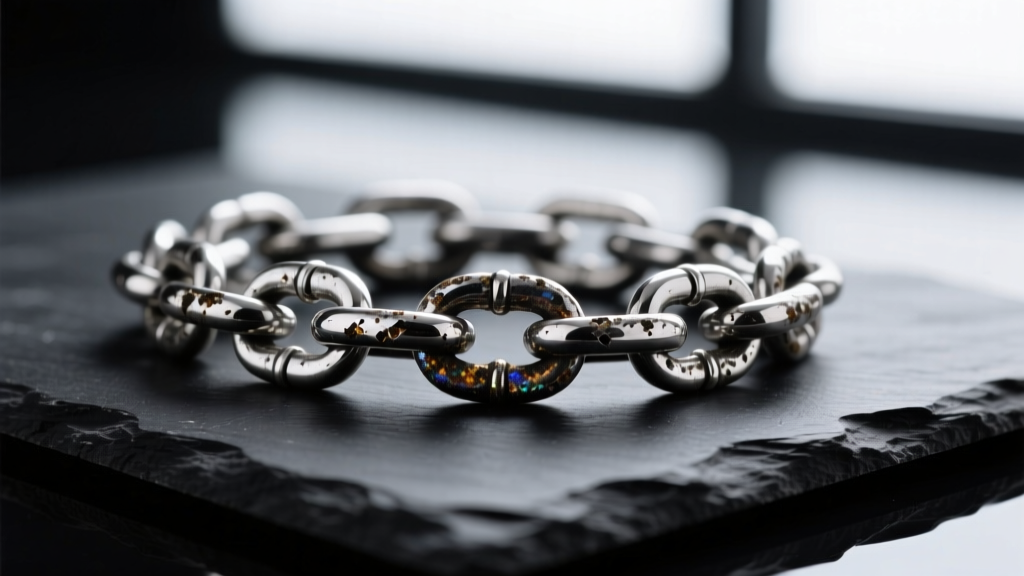
The Chemistry of Silver Tarnish: Why Cleaners Must Be Specific
When discussing a silver jewelry cleaner, most consumers assume they are purchasing a simple polishing agent. In reality, modern silver cleaning relies on complex chemical reduction, chelation, or controlled abrasion. To select the right formulation, we must first understand the substrate. Pure silver (999 fine) is highly resistant to oxidation. However, the vast majority of jewelry is crafted from 925 sterling silver, which contains 7.5% copper by weight to increase tensile strength and Vickers hardness.
Tarnish is not rust; it is primarily silver sulfide ($Ag_2S$). When airborne hydrogen sulfide ($H_2S$) interacts with the silver surface in the presence of moisture and oxygen, a dark, non-reflective layer forms. The copper in sterling silver actually accelerates this process through microscopic galvanic cells that form on the alloy's surface. Therefore, an effective silver jewelry cleaner must either chemically reduce the silver sulfide back to elemental silver, dissolve it via complexing agents, or physically abrade it without scratching the underlying substrate. According to the Gemological Institute of America (GIA), understanding these chemical pathways is critical to preventing irreversible damage to both the metal and any set gemstones.
Deconstructing Commercial Silver Jewelry Cleaner Formulas
The market is saturated with various liquid dips, pastes, and foams. As of 2026, formulations generally fall into three distinct chemical categories, each with specific use cases and severe contraindications.
1. Thiourea-Based Acid Dips
Commercial liquid dips (often recognized by their pungent, sulfur-like odor) rely on thiourea ($CH_4N_2S$) suspended in a mild acidic base, typically sulfuric or phosphoric acid. Thiourea acts as a complexing agent. It binds to the silver ions in the silver sulfide layer, dissolving the tarnish almost instantly. While visually dramatic, this chemical process is highly aggressive. It strips the tarnish but also etches the microscopic surface of the silver, leaving behind a copper-rich, porous layer. This increased surface area actually accelerates future tarnishing—a phenomenon bench jewelers call 'rebound tarnish.' Furthermore, thiourea is toxic and requires careful disposal.
2. Alkaline Electrolytic Reduction Solutions
This method utilizes a galvanic cell to reverse the tarnishing process without removing any base metal. By submerging the silver in an alkaline electrolyte (such as sodium carbonate, $Na_2CO_3$) while in direct physical contact with a more anodic metal like aluminum, a redox reaction occurs. The aluminum sacrifices itself, oxidizing into aluminum sulfide, while the silver sulfide is reduced back to pure, elemental silver. This is the safest chemical method for plain sterling silver, as it preserves the metal's original mass and does not induce rebound tarnish. However, the required heat (optimally 85°C to 95°C) and alkaline environment will dissolve the cyanoacrylate or epoxy adhesives commonly used in cluster-style jewelry.
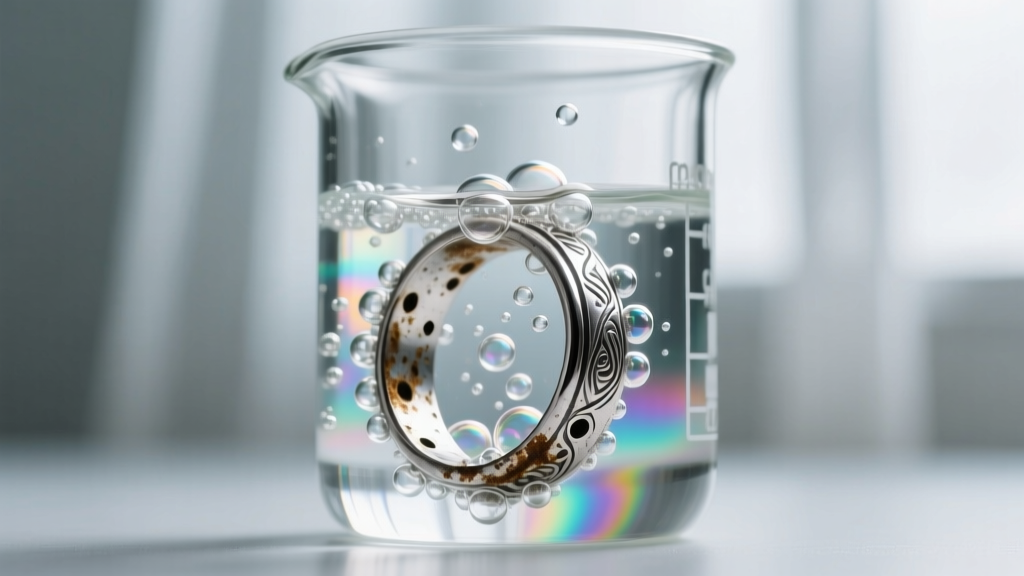
3. Surfactant and Nano-Chelating Blends
Modern, eco-friendly silver jewelry cleaners utilize non-ionic surfactants combined with mild chelating agents like EDTA. These do not remove heavy, blackened silver sulfide. Instead, they are engineered to lift sebum, cosmetics, and environmental particulates that trap moisture against the metal. They are the only safe liquid option for antique pieces, oxidized jewelry, and porous gemstones.
Technical Comparison: Cleaner Efficacy and Substrate Risk
Selecting the correct silver jewelry cleaner requires matching the chemical mechanism to the specific jewelry architecture. The table below outlines the technical parameters for bench jewelers and serious collectors.
| Cleaner Type | Active Mechanism | Ideal Substrate | Risk to Patina | Rebound Tarnish Risk |
|---|---|---|---|---|
| Thiourea Acid Dip | Chemical Complexation | Plain, heavily tarnished 925 chains | Severe (Strips entirely) | High |
| Electrolytic Bath | Galvanic Reduction | Plain sterling flatware and bangles | None (Converts to Ag) | Low |
| Non-Ionic Surfactant | Micellar Encapsulation | Oxidized silver, porous gems, pearls | None (Preserves) | None |
| Abrasive Paste (Silica) | Physical Shearing | Mirror-finish heavy gauge cuffs | Moderate (Micro-scratches) | Moderate |
Expert Protocols for Complex Silver Alloys and Settings
Applying a one-size-fits-all silver jewelry cleaner is the leading cause of bench damage. Below are the precise protocols for complex jewelry types.
Protocol 1: Preserving Intentional Oxidation (Antiqued Silver)
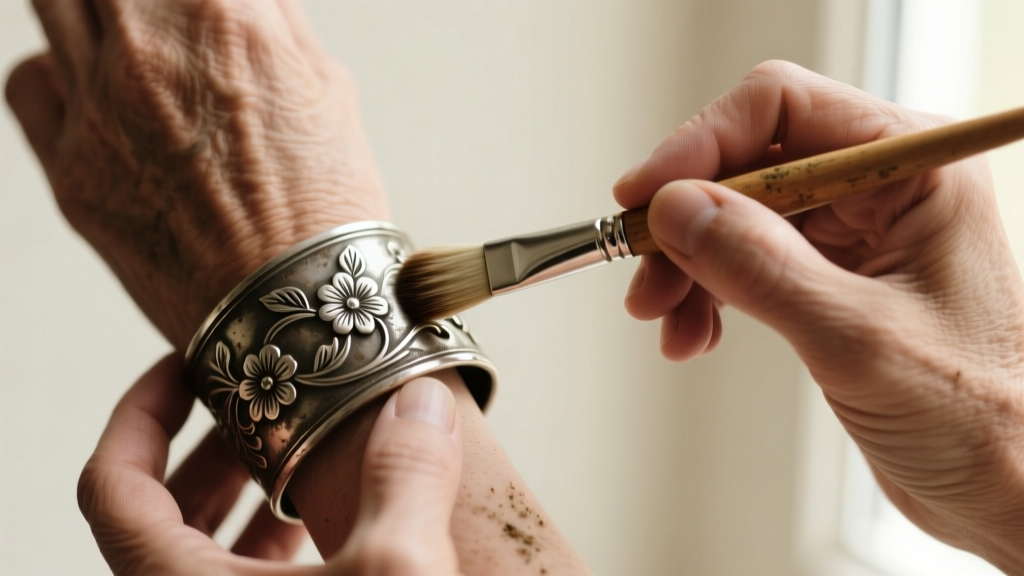
Oxidized silver is treated with potassium sulfide ($K_2S$) to force a black silver sulfide layer into the recesses of engravings, creating high contrast. Never use thiourea dips, electrolytic baths, or ultrasonic cleaners on these pieces. The protocol requires a pH-neutral, non-ionic surfactant (such as a diluted solution of Triton X-100) applied with a soft nylon brush. The brush should only agitate the high-polish raised areas, leaving the black sulfide intact in the recesses. Rinse with distilled water to prevent mineral spotting, and dry immediately with compressed air to avoid watermarks in the crevices.
Protocol 2: Ultrasonic Cavitation for Gem-Set 925 Sterling
Ultrasonic cleaners do not remove tarnish; they remove physical debris via cavitation. The implosion of microscopic bubbles generates localized shockwaves exceeding 1,000 atmospheres of pressure. When using an ultrasonic machine alongside a mild surfactant silver jewelry cleaner, frequency selection is paramount. Standard 40kHz machines are suitable for durable gems like diamonds and sapphires set in heavy prongs. However, for delicate micro-pavé settings or tension mounts, an 80kHz or higher frequency must be used. The smaller cavitation bubbles generated at higher frequencies provide a gentler, more penetrating clean that will not rattle stones loose from their mounts.
Failure Modes: When Cleaners Destroy Silver Jewelry
Even professional-grade silver jewelry cleaners can cause catastrophic failure if misapplied. Bench jewelers frequently encounter the following damage vectors:
- Rhodium Stripping: Many modern sterling silver pieces are electroplated with 0.1 to 0.5 microns of rhodium to prevent tarnish. While acid dips will not harm the rhodium, using abrasive silver polishing pastes or cloths will instantly shear off this microscopic plating, exposing the raw silver beneath and ruining the uniform finish.
- Galvanic Shock to Inclusions: Submerging included gemstones (like emeralds or opals) in hot electrolytic baths or ultrasonic cleaners can cause thermal and acoustic shock. Opals contain 5-10% water; the localized heat from cavitation or chemical baths will cause the water to expand, resulting in internal crazing or complete shattering.
- Micro-Pitting: Leaving 925 sterling silver in a thiourea-based dip for longer than the manufacturer's recommended 10 to 15 seconds causes the acid to eat into the copper alloy matrix. This leaves a frosted, micro-pitted surface that cannot be fixed without heavy machine polishing, which removes significant metal weight.
Final Verdict from the Bench
The ideal silver jewelry cleaner does not exist in a single bottle; it exists in a tailored protocol. For rapid, heavy tarnish removal on plain chains, electrolytic reduction remains the undisputed champion of metal preservation. For daily maintenance and gem-set pieces, pH-neutral surfactants combined with proper ultrasonic frequencies offer the safest, most effective results. By understanding the underlying chemistry of silver sulfide and the specific mechanics of your cleaner, you can maintain the optical reflectivity and structural integrity of your sterling silver collection for generations. For further reading on metal conservation, the Jewelers of America provides excellent bench guidelines for professional care.


