Decoding Silver Stamps on Jewelry: 2026 Trend & Authenticity Guide
Discover the meaning of silver stamps on jewelry, from 925 sterling to 800 continental. Explore 2026 hallmark trends and learn to spot fake marks.

The Evolution of Hallmarks: From Legal Requirement to Design Feature
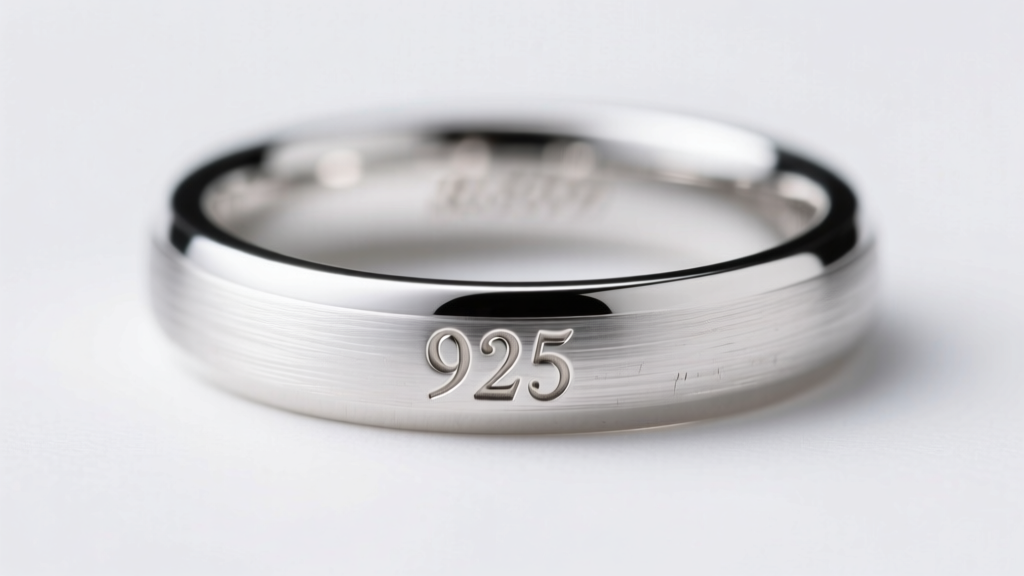
For centuries, silver stamps on jewelry served a purely utilitarian and legal purpose. Mandated by guilds and governments, these tiny hallmarks were tucked away on the inside of ring bands or the underside of clasps to verify metal purity without disrupting the piece's aesthetic. However, as we navigate the jewelry landscape of 2026, a fascinating stylistic shift has occurred. The hallmark is no longer just a guarantee of authenticity; it has become a deliberate design element.
In the realm of industrial brutalism and neo-minimalism, contemporary silversmiths are now placing the 925 or 999 stamp front and center. Exposed hallmarks are being laser-engraved in oversized typography on the exterior of heavy cuff bracelets and signet rings. This trend speaks to a consumer base that values radical transparency, raw materials, and the "blueprint" aesthetic. By exposing the stamp, designers are transforming a legal necessity into a badge of honor, celebrating the material integrity of the piece.
Furthermore, the rise of the circular fashion economy has elevated the status of vintage hallmarks. Collectors and stylists are actively seeking out specific historical silver stamps on jewelry, treating assay marks and defunct maker's punches as verifiable proof of sustainable, pre-mined sourcing. Understanding these marks is no longer just for appraisers; it is a critical skill for the modern style curator.
The 2026 Stamp Dictionary: Decoding Global Silver Purity
To navigate the secondary market and verify contemporary pieces, you must understand the millesimal fineness system. According to The Silver Institute, the global standard for sterling silver remains 925 parts per thousand, but regional variations heavily influence a piece's value, durability, and trend status.
| Stamp / Mark | Millesimal Fineness | Common Regions | 2026 Market & Style Trend |
|---|---|---|---|
| 999 / Fine | 99.9% Pure Silver | Global (Investment/Artisan) | Highly prized in avant-garde, soft-sculpture jewelry. Too malleable for daily wear rings, but trending in sculptural ear cuffs. |
| 958 / Britannia | 95.8% Pure Silver | United Kingdom | Experiencing a resurgence among heritage collectors. Offers a slightly warmer luster than standard sterling. |
| 925 / Sterling | 92.5% Pure Silver | Global Standard | The undisputed baseline for fine jewelry. Essential for structural integrity in gemstone settings and chain links. |
| 900 / Coin | 90.0% Pure Silver | USA (Vintage), Latin America | Surging in value due to the "upcycled coin jewelry" trend and mid-century Taxco collector markets. |
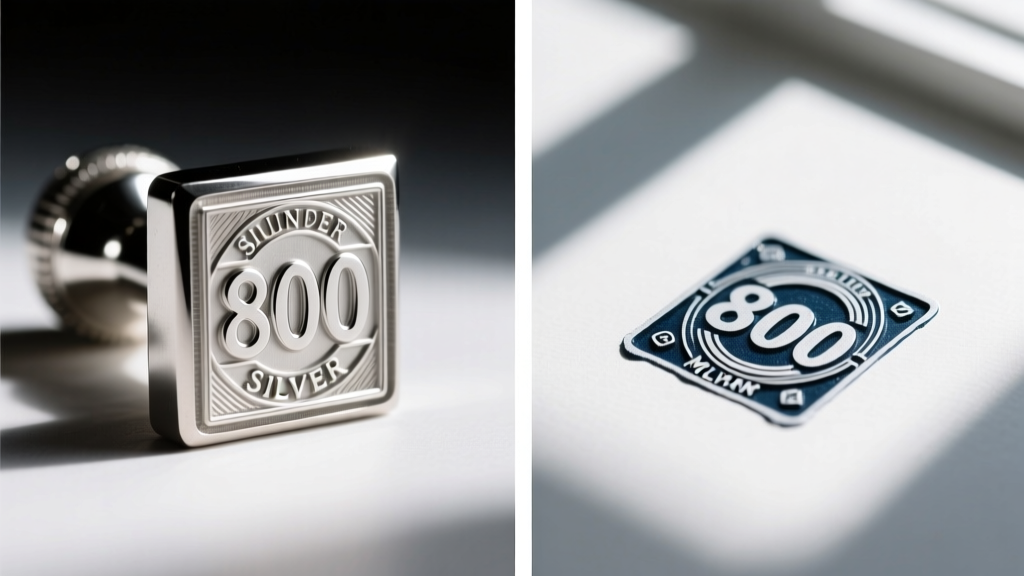
| 800 / Continental | 80.0% Pure Silver | Germany, Italy, Scandinavia | Darker oxidation patina. Highly sought after for vintage European flatware converted into modern statement rings. |
Maker’s Marks vs. Purity Stamps: The Artisan Signature
A common mistake among novice buyers is confusing a purity stamp with a maker's mark. While the purity stamp (like 925) guarantees the metal content, the maker's mark identifies the individual artisan, guild, or manufacturing house. In 2026, the maker's mark has become a powerful driver of micro-trends, with certain independent artisan punches commanding premiums far above the melt value of the silver itself.
Laser Engraving vs. Traditional Punching
The method used to apply these silver stamps on jewelry tells a story about the piece's origin. Traditional punch stamping involves a hardened steel die struck with a hammer or press. This displaces the metal, creating a deep, slightly raised border around the numbers. Punch marks are characteristic of vintage pieces and high-end bespoke contemporary work. Conversely, modern mass-produced jewelry often utilizes laser engraving. Laser marks are incredibly crisp, perfectly level with the surrounding metal, and lack the microscopic displacement ridges of a physical punch. Neither is inherently "better," but knowing the difference is vital for dating a piece.

Forensic Authentication: Spotting Counterfeit Silver Stamps
As the price of raw silver has fluctuated and climbed through the mid-2020s, the market has been flooded with counterfeit pieces. Unscrupulous manufacturers will cast brass or copper alloys and electroplate them with a thin layer of silver, stamping the piece with a fraudulent 925 mark. Relying on a simple magnet test or ice cube test is no longer sufficient for serious collectors. True authentication requires forensic observation of the stamp itself.
Here is a professional framework for verifying silver stamps on jewelry:
- The Micro-Fracture Test: When a steel punch strikes silver, the metal stretches. Under a 10x jeweler's loupe, a genuine punch stamp will show microscopic stress fractures or stretching at the edges of the numbers. Cast or electroformed fake stamps will look perfectly smooth or exhibit the "orange peel" texture of cast metal.
- Oxidation Mapping: Genuine vintage silver stamps accumulate oxidation (tarnish) and microscopic debris in the deepest crevices of the numbers. If a piece is heavily tarnished overall but the inside of the 925 stamp is bright and shiny, it is a massive red flag. This indicates the stamp was applied after the piece was artificially aged, or that the piece was recently polished with a harsh rotary tool that stripped the recesses.
- Plating Bleed-Through: On silver-plated fakes, the physical act of stamping the metal often cracks the microscopic layer of silver plating. Look closely at the bottom of the stamped numbers. If you see a hint of yellow (brass) or reddish-brown (copper) peeking through the silver inside the stamp, the piece is plated.
- Font and Alignment Anomalies: Official assay offices, such as The London Assay Office, use highly regulated, standardized fonts and shield shapes for their hallmarks. Counterfeiters often use generic, slightly off-center sans-serif fonts that do not match the historical registry of the claimed era.
The "Verified Vintage" Movement and Defunct Marks
In the current style zeitgeist, perfection is out, and provenance is in. The "Verified Vintage" movement has driven immense interest in defunct silver stamps on jewelry. Rather than just looking for "925," stylists are hunting for specific regional assay marks that tell a geographical and historical story.
"We are seeing a massive pivot away from generic modern sterling toward pieces that carry the 'scars' of their origin. A Mexican Taxco Eagle mark from the 1950s, or a Danish Georg Jensen assay mark, doesn't just tell you the silver content; it anchors the piece in a specific moment of design history." — Archival Jewelry Curator, 2026 Trend Report
For example, Mexican silver from the mid-20th century often features the "Eagle" assay mark alongside a specific number (like TC-902) denoting the exact workshop in Taxco. These stamps are highly documented, and finding a genuine, unpolished example with a clear, deep punch is considered a major stylistic flex in contemporary bohemian and eclectic styling circles. Similarly, Scandinavian pieces featuring the "830S" stamp (a regional standard slightly purer than sterling) are highly coveted for their distinct, heavy-gauge mid-century modernist aesthetics.
Final Verdict for Collectors and Stylists
Silver stamps on jewelry have transcended their origins as mere legal safeguards. In 2026, they are at the intersection of material science, historical archiving, and avant-garde design. Whether you are a stylist incorporating exposed-hallmark brutalist cuffs into an editorial shoot, or a collector hunting for verified 800-grade Continental antique conversions, the stamp is your most reliable guide. Invest in a high-quality 10x triplet loupe, learn to read the micro-textures of metal displacement, and appreciate the tiny, punched signatures that connect modern wearers to centuries of metallurgical artistry.


