Fake or Faded 925 Imprint on Jewelry? Troubleshooting & Testing
Discover how to troubleshoot a missing, faded, or fake 925 imprint on jewelry. Learn expert acid testing, magnet tricks, and restamping methods.

The '925' stamp is universally recognized as the hallmark of authenticity for sterling silver, indicating an alloy composition of 92.5% pure silver and 7.5% base metals (usually copper). However, encountering a missing, heavily worn, or suspicious 925 imprint on jewelry is a common troubleshooting scenario for collectors, jewelers, and everyday wearers. Whether you are dealing with decades of friction wear, aggressive polishing, or the rising tide of sophisticated counterfeits, a missing or questionable stamp requires a systematic diagnostic approach.
In this comprehensive guide, we will break down exactly why a 925 imprint on jewelry disappears, how to identify counterfeit stamps on base metals, and the precise metallurgical tests you can perform to verify silver purity when the hallmark cannot be trusted.
Why Your 925 Imprint on Jewelry Might Be Missing or Faded
Sterling silver is a relatively soft metal, ranking between 2.5 and 3 on the Mohs hardness scale. Because of this malleability, the physical integrity of a stamped hallmark is constantly under threat from environmental and mechanical factors.
1. Friction and Mechanical Wear
Rings and bracelets endure constant friction against skin, clothing, and hard surfaces. Over 10 to 20 years, the inner shank of a ring can lose fractions of a millimeter of its total thickness. Since traditional hallmarks are struck using a steel punch that displaces metal to a depth of only 0.2mm to 0.5mm, decades of wear will eventually erase the 925 imprint entirely.
2. Aggressive Polishing and Dipping
Chemical silver dips and abrasive polishing cloths remove tarnish by stripping away microscopic layers of silver sulfide—and the silver itself. Repeated use of motorized polishing wheels with rouge compounds can easily buff away shallow laser engravings or worn die stamps, leaving the jewelry completely unmarked.
3. Vintage and Antique Hallmarking Laws
If you are examining a piece made before the 1970s, the absence of a '925' stamp does not mean it is fake. Historically, many regions used the word 'STERLING', 'COIN', or a lion passant (in the UK) rather than the numeric 925. According to the FTC Jewelry Guides, the numeric 925 standard became strictly enforced in the US much later than in Europe, meaning older American pieces often rely solely on a maker's mark or the word 'Sterling'.
The Counterfeit Problem: When the 925 Stamp Lies
A visible 925 imprint on jewelry is unfortunately not a guarantee of authenticity. The global market is saturated with counterfeit pieces made from brass, cupronickel, or white metal alloys that are heavily plated with rhodium or a microscopic layer of pure silver. Counterfeiters routinely stamp '925' into the base metal before the plating process to deceive buyers.
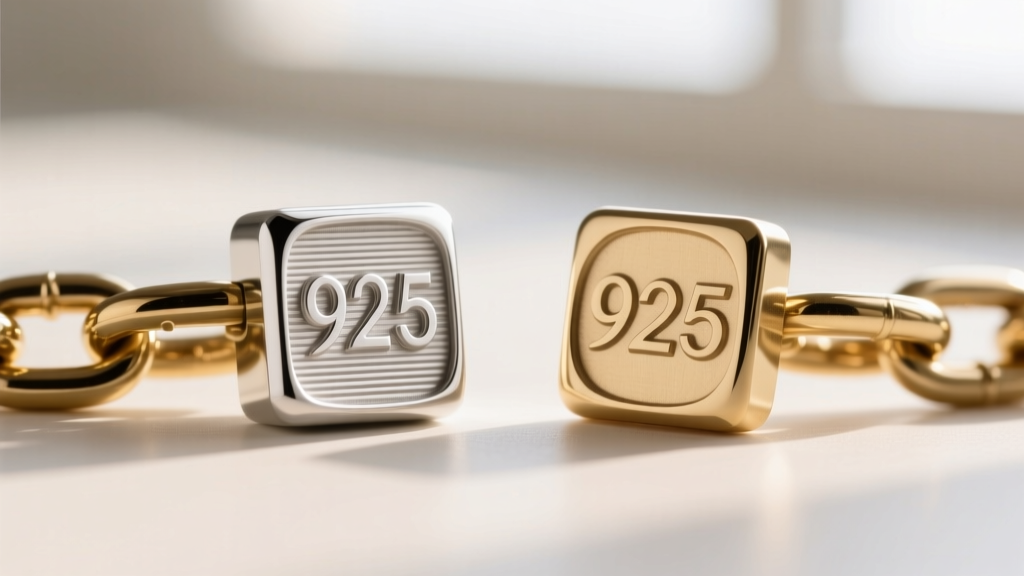
To troubleshoot a suspected fake stamp, examine the impression under a 10x or 20x jeweler's loupe. Authentic stamps applied by reputable manufacturers are typically laser-engraved with sharp, perfectly uniform edges, or struck with a high-tonnage hydraulic press that leaves a deep, clean impression. Counterfeit stamps often appear shallow, blurry, or slightly tilted, as they are hastily hand-struck in unregulated workshops before the piece is plated.
Step-by-Step Troubleshooting: Verifying Silver Without a Stamp
When the 925 imprint on jewelry is compromised, you must rely on the physical and chemical properties of silver to verify its authenticity. Here are the professional troubleshooting methods used by gemologists and pawnbrokers.
The Neodymium Magnet and Eddy Current Test
Silver is diamagnetic, meaning it does not attract to a magnet. However, simply checking if a magnet sticks is insufficient, as copper and brass are also non-magnetic. To perform a professional-grade test, use an N52-grade neodymium magnet. Drop the magnet through a silver tube or slide it down a heavily angled silver coin. Due to silver's exceptional electrical conductivity, the moving magnetic field induces eddy currents that create a braking effect (Lenz's Law). The magnet will slide down genuine silver in slow motion. If it drops instantly, the piece is likely a base metal fake.
The Ice Cube Thermal Conductivity Test
Silver possesses the highest thermal conductivity of any common metal, measured at an astonishing 429 W/(m·K). Place an ice cube directly on the jewelry and another on a piece of room-temperature plastic. The ice on genuine sterling silver will begin melting almost instantaneously, and the silver piece will become freezing cold to the touch within seconds as it rapidly pulls ambient heat into the ice.
Chemical Acid Testing (Schwerter's Solution)
For definitive troubleshooting without expensive machinery, jewelers use Schwerter's solution—a mixture of potassium dichromate and nitric acid. You must file a tiny, inconspicuous notch into the jewelry to bypass any surface plating, then apply a single drop of the acid.
Diagnostic Data Table: Acid Test Color Reactions
| Acid Reaction Color | Indicated Metal / Purity | Troubleshooting Conclusion |
|---|---|---|
| Bright, Blood Red | .925 Sterling Silver | Authentic; matches the 925 standard. |
| Dark Red / Brown | .800 Silver (Continental) | Authentic silver, but lower purity than 925. |
| Green | Base Metal (Copper/Brass) | Counterfeit; piece is plated or solid base metal. |
| Blue | Nickel Silver / Alpaca | Counterfeit; contains zero actual silver. |
Safety Warning: Schwerter's solution contains hexavalent chromium and nitric acid. Always wear nitrile gloves and eye protection, and neutralize the acid with baking soda after testing.
How to Restore or Re-Hallmark Worn Silver
If your testing confirms the piece is genuine sterling silver but the 925 imprint on jewelry has worn away, you can legally and ethically restore the hallmark. This is a common practice for antique restoration, provided you have verified the alloy's purity.
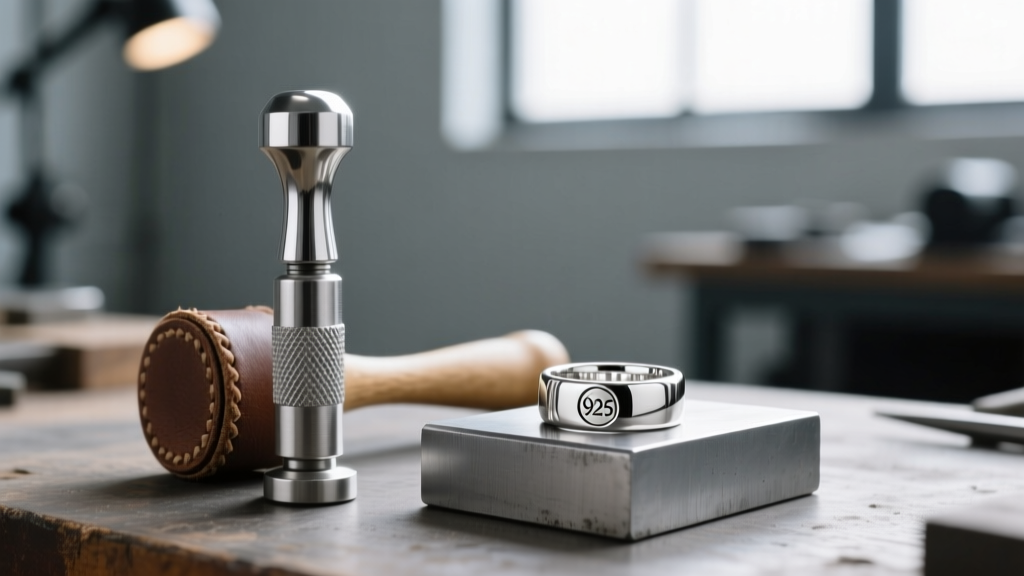
Tools Required for Restamping
- 925 Steel Hallmarking Punch: Ensure the font size matches the scale of the jewelry (e.g., a 1.5mm font for delicate rings).
- Rawhide or Brass Mallet: Never use a steel hammer on a steel punch, as this will 'mushroom' the top of the punch and shatter the tempered steel.
- Steel Bench Block: Provides a zero-flex anvil surface to ensure the stamp transfers deeply into the silver.
- Engraver's Wax or Masking Tape: Used to hold the punch perfectly perpendicular to the curved surface of a ring shank.
Position the punch exactly at a 90-degree angle to the metal. Strike it once with firm, deliberate force. Multiple light taps will result in a 'ghosted' or double-stamped impression, which ruins the professional finish of the piece.
When to Consult a Professional Assayer
While home troubleshooting is effective for everyday jewelry, high-value items, estate acquisitions, and complex multi-metal pieces require professional intervention. If a piece features intricate enamel work or gemstones that could be damaged by acid or filing, take it to a certified gemologist or an official assay office. Facilities like the London Assay Office utilize X-Ray Fluorescence (XRF) spectrometry. XRF machines fire X-rays into the metal and measure the fluorescent emissions, providing a non-destructive, exact elemental breakdown of the alloy down to 0.01% accuracy, entirely eliminating the guesswork of a faded or fake 925 imprint on jewelry.
Final Thoughts on Silver Authentication
A missing or suspicious 925 imprint on jewelry should never be the sole factor in determining a piece's value or authenticity. By understanding the mechanical realities of silver wear, recognizing the visual cues of counterfeit stamping, and utilizing diamagnetic and chemical testing frameworks, you can confidently troubleshoot and verify sterling silver in any condition. Always prioritize non-destructive testing methods first, and reserve acid testing and restamping for pieces where the origin remains stubbornly unverified.


