How to Vet a Sterling Jewelry Company for Wholesale 925 Silver
Learn how to vet a sterling jewelry company for wholesale 925 silver. Our guide covers alloy testing, hallmarking, and MOQ negotiation.

The Hidden Risks of Sourcing 925 Silver
Sourcing from a reliable sterling jewelry company is the foundational pillar of any successful fine jewelry brand. However, the global wholesale market is heavily saturated with suppliers cutting corners to offer rock-bottom pricing. In 2026, the proliferation of sophisticated silver-plated brass and cadmium-laced alloys means that visual inspection is no longer sufficient. A piece may look like brilliant 925 silver on the showroom floor, only to tarnish, crack, or trigger severe contact dermatitis once it reaches the end consumer. To protect your brand's reputation and profit margins, you must approach supplier vetting as a rigorous metallurgical and operational audit. This step-by-step guide will teach you how to evaluate a manufacturing partner's alloy integrity, finishing processes, and quality assurance protocols.
Step 1: Verify Metallurgical Standards and Alloy Composition
Standard sterling silver is an alloy consisting of 92.5% pure silver and 7.5% copper. While copper provides the necessary tensile strength for jewelry manufacturing, it is also the primary culprit behind oxidation and tarnish. When vetting a sterling jewelry company, you must inquire about their master alloy sources and melting protocols.
Standard 925 vs. Argentium Silver
Top-tier manufacturers now offer Argentium Silver as an upgrade. Argentium replaces a portion of the copper with germanium, resulting in alloys that are 93.5% or 96% pure silver. This germanium addition creates a transparent, self-healing oxide layer that drastically slows tarnishing and eliminates firescale during the soldering process. According to the Silver Institute, maintaining strict purity standards is vital for market trust. Require your supplier to provide a mill certificate or an X-ray Fluorescence (XRF) scan report for every batch of master alloy they cast. If a company cannot prove the exact elemental breakdown of their molten silver, walk away.
Step 2: Audit Hallmarking and Stamping Protocols
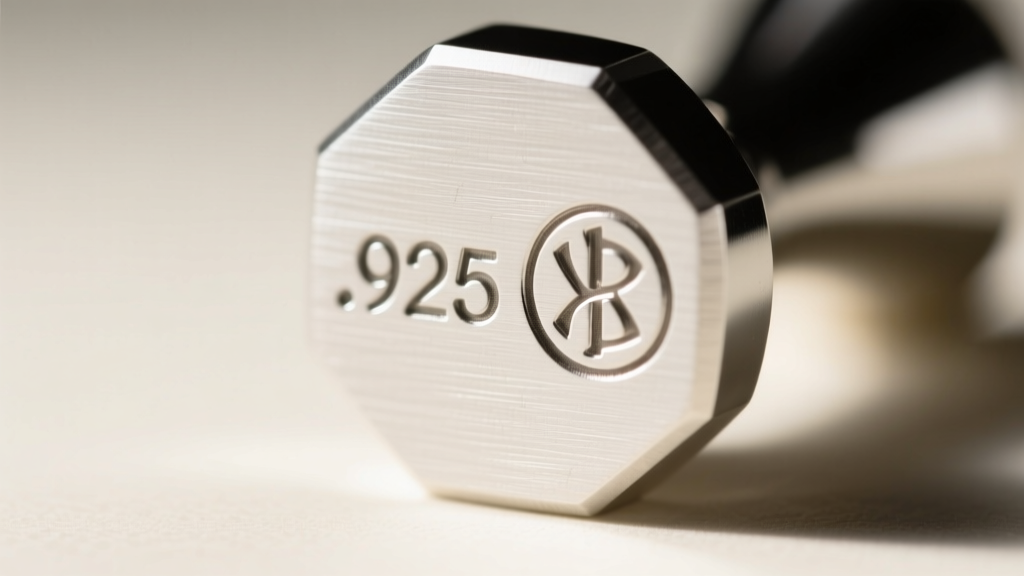
Hallmarking is not just a legal requirement; it is a traceability mechanism. The Federal Trade Commission (FTC) Jewelry Guides mandate that any item stamped with a quality mark (such as '925' or 'Sterling') must also bear a registered trademark or maker's mark. This ensures accountability.
What to Look For in the Stamping Process
- Depth and Clarity: The '.925' stamp should be laser-engraved or struck with a high-tonnage hydraulic press. Shallow, blurry stamps often indicate post-production marking on finished, plated goods, which is a red flag for counterfeit sourcing.
- Placement: Stamps should be placed in discreet but verifiable areas, such as the inner shank of a ring or the back of a pendant bail.
- Country of Origin: For customs compliance and consumer transparency, ensure the manufacturer includes 'Made in [Country]' stamps or tags on all wholesale packaging.
Step 3: Evaluate Manufacturing Capabilities and Finishing
The longevity of wholesale silver jewelry depends heavily on the post-cast finishing processes. Raw 925 silver is porous and prone to sulfur-induced tarnishing. A premium sterling jewelry company will offer advanced surface treatments to extend the shelf life and wearability of their products.
Comparing Silver Finishing Techniques
| Finish Type | Thickness / Specs | Durability & Purpose | Cost Impact |
|---|---|---|---|
| Rhodium Plating (Standard) | 0.1 to 0.5 microns | Provides a bright, white-gold-like finish and excellent tarnish resistance. Wears off after 1-2 years of daily use. | Moderate |
| Thick Rhodium / Platinum | 1.0 to 2.5 microns | Used for high-end bridal and luxury silver. Highly durable, scratch-resistant, and maintains brilliance for years. | High |
| E-Coating (Electro-deposition) | N/A (Organic resin) | A clear, nano-ceramic or resin bath that seals the silver from oxygen and sulfur. Ideal for intricate filigree. | Low to Moderate |
| Oxidized (Blackened) | N/A (Chemical bath) | Accelerated tarnishing using liver of sulfur to highlight textures and vintage details. Requires a protective wax seal. | Low |
Always request the exact micron thickness for rhodium-plated goods. 'Flash plating' (less than 0.05 microns) will wear off during transit or within weeks of retail display, leaving your brand liable for customer complaints.
Step 4: Request and Test Pre-Production Samples
Never commit to a bulk Minimum Order Quantity (MOQ) without independently verifying pre-production samples. The Gemological Institute of America (GIA) outlines several non-destructive and minimally destructive methods to verify silver authenticity.
Independent Testing Methods
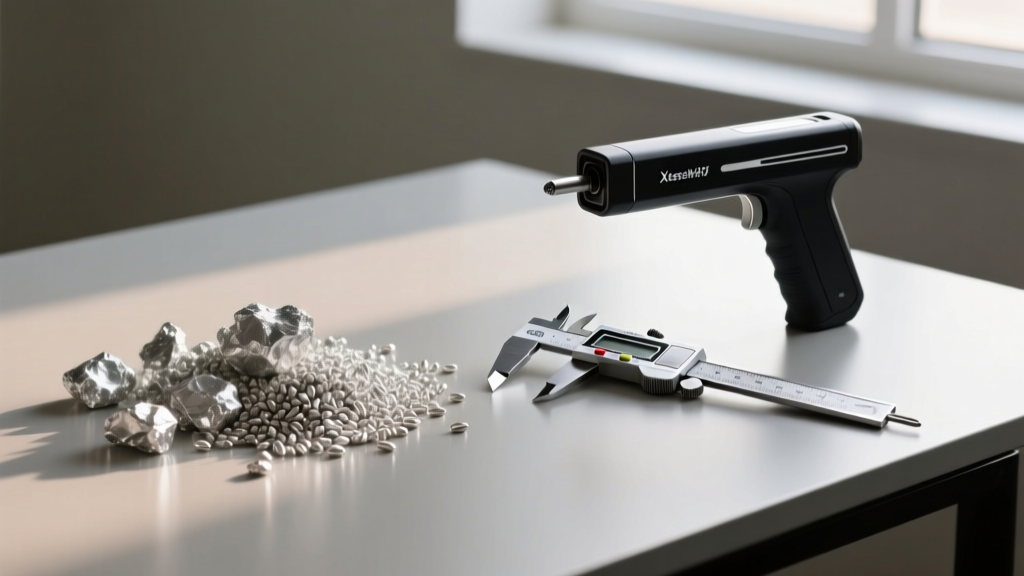
- XRF (X-Ray Fluorescence) Testing: This is the gold standard for non-destructive alloy verification. An XRF gun will instantly display the elemental percentages of the surface layer. Ensure the reading shows ~92.5% Ag. Warning: XRF only penetrates the top few microns. If a piece is heavily rhodium-plated over brass, XRF might read the plating or the brass base. Always ask for a cross-section scan or file a small notch to test the core.
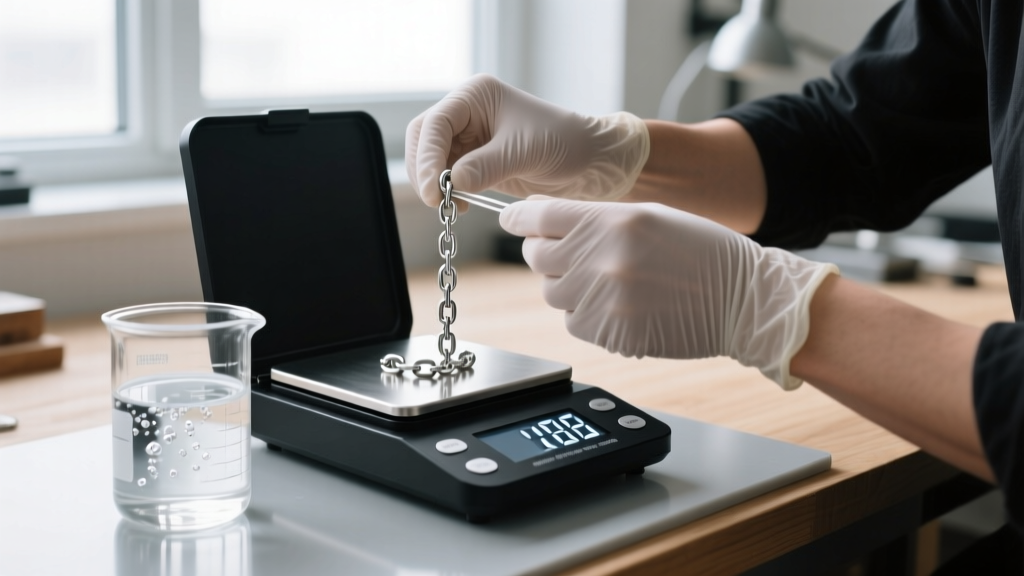
- Specific Gravity (Water Displacement) Test: Pure silver has a density of 10.49 g/cm³, and copper is 8.96 g/cm³. True 925 sterling silver calculates to approximately 10.36 g/cm³. By weighing the sample in the air and then suspended in distilled water, you can calculate its density. If a heavy chain tests at 8.5 g/cm³, it is heavily alloyed with cheaper zinc or is solid brass.
- Nitric Acid Test: A drop of 65% nitric acid on a filed notch will turn creamy white on genuine 925 silver. If it turns green, the core metal is copper or brass. This is destructive and should only be used on sacrificial samples.
Step 5: Negotiate MOQs, Tooling, and ESG Compliance
The operational structure of your partnership is just as critical as the metallurgy. When negotiating with a sterling jewelry company, clarity on tooling fees and ethical sourcing is paramount for modern jewelry brands.
Understanding Tooling and CAD Fees
If you are submitting custom designs, the manufacturer will need to create 3D CAD models and resin waxes for casting. Expect to pay a one-time tooling fee ranging from $50 to $150 per SKU. Ensure your contract explicitly states that you own the CAD files and the physical rubber molds. Some unscrupulous factories retain mold ownership and will sell your proprietary designs to competitors once they prove successful in the market.
ESG and Ethical Sourcing
In 2026, consumers and regulators demand transparency regarding precious metal origins. Verify that your supplier sources silver from LBMA (London Bullion Market Association) certified refineries. This guarantees the metal is conflict-free and mined or recycled under strict environmental and labor standards. Request a Supplier Code of Conduct and audit reports regarding wastewater management, as silver electroplating and pickling processes involve highly toxic chemicals that must be neutralized before discharge.
Conclusion: Building a Bulletproof Supply Chain
Vetting a sterling jewelry company requires moving beyond glossy catalogs and low price quotes. By enforcing strict metallurgical verification, demanding FTC-compliant hallmarking, specifying precise rhodium micron thicknesses, and independently testing samples via specific gravity and XRF analysis, you insulate your brand from catastrophic quality failures. Treat your manufacturer not just as a vendor, but as a technical partner, and your wholesale silver collections will stand the test of time.


