Disadvantages of Stainless Steel Jewelry: Material Limits Exposed
Discover the real disadvantages of stainless steel jewelry. We compare 316L steel to titanium and gold, analyzing weight, resizing, and allergies.

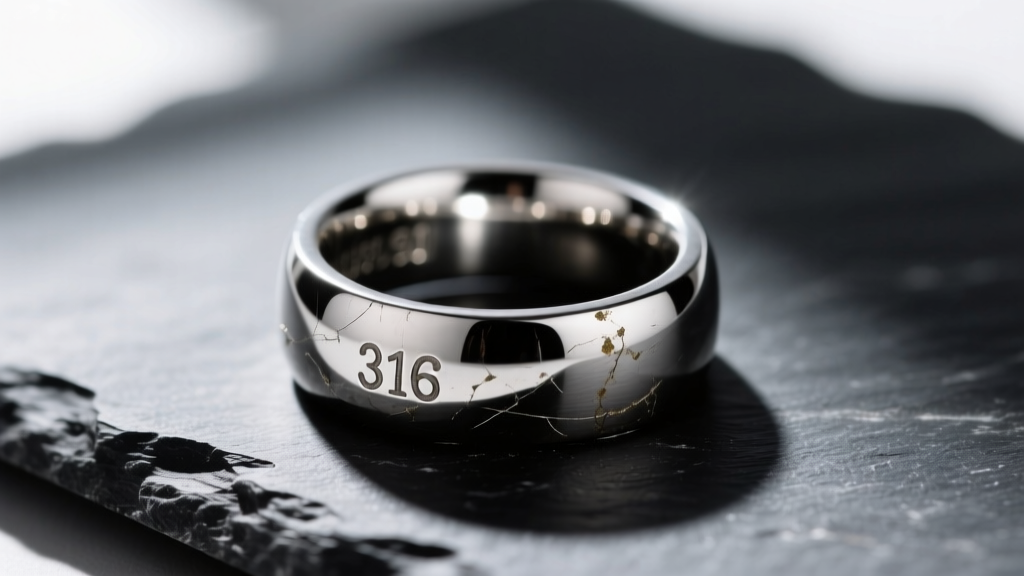
The Allure and the Reality of 316L Steel
Stainless steel, particularly the 316L marine-grade variant, has dominated the affordable jewelry market for over a decade. Prized for its high tensile strength, resistance to tarnish, and accessible price point, it is a staple in everything from heavy Cuban link chains to minimalist huggie hoops. However, as consumers become more educated about metallurgy and body-safe materials, the disadvantages of stainless steel jewelry are becoming impossible to ignore. While it outperforms brass or copper, 316L steel falls short when compared to aerospace-grade titanium or solid karat gold. This guide dissects the structural, biological, and practical limitations of stainless steel, providing a clear framework for when to wear it—and when to avoid it entirely.
Core Disadvantages of Stainless Steel Jewelry
To understand the limitations of steel, we must look at its atomic structure and physical properties. 316L is an austenitic stainless steel containing roughly 16-18% chromium, 10-14% nickel, and 2-3% molybdenum. The 'L' stands for low carbon, which improves corrosion resistance. Yet, this exact composition creates several inherent flaws for jewelry applications.
The Resizing Roadblock
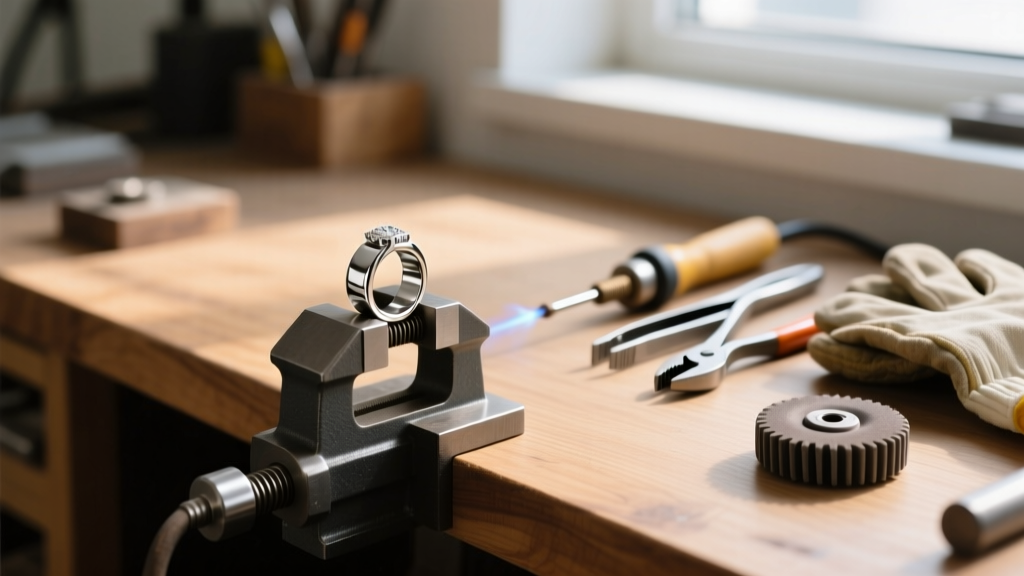
One of the most significant disadvantages of stainless steel jewelry is the near-impossibility of resizing rings. Precious metals like 14k gold (melting point ~850°C) and sterling silver (~890°C) can be easily cut, soldered, and polished by any local jeweler using standard torches. Stainless steel, however, melts at a staggering 1,400°C to 1,450°C. Standard jewelry soldering torches cannot reach this temperature. Resizing a steel ring requires specialized laser welding or TIG (Tungsten Inert Gas) welding equipment, followed by heavy-duty motorized polishing to hide the weld seam. Consequently, 95% of traditional jewelers will flat-out refuse to resize a stainless steel ring, rendering it a disposable item if your finger size fluctuates.
Weight and Comfort Issues
Density plays a massive role in jewelry comfort, particularly for earrings and oversized pendants. The specific gravity of 316L stainless steel is approximately 8.0 g/cm³. To put that into perspective, pure titanium is 4.5 g/cm³, and aluminum is just 2.7 g/cm³. A solid steel pendant that weighs 40 grams would weigh only 22.5 grams if machined from titanium. In body jewelry, this excessive weight becomes a liability. Heavy steel earrings in thicker gauge sizes (such as 10G or 8G) can cause earlobe stretching, migration, and tissue fatigue over time, a phenomenon well-documented by professional piercers.
The Nickel Allergy Caveat
While often marketed as 'hypoallergenic' or 'surgical steel,' 316L contains 8% to 10.5% nickel. In high-quality 316L, the nickel is bound within the crystal lattice structure, which prevents it from reacting with the skin under normal conditions. However, human sweat contains lactic acid and chlorides. Prolonged exposure to this acidic environment can cause microscopic pitting and ion leaching. For the estimated 10-15% of the population with a nickel allergy, this leaching triggers allergic contact dermatitis, resulting in redness, itching, and blistering. According to the Cleveland Clinic, nickel is the most common cause of allergic contact dermatitis worldwide, making steel a risky choice for sensitive skin or fresh piercings.
Material Showdown: Steel vs. Titanium vs. 14k Gold
When evaluating the disadvantages of stainless steel jewelry, it is helpful to benchmark it against industry alternatives. The table below highlights why steel is often relegated to fashion jewelry rather than fine or permanent body jewelry.
| Property | 316L Stainless Steel | ASTM F138 Titanium | 14k Yellow Gold |
|---|---|---|---|
| Density | 8.0 g/cm³ (Heavy) | 4.5 g/cm³ (Light) | 13.0 g/cm³ (Very Heavy) |
| Nickel Content | 8 - 10.5% | 0% (Nickel-Free) | Trace (Alloy dependent) |
| Resizing Ability | Extremely Difficult | Difficult (Requires laser) | Easy (Standard soldering) |
| Melting Point | ~1,400°C | ~1,660°C | ~850°C |
| MRI Safety | Risky (Ferromagnetic) | 100% Safe (Non-magnetic) | 100% Safe (Non-magnetic) |
| Price (per gram) | $0.05 - $0.15 | $0.30 - $0.60 | $35.00 - $45.00 |
Tarnish, Scratches, and Surface Degradation
A common selling point for steel is that it 'doesn't tarnish.' While it is true that 316L will not oxidize into a black sulfide layer like sterling silver, it is highly susceptible to scratching. On the Mohs hardness scale, 316L steel sits around 5.5 to 6.0. Everyday materials like quartz dust (hardness 7.0) in the environment will easily micro-scratch a polished steel surface, turning a mirror finish into a dull, matte grey over a few months of daily wear.
The PVD Coating Failure Point
To combat the monotonous silver-grey color of raw steel, manufacturers often apply PVD (Physical Vapor Deposition) coatings to create black, rose gold, or 18k yellow gold finishes. While PVD is significantly harder and more durable than traditional electroplating, it is not permanent. Once a PVD-coated steel ring sustains a deep scratch that penetrates the 0.5 to 2-micron coating layer, the raw steel underneath is exposed. Unlike solid gold, which can be polished to reveal more gold, a scratched PVD steel ring cannot be buffed out; the coating will eventually flake or peel, ruining the piece.
When to Avoid Steel: Specific Piercing & Use Cases
Understanding the disadvantages of stainless steel jewelry is critical for specific use cases where material failure can result in physical harm or medical complications.
Initial Piercings and Gauge Sizes
Professional piercers overwhelmingly advise against using 316L steel for fresh piercings. A healing fistula is an open wound, and the combination of bodily fluids, heat, and nickel leaching creates a high-risk environment for rejection and infection. For initial piercings, especially in standard 16G (1.2mm) or 14G (1.6mm) sizes, implant-grade titanium (ASTM F138) or niobium are the only acceptable standards. Steel should only be introduced into a piercing once it has fully healed and seasoned.
The MRI Ferromagnetism Risk
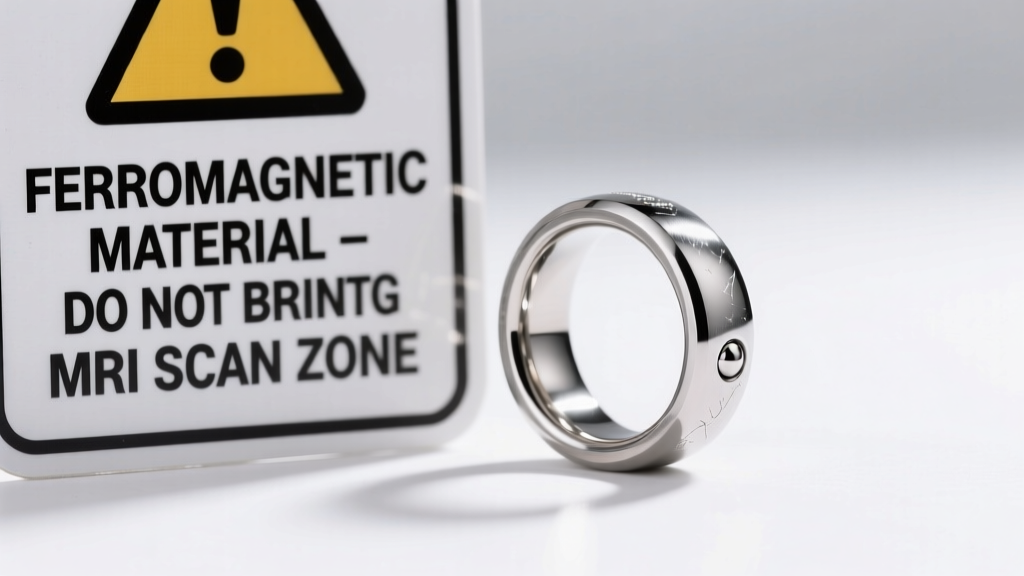
While 316L is classified as an 'austenitic' (non-magnetic) steel, the manufacturing process of jewelry often involves 'cold working'—bending, stamping, or drawing the metal at room temperature. Cold working causes a partial transformation of the austenite crystal structure into martensite, which is highly ferromagnetic. If you wear a cold-worked stainless steel captive bead ring or dermal anchor into a 3-Tesla MRI machine, the magnetic field can violently pull the jewelry, causing severe tissue tearing. The U.S. Food and Drug Administration (FDA) strictly warns about the dangers of ferromagnetic objects in MRI suites, making steel a major liability for anyone who may require emergency medical imaging.
Final Verdict: Is Steel Right for Your Collection?
Stainless steel is not inherently 'bad'; rather, it is a material with highly specific boundaries. It excels in large, structural fashion pieces like belt buckles, heavy chain necklaces, and temporary body jewelry where low cost and high tensile strength are paramount. However, the disadvantages of stainless steel jewelry—namely the inability to resize, the risk of nickel dermatitis, the heavy density, and MRI incompatibility—make it a poor choice for lifelong commitments like wedding bands, initial piercings, or everyday fine jewelry. By recognizing these metallurgical limits, you can curate a collection that prioritizes both aesthetic appeal and long-term biological safety.


