Does Stainless Steel Jewelry Turn Green? Causes & Fixes
Discover if stainless steel jewelry turns skin green. Learn the metallurgy behind green skin, how to spot fake 316L, and actionable fixes.

The Short Answer: Does Stainless Steel Jewelry Turn Green?
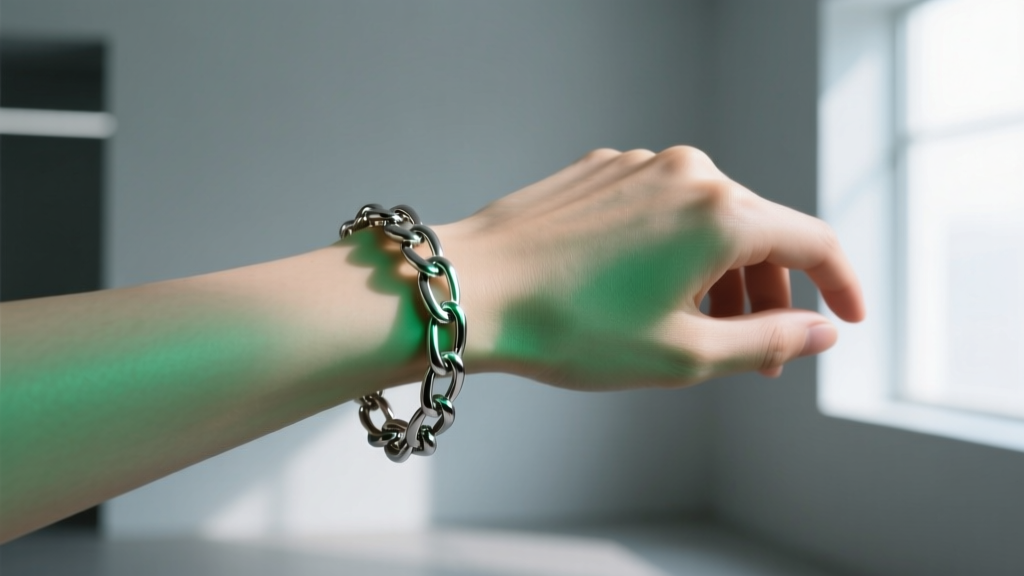
If you have ever taken off a favorite ring or bracelet only to find a stubborn green ring staining your skin, you have likely questioned the authenticity of your jewelry. The short answer to whether true stainless steel jewelry turns your skin green is no. Genuine, solid 316L surgical stainless steel does not contain the elements required to create green skin stains. However, the jewelry market is flooded with mislabeled pieces, and understanding the metallurgical reality behind this common issue is the first step in troubleshooting your collection.
When consumers ask, "does stainless steel jewelry turn green," they are usually experiencing a chemical reaction between their skin's natural chemistry and a base metal masquerading as steel. In this comprehensive troubleshooting guide, we will break down the exact elemental compositions that cause discoloration, provide a diagnostic framework to test your existing pieces, and outline professional-grade solutions to protect your skin and your investment.
The Metallurgy: Why Your Skin is Turning Green
To understand why a piece of jewelry leaves a green residue, we must look at the periodic table. The green stain is almost exclusively caused by copper salts (such as copper chloride or copper sulfate). When copper comes into contact with the acids, salts, and moisture in human sweat (which typically has a pH ranging from 4.5 to 7.0), it oxidizes and transfers onto the epidermis.
The Imposter Syndrome: Plated Brass vs. Solid 316L
Authentic 316L stainless steel is an austenitic alloy composed primarily of iron, 16-18% chromium, 10-14% nickel, 2-3% molybdenum, and a maximum of 0.03% carbon. Notice what is missing from this formula: copper. Because true 316L contains zero copper, it is chemically impossible for a solid piece of 316L steel to turn your skin green.
If your "stainless steel" jewelry is leaving a green mark, you are likely wearing a brass or copper alloy that has been electroplated or coated with a microscopic layer of steel-colored PVD (Physical Vapor Deposition). Over time, friction, sweat, and lotions wear away this thin outer layer, exposing the copper-rich core beneath. According to the International Stainless Steel Forum, genuine 316L is highly resistant to corrosion precisely because of its chromium and molybdenum content, which forms a passive, self-repairing oxide layer on the surface that prevents leaching.
Sweat, Chlorides, and the Olfactory Reaction
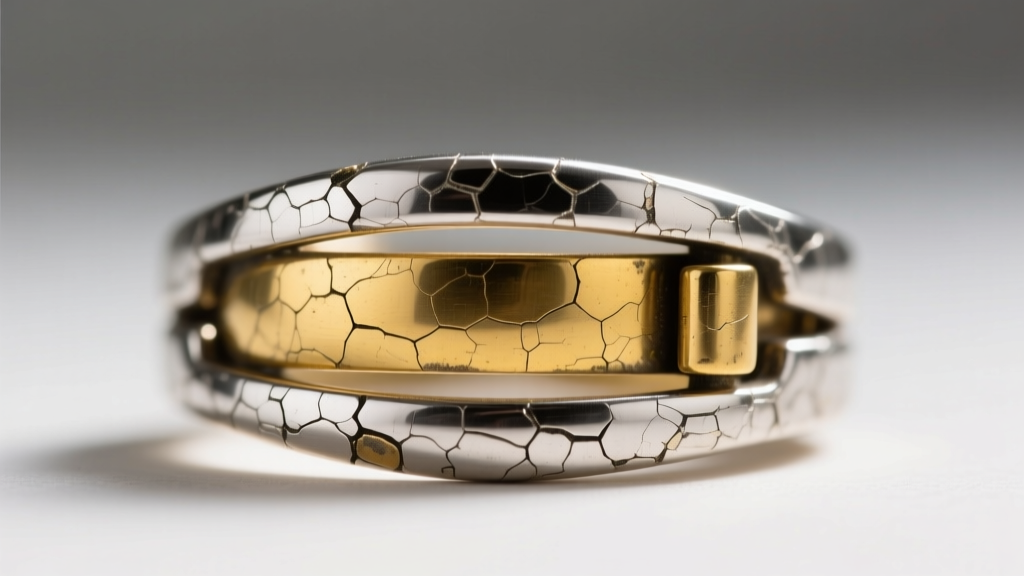
While copper causes the green stain, lower-grade stainless steels (like 400-series ferritic steel) can react differently. These lower grades lack molybdenum and are highly susceptible to pitting corrosion when exposed to the chlorides found in human sweat. This corrosion produces iron oxide (rust), which can mix with skin oils and dead cells to create a dark, grimy black or brownish-grey stain. While not bright green, many wearers confuse this dark oxidation with the infamous "green skin" phenomenon.
Diagnostic Guide: Is Your Jewelry Really Stainless Steel?
Before throwing away a discolored piece, put it through this three-step diagnostic troubleshooting process to determine its true material composition.
- The Scratch Test: Use a jeweler's file or a sharp needle to make a tiny scratch in an inconspicuous area (like the inside of a clasp). If you see a bright yellow, orange, or reddish hue beneath the silver surface, the piece is plated brass or copper. Solid 316L will remain silver-grey all the way through.
- The Magnet Test: Austenitic 316L is generally non-magnetic (though heavy cold-working during manufacturing can induce a very weak magnetic pull). If your jewelry snaps strongly to a rare-earth magnet, it is likely a lower-grade ferritic steel (like 430) which is prone to rusting, or a plated ferrous base metal. Note: Brass and copper are also non-magnetic, so this test must be combined with the scratch test.
- The Weight Assessment: Stainless steel has a specific gravity of roughly 8.0 g/cm³, while brass is denser at 8.4 to 8.7 g/cm³. In heavy chainmail or thick cuff bracelets, brass will feel noticeably heavier and more "dead" in the hand compared to the lighter, more resonant feel of solid steel.
Comparative Analysis: Steel Grades and Skin Reactions
Not all metals marketed as "surgical" or "stainless" are created equal. Use this troubleshooting matrix to identify how different common jewelry alloys interact with human skin chemistry.
| Material Grade | Core Composition | Copper Content | Reaction with Sweat (pH 4.5-7.0) | Discoloration Risk |
|---|---|---|---|---|
| 316L (Surgical) | Fe, 17% Cr, 12% Ni, 2.5% Mo | 0% | Passive oxide layer resists chlorides | None (Zero Green Stain) |
| 304 (Food Grade) | Fe, 18% Cr, 8% Ni | 0% | Mild pitting possible in high-salt sweat | Low (Dark grime, no green) |
| Plated Brass | Cu, Zn base with steel PVD | 60-70% | Acids dissolve zinc/copper rapidly | High (Bright Green Stain) |
| 430 (Ferritic) | Fe, 17% Cr, 0% Ni | 0% | Rusts easily when exposed to moisture | Medium (Brown/Orange Rust) |
4 Actionable Fixes for Green Skin
If you have discovered that a beloved piece is actually a plated imposter, or if you are dealing with surface oxidation on a lower-grade steel, implement these troubleshooting solutions immediately.
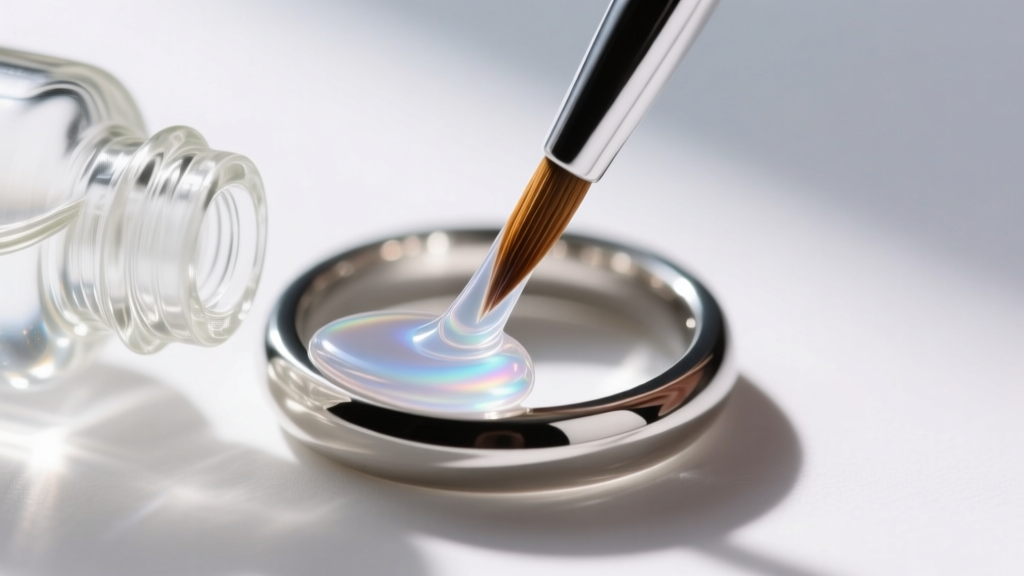
- Apply a Polymer Barrier: For a quick, temporary fix, coat the inner band of rings or the back of pendants with a specialized jewelry shield (a clear, hypoallergenic polymer resin) or even a high-quality clear nail polish. This creates a physical barrier between the copper core and your skin's acids. Reapply every 2-3 weeks as the polymer wears off from friction.
- Implement an Ultrasonic Cleaning Protocol: If your genuine 316L steel is leaving a dark, non-green smudge, it is likely trapping dead skin cells, lotions, and environmental chlorides in the crevices of the links. Use an ultrasonic jewelry cleaner with a mild, pH-neutral dish soap for 3 minutes to blast out microscopic debris that causes surface oxidation.
- Neutralize Your Skin's pH Post-Wear: If you live in a humid climate or sweat heavily, wash the skin beneath your jewelry with a gentle, pH-balancing cleanser immediately after removing it. This halts the ongoing acid-metal reaction before the salts can crystallize on your epidermis.
- The Upgrade Path (ASTM F138): If your skin is reacting poorly, bypass commercial "surgical steel" entirely and upgrade to ASTM F138 compliant implant-grade titanium (Ti6Al4V). Titanium contains zero nickel and zero copper, making it biologically inert and entirely immune to the green skin phenomenon.
When to See a Dermatologist: Nickel Allergy vs. Copper Stains
It is crucial for jewelry wearers to distinguish between a harmless surface metal stain and a genuine allergic reaction. While copper turns the skin green, the 10-14% nickel content in 316L stainless steel can trigger Allergic Contact Dermatitis (ACD) in sensitive individuals.
According to the National Center for Biotechnology Information (NCBI), nickel allergy is one of the most common causes of contact dermatitis worldwide. If your skin is not just stained, but is also exhibiting erythema (redness), pruritus (itching), vesicles (tiny blisters), or post-inflammatory hyperpigmentation (which can sometimes look like a dark, bruised stain), you are not dealing with a simple copper oxidation issue. You are experiencing an immune response.
"If a patient presents with localized eczema directly corresponding to the area of metal contact, particularly from watch backs, belt buckles, or jewelry clasps, patch testing for nickel sulfate should be the immediate clinical next step." — DermNet NZ
If you suspect a nickel allergy, discontinue wearing 316L stainless steel immediately. The troubleshooting solution here is not a polymer barrier, but a complete material substitution to pure niobium, 14k+ solid gold, or implant-grade titanium. By understanding the exact metallurgical properties of your jewelry, you can curate a collection that is both visually striking and biologically harmonious with your body.


