What Does 316L Mean on Jewelry? Care & Cleaning Guide
Discover what does 316L mean on jewelry, its surgical steel properties, and expert care, cleaning, and maintenance tips to keep your pieces pristine.

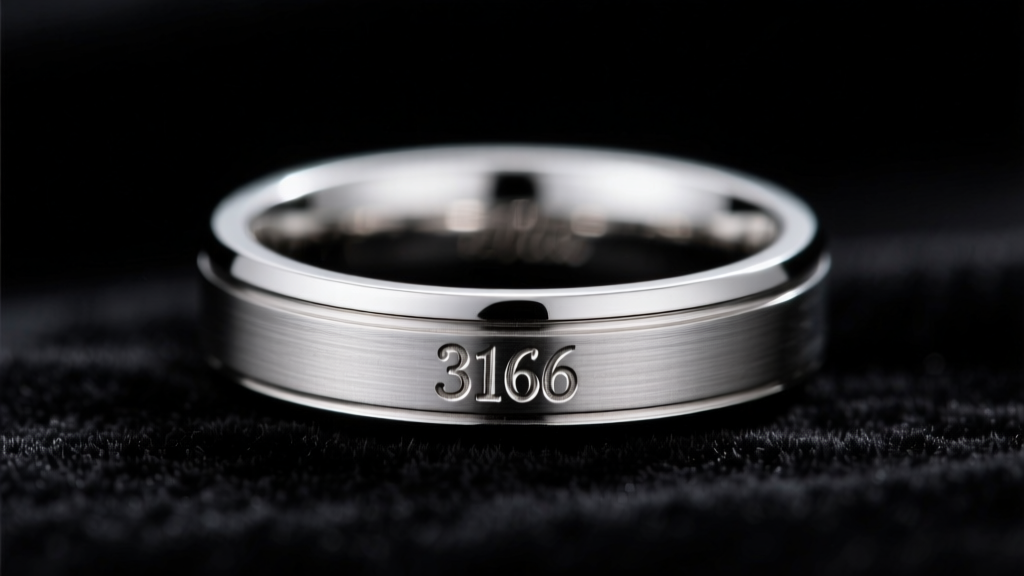
Decoding the Stamp: What Does 316L Mean on Jewelry?
If you have ever turned over a high-quality stainless steel ring or pendant and spotted the tiny "316L" hallmark, you might have wondered about its significance. Understanding what does 316L mean on jewelry is the first step toward mastering its care and maintenance. In metallurgical terms, 316L is an austenitic stainless steel alloy specifically engineered for superior corrosion resistance. While standard 304 stainless steel is common in kitchen appliances, 316L is the gold standard for medical implants, marine hardware, and premium body jewelry.
The secret to its resilience lies in its precise chemical composition. According to the Australasian Stainless Steel Development Association (ASSDA), 316L contains 16-18% chromium, 10-14% nickel, and crucially, 2-3% molybdenum. It is this addition of molybdenum that dramatically increases the metal's resistance to chloride pitting—the exact type of corrosion caused by human sweat, ocean water, and chlorinated pools. When you wear 316L jewelry, you are wearing an alloy that actively fights off the environmental stressors that would rapidly degrade lesser metals.
The "L" Factor: Why Low Carbon Matters for Durability
The "L" in 316L stands for "Low Carbon," meaning the carbon content is strictly capped at a maximum of 0.03%. To understand why this matters for your jewelry's longevity, we have to look at a metallurgical phenomenon called sensitization. When standard stainless steel is exposed to high temperatures—such as during the laser welding of jump rings, clasp attachments, or custom sizing—carbon atoms can bind with chromium to form chromium carbides. This process, known as carbide precipitation, depletes the surrounding area of the chromium needed to maintain the protective passive oxide layer.
By keeping the carbon content exceptionally low, 316L prevents this localized depletion. The result is a piece of jewelry that maintains its structural integrity and rust resistance even at the welded seams. This is why reputable jewelers and piercers insist on 316L for structural components like chain links and post welds, ensuring that the jewelry will not snap or corrode at its weakest points over years of daily wear.
Environmental Stressors and the 316L Resistance Matrix
While 316L is highly durable, it is not entirely invincible. The passive chromium oxide layer that protects the steel can be compromised by prolonged exposure to harsh chemicals or abrasive environments. Below is a detailed matrix comparing how 316L holds up against common daily stressors compared to standard 304 stainless steel, helping you understand when to remove your jewelry and when it is safe to keep it on.
| Environmental Stressor | 316L Surgical Steel Reaction | 304 Stainless Steel Reaction | Maintenance Action Required |
|---|---|---|---|
| Human Sweat (pH 4.5 - 7.0) | Highly resistant; molybdenum prevents chloride pitting. | Moderate risk of surface spotting over time. | Rinse with warm water after heavy exercise. |
| Chlorinated Pool Water | Resistant to short-term exposure; safe for occasional swimming. | High risk of pitting and crevice corrosion. | Remove before swimming; rinse immediately if exposed. |
| Saltwater (Ocean) | Excellent resistance, but prolonged immersion can cause micro-pitting. | Rapid surface degradation and rusting. | Rinse thoroughly with fresh water post-swim. |
| Household Bleach | Severe risk of irreversible pitting and oxide layer destruction. | Immediate surface damage and discoloration. | Never wear 316L jewelry while handling bleach. |
| Cosmetics & Lotions | Generally safe, but buildup can dull the finish. | Safe, but prone to trapping debris in seams. | Weekly cleaning with mild dish soap. |
The Definitive 316L Cleaning Protocol
Proper maintenance of 316L jewelry requires a gentle but effective approach to preserve the passive oxide layer without scratching the surface. Follow this step-by-step protocol for optimal results:
Step 1: The pH-Neutral Soak
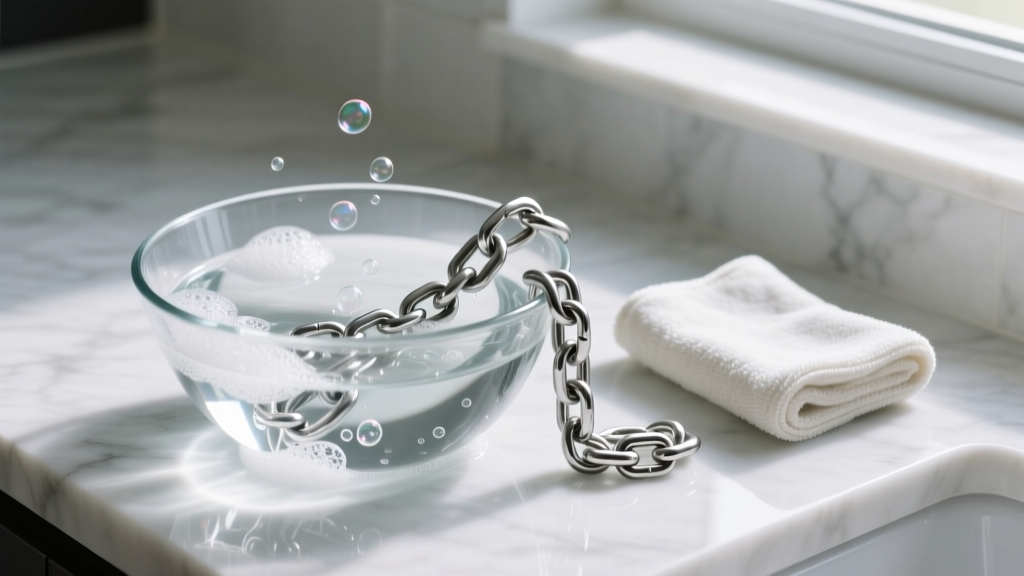
Fill a glass or ceramic bowl with warm (not hot) water and add a few drops of pH-neutral liquid dish soap. Avoid harsh detergents, antibacterial soaps with added moisturizers, or anything containing chlorine or ammonia. Submerge your 316L jewelry and let it soak for 5 to 10 minutes. This loosens sebum, dead skin cells, and cosmetic buildup trapped in intricate linkages or under gemstone settings.
Step 2: Gentle Agitation
Using an extra-soft baby toothbrush or a dedicated jewelry brush with nylon bristles, gently agitate the piece. Pay special attention to the interior of rings, the clasp mechanisms of necklaces, and the crevices of textured designs. Never use wire brushes or abrasive scouring pads, as these will permanently mar the polished finish.
Step 3: Ultrasonic Cleaning (With Caveats)
For plain 316L chains and solid bands without gemstones, a 40kHz ultrasonic cleaner is highly effective at dislodging microscopic debris. However, if your 316L jewelry features Physical Vapor Deposition (PVD) coatings, porous stones (like opals or turquoise), or fracture-filled gems, avoid ultrasonic cleaners entirely, as the high-frequency cavitation can strip coatings and shatter delicate inclusions.
Step 4: Drying and Microfiber Buffing
Rinse the jewelry under distilled or filtered water to prevent hard water spots. Immediately dry the piece using a lint-free microfiber cloth. Air-drying is not recommended, as minerals in tap water can leave a cloudy film on the high-polish surface.
Polishing and Scratch Removal on Surgical Steel
With a Mohs hardness rating of approximately 5.5 to 6.0, 316L stainless steel is harder than silver and gold, but it is still susceptible to micro-scratches from contact with harder materials like quartz dust, concrete, and ceramics. When your 316L jewelry loses its mirror finish, you can restore it, but the method depends on the original finish type.
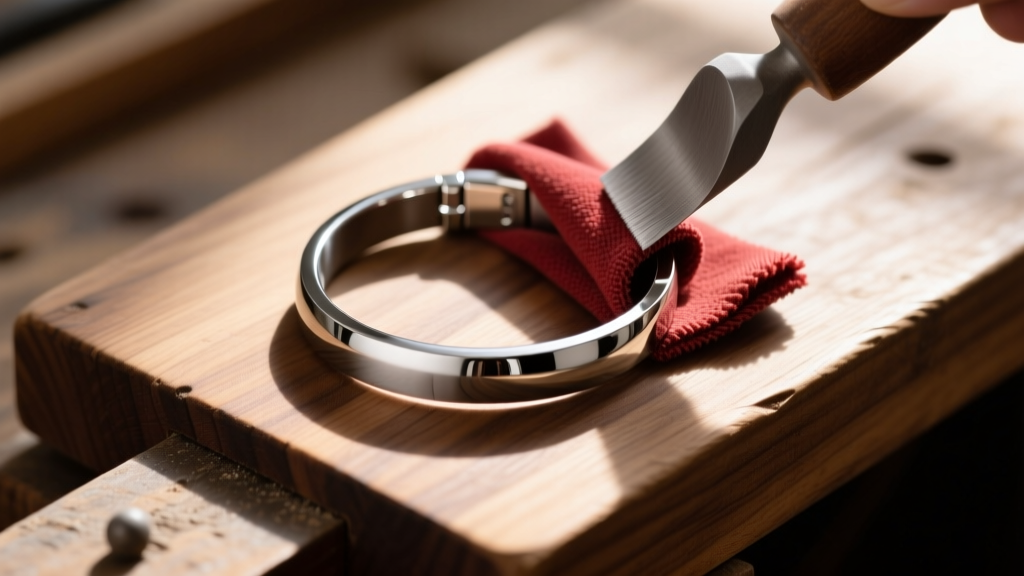
- High-Polish Finishes: Use a specialized jeweler's rouge cloth or a non-abrasive metal polish like Flitz or Simichrome. Apply a pea-sized amount of polish to a soft cotton cloth and rub the metal in small, circular motions. Buff away the residue with a clean microfiber towel until the mirror shine returns.
- Brushed or Matte Finishes: Never use polishing compounds on brushed 316L, as it will create shiny, uneven patches. Instead, use a Scotch-Brite pad or a dedicated jewelry abrasive sponge, stroking strictly in one direction to match the original grain pattern of the metal.
- PVD-Coated 316L: If your black or rose-gold PVD-coated 316L jewelry gets scratched, you cannot polish it out. Polishing will strip the microscopic PVD layer, exposing the raw silver-colored steel beneath. Limit cleaning to mild soap and water only.
Long-Term Maintenance and Storage
While 316L does not tarnish or oxidize in the way that sterling silver does, improper storage can still lead to physical damage and galvanic corrosion. If you store your 316L pieces in a jewelry box alongside raw copper, brass, or low-grade carbon steel items, moisture in the air can create a galvanic cell, causing the lesser metals to corrode and potentially staining your stainless steel.
Expert Troubleshooting Tip: If you notice small, localized brown spots or deep pitting in the crevices of your 316L jewelry, you are likely witnessing crevice corrosion. According to the British Stainless Steel Association (BSSA), this occurs when oxygen is restricted in tight gaps, preventing the passive oxide layer from repairing itself. If a piece shows deep structural pitting, it is time to retire it, as the metal's structural integrity has been permanently compromised.
To store your collection safely, keep pieces separated in soft flannel pouches or individual compartments. While anti-tarnish strips are unnecessary for 316L itself, tossing a small silica gel packet into your jewelry drawer will control ambient humidity, protecting any mixed-metal pieces or organic gemstones stored nearby. By understanding the metallurgy behind the 316L stamp and adhering to these targeted care protocols, your surgical steel jewelry will maintain its brilliant finish and structural integrity for decades.


