How Do You Clean Titanium Jewelry? An Expert Technical Guide
Learn exactly how do you clean titanium jewelry based on its finish and grade. Expert methods for anodized, brushed, and polished titanium pieces.

The Metallurgy of Clean: Understanding Titanium's Oxide Layer
When consumers ask, "how do you clean titanium jewelry," the answer requires a fundamental understanding of titanium's unique surface chemistry. Unlike silver, which forms a dark sulfide tarnish, or copper, which oxidizes into green verdigris, titanium is protected by a passive titanium dioxide (TiO2) layer. According to data published by ASM International, this oxide layer forms instantaneously when the raw metal is exposed to oxygen, typically measuring between 2 to 5 nanometers in thickness.
This TiO2 layer is what makes titanium exceptionally hypoallergenic and highly resistant to corrosion. However, it is not entirely impervious to environmental buildup. The oxide layer is slightly hydrophilic, meaning it readily attracts and binds to lipids, sebum (skin oils), lotions, and hard water minerals. Over time, this microscopic layer of organic and inorganic debris dulls the metal's optical reflectivity, making the jewelry appear cloudy or gray. Therefore, cleaning titanium is not about removing tarnish; it is about safely removing lipid and mineral buildup without compromising the passive oxide layer or the physical surface finish.
Cleaning Protocols Dictated by Surface Finish
The most critical mistake jewelry owners make is applying a universal cleaning method to all titanium pieces. The mechanical finish applied to the titanium dictates the exact cleaning protocol you must follow.
1. Polished and Mirror Finishes
Mirror-polished titanium reflects light by utilizing a perfectly flat microscopic surface. Any abrasive cleaner, including baking soda pastes or stiff-bristled brushes, will introduce micro-scratches that scatter light and permanently ruin the mirror effect. For polished titanium, rely exclusively on chemical degreasing and ultra-soft mechanical agitation. A pH-neutral dishwashing liquid diluted in warm distilled water, applied with a lint-free microfiber cloth, is the only safe approach. Avoid any polishing compounds containing aluminum oxide or cerium oxide, as these are designed to cut metal and will alter the jewelry's tolerances.
2. Brushed, Satin, and Bead-Blasted Matte Finishes
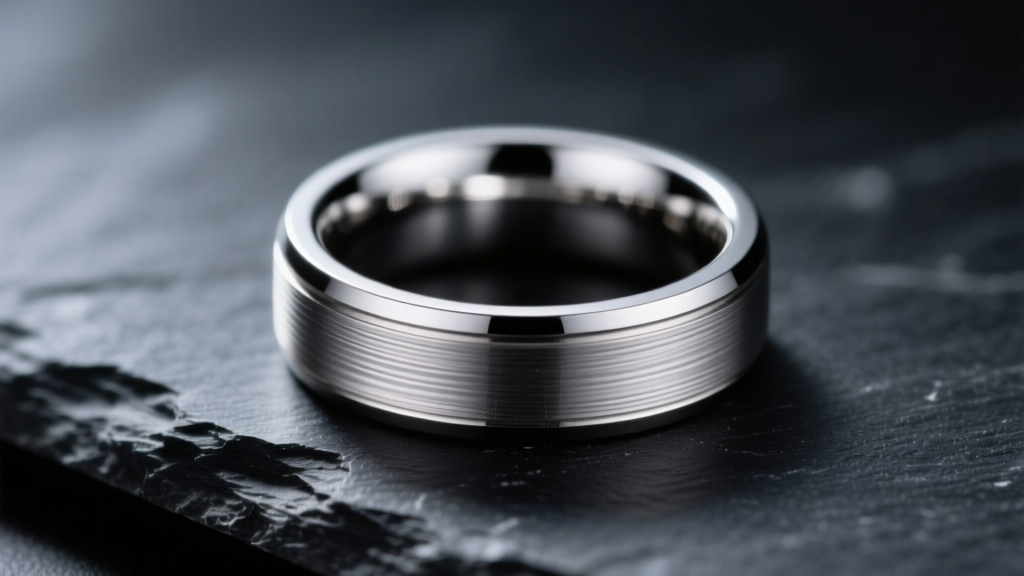
Brushed and bead-blasted finishes achieve their aesthetic through intentional microscopic grooves and craters. The danger here is that dirt, dead skin cells, and lotions become impacted deep within these physical valleys. To clean a brushed titanium wedding band or bead-blasted pendant, you must use a soft-bristled nylon brush (a baby toothbrush is ideal) to physically agitate the debris out of the grooves. Always brush in the exact direction of the grain on a brushed piece; brushing in a circular motion will create cross-hatching and ruin the directional satin finish.
3. Anodized Titanium: The High-Risk Category
Anodizing is an electrolytic process that thickens the TiO2 layer to specific nanometer depths, causing light interference that produces vibrant colors without using dyes or paints. For example, an anodizing voltage of roughly 15V produces a gold hue, while 90V produces a vibrant green. Because the color exists entirely within the fragile oxide layer, any abrasive action will permanently strip the color, revealing the dull gray base metal beneath.
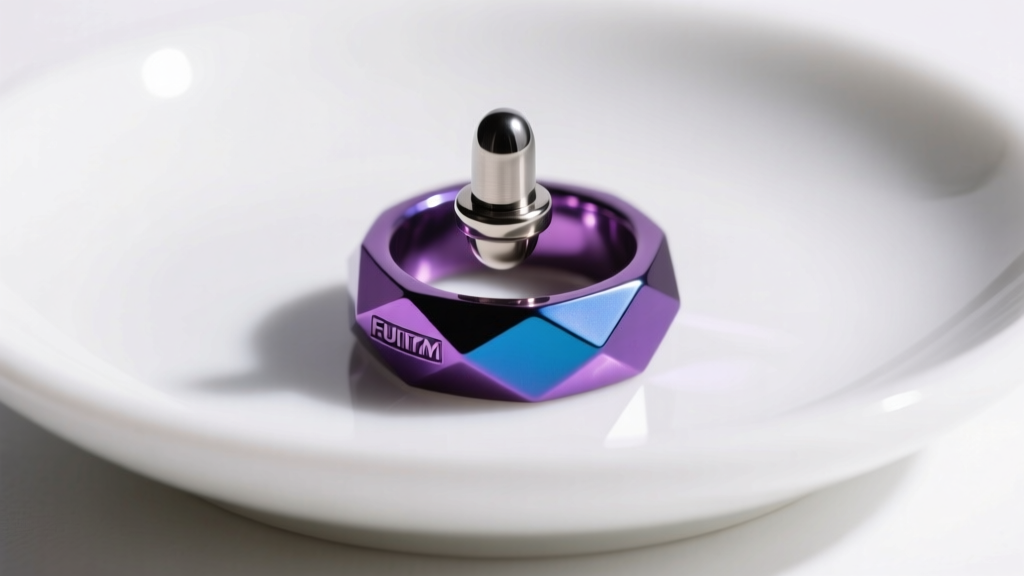
To clean anodized titanium, never use brushes, ultrasonic cleaners, or alcohol-based solvents. Soak the piece briefly in distilled water with a drop of mild surfactant, gently swish it, and pat it dry. The International Titanium Association notes that anodized layers can also be degraded by prolonged exposure to highly alkaline environments, so avoid harsh chemical degreasers entirely.
Chemical Compatibility and Ultrasonic Safety
Titanium is famously inert, but it is not indestructible. When formulating a cleaning solution, you must avoid specific halogens and acids that can cause pitting or completely dissolve the protective oxide layer. Below is a technical compatibility chart for common household and jewelry cleaning agents.
| Chemical Agent | Concentration | Effect on TiO2 Layer | Cleaning Verdict |
|---|---|---|---|
| Mild Dish Soap | 1-5% | None | Safe for all finishes |
| Isopropyl Alcohol | 70-99% | None | Safe for polished/brushed; avoid on anodized |
| Chlorine Bleach | 5-10% | Risk of micro-pitting over time | Avoid completely |
| Hydrofluoric Acid | Trace | Destroys oxide layer instantly | Never use (found in some rust removers) |
| Ultrasonic Waves | 40kHz | None on metal | Safe for solid Ti; avoid if gems are fracture-filled |
Ultrasonic cleaners are highly effective for solid titanium pieces, particularly those with intricate milgrain or laser-engraved details where manual brushing cannot reach. The cavitation bubbles safely blast away sebum without scratching the metal. However, if your titanium jewelry is set with tension-mounted gemstones or porous stones like opals or emeralds, the high-frequency vibrations can shatter the stones or loosen the tension setting.
Step-by-Step Deep Cleaning Framework
For heavily soiled daily-wear titanium jewelry, follow this precise metallurgical cleaning framework to restore the metal's original luster without causing surface degradation.
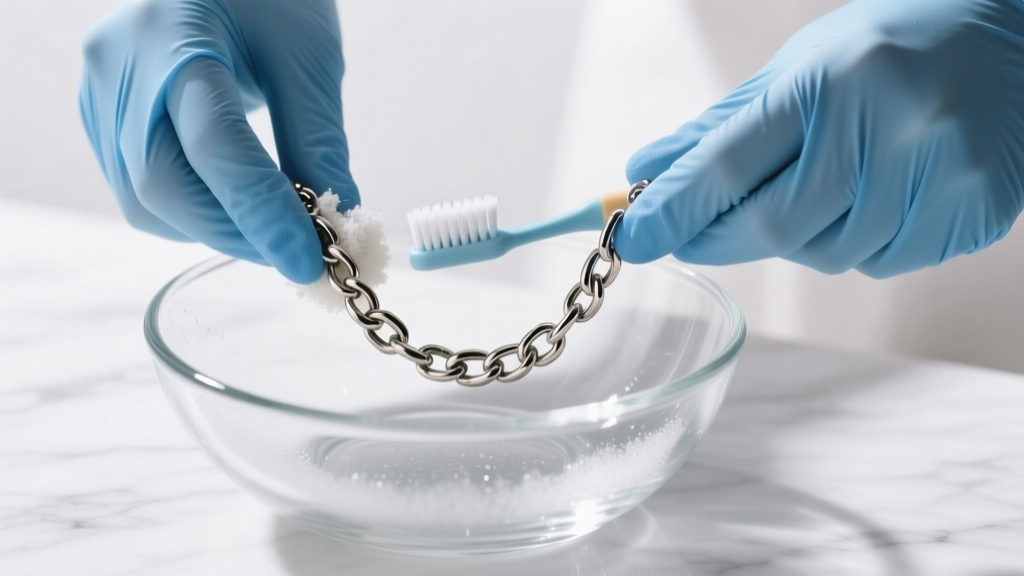
- Preparation: Fill a glass or ceramic bowl (avoid metal bowls to prevent galvanic interactions) with warm distilled water. Tap water contains calcium and magnesium ions that will leave hard water spots on the titanium as it dries. Add three drops of a pH-neutral, fragrance-free dishwashing liquid.
- Soaking Phase: Submerge the titanium jewelry for exactly 5 to 10 minutes. This allows the mild surfactants to break the surface tension of the sebum and lift lipid bonds from the TiO2 layer. Do not exceed 15 minutes, especially if the piece features resin or epoxy inlays.
- Mechanical Agitation: Using a soft nylon baby toothbrush, gently brush the jewelry. For brushed finishes, follow the grain. For polished finishes, use extremely light, circular motions. Pay special attention to the interior shank of rings, where dead skin and soap scum accumulate heavily.
- The Distilled Rinse: Rinse the piece thoroughly under a stream of distilled water. This is a crucial step often skipped by consumers; rinsing with tap water reintroduces minerals that will dry into cloudy spots, negating the entire cleaning process.
- Controlled Drying: Immediately dry the jewelry using a clean, lint-free microfiber cloth. Do not air dry. Use compressed air to blow moisture out of deep engravings or chain links before giving it a final microfiber buff.
Grade 2 vs. Grade 5 Titanium: Maintenance Nuances
Finally, understanding the specific alloy of your jewelry impacts long-term maintenance. Commercially Pure (CP) Grade 2 titanium is the standard for most hypoallergenic body jewelry and lightweight rings. It is highly malleable and prone to micro-scratching, meaning it requires gentler handling and more frequent polishing to maintain a mirror finish.
Conversely, Grade 5 titanium (Ti-6Al-4V), an aerospace-grade alloy containing 6% aluminum and 4% vanadium, is significantly harder and more scratch-resistant. Grade 5 is often used in high-end men's wedding bands and tactical jewelry. While its oxide layer behaves similarly to Grade 2, its superior hardness means it can withstand slightly more aggressive mechanical brushing to remove impacted debris from brushed or machined finishes without fear of altering the surface topography. Regardless of the grade, adhering to these strict, finish-specific cleaning protocols will ensure your titanium jewelry remains structurally sound and optically flawless for a lifetime.