1950s Costume Jewelry: A Beginner's Guide to Vintage Glamour
Discover the magic of 1950s costume jewelry. Learn to identify top makers, spot authentic vintage pieces, and understand pricing in this beginner guide.

The Post-War Glamour Explosion
When we talk about the golden age of fashion accessories, 1950s costume jewelry stands in a league of its own. Following the austerity of World War II, the 1950s ushered in an era of unapologetic opulence, economic prosperity, and a cultural obsession with femininity and glamour. Christian Dior’s revolutionary 1947 'New Look'—characterized by cinched waists, full skirts, and elegant silhouettes—demanded equally bold and sophisticated accessories. Fine jewelry was often locked in vaults or still scarce due to wartime metal rationing, leaving a massive void that high-end costume jewelers rushed to fill.
For beginners entering the vintage market today, understanding this era is crucial. Unlike the flapper beads of the 1920s or the plastic novelty pieces of the 1980s, 1950s costume jewelry was engineered to mimic fine jewelry. Houses like Trifari, Coro, and Miriam Haskell employed master craftsmen, utilizing intricate metalwork, hand-set stones, and revolutionary new materials. According to the V&A Museum's jewelry archives, the mid-century period represents a pinnacle of wearable art, where the line between costume and fine jewelry was intentionally blurred by brilliant designers like Alfred Philippe and Marcel Boucher.
Defining Materials of the Decade
To authenticate and date vintage pieces, you must understand the materials that defined the decade. The 1950s was an era of rapid material innovation, blending traditional metalworking with post-war industrial advancements.
Aurora Borealis (AB) Rhinestones
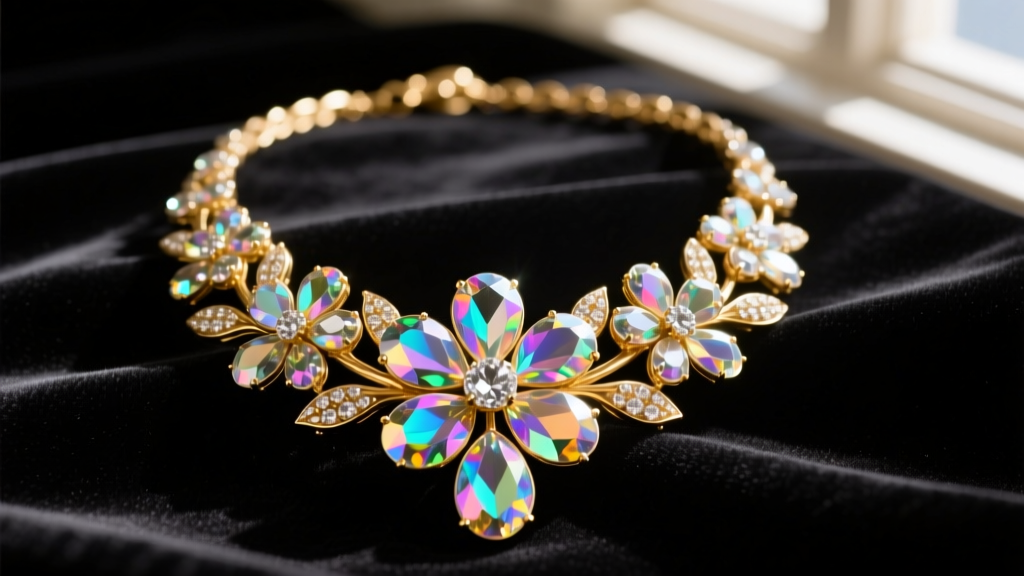
Perhaps the most critical dating marker in mid-century jewelry is the Aurora Borealis rhinestone. Invented in 1955 by Manfred Swarovski in direct collaboration with Christian Dior, the AB finish involves a vacuum-deposited metallic coating that gives glass stones an iridescent, rainbow-like oil-slick shimmer. Rule of thumb: If a piece features AB stones, it was manufactured in 1955 or later. It is physically impossible for an AB piece to be an early-50s or Art Deco original.
Japanned Metal and Russian Gold
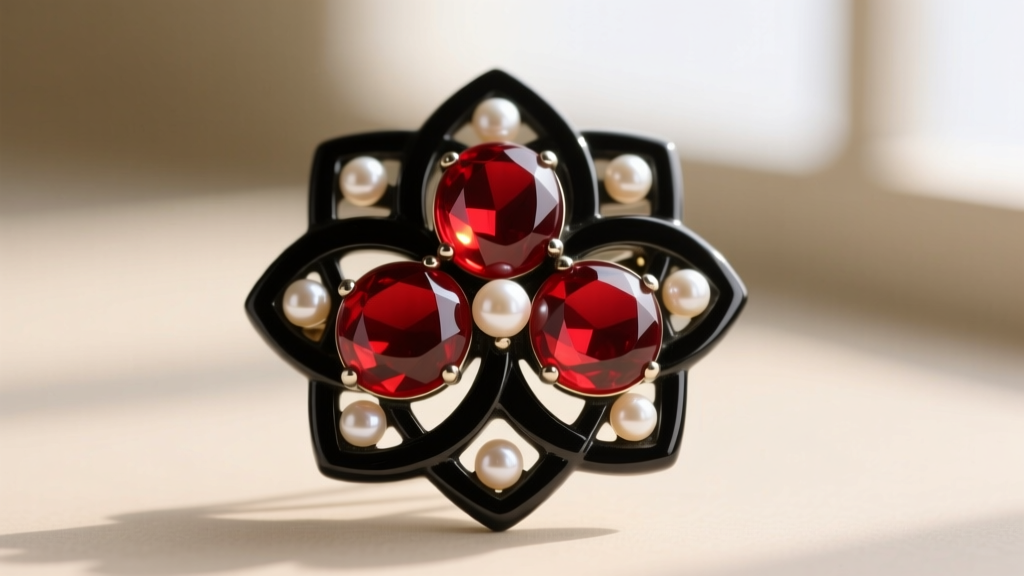
High-end makers frequently utilized specialized metal finishes to make rhinestones pop. Japanned metal is a dark, charcoal-to-black metallic finish that provides a moody, dramatic backdrop for clear and colored crystals. Conversely, Miriam Haskell popularized 'Russian Gold,' a unique 24k gold-plated finish over brass that yields a soft, warm, almost antique patina. Haskell's Russian gold is highly prized by collectors, though it is prone to wear if polished improperly.
Lucite and Thermoset Plastics
While Bakelite dominated the 1930s and 40s, the 1950s saw the rise of Lucite (polymethyl methacrylate). Lucite could be carved, embedded with glitter, or tinted in pastel 'rock candy' hues. It was heavily used in bangles, brooches, and the era's iconic 'reverse-carved' pendants, where floral motifs were carved into the back of a clear Lucite block and painted, creating a 3D effect.
The Big Five: Essential Makers to Know
The vintage market is flooded with unmarked, mass-produced pieces from the mid-century. To build a collection with lasting value, focus on the 'Big Five' American houses. The Costume Jewelry Collectors International Club frequently highlights these makers as the benchmark for mid-century quality and investment potential.
| Maker | Signature 1950s Hallmarks | Defining Style & Materials | Est. Price Range (Mint) |
|---|---|---|---|
| Trifari | 'Trifari' with a crown over the T, 'KRAM' (Kramer for Trifari) | Alfred Philippe's 'Fruit Salad' and 'Jelly Belly' designs; pave-set rhinestones. | $150 - $800+ |
| Coro / CoroCraft | 'Coro' in script, 'CoroCraft', 'Sterling' (for 50s silver lines) | Intricate sterling silver vermeil, floral motifs, and the famous 'Quivering Petal' pins. | $75 - $400 |
| Miriam Haskell | >Rarely marked before 1950; later marked 'Miriam Haskell' on an oval plaqueHand-wired seed pearls, Russian gold, faux baroque pearls, poured glass. | $250 - $1,200+ | |
| Weiss | 'WEISS' in block letters, 'Albert Weiss' | Black diamond rhinestones, aurora borealis arrays, bold geometric parures. | $100 - $500 |
| Kramer | 'Kramer', 'Kramer N.Y.', 'Kramer of New York' | Dior-licensed pieces, floral sprays, high-quality Swarovski imports. | $80 - $350 |
Anatomy of a 1950s Piece: Clasps and Findings
One of the most reliable ways to date and authenticate 1950s costume jewelry is by examining the 'findings'—the functional components like clasps, hinges, and pin stems. As noted by the experts at Lang Antiques University, hardware evolution provides a timeline that counterfeiters often get wrong.
- Fold-Over Clasps: The undisputed king of 1950s necklace closures. These feature a hinged arm that folds over a loop and snaps shut. They were favored because they lay flat against the neck and could support the heavy, multi-strand rhinestone collars popular in the era.
- Roll-Over Safety Catches: On brooches, the simple 'C-clasp' of the 1920s and 30s was almost entirely replaced by the roll-over safety catch by the early 1950s. This mechanism features a rolling barrel that locks the pin stem in place, preventing the heavy brooch from falling off a thick wool coat or silk scarf.
- Trombone Clasps: While more common on European pieces (especially from West Germany and Austria), the trombone clasp—where a cylindrical tube slides over the pin stem and locks via a twist or push mechanism—was frequently used on high-end imported parures.
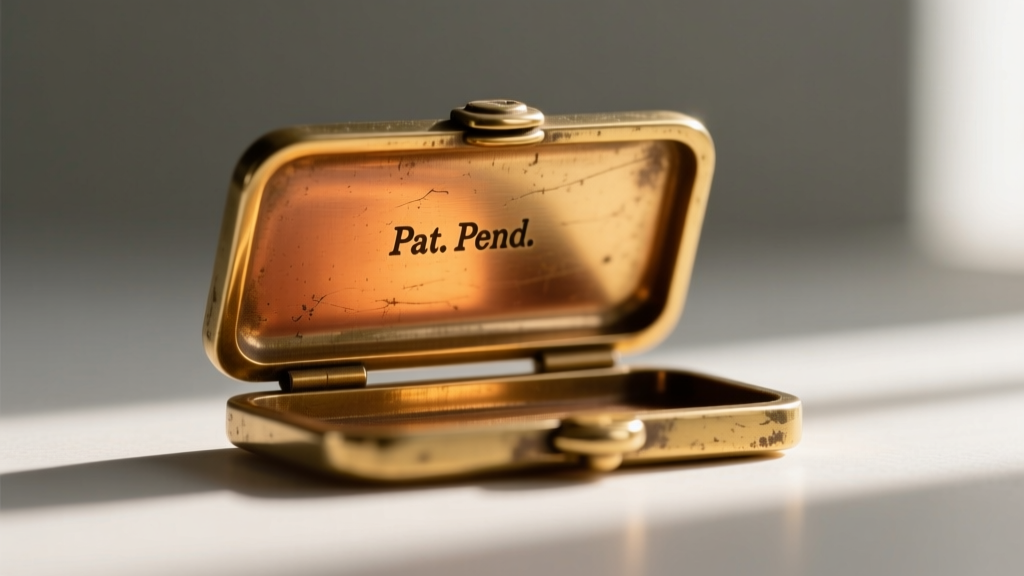
- 'Pat. Pend.' Stamps: Many 1950s pieces feature a tiny 'Pat. Pend.' (Patent Pending) stamp near the clasp or on the back of a brooch. This indicates the manufacturer was protecting a novel mechanical design, such as a specific pin stem hinge or a unique clasp mechanism.
Condition, Flaws, and Pricing Realities
When shopping for 1950s costume jewelry, condition is everything. A piece in mint condition can command ten times the price of the same piece with structural damage. As a beginner, you must learn to spot the 'dealbreakers' that plague mid-century costume pieces.
The Danger of 'Sleep' and Foil Damage
Rhinestones in the 1950s were often 'foiled'—meaning a thin layer of metallic paint was applied to the back of the glass to increase light refraction. If water, perfume, or harsh chemicals seep behind the stone, the foil oxidizes, turns black, and the stone loses its sparkle. In the trade, this is called a 'sleepy' or 'dead' stone. Never buy a piece with dead stones unless you are prepared to pay a master jeweler to source and hand-set vintage replacement crystals, which is often cost-prohibitive.
Verdigris and Base Metal Rot
Verdigris is the green, crusty corrosion that forms on copper and brass alloys when exposed to moisture and skin acids. While light surface verdigris can be gently removed with a soft toothpick and a tiny amount of mineral oil, deep 'green rot' compromises the structural integrity of the prongs. If the metal holding your rhinestones is flaking or brittle, the stones will inevitably fall out. Avoid pieces with advanced base metal rot.
Stone Setting: Prong vs. Glue
High-end 1950s makers like Trifari and Weiss almost exclusively used metal prongs to secure their rhinestones. If you examine a piece with a jeweler's loupe and see stones glued directly into the metal setting without prongs, you are likely looking at a later 1960s/70s reproduction, a lower-tier brand, or a piece that has been poorly repaired.
'The true value of 1950s costume jewelry lies not in the intrinsic worth of the brass or glass, but in the architectural brilliance of the setting and the historical narrative of post-war American manufacturing.'
Building Your Collection: Where to Start
If you are just starting your journey into 1950s costume jewelry, begin by hunting for single, high-impact brooches or clip-back earrings from Coro or Weiss. These pieces are generally more affordable than multi-strand necklaces or parure sets (matching necklace, bracelet, and earrings) and allow you to train your eye on hallmarks, prong settings, and clasp types without breaking the bank. Always carry a 10x jeweler's loupe to estate sales and antique malls, and remember: in the world of mid-century vintage, the magic is entirely in the details.


