How to Clean and Care for Antique Mother of Pearl Jewelry
Discover expert cleaning and care tips for antique mother of pearl jewelry. Learn how to safely restore and preserve vintage nacre pieces from damage.

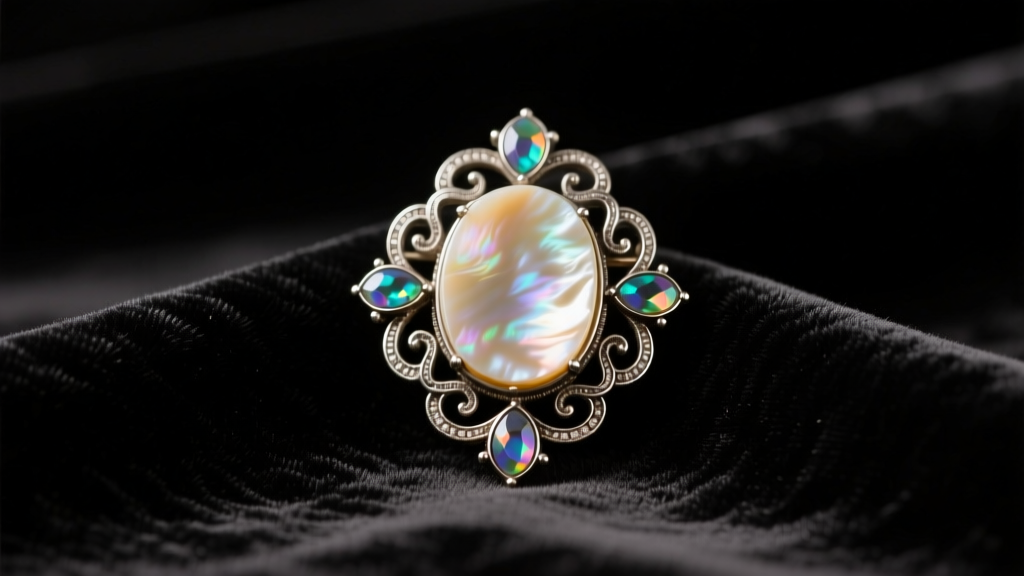
As generational estate transfers accelerate in 2026, an increasing number of collectors and inheritors are finding themselves in possession of exquisite antique mother of pearl jewelry. Whether it is a Victorian mourning cameo, an Edwardian lavalier, or an Art Deco geometric inlay, these pieces represent a masterclass in historical lapidary arts. However, caring for century-old nacre requires a radically different approach than maintaining modern cultured pearls. The organic compounds, antique adhesives, and historical metalwork demand a meticulous, conservation-grade cleaning protocol to prevent irreversible structural failure and luster loss.
The Material Science of Vintage Nacre
To properly care for antique mother of pearl jewelry, one must first understand its microscopic anatomy. Nacre is a biomineral composite consisting of roughly 95% microscopic aragonite (calcium carbonate) platelets and 5% conchiolin, an organic protein matrix that acts as a biological glue. On the Mohs hardness scale, mother of pearl ranks between 2.5 and 4.5, making it exceptionally vulnerable to micro-scratches from airborne dust and improper polishing cloths.
Unlike modern, thickly nucleated saltwater pearls, antique shell carvings were often sliced remarkably thin to maximize yield from the Pinctada maxima or Mississippi River basin shells. This thinness, combined with a century of environmental exposure, means the conchiolin protein can become desiccated and brittle. When the organic matrix dries out, the nacre delaminates, resulting in a network of microscopic crazing that scatters light and dulls the signature iridescent "orient" of the piece.
The Conservation-Grade Cleaning Protocol
Commercial jewelry cleaners are fundamentally incompatible with antique organics. Instead, master conservators rely on a gentle, pH-neutral approach that lifts sebum and environmental grime without stripping the nacre's natural moisture.
Step 1: The Dry Dusting Phase
Before introducing any moisture, use a clean, ultra-soft cosmetic brush (such as a squirrel-hair makeup brush) to gently sweep away loose particulate matter. Dust contains microscopic silica (Mohs 7), and rubbing the surface with a cloth while dust is present will permanently scratch the delicate aragonite layers.
Step 2: Formulating the Cleaning Solution
Mix three drops of pH-neutral, unfragranced liquid castile soap into a small glass bowl of distilled water. Tap water must be strictly avoided, as municipal water treatments often contain chlorine and fluoride, which can react with calcium carbonate to form a cloudy, etched surface over time. The water should be room temperature; thermal shock can fracture antique shell inlays.
Step 3: Targeted Surface Swabbing
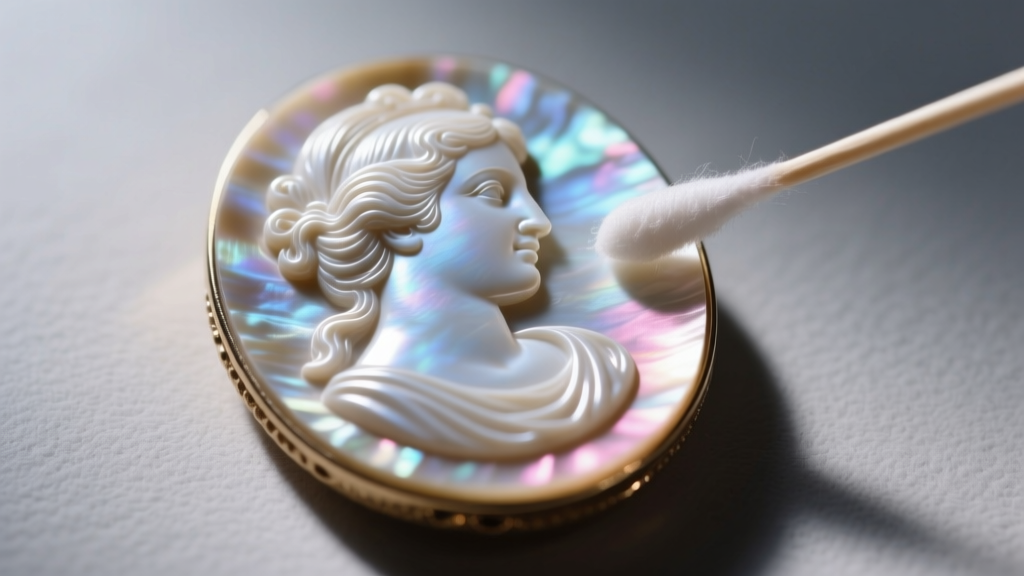
Never submerge antique mother of pearl jewelry. Instead, dip a tightly wound, untreated cotton swab into the solution, rolling it on a clean paper towel to remove excess moisture. Gently roll the swab across the carved crevices of the nacre, lifting dirt without scrubbing. Replace the swab the moment it shows discoloration to avoid re-depositing oils onto the shell.
Step 4: The Rinse and Dry
Use a second cotton swab dampened only with pure distilled water to "rinse" the soap residue. Immediately pat the piece dry with an unbleached, lint-free microfiber cloth. Allow the jewelry to air-dry completely in a climate-controlled room before returning it to storage.
The Danger Zone: Chemicals and Tools to Ban
Many well-intentioned owners ruin historical pieces by applying modern jewelry maintenance logic to antique materials. The Gemological Institute of America (GIA) explicitly warns against the use of ultrasonic and steam cleaners on any organic gemstone, but this rule is absolute for antiques due to the degradation of historical setting materials.
| Cleaning Agent / Tool | Effect on Antique Mother of Pearl | Safe Alternative |
|---|---|---|
| Ultrasonic Cleaners | High-frequency vibrations shatter brittle conchiolin and dissolve antique shellac glues. | Manual cotton swab rolling. |
| Commercial Silver Dips | Thiourea-based acids strip the nacre's orient and cause permanent white etching. | Precipitated calcium carbonate paste for metal only. |
| Ammonia & Bleach | Alkaline chemicals break down the protein matrix, causing yellowing and peeling. | pH-neutral castile soap. |
| Steam Cleaners | Sudden thermal expansion fractures thin shell inlays and loosens bezel settings. | Room-temperature distilled water. |
| Toothbrushes | Even "soft" nylon bristles leave micro-abrasions on the 2.5 Mohs nacre surface. | Squirrel-hair cosmetic brush. |
Navigating Foil Backs and Antique Adhesives
One of the most critical aspects of caring for antique mother of pearl jewelry is recognizing the hidden vulnerabilities of the setting. During the Victorian and Georgian eras, jewelers frequently employed "foil-backing" to enhance the iridescence of translucent shell carvings. A thin sheet of silver or colored foil was placed behind the nacre in a closed-back bezel to reflect light back through the stone.
If moisture breaches the bezel, the foil will instantly oxidize and turn black, ruining the optical effect and trapping corrosive acids against the back of the shell. Furthermore, pre-1930s jewelry was often set using natural resins, shellac, or early animal glues rather than modern epoxies. These historical adhesives are highly soluble in alcohols and highly sensitive to heat. A single drop of rubbing alcohol or exposure to a hot hair dryer can liquefy the glue, causing the mother of pearl cabochon to detach from its mount and fall into the drain.
Archival Storage and Humidity Control
Because conchiolin requires a baseline level of ambient moisture to remain flexible, storing antique nacre in modern, airtight plastic environments is a recipe for disaster. Polyethylene and PVC plastics can off-gas volatile organic compounds (VOCs) that chemically react with the pearl's surface, while sealed environments can desiccate the organic matrix if the trapped air is too dry.
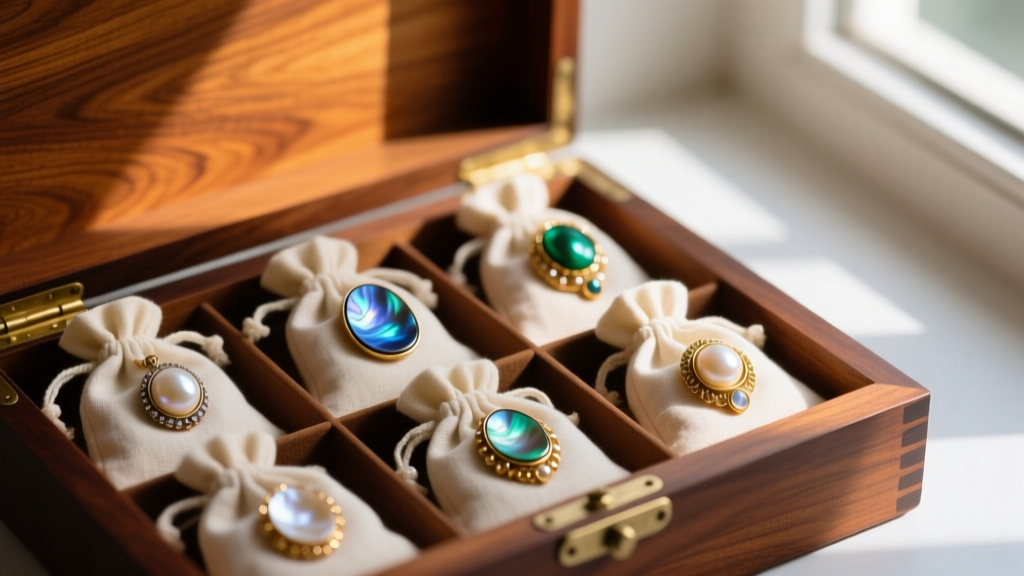
According to conservation guidelines from institutions like the Victoria and Albert Museum, organic gems should be stored in breathable, acid-free environments. Wrap each piece individually in unbleached, washed cotton or acid-free archival tissue paper. Store these wrapped pieces in a wooden jewelry box or a drawer lined with unbleached linen. To maintain the ideal relative humidity of 40% to 50%, place a small, breathable silica gel packet (conditioned to 45% RH) or a specialized jewelry humidification puck in the storage compartment. Never store mother of pearl in direct contact with rubber bands, which emit sulfur gases that will aggressively tarnish the silver settings and stain the porous nacre.
When to Consult a Master Conservator
While routine surface cleaning can be safely performed at home, certain conditions require the intervention of a certified gemologist or antique jewelry conservator. If you notice the nacre lifting from the metal bezel, if the shell exhibits a chalky white residue (indicating severe acid etching), or if the silver setting features deep, structural corrosion that threatens the integrity of the prongs, do not attempt DIY repairs.
A master jeweler specializing in antique restoration can carefully remove the nacre, clean the metalwork using specialized non-caustic electrolysis, and re-seat the shell using historically appropriate, reversible adhesives like conservation-grade Paraloid B-72. By respecting the unique material science and historical construction of antique mother of pearl jewelry, collectors can ensure these iridescent masterpieces survive to captivate the next generation of inheritors.


