How to Clean Disney Fine Jewelry: Enamel & Pavé Care
Learn how to safely clean Disney fine jewelry. Discover expert maintenance tips for protecting delicate enamel, pavé diamonds, and mixed-metal charms.

The Unique Anatomy of Disney Fine Jewelry
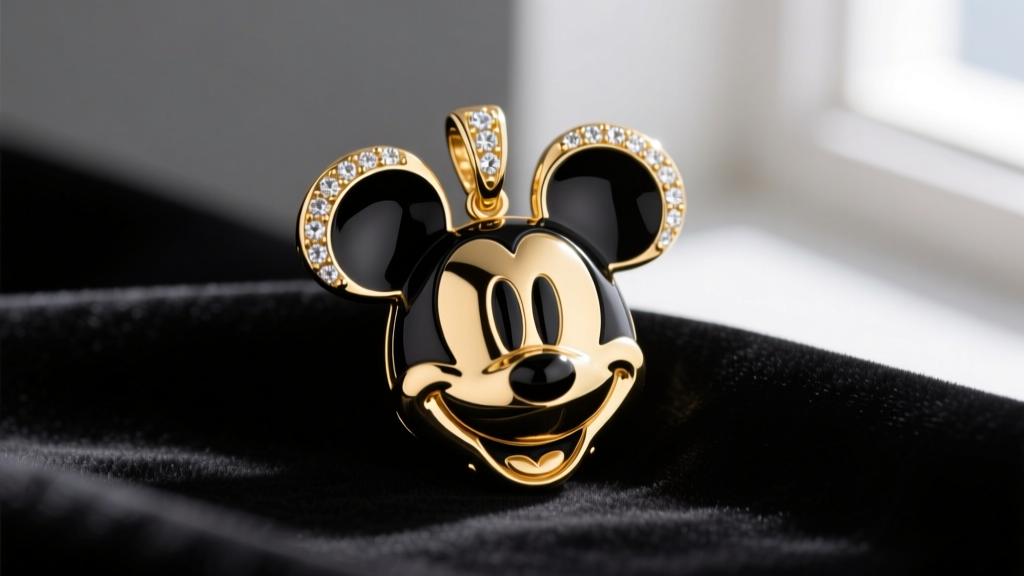
Disney fine jewelry occupies a highly specific niche in the luxury market, bridging the gap between sentimental fashion accessories and heirloom-quality fine jewelry. Authorized collections, such as Enchanted Disney Fine Jewelry or high-end Pandora collaborations, frequently utilize a complex hybrid of materials. Unlike standard solitaire diamond rings or solid gold chains, these pieces often feature intricate character silhouettes, castle motifs, and princess symbols that require a mix of 10k or 14k gold, sterling silver, genuine melee diamonds, and delicate cold enamel.
Understanding the material science behind your jewelry is the first step in proper maintenance. The 'black' or 'red' accents on character outlines are rarely vitreous (glass-based) enamel, which requires kiln firing at over 1400°F. Instead, Disney fine jewelry predominantly uses cold enamel, an epoxy-based resin that is painted and cured at room temperature. While cold enamel allows for vibrant colors and precise application on micro-surfaces, it is highly susceptible to chemical solvents, high heat, and abrasive friction. Furthermore, the 'sparkle' on pieces like the Cinderella carriage or Mickey ears is usually achieved through micropavé settings, where 1.0mm to 1.3mm melee diamonds are held in place by micro-prongs that are often less than 0.2mm thick.
The Ultrasonic and Steam Trap: What NOT to Do
The most common way collectors destroy their Disney fine jewelry is by treating it like traditional fine jewelry. Many well-meaning owners drop their enamel and pavé pieces into ultrasonic cleaners or use high-pressure steamers. According to the Gemological Institute of America (GIA), ultrasonic cleaners use high-frequency sound waves to create microscopic bubbles in a cleaning solution. The implosion of these bubbles—a process called cavitation—creates intense localized shockwaves.
Never place cold enamel or micropavé jewelry in an ultrasonic cleaner. The cavitation shockwaves will shatter the epoxy resin and vibrate the microscopic prongs loose, causing irreversible stone loss.
Similarly, steam cleaners expose the jewelry to temperatures exceeding 212°F (100°C). Because cold enamel is essentially a hardened epoxy, high heat will cause it to soften, bubble, discolor, or peel away from the metal backing. Even harsh chemical dips, such as silver polishing liquids containing thiourea or ammonia-based glass cleaners, will permanently cloud the surface of the enamel and strip the rhodium plating often used on sterling silver Disney charms.
Step-by-Step Cleaning Guide for Enamel and Pavé
To safely remove sebum, lotions, and environmental dust from your Disney fine jewelry without compromising the structural integrity of the enamel or the pavé settings, follow this meticulous, gemologist-approved cleaning protocol.
1. The Preparation Phase
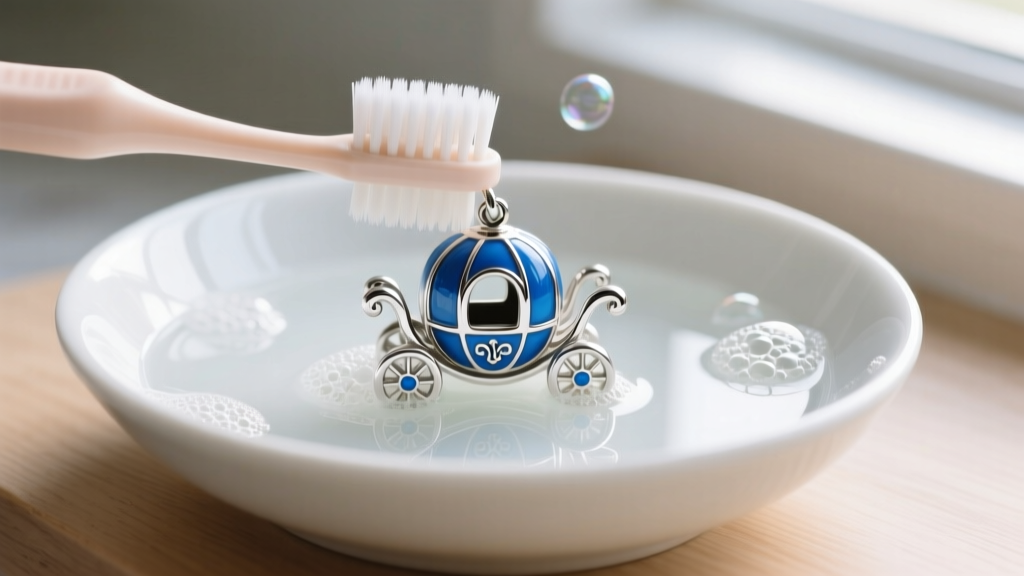
Fill a small glass bowl with lukewarm distilled water. Avoid tap water, as the dissolved minerals (calcium and magnesium) can leave hard water spots on the diamonds and metal. Add three drops of a mild, lotion-free, phosphate-free dish soap (such as original blue Dawn). Do not use soaps containing moisturizers or citric acid, as these can leave a filmy residue on the pavé diamonds, dulling their refractive brilliance.
2. The Soak and Agitation
Submerge the jewelry for no more than 3 to 5 minutes. This is enough time to loosen surface oils without allowing water to seep into any microscopic gaps between the enamel and the metal. Using an extra-soft baby toothbrush (with bristles measuring roughly 0.1mm in diameter), gently flick the bristles across the metal and diamonds. Never scrub the cold enamel directly; instead, let the soapy water do the lifting. Brush the back of the settings (the galleries) where skin oils accumulate and block light from entering the diamonds.
3. The Rinse and Dry
Rinse the piece under a gentle stream of lukewarm distilled water. Ensure the drain is securely plugged or use a mesh strainer to prevent catastrophic loss. Pat the jewelry dry with a lint-free microfiber cloth. Avoid paper towels or tissues, as their wood-pulp fibers can snag on the micro-prongs of the pavé settings, bending them and loosening the diamonds.
Material-Specific Maintenance Matrix
Different components of your Disney jewelry react differently to environmental factors. Use this matrix to understand the specific vulnerabilities of each material tier commonly found in these collections.
| Material | Common Use in Disney Jewelry | Primary Vulnerability | Safe Cleaning Agent |
|---|---|---|---|
| 14k Yellow/Rose Gold | Main body of rings, pendant bails | Scratching from harder metals | Mild dish soap, microfiber |
| Sterling Silver (925) | Charm bases, budget-friendly rings | Oxidation/Tarnish from sulfur | Polishing cloth (avoid enamel) |
| Cold Enamel (Epoxy) | Character silhouettes, color accents | Solvents, heat, abrasion | Lukewarm distilled water only |
| Melee Diamonds (Pavé) | Ear outlines, wand stars, halos | Prong snagging, oil buildup | Soft baby toothbrush, ammonia-free |
Storing and Protecting Intricate Character Motifs
Proper storage is just as critical as proper cleaning. The intricate, asymmetrical shapes of Disney motifs—such as the jagged edges of a crown or the protruding loops of a bow—make them highly prone to snagging and tangling.
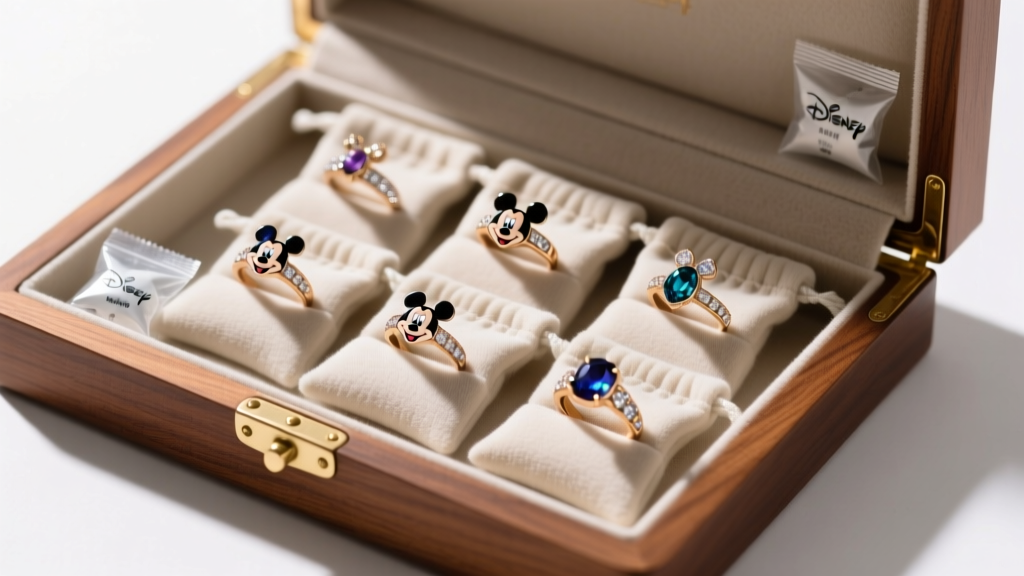
- Isolate Your Pieces: Never throw a pavé Mickey Mouse ring into a communal jewelry box. The friction against other pieces will scratch the gold and, more importantly, catch on the micro-prongs, pulling them upward and releasing the diamonds.
- Use Anti-Tarnish Strips: For sterling silver Disney pieces, store them in airtight ziplock bags with 3M anti-tarnish strips. These strips absorb ambient sulfur compounds in the air, preventing the silver from turning black without the need for abrasive chemical polishes.
- Control Humidity: Include small silica gel packets in your jewelry storage area. High humidity accelerates the oxidation of silver and can degrade the adhesive bonds used in some composite jewelry settings over time.
When to Seek Professional Jeweler Intervention
While home maintenance is excellent for surface cleaning, it cannot replace professional structural inspections. The GIA recommends having fine jewelry inspected by a professional jeweler at least once a year. For Disney fine jewelry featuring extensive micropavé, this is non-negotiable.
A jeweler will use a 10x loupe or a microscope to check the integrity of the micro-prongs. Because these prongs are incredibly small, everyday activities like putting on a sweater or washing your hair can bend them without you noticing. A jeweler can perform prong re-tipping, a process where a tiny bead of matching gold is laser-welded onto a worn prong to secure the diamond. Furthermore, if your cold enamel becomes deeply scratched or chipped, a professional jeweler or the original manufacturer must carefully drill out the damaged epoxy and re-pour the enamel; this is a specialized bench skill that cannot be fixed with over-the-counter polishes.
Final Thoughts on Heirloom Preservation
Treating your Disney fine jewelry with the respect demanded by its complex material composition ensures that these sentimental pieces survive to become true family heirlooms. By abandoning harsh ultrasonic machines in favor of gentle, targeted cleaning methods, you protect both the vibrant storytelling of the enamel and the brilliant fire of the pavé diamonds.


