How to Evaluate Design Wise Fine Jewelry: A Step-by-Step Guide
Learn how to evaluate design wise fine jewelry with our step-by-step guide. Master structural anatomy, prong architecture, and metal finishing.

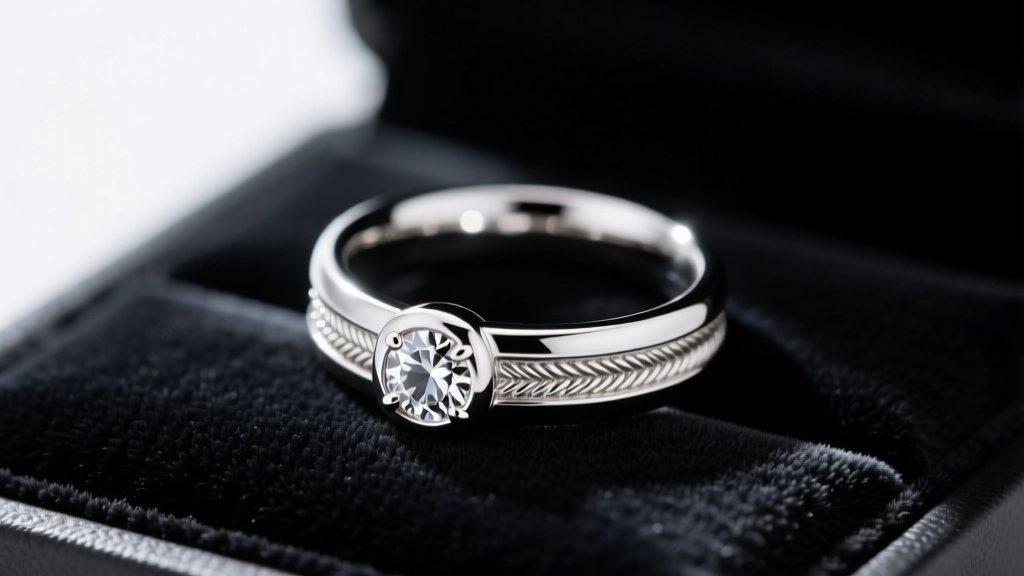
Introduction: Beyond the 4Cs of Gemology
When investing in high-end pieces, buyers often fixate almost exclusively on gemological metrics—carat weight, color, clarity, and cut. While these factors dictate the value of the center stone, they completely ignore the architectural integrity of the piece itself. Evaluating design wise fine jewelry requires a shift in perspective. You must look at the jewelry not just as a vessel for precious stones, but as a masterclass in structural engineering, ergonomics, and metallurgical artistry.
As of 2026, the integration of advanced CAD modeling has allowed for incredibly intricate internal galleries and lightweight lattice structures. However, technology does not automatically equate to longevity. A poorly engineered ring will spin, warp, and eventually lose its stones, regardless of the diamond's pedigree. This step-by-step guide will teach you how to audit fine jewelry from a structural and aesthetic standpoint, ensuring your investment is built to last generations.
Step 1: Analyze the Structural Anatomy and Ergonomics
The first step in evaluating design wise fine jewelry is assessing how the piece interacts with the human body. A beautiful ring is useless if it is physically uncomfortable or constantly requires adjustment.
Center of Gravity and Shank Profiling
Top-heavy rings—typically those featuring stones over 2.5 carats or high-dome cabochons—suffer from a high center of gravity. If paired with a standard circular band, the ring will inevitably spin on the finger. The hallmark of a smart design is the implementation of a Euro-shank (a squared-off bottom). This flattened base acts as a counterweight and anchor, preventing rotation without requiring the wearer to size down uncomfortably.
Gallery Clearance for Stacking
The gallery is the underside of the ring's head. If you plan to pair an engagement ring with a wedding band, the gallery height is critical. A flush fit requires a minimum clearance of 2.8mm to 3.2mm from the finger to the bottom of the center stone's girdle. Anything less will force the wedding band to sit awkwardly away from the primary ring, creating a gap that traps dirt and moisture against the skin.
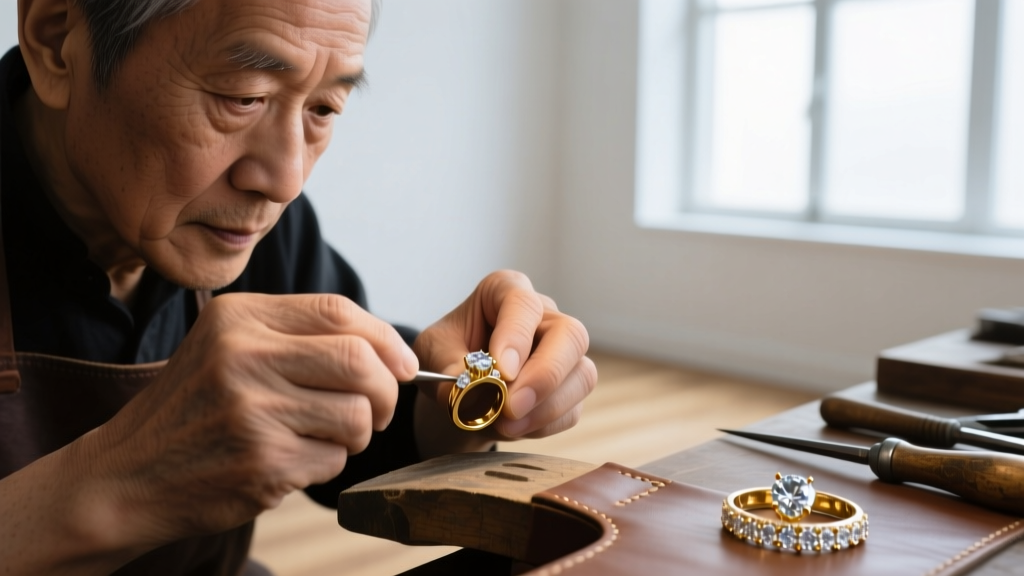
Step 2: Evaluate Stone Setting and Prong Architecture
The setting is the bridge between the metal and the gemstone. According to the Gemological Institute of America (GIA), the choice of setting directly impacts both the light return of the stone and its physical security over decades of daily wear.
Prong Geometry and Placement
Not all prongs are created equal. When inspecting a piece, look for intentional prong architecture tailored to the specific stone shape:
- Claw/Talon Prongs: Tapered to a fine point, these minimize metal coverage, maximizing light entry for round brilliant and oval cuts. They require hand-fabrication or meticulous CAD refinement to ensure the tip folds smoothly over the girdle without snagging.
- V-Prongs: Mandatory for stones with acute angles, such as pear, marquise, and princess cuts. A standard round prong on a 90-degree corner leaves the tip exposed to chipping. A V-prong wraps the vulnerable point in a protective metal jacket.
- Double Prongs: Often used on elongated stones (emerald or radiant cuts) to provide symmetrical visual framing and distribute tension evenly across the stone's edges.
Bezel Tolerances
If evaluating a bezel setting, check the interior rim. The metal must sit flush against the stone's crown without gaps. In mass-produced jewelry, a thin layer of epoxy is sometimes used to fill gaps between the metal and the stone—a massive red flag in fine jewelry. True design wise fine jewelry relies on precise mechanical friction and burnishing, never adhesives.
Step 3: Inspect Metalwork and Finishing Details
The surface finish of the metal dictates both the aesthetic mood and the long-term maintenance requirements of the piece. Jewelers of America notes that understanding how different finishes age is crucial for buyers who want their jewelry to look intentional even after years of wear.
| Finish Type | Visual Effect | Wear & Tear Profile | Maintenance Level |
|---|---|---|---|
| High Polish | Mirror-like, highly reflective | Shows micro-scratches immediately; develops a patina over time | High (requires regular professional repolishing) |
| Satin/Brushed | Soft, directional matte glow | Hides daily scratches well; directional lines may blur over years | Medium (can be re-brushed at home with Scotch-Brite) |
| Hammered | Organic, textured, light-scattering | Extremely durable; new dents blend into the existing texture | Low (virtually maintenance-free) |
| Milgrain | Delicate beaded borders | Beads will slowly wear flat on high-contact edges (e.g., ring shanks) | Medium (requires a skilled bench jeweler to re-milgrain) |
When evaluating a piece with mixed finishes (e.g., a brushed shank with high-polish prongs), ensure the transition lines are razor-sharp. Blurry transitions indicate sloppy polishing wheels and a lack of attention to detail at the bench.
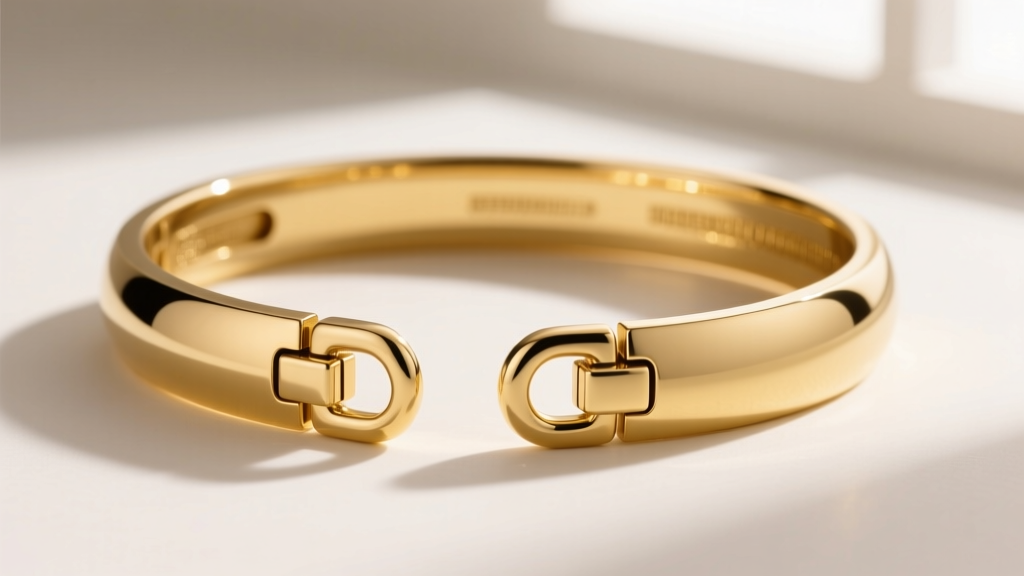
Step 4: Assess Clasp and Articulation Mechanics
For necklaces, bracelets, and earrings, the mechanics of the closures are where many designers cut corners. A heavy 18k gold chain secured by a flimsy spring-ring clasp is a structural liability.
Hinge and Clasp Tolerances
When inspecting a hinged bangle or a multi-strand necklace, test the articulation. A well-engineered hinge should have less than 0.2mm of lateral play. If the hinge wiggles, the internal pin is undersized, and the metal will eventually fatigue and snap. For heavy bracelets, demand a hidden box clasp equipped with dual figure-eight safety catches. The primary clasp bears the static load, while the safeties prevent catastrophic loss if the primary latch is accidentally depressed.
Earring Backs and Post Gauges
Standard earring posts are often 20-gauge (0.81mm), which can easily bend under the weight of a heavy chandelier or drop earring. Design wise fine jewelry utilizes 18-gauge (1.02mm) or even 16-gauge (1.29mm) posts for substantial pieces, paired with secure screw-backs or heavy-duty omega clips to distribute the weight across the earlobe.
Step 5: The 'Design Wise' Checklist for Custom Commissions
If you are commissioning a custom piece, do not leave the engineering entirely up to the CAD designer. Use this checklist during your consultation to ensure the final product meets the highest standards of structural integrity:
- What is the thinnest point of the shank? (Never accept a band thinner than 1.8mm for daily wear; 2.0mm to 2.2mm is the gold standard for longevity).
- Are the prongs cast-in-place or hand-fabricated? (Cast prongs are more porous and prone to snapping. Hand-drawn and soldered prongs offer superior tensile strength).
- Is the gallery hollowed out? (While 'comfort fit' hollowing reduces metal weight and cost, it creates a trap for lotion and debris, and makes future resizing nearly impossible).
- How is the patina or oxidation sealed? (If the design features blackened silver or oxidized recesses, ask how it will be protected from wearing off on high-friction areas).
Expert Insight: True luxury in jewelry is not just about the rarity of the materials, but the intentionality of the construction. A 1-carat diamond set in a masterfully engineered, ergonomically balanced mounting will outshine a 2-carat stone trapped in a poorly proportioned, mass-produced casting every single time.
Conclusion
Learning to evaluate design wise fine jewelry transforms you from a passive consumer into an informed collector. By scrutinizing the center of gravity, demanding shape-specific prong architecture, understanding the aging process of metal finishes, and testing mechanical tolerances, you ensure that the pieces you acquire are not just beautiful today, but heirloom-ready for tomorrow. Always prioritize the bench jeweler's structural ingenuity alongside the gemologist's grading report.


