Fine Jewelry Auctions: 2026 Technical Buyer's Guide
Master fine jewelry auctions with our 2026 technical guide. Learn to decode GIA reports, buyer premiums, and hallmark authentication.

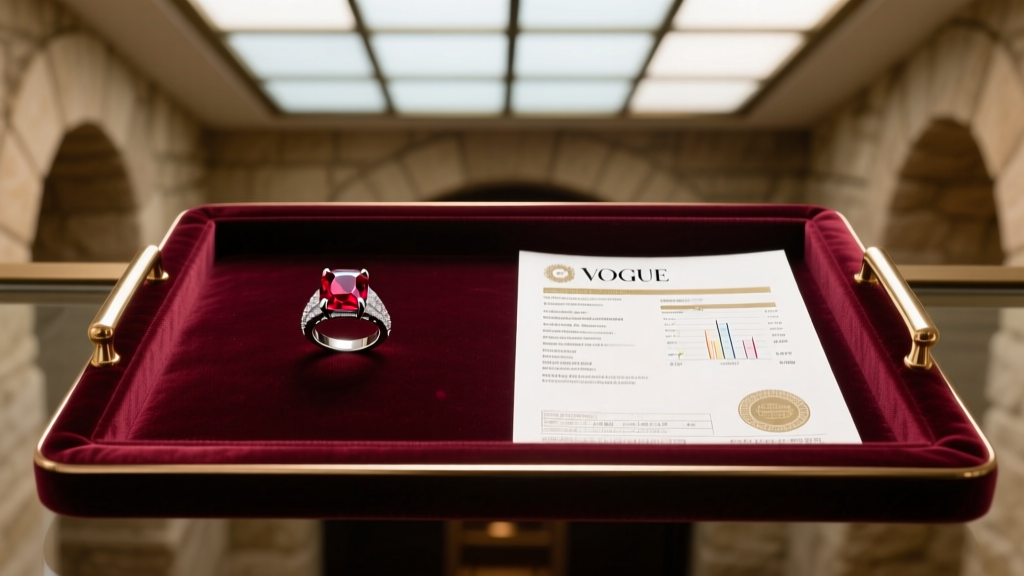
The Architecture of Auction Pricing: Beyond the Hammer
Navigating the secondary market for high-end gems and precious metals requires more than just an appreciation for aesthetics; it demands rigorous technical literacy. As we move through 2026, the landscape of fine jewelry auctions has become increasingly sophisticated, blending in-person saleroom theater with high-frequency digital bidding platforms. However, the fundamental economics of acquiring investment-grade pieces remain rooted in a complex fee structure that novice buyers often misunderstand.
The 'hammer price'—the winning bid announced by the auctioneer—is merely the baseline. The actual financial commitment includes the Buyer’s Premium (BP), a sliding-scale commission charged by the auction house on top of the hammer price. Major houses like Christie's and Sotheby's utilize a tiered BP system that rewards higher-value purchases with a lower percentage fee on the upper tranches. Additionally, buyers must account for overhead premiums, local sales taxes, and potential import duties if the lot is housed in a different tax jurisdiction.
Decoding the Buyer’s Premium Tier System
Understanding the exact mathematical breakdown of your final invoice is critical for establishing your absolute ceiling bid. Below is a representative framework of the tiered premium structure utilized by top-tier global auction houses in 2026:
| Hammer Price Tranche (USD) | Buyer's Premium Rate | Strategic Bidding Insight |
|---|---|---|
| First $400,000 | 25.0% | Highest fee burden; factor this heavily into entry-level luxury lots. |
| $400,001 to $4,000,000 | 20.0% | The 'sweet spot' for important signed pieces and high-carat diamonds. |
| Above $4,000,000 | 13.9% | Ultra-high-net-worth tier; institutional buyers operate heavily here. |
Always calculate your maximum bid backward from your total budget, subtracting the estimated premium and applicable taxes. According to the Sotheby's Buying Guide, failing to account for the BP is the most common reason bidders face post-sale sticker shock.
Gemological Lab Reports: The Technical Trinity
In the realm of fine jewelry auctions, a gemstone without a reputable laboratory report is essentially a blind gamble. The technical trinity of gemological authority consists of the Gemological Institute of America (GIA) for diamonds, and the Swiss Gemmological Institute (SSEF) and Gübelin for colored gemstones. These reports are not merely certificates of authenticity; they are forensic documents that dictate a stone's market multiplier.
Diamond Forensics: Beyond the 4Cs
While the 4Cs (Cut, Color, Clarity, Carat) are foundational, expert buyers at fine jewelry auctions scrutinize the 'Additional Grading Information' section of a GIA report. For instance, a D-color, Flawless diamond might command a massive premium, but if the report notes 'Strong Blue Fluorescence,' the hammer price could drop by 10% to 15% due to potential milky appearance in daylight. Furthermore, the GIA Type IIa classification—indicating a diamond that is chemically pure and structurally devoid of nitrogen—is a critical value driver for stones over 10 carats, often realizing prices 20% above standard Type Ia counterparts.
Colored Stones: Origin and Treatment Dealbreakers
For colored gemstones, the SSEF and Gübelin reports focus heavily on geographic origin and treatment identification. A 'Pigeon Blood' Burmese ruby or an unheated Kashmir sapphire carries an exponential premium over stones of identical visual quality from secondary deposits like Mozambique or Madagascar. More importantly, the report must explicitly state 'No indications of heating.' If a sapphire report mentions 'Beryllium diffusion' or a ruby notes 'Fracture filling with lead glass,' the stone's value plummets by up to 90%, rendering it a fashion-tier stone rather than an investment-grade asset.
Hallmarks, Maker's Marks, and Provenance Forensics
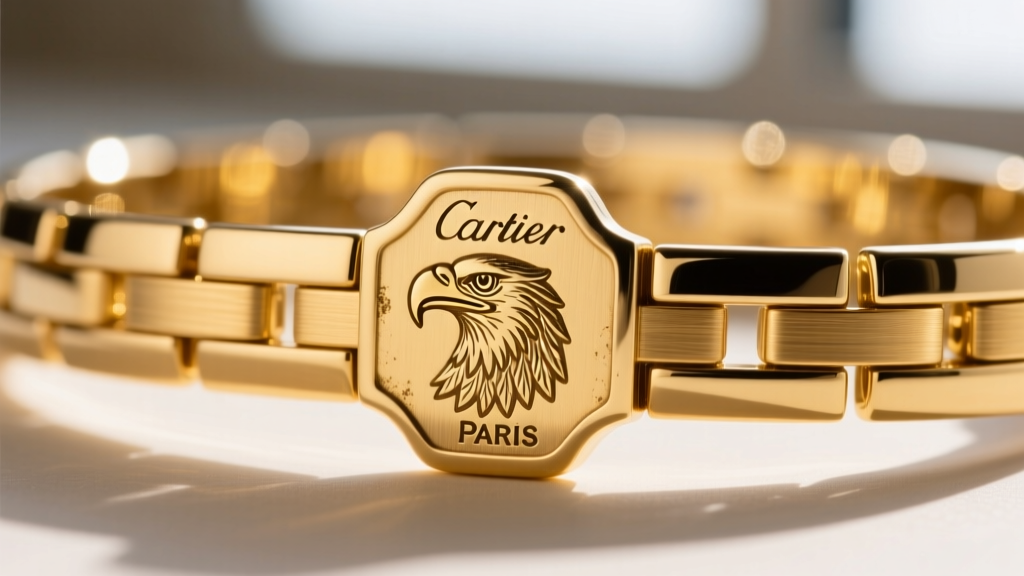
The metalwork of a piece tells a story as compelling as its gemstones. Authenticating signed pieces from heritage maisons like Cartier, Boucheron, Van Cleef & Arpels, or Suzanne Belperron requires a mastery of European assay marks and maker's punches. In the French system, which governs much of the high-end estate jewelry market, the Tête d'aigle (eagle's head) guarantees a minimum of 18-karat (750/1000) gold purity, while the Tête de chien (dog's head) denotes 950 platinum.
However, a hallmark only proves metal purity, not the maker. You must locate the maker's mark, typically a diamond-shaped lozenge containing the jeweler's initials and a symbol. Counterfeiters often stamp genuine 18k gold pieces with fake Cartier serial numbers. True authentication requires cross-referencing the inventory number stamped on the piece with the brand's historical archives. For significant auction lots, always request a 'Certificate of Authenticity' or an 'Archive Extract' directly from the maison's heritage department prior to placing a bid.
Bidding Strategies and Pre-Sale Due Diligence
Winning a lot at fine jewelry auctions is less about aggressive paddling and more about meticulous pre-sale due diligence. The catalog description is a marketing document; the Condition Report is the legal reality. Auction houses condition their sales on the buyer having reviewed the technical condition report, which outlines the physical flaws, restorations, and structural compromises of the piece.

The Condition Report Matrix
When requesting a condition report from the jewelry department, look for these specific technical red flags that require immediate post-sale restoration budgets:
- Prong Wear and Retipping: Check if the report notes 'prongs worn down to the girdle.' Retipping platinum prongs on a multi-stone pavé setting can cost thousands of dollars and risks thermal damage to heat-sensitive stones like emeralds or opals.
- Shank Thinning and Soldering: Vintage rings often suffer from severe shank thinning at the base. Look for mentions of 'shank previously cut and soldered,' which compromises the structural integrity and resizing potential of the band.
- Facet Abrasion and Girdle Chips: Softer stones like emeralds (Mohs 7.5-8) frequently exhibit 'girdle chips' or 'facet junction abrasion' from decades of wear. This requires a complete re-polish by a master lapidary, which will result in a slight loss of carat weight.
- Enamel Loss: For pieces featuring guilloché or plique-à-jour enamel, any noted 'micro-chipping' is virtually irreversible, as the original historical enamel formulation and firing techniques are largely lost to time.
'Never bid on a high-value colored gemstone based solely on a catalog photograph. The lighting in auction previews is specifically calibrated to mask color zoning and extinction. Always view the stone in diffused natural daylight or demand a video taken under standardized D65 gemological lighting.' — Senior Gemologist, Heritage Auctions
Post-Sale Logistics and Insurance Valuations
The moment the gavel falls, the buyer assumes all risk. The GIA frequently highlights the importance of immediate post-sale insurance, as auction house liability ceases the moment the lot is cleared for collection. Furthermore, the 'Auction Estimate' provided in the catalog is not a valid insurance replacement value. Insurance appraisals for auction-acquired pieces must be conducted by an independent, USPAP-compliant appraiser who will determine the 'Retail Replacement Value'—a figure that is typically 30% to 50% higher than the hammer price you paid. By mastering the technical nuances of lab reports, metallurgical hallmarks, and premium structures, you transform from a passive bidder into a strategic acquirer in the upper echelons of the 2026 fine jewelry market.


