Fine Jewelry Meaning: How to Troubleshoot Misleading Metal Claims
Confused by the fine jewelry meaning? Learn how to troubleshoot misleading metal stamps, spot fake hallmarks, and verify gold and gemstone quality.

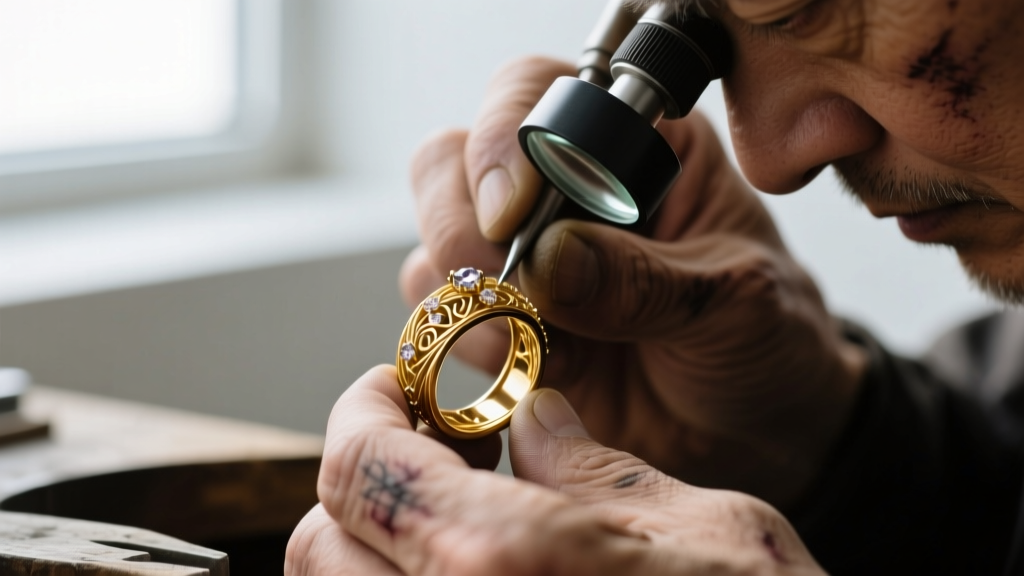
In the rapidly expanding 2026 e-commerce landscape, the term "fine jewelry" is frequently hijacked by aggressive marketing algorithms. Brands routinely slap the label on gold-plated brass or cubic zirconia to justify premium price tags. For consumers and collectors, understanding the true fine jewelry meaning is no longer just about appreciating aesthetics; it is a critical financial defense mechanism. Fine jewelry strictly dictates the use of solid precious metals (gold, platinum, palladium, sterling silver) and genuine gemstones. Anything less falls into demi-fine or costume categories.
When you suspect a piece has been misrepresented, you need a systematic approach to verify its composition. This guide provides a technical troubleshooting framework to decode misleading hallmarks, test metal integrity, and resolve disputes over jewelry authenticity.
The Legal vs. Marketing Fine Jewelry Meaning
Marketing teams often use "fine" as a synonym for "expensive" or "well-designed." Legally and gemologically, the definition is rigid. According to the Federal Trade Commission (FTC) Jewelry Guides, a piece can only be marketed as solid gold, platinum, or silver if it meets specific purity thresholds and is not merely plated over a base metal core.
If a brand sells a ring as "18k Gold" but fails to disclose that it is actually 18k gold vermeil or electroplated over brass, they are violating FTC guidelines. The true fine jewelry meaning requires the precious metal to constitute the entire structural mass of the item, not just a superficial micron-thick veneer. When troubleshooting a suspicious purchase, your first step is to audit the product listing for omitted qualifiers like "dipped," "bonded," or "filled."
Troubleshooting Suspicious Hallmarks and Stamps
Hallmarks are the primary fingerprint of metal purity, but they are also the most commonly forged or misunderstood elements in jewelry authentication. A stamp of "14K" does not automatically guarantee fine jewelry if accompanied by deceptive secondary letters.
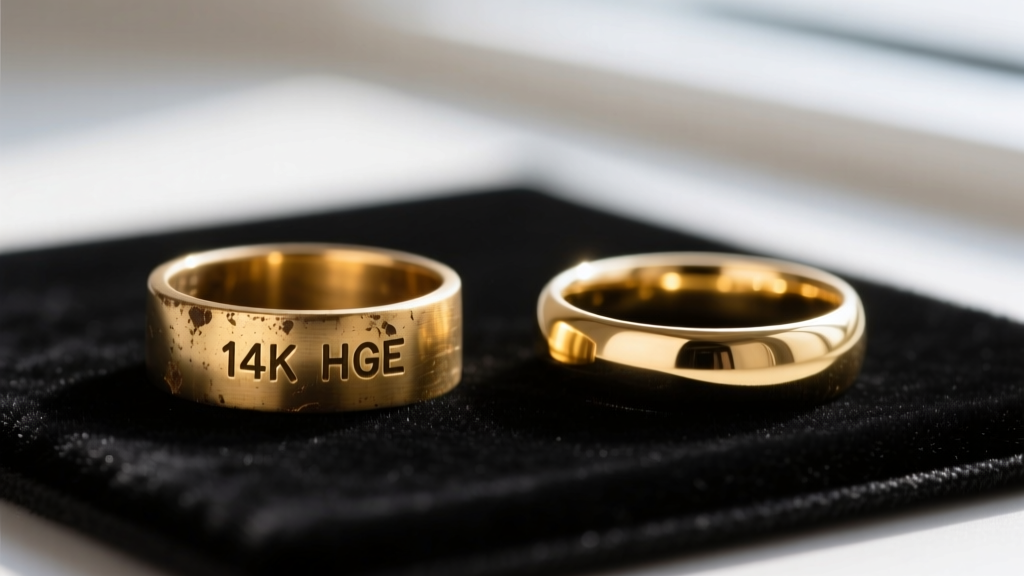
Decoding Deceptive Stamps
Use the following diagnostic table to troubleshoot the stamp inside your ring clasp or chain link. If your piece features a stamp from the right column, it is legally classified as costume or demi-fine jewelry, regardless of the brand's marketing claims.
| Stamp / Hallmark | Actual Material Composition | Classification |
|---|---|---|
| 14K, 18K, 585, 750 | Solid Gold Alloy (58.5% - 75% pure gold) | Fine Jewelry |
| 925, Sterling | Solid Sterling Silver (92.5% pure silver) | Fine Jewelry (Entry-Level) |
| 14K GF / 1/20 14K | Gold Filled (Brass core, 5% gold by weight) | Demi-Fine / Costume |
| 14K HGE / GE | Heavy Gold Electroplate (Base metal core) | Costume Jewelry |
| 925 GP / SP | Silver Plated over Copper or Brass | Costume Jewelry |
| Plat, Pt950 | Solid Platinum (95% purity) | Fine Jewelry |
Troubleshooting Tip: If a piece is stamped "925" but exhibits a copper or greenish hue on high-friction edges (like the inside of a ring band), the stamp is likely forged, or the piece is silver-plated base metal that has worn through. Genuine sterling silver tarnishes black, not green.
Resolving the "Vermeil" Loophole
Gold vermeil is the most common culprit in fine jewelry misrepresentation. To legally qualify as vermeil in the United States, a piece must have a sterling silver base and be plated with at least 10k gold that is a minimum of 2.5 microns thick.
However, many overseas manufacturers utilize "flash plating," applying a mere 0.1 to 0.5 microns of gold over brass or low-grade silver. If your "fine" gold necklace begins to tarnish, flake, or turn your skin green within three months of wear, you have likely been sold flash-plated costume jewelry.
Visual Troubleshooting for Plating Wear
- Inspect the Clasp and Jumps Rings: These high-friction areas wear fastest. Use a 10x jeweler's loupe to look for a distinct color boundary line where the yellow gold meets a silver or copper underlayer.
- Check the Prongs: If the prongs holding a gemstone are a different color than the rest of the ring, the piece is plated. Fine jewelry prongs are cast or carved from the same solid metal as the band.
- The Smell Test: Rub the metal vigorously to create friction heat. Solid gold and platinum are odorless. If you detect a metallic, "penny-like" copper scent, the core is a base metal alloy.
The At-Home Verification Protocol
Before escalating a dispute or paying for a professional appraisal, you can perform non-destructive at-home tests to verify the metal's integrity.
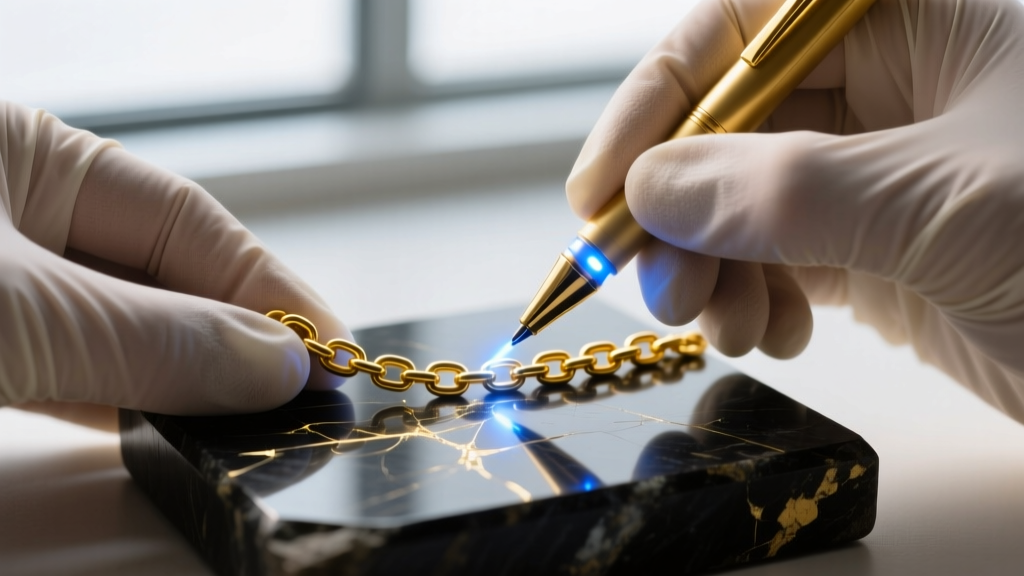
1. The Neodymium Magnet Test
Gold, silver, and platinum are entirely non-magnetic. Procure a strong N52-grade neodymium magnet. If your chain or ring exhibits any magnetic pull or "drag," it contains ferrous metals (iron, steel, or nickel) and is absolutely not fine jewelry. Note: Brass and copper are also non-magnetic, so passing this test does not guarantee solid gold, but failing it guarantees a fake.
2. The Ice Test (For Silver Claims)
Sterling silver has the highest thermal conductivity of any common metal. Place an ice cube directly on the suspected silver piece. If it is genuine 925 silver, the ice will begin to melt almost instantaneously, far faster than it would on a steel or brass counterfeit.
3. Electronic Gold Testers
For a more scientific approach, invest in an electronic gold tester (such as the Kee Gold Tester). Unlike destructive acid tests that scratch and scar the metal, electronic testers measure electrical conductivity to accurately differentiate between 10k, 14k, 18k, and 22k solid gold, as well as identify platinum.
Gemstone Misdirection: Natural vs. Lab vs. Simulant
The fine jewelry meaning extends beyond metals to the stones themselves. The Gemological Institute of America (GIA) strictly categorizes gemstones, but e-commerce listings frequently blur these lines.
"A 'created' or 'lab-grown' diamond is chemically and optically identical to a mined diamond and qualifies as fine jewelry. However, cubic zirconia (CZ) and moissanite are simulants. Marketing a simulant as a 'diamond' without a clear qualifier is a direct violation of consumer protection laws."
Troubleshooting Gem Claims: If a listing uses terms like "Diamond Simulant," "Created Emerald," or "Chatham Ruby," you are looking at lab-grown or synthetic stones. While lab-grown stones are legitimate fine jewelry, they command a significantly lower resale value than their natural counterparts. If you paid natural market prices for a lab-grown stone, you have grounds for a refund.
What to Do When You Have Been Misled
If your troubleshooting confirms that your "fine jewelry" is actually gold-plated brass or a glass simulant, take the following escalation steps immediately:
- Document the Evidence: Take macro photographs of the deceptive hallmarks, the plating wear, and the results of your magnet or electronic tests.
- Request a Chargeback: Contact your credit card issuer. Provide the FTC guidelines on jewelry marketing as evidence that the merchant engaged in deceptive trade practices.
- Demand an Independent Appraisal: If the merchant disputes your claim, require that the piece be evaluated by a Jewelers of America certified appraiser or a GIA Graduate Gemologist. Legitimate fine jewelers will readily agree to third-party verification.
- File an FTC Complaint: Report the brand to the FTC and your local Better Business Bureau to prevent future consumers from falling victim to the same misleading metal claims.
Ultimately, protecting your investment requires looking past the marketing copy. By mastering the true fine jewelry meaning and applying these technical troubleshooting methods, you can confidently navigate the market and ensure you are paying for solid precious metals, not clever plating.


