Gholson Originals Fine Jewelry: 2026 Artisan Trends
Explore 2026 heritage craft trends with our analysis of Gholson Originals fine jewelry, covering bespoke metals, lapidary work, and modern styling.

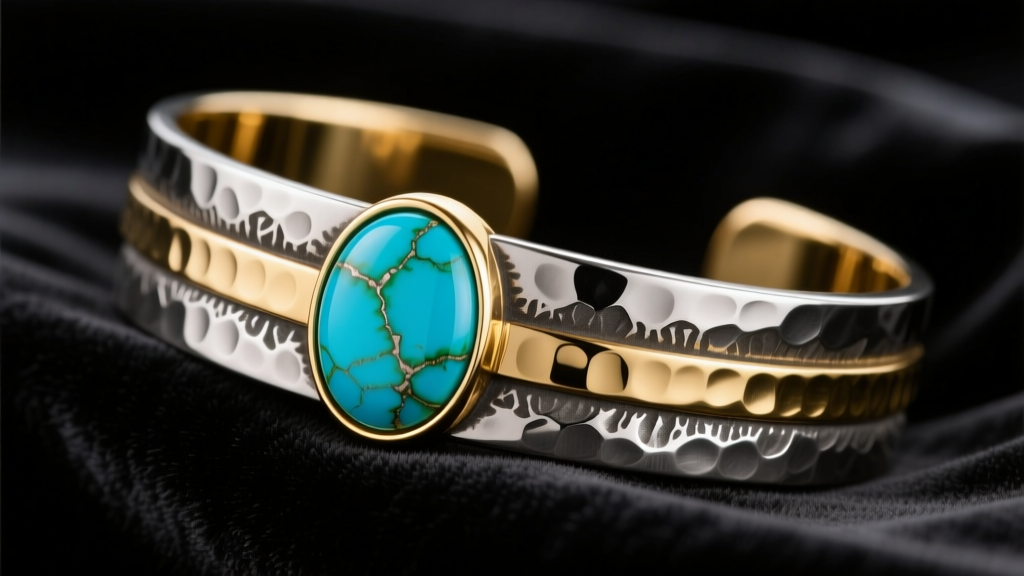
The landscape of luxury accessories has undergone a seismic shift as we move through 2026. Consumers are increasingly fatigued by the homogenized, CAD/CAM-milled aesthetics of mass-market demi-fine brands, pivoting instead toward heritage-driven, hand-fabricated pieces. At the forefront of this artisanal renaissance is the ethos embodied by Gholson Originals fine jewelry—a benchmark for bespoke metallurgy, custom lapidary work, and uncompromising structural integrity. This style and trend analysis deconstructs the technical anatomy of the artisan fine jewelry movement, exploring why collectors and stylists are prioritizing hand-forged heirlooms over factory-cast alternatives.
The Resurgence of Hand-Fabricated Heritage
Modern fine jewelry has been dominated by lost-wax casting for decades, a process that prioritizes speed and scalability. However, the 2026 trend cycle heavily favors hand-fabrication—building a piece entirely from scratch using raw metal stock, saws, torches, and hammers. The Gholson Originals fine jewelry approach exemplifies this by utilizing traditional techniques like repoussé, hand-stamping, and fold-forming. Hand-forging aligns the metal's crystalline structure, increasing its tensile strength and yielding a piece that is significantly more resistant to bending and warping than a cast equivalent. For the consumer, this translates to jewelry that withstands daily wear without the porosity issues or micro-fractures often found in mass-cast demi-fine goods.
Material Anatomy: What Defines the Artisan Standard?
The foundation of any heirloom piece lies in its metallurgy. While commercial brands often rely on standard 925 sterling silver and 10k or 14k gold alloys to minimize costs, artisan makers are pushing the boundaries of material science. A key trend is the use of Argentium 935 silver, which replaces some of the copper in traditional sterling with germanium. This alteration drastically reduces firescale during the soldering process and provides immense tarnish resistance, a critical factor for intricate, oxidized designs that cannot be easily polished without ruining the patina. Furthermore, the strategic use of 18k yellow gold accents—chosen for its rich, warm saturation and higher Vickers hardness when properly work-hardened—creates a striking visual contrast against darkened silver backgrounds.
| Material Grade | Composition | Artisan Application | Durability Metric |
|---|---|---|---|
| Argentium 935 | 93.5% Silver, Germanium | Base structures, intricate wirework | Highly tarnish-resistant, excellent for forge-welding |
| Traditional 925 | 92.5% Silver, 7.5% Copper | Heavy cast elements, budget tiers | Prone to firescale, requires frequent chemical dips |
| 14k Yellow Gold | 58.5% Gold, Alloy Mix | Durable bezels, prong settings, shanks | High tensile strength, ideal for daily-wear rings |
| 18k Yellow Gold | 75% Gold, Copper/Silver | Inlay accents, flush-set gemstones | Softer, richer color, requires work-hardening for bezels |
Gemstone Sourcing and Custom Lapidary Work
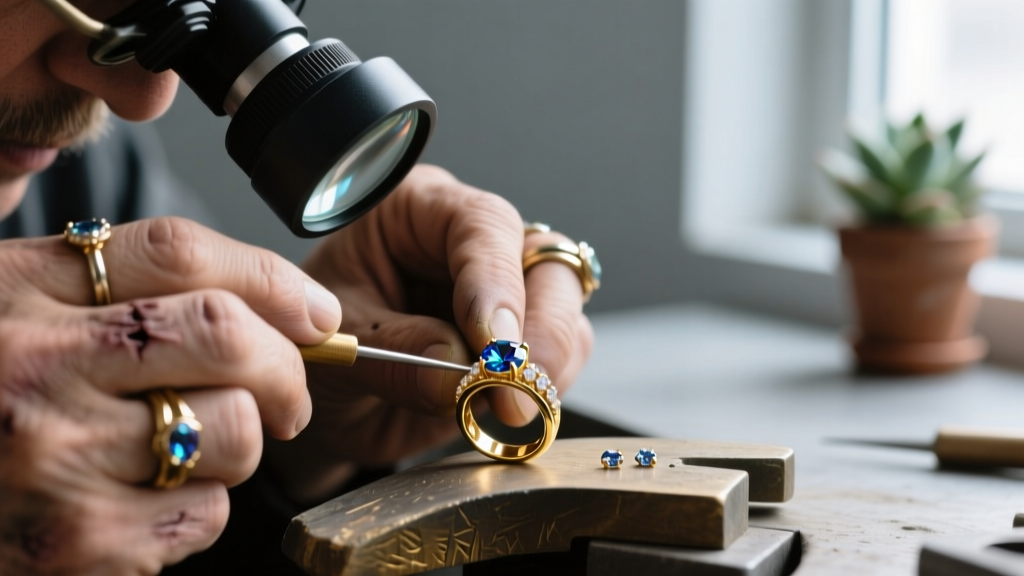
The gemstone landscape in 2026 is defined by a rejection of perfectly calibrated, commercially faceted stones in favor of custom-cut cabochons and raw, unheated specimens. Artisan makers prioritize stones with unique matrix patterns, such as Sonoran gold turquoise or heavily included rutilated quartz. According to the Gemological Institute of America (GIA), the structural integrity of porous gems like turquoise (Mohs hardness 5-6) demands specific setting techniques. Rather than using standard prongs which can cause the girdle to chip, artisan jewelers employ heavy-gauge bezel walls. Using a hart burr to cut a precise bearing inside the bezel, the jeweler then uses a pusher and burnisher to fold the metal over the dome of the cabochon, securing the stone through compression rather than tension. This custom lapidary approach ensures that every gemstone is cut to maximize its specific optical phenomena, whether that is chatoyancy, asterism, or simply the depth of its natural matrix.
Market Positioning: Artisan Fine vs. Demi-Fine
Understanding the financial architecture of artisan jewelry requires looking beyond the raw melt value of the metals. The pricing model for Gholson Originals fine jewelry and similar bespoke houses is rooted in 'cost-per-gram' metrics that factor in intensive bench time. A 40-gram hand-fabricated sterling and 14k gold cuff might retail between $1,800 and $2,600. This equates to $45 to $65 per gram, reflecting 20 to 40 hours of meticulous sawing, soldering, and stone-setting.
While demi-fine jewelry operates on a high-margin, low-labor model (averaging $3 to $8 per gram for cast silver with micron-plating), artisan fine jewelry is an investment in structural permanence. You are paying for the absence of porosity, the precision of the bezel push, and the guarantee that the piece can be repaired or resized by any master jeweler decades from now.
For the 2026 consumer, this represents a shift toward 'quiet luxury' and sustainable consumption. Rather than replacing tarnished, plated demi-fine pieces every two years, collectors are pooling their budgets to acquire singular, indestructible artisan works that carry genuine heirloom potential. The Jewelers of America consistently notes that solid, hand-fabricated pieces maintain their structural and monetary value far better than plated or hollow-cast alternatives.
2026 Styling: Integrating Artisan Pieces
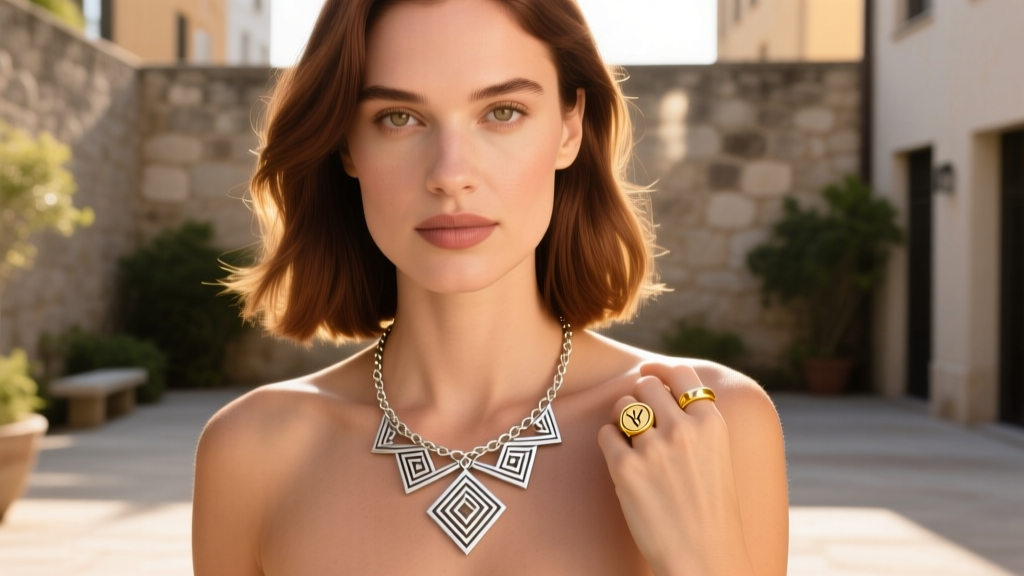
Styling heavy, heritage-driven pieces requires a deliberate approach to proportion and mixed metals. The 2026 aesthetic moves away from the 'more is more' bohemian layering of the 2010s, favoring instead a singular, commanding focal point grounded by minimalist tailoring. A heavy, hand-stamped silver lariat necklace featuring a custom lapis lazuli slide is best worn over a structured, neutral-toned linen blazer or a simple ribbed cashmere turtleneck. This allows the intricate repoussé work and the deep saturation of the stone to command attention without competing with busy textile patterns.
Mixing metals is no longer a faux pas; it is a hallmark of the modern artisan aesthetic. Pairing an oxidized silver and 14k gold cuff on one wrist with a polished 18k gold signet ring on the opposite hand creates a curated, collected-over-time narrative. The key to pulling off this look is maintaining a cohesive design language—such as matching the hand-hammered texture of the silver with the matte, brushed finish of the gold ring. Avoid high-polish, machine-milled commercial bands, as their sterile perfection will clash with the organic, tool-marked warmth of hand-fabricated artisan pieces.
Final Verdict on the Artisan Investment
The trajectory of the fine jewelry market in 2026 makes one thing abundantly clear: the era of disposable luxury is ending. The ethos championed by Gholson Originals fine jewelry—prioritizing hand-forged metallurgy, custom lapidary work, and structural permanence—represents the pinnacle of modern accessory investment. By understanding the technical nuances of Argentium alloys, bezel-setting mechanics, and the true cost of bench time, consumers can make highly informed decisions that transcend fleeting seasonal trends. Investing in artisan fine jewelry is not merely a stylistic choice; it is an acquisition of functional art, engineered to outlive its wearer and carry a legacy of uncompromising craftsmanship into the next generation.


