Is Herman's Fine Jewelry Worth the Markup? A 2026 Value Assessment
We audit Herman's Fine Jewelry pricing, diamond grading standards, and custom bench work to see if the traditional retail markup is worth it in 2026.

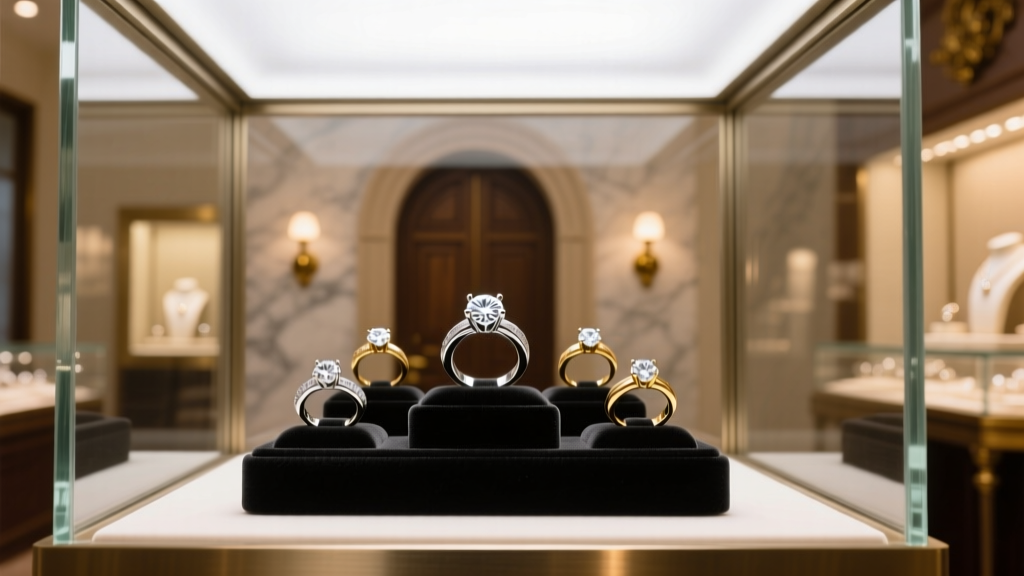
When shoppers research local brick-and-mortar retailers like Herman's Fine Jewelry, they are usually trying to answer one fundamental question: does the traditional retail markup justify the price tag? In 2026, the jewelry market is more polarized than ever. Direct-to-consumer (DTC) online brands promise wholesale-adjacent pricing, while established physical stores maintain premiums that often range from 2.5x to 3.5x above wholesale diamond and metal costs. However, reducing the value of a fine jeweler to a simple spreadsheet comparison of carat weight and gold grams ignores the critical nuances of after-sales service, alloy integrity, and bench craftsmanship.
This comprehensive value assessment breaks down the pricing structure, diamond grading standards, and long-term ownership costs associated with traditional fine jewelry retailers, using the archetypal Herman's Fine Jewelry experience as our benchmark.
The Traditional Jeweler Premium: What You Actually Pay For
When you purchase an engagement ring or a luxury timepiece from a traditional storefront, you are not just buying raw materials; you are funding a localized infrastructure. According to industry data from Jewelers of America, the standard keystone markup (100% markup from wholesale) is merely the baseline. For luxury and custom pieces, markups can reach 150% to 200%.
However, this premium buys immediate physical verification and localized liability. When shopping at Herman's Fine Jewelry, the overhead covers secure, climate-controlled inventory, insured premises, and, most importantly, an on-site or closely affiliated bench jeweler. Online retailers operate with razor-thin margins (often 15% to 30% above wholesale) but externalize the long-term maintenance costs to the consumer. If a prong snaps on a DTC ring, you are often responsible for insured shipping, weeks of downtime, and third-party repair fees. A traditional jeweler absorbs these micro-repairs as part of the initial premium, offering lifetime tightening and polishing that mathematically offsets the initial markup over a 10-year ownership period.
Diamond Sourcing and the Certification Trap
The most significant point of friction in assessing value is diamond grading. Traditional jewelers historically relied on 'in-house' appraisals, which are notoriously inflated. A diamond graded as a 'G color, VS2 clarity' by an in-house gemologist might actually be an 'I color, SI1' when sent to an independent lab.

Today, reputable establishments have pivoted. When evaluating inventory at Herman's Fine Jewelry, buyers must insist on certificates from the Gemological Institute of America (GIA) or the American Gem Society (AGS) for any natural diamond over 0.75 carats. The value proposition here is the ability to pair the certificate with physical light performance tools. While an online buyer relies on a 2D video, a traditional jeweler can provide an ASET (Angular Spectrum Evaluation Tool) or Idealscope image on the spot, revealing exactly how the diamond handles light return and contrast in real-world lighting conditions.
The Clarity and Color Sweet Spot for Budget Buyers
To maximize value at a traditional retailer, avoid the 'collection' grades (D-F color, FL-VVS clarity) which carry massive premiums for differences invisible to the naked eye. The optimal budget-to-value ratio in 2026 lies in the G-H color range with VS2-SI1 clarity, specifically targeting stones with 'eye-clean' inclusions located near the girdle rather than dead center under the table facet.
Custom Design and Bench Work: Where the Real Value Lies
Where Herman's Fine Jewelry fundamentally outpaces online competitors is in custom CAD (Computer-Aided Design) and physical bench work. Designing an heirloom reset or a complex bespoke mounting requires iterative, tactile adjustments that email renderings simply cannot replicate.
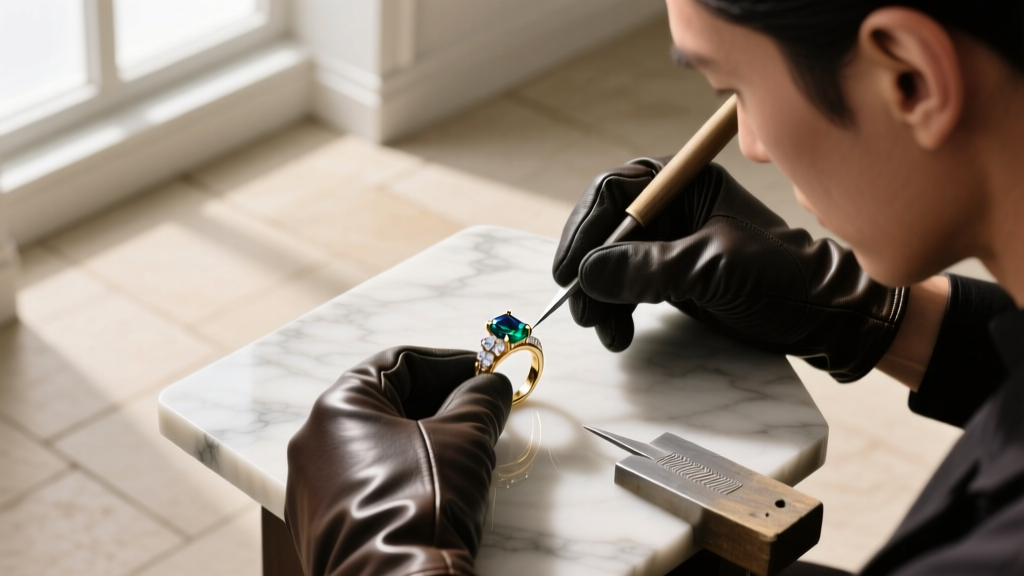
Furthermore, the quality of the metalwork dictates the lifespan of the piece. Traditional bench jewelers utilize laser welding for platinum and titanium, which allows for precise prong retipping and sizing without exposing adjacent gemstones to the thermal shock of a traditional oxy-acetylene torch. Below is a cost and timeline comparison illustrating the hidden value of local bench services.
| Service | Traditional Bench (e.g., Herman's) | Online DTC Brand |
|---|---|---|
| Prong Retipping (4 prongs) | $85 - $120 (48 hours) | $150+ (2-4 weeks shipping) |
| Custom CAD Wax Model | $250 - $400 (In-house consultation) | $150 - $250 (Email rendering only) |
| Ring Sizing (Up/Down 1 size) | $45 - $75 (Laser welded if needed) | $75 - $100 (Must ship back) |
| Shank Replacement (Bottom 1/3) | $180 - $250 (Same week) | Often refused; requires 3rd party |
Precious Metal Weight and Alloy Integrity
Not all gold is created equal, and this is where budget assessments often fail. A 14k white gold ring from a mall kiosk and a 14k white gold ring from a high-end traditional jeweler may share the same karat stamp, but their alloy compositions differ drastically.
14k vs 18k Gold: Durability and Allergy Considerations
Many mass-market brands use nickel as a bleaching agent in white gold alloys to save money, which causes severe contact dermatitis in roughly 15% of the population. Premium traditional jewelers typically utilize palladium-based white gold alloys. While palladium alloys are more expensive and slightly softer, they are hypoallergenic and possess a naturally whiter base color. This means the rhodium plating—which costs $45 to $65 to reapply every 12 to 18 months—wears off more gracefully, revealing a warmer white rather than a brassy yellow.
When assessing the value at Herman's Fine Jewelry, always ask for the specific gram weight of the mounting. A flimsy 1.8-gram 14k gold band will warp and lose stones within three years of daily wear. A quality fine jewelry mounting should weigh a minimum of 3.5 to 4.5 grams for a standard solitaire setting to ensure structural rigidity.
The Verdict: Decision Matrix for the Modern Buyer
Is the traditional retail markup worth it? The answer depends entirely on your purchasing profile and long-term maintenance tolerance. Use the following framework to decide if buying from an established local retailer is the right financial move for you.
- Buy from Herman's Fine Jewelry if: You are commissioning a complex custom design, resetting a multi-generational heirloom, require immediate physical inspection of diamond light performance, or lack the logistical patience to manage insured shipping for inevitable future repairs and rhodium replating.
- Buy from an Online DTC Brand if: You are purchasing a standard, pre-designed solitaire setting with a GIA-certified lab-grown diamond, possess a trusted local third-party jeweler for future maintenance, and prioritize the absolute lowest initial cash outlay over long-term service relationships.
Ultimately, Herman's Fine Jewelry represents the classic value proposition of the brick-and-mortar fine jewelry trade: you pay a premium on day one to purchase a localized, insured, and highly skilled service network that protects your investment for decades to come.


