Pam Benson Antiques & Fine Jewelry: Expert Authentication
Explore the technical authentication standards of Pam Benson Antiques & Fine Jewelry, covering diamond cuts, metallurgy, and hallmarks.

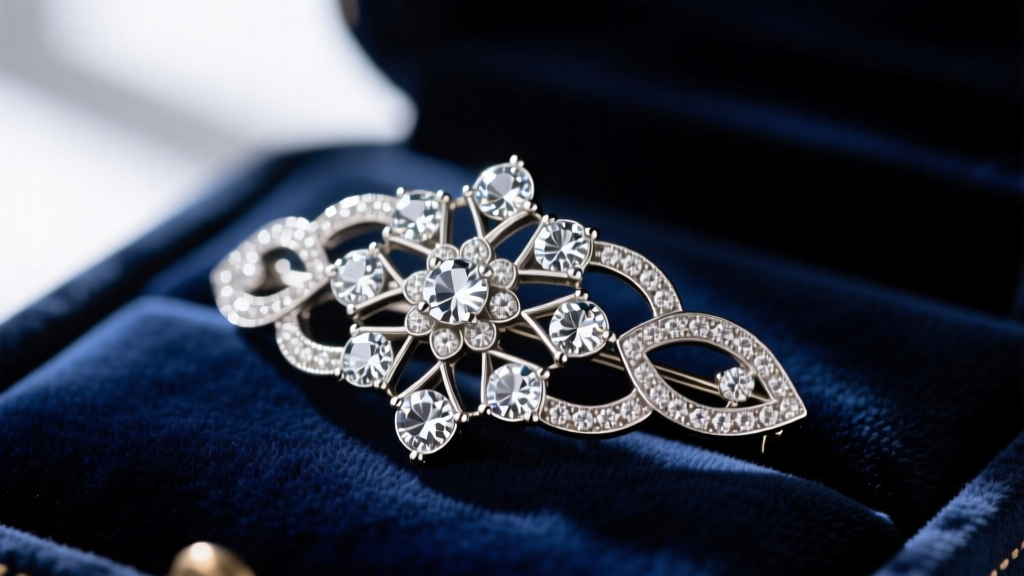
The Benchmark: Defining True Antique Fine Jewelry
In the expansive landscape of estate and vintage adornments, distinguishing between mass-produced 'vintage-style' fashion jewelry and genuine historical fine jewelry requires rigorous technical analysis. The curation philosophy exemplified by Pam Benson Antiques & Fine Jewelry serves as an industry benchmark for this exact differentiation. True antique fine jewelry is not merely old; it is a metallurgical and gemological artifact that reflects the specific technological limitations and artistic movements of its era. As of 2026, the market is flooded with high-precision CAD/CAM cast reproductions designed to mimic Victorian, Edwardian, and Art Deco aesthetics. To navigate this, collectors and gemologists must rely on structural forensics, precise carat weight analysis, and historical hallmark decoding.
Metallurgical Analysis: Precious Metals Across Eras
Authenticating a piece begins at the atomic level. The alloy compositions used in the 19th and early 20th centuries differ vastly from modern standards. For instance, British Victorian jewelry frequently utilizes 15k gold (62.5% pure gold), an alloy standard that was officially discontinued in 1932. If a piece purportedly from 1880 features a standard 14k or 18k American stamp without accompanying British hallmarks, it warrants immediate suspicion.
Platinum vs. White Gold in Art Deco Pieces
The introduction of platinum to fine jewelry occurred in the late 1890s, reaching its zenith during the Art Deco period (1920-1935). Authentic Art Deco pieces curated by top-tier dealers like Pam Benson Antiques & Fine Jewelry will feature platinum alloys, typically 90% platinum and 10% iridium or ruthenium. Modern reproductions often use 14k or 18k white gold plated with rhodium to mimic the cool, gray luster of platinum. Under a 10x triplet loupe, rhodium plating will show micro-flaking, particularly around prong tips and high-friction bezel edges. Furthermore, platinum's high density and specific gravity (21.45 g/cm³) make it noticeably heavier than white gold (approx. 15 g/cm³ for 14k) in identically proportioned mounts.
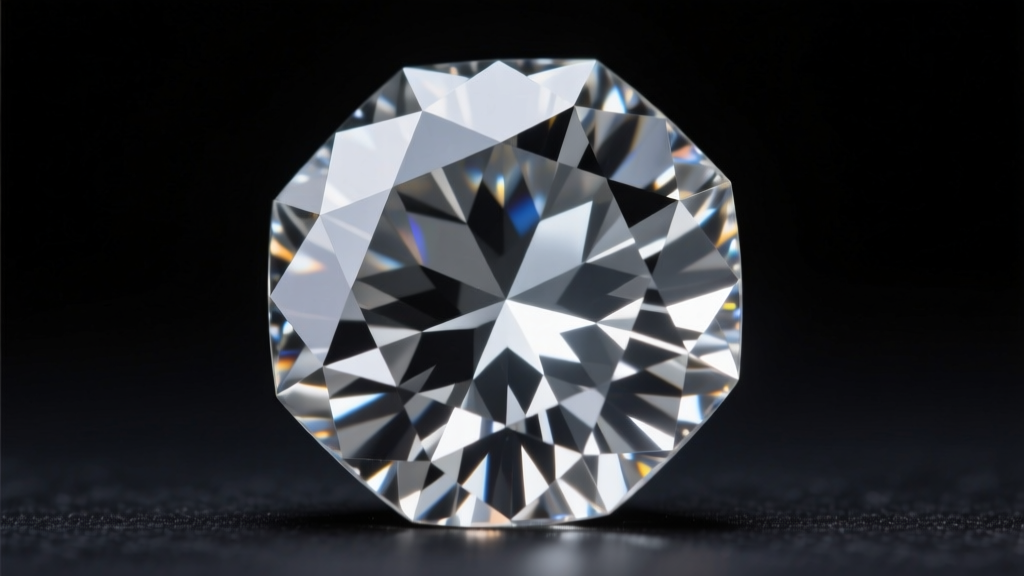
Gemological Deep Dive: Antique Diamond Proportions
A critical pillar of authenticating fine antique jewelry is analyzing the diamond cutting styles. Modern brilliant cuts (post-1919 Tolkowsky ideal) feature 57 or 58 facets with precise mathematical proportions designed for maximum light return. Antique diamonds were cut by hand, prioritizing carat weight retention over optical symmetry. According to the Gemological Institute of America (GIA), identifying the specific antique cut is vital for dating a piece.
| Diamond Cut | Era of Prominence | Table % | Culet Size | Shape Profile |
|---|---|---|---|---|
| Old Mine Cut (OMC) | 1700s - Late 1800s | Small (38-45%) | Very Large / Open | Cushion / Squarish |
| Old European Cut (OEC) | 1890s - 1920s | Small (40-50%) | Large / Open | Round |
| Transitional Cut | 1920s - 1940s | Medium (50-57%) | Medium / Small | Round |
When examining an Edwardian platinum sautoir necklace, the presence of modern round brilliants with laser-inscribed girdles is an immediate indicator of a stone replacement or an outright modern forgery. True OEC diamonds will display a 'chunky' facet pattern and a visible open culet when viewed through the table, creating a distinctive 'inner fire' rather than the sharp, splintery scintillation of modern cuts.
Construction & Failure Modes: Hand-Forged vs. Cast
Perhaps the most definitive technical separator between authentic antiques and modern reproductions is the manufacturing method. Jewelry crafted before 1930 was predominantly hand-forged. Metal was rolled, drawn into wire, and hammered into shape. This mechanical working aligns the grain structure of the metal, increasing its Vickers hardness and tensile strength. Conversely, modern reproductions are typically cast using the lost-wax method, which leaves the metal with an isotropic, less dense grain structure.
Identifying Cast Porosity and Solder Joints
Under 30x magnification, cast reproductions often reveal micro-porosity—tiny gas bubbles trapped during the cooling process—particularly in the shanks and gallery wires. Hand-forged antique pieces will show a dense, continuous metal flow. Furthermore, analyzing the solder joints provides crucial forensic data. According to the Lang Antique Jewelry University, antique pieces were assembled using varying grades of hard, medium, and easy solders, often leaving slight color variations or subtle pooling at the joints. Modern laser welding, used to repair or assemble contemporary pieces, leaves distinct, perfectly spherical micro-splatter patterns that did not exist in the 19th century.
- Prong Degradation: Antique millegrain (tiny beaded edges) will show asymmetrical wear, flattening on the side facing the wearer's body. Cast millegrain is often perfectly uniform and unnaturally sharp.
- Gallery Wires: Hand-drawn gallery wires in Art Deco pieces are often slightly irregular in thickness, whereas modern CAD-designed galleries are mathematically flawless.
- Stone Setting: Foil-backed gemstones (common in Georgian and early Victorian eras) must never be removed from their closed-back settings. Modern reproductions attempting to mimic this often use epoxy resins that degrade and yellow under UV light, unlike the original shellac or gold leaf backings.
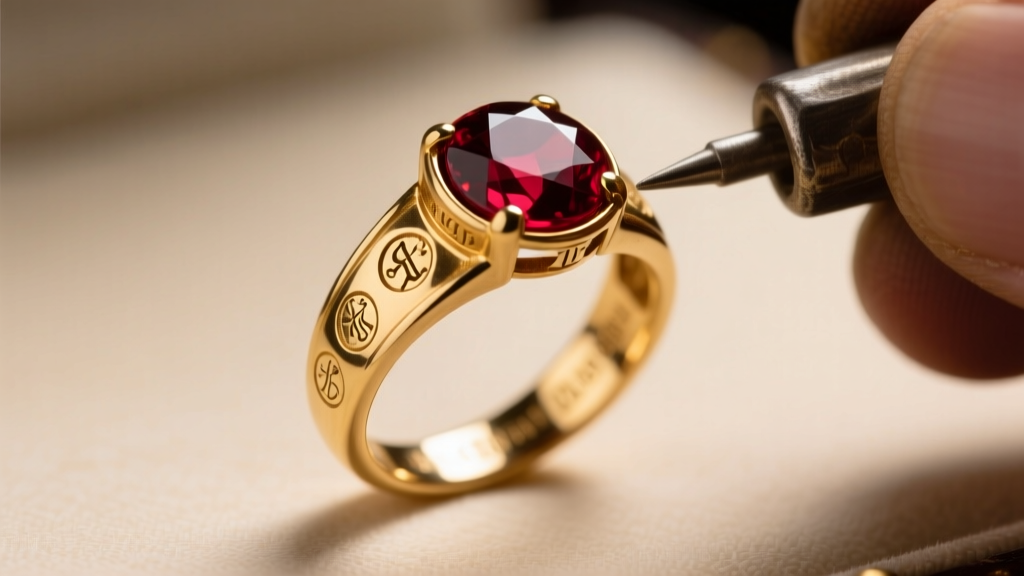
Hallmarks, Maker's Marks, and Provenance Tracking
Hallmarks are the DNA of antique fine jewelry. However, expert authenticators know that hallmarks can be faked or transferred from scrap metal to new castings. The Victoria and Albert Museum notes that British hallmarks consist of a precise sequence: the sponsor's (maker's) mark, the standard mark (e.g., a crown for gold), the fineness mark (e.g., 18 or 15), the assay office mark (e.g., an anchor for Birmingham), and the date letter.
When evaluating a piece in the style of Pam Benson Antiques & Fine Jewelry collections, the depth and crispness of the hallmark stamp must be analyzed. Genuine historical strikes were applied with heavy steel punches, resulting in deep, slightly distorted impressions that follow the curvature of the ring shank. Laser-engraved or shallow, perfectly crisp hallmarks on a supposedly 150-year-old ring are red flags for modern fabrication. French hallmarks, such as the eagle head for 18k gold or the dog head for platinum, are often stamped on the exterior of the shank or the gallery, requiring microscopic verification to ensure they haven't been artificially worn down and re-stamped.
Investment Pricing Tiers for Curated Antique Fine Jewelry
Understanding the technical nuances directly impacts market valuation. In 2026, the pricing for authenticated, museum-quality antique fine jewelry is heavily stratified based on condition, originality, and provenance. Pieces that have been heavily polished—destroying the original patina and softening the millegrain—suffer a 20% to 40% reduction in value compared to untouched examples.
- Tier 1: Georgian & Early Victorian (1714-1860) - Foil-backed garnet, topaz, and early diamond parures. High failure rate due to foil degradation. Pricing ranges from $3,500 to $25,000+ depending on the survival of the original closed-back settings.
- Tier 2: Late Victorian & Edwardian (1861-1915) - 15k gold mourning jewelry and early platinum lace-work brooches. Valuations sit between $2,000 and $45,000, with platinum and diamond sautoir necklaces commanding premium auction prices.
- Tier 3: Art Deco (1920-1935) - Geometric platinum mounts featuring calibre-cut sapphires, rubies, and Old European Cut diamonds. Pristine, unmodified examples from houses like Cartier or Van Cleef & Arpels easily exceed $100,000, while unsigned but technically masterful pieces range from $8,000 to $35,000.
Ultimately, acquiring fine antique jewelry requires moving beyond aesthetic appreciation into the realm of material science. By applying the rigorous authentication frameworks utilized by top-tier curators, collectors can confidently separate genuine historical artifacts from modern homages, ensuring their investments retain both their financial and historical integrity.


