High Jewelry vs Fine Jewelry: Technical & Material Specs
Discover the exact technical, material, and craftsmanship differences in high jewelry vs fine jewelry, from gemstone grades to metalwork.

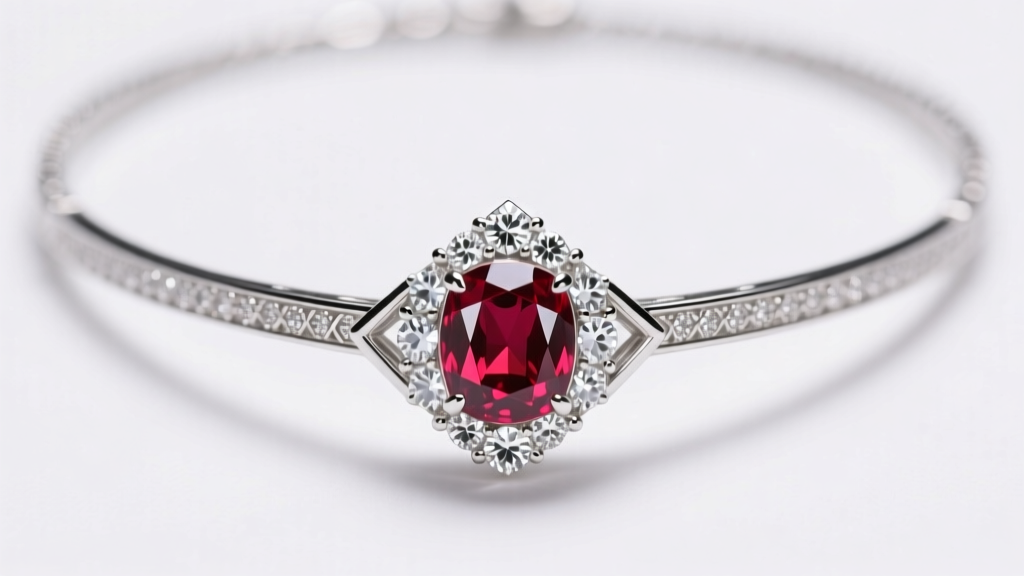
The Core Distinction: Haute Joaillerie vs. Joaillerie
The demarcation between high jewelry and fine jewelry is frequently blurred by luxury marketing departments, but within the gemological and metallurgical communities, the boundary is defined by strict technical parameters. When evaluating high jewelry vs fine jewelry, one must look past the brand heritage and examine the molecular structure of the alloys, the crystallographic purity of the gemstones, and the mechanical tolerances of the stone settings. This deep dive explores the exact specifications that separate bespoke Haute Joaillerie from serially produced Joaillerie.
Gemstone Provenance and Grading Tolerances
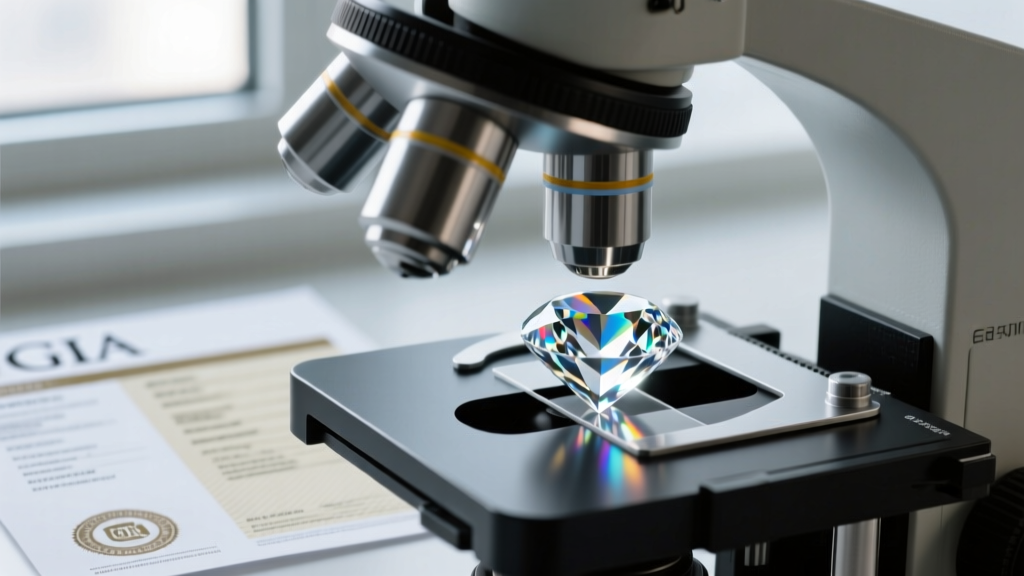
In fine jewelry, the baseline for premium diamonds typically sits at G-H color and VS1-VS2 clarity. These stones offer excellent visual performance to the naked eye and allow for scalable, predictable sourcing. High jewelry, however, operates under a radically different mandate. According to the Gemological Institute of America (GIA), high jewelry houses predominantly source Type IIa diamonds. These diamonds, which constitute less than 2% of all gem-quality diamonds, contain virtually no nitrogen impurities in their crystal lattice, resulting in unmatched optical transparency and superior light return.
The "No-Heat" Mandate and Trace Element Analysis
When dealing with colored gemstones, high jewelry strictly requires unheated, untreated stones accompanied by origin reports from elite laboratories like SSEF or Gübelin. These labs utilize Energy Dispersive X-Ray Fluorescence (EDXRF) spectroscopy to detect trace elements like beryllium or titanium. A 5-carat unheated Burmese ruby commands a vastly different structural integrity and market premium than a beryllium-diffused sapphire commonly found in fine jewelry collections. Fine jewelry readily accepts traditional heat treatments to enhance color and clarity, prioritizing visual appeal over crystallographic purity.
Metallurgy and Structural Engineering
The structural engineering of the metalwork reveals the most profound differences between the two tiers. Fine jewelry relies heavily on lost-wax casting. While modern 3D-printed resin waxes have improved casting accuracy, the resulting metal structure is inherently crystalline and prone to microscopic porosity. The Vickers hardness (HV) of a standard cast 18k yellow gold ring typically ranges between 120 and 135 HV. Conversely, high jewelry frequently utilizes hand-forging, rolling, and draw-plate extrusion. These mechanical working processes align the metal's grain structure and induce work hardening, pushing the Vickers hardness of 18k gold past 200 HV. This superior structural integrity allows artisans to create impossibly delicate armatures that can support heavy carat weights without warping.
White Gold Alloys and Rhodium Plating
In fine jewelry, 18k white gold is typically alloyed with nickel or palladium and then electroplated with a 0.5-micron layer of rhodium to achieve a bright white finish. Over time, this plating wears away, revealing the yellowish-grey substrate beneath. High jewelry houses often reject rhodium plating entirely, opting instead for proprietary palladium-rich 18k white gold alloys that possess a naturally bright, cool-grey hue. This ensures the metal's color remains permanent and homogenous, even if the piece suffers microscopic surface abrasions over a century of wear.
| Parameter | High Jewelry (Haute Joaillerie) | Fine Jewelry (Joaillerie) |
|---|---|---|
| Production Model | Bespoke, one-of-a-kind, museum-grade | Serial production, seasonal collections |
| Diamond Baseline | D-F Color, FL-VVS1, Type IIa preferred | G-I Color, VS1-SI1, Type Ia standard |
| Gem Treatments | Strictly unheated/untreated (SSEF certified) | Traditional heat and clarity enhancement accepted |
| Metal Fabrication | Hand-forged, milled, work-hardened (>200 HV) | Lost-wax cast, CNC finished (~125 HV) |
| Enameling | Grand Feu vitreous enamel (>800°C firing) | Cold enamel (epoxy) or low-temp kiln glass |
Stone Setting Techniques: Mechanics and Tolerances
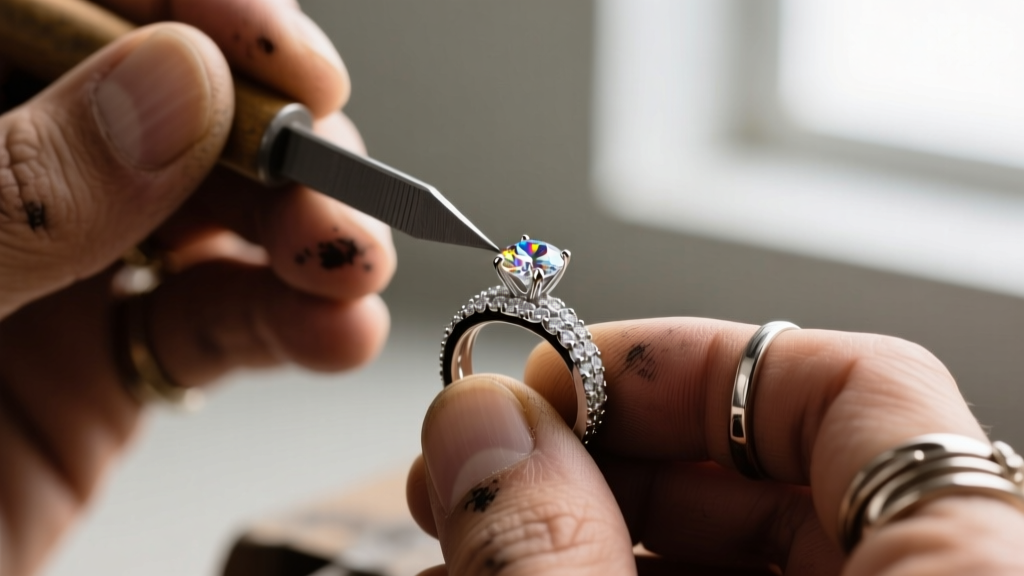
The mechanics of stone setting represent the zenith of horological-adjacent craftsmanship. Fine jewelry utilizes standard cast prongs or CNC-milled bezels, with tolerances measured in tenths of a millimeter. High jewelry employs techniques like the Mystery Set (Serti Mystérieux), patented by Van Cleef & Arpels. This technique requires cutting microscopic grooves into the girdle of each gemstone to a tolerance of 0.02 millimeters, allowing them to slide onto a hidden gold lattice without any visible metal prongs. The failure rate during the grooving process is exceptionally high, meaning a single miscalculation shatters the stone and ruins weeks of lapidary work.
Surface Finishes: Grand Feu vs. Cold Enamel
High jewelry utilizes Grand Feu (great fire) enameling, which requires firing silica-based glass powders onto a gold surface at temperatures exceeding 800°C. This process demands immense technical precision, as the metal and glass must have perfectly matched coefficients of thermal expansion to prevent crazing or shattering. Fine jewelry, by contrast, frequently relies on cold enamel (epoxy resin) or low-temperature kiln-fired glass, which lacks the depth, refractive index, and centuries-long archival stability of true vitreous enamel.
Valuation Metrics and Investment Horizons
From an investment perspective, the divergence is stark. Fine jewelry is a luxury consumer good; it experiences immediate depreciation upon retail purchase, retaining only its intrinsic melt and wholesale stone value. High jewelry functions as a tangible asset class. As noted by Sotheby's Magnificent Jewels auction archives, bespoke high jewelry pieces with documented provenance and exceptional unheated gemstones consistently achieve premiums well above their intrinsic material value, often appreciating over decades.
"The true value of Haute Joaillerie lies not just in the carat weight, but in the archival permanence of its metallurgy and the statistical impossibility of its gemstone matching." — Senior Gemologist, Geneva
Summary Framework for Collectors
When evaluating a piece to determine its true classification, apply this technical checklist:
- Request the Origin Report: Verify that colored stones are certified unheated by SSEF, Gübelin, or AGL.
- Examine the Metal Grain: Look for the linear striations of hand-forging rather than the isotropic surface of cast metal.
- Check the Diamond Type: Ask for GIA reports confirming Type IIa status for large center stones.
- Assess the Setting Tolerance: Use a 10x loupe to ensure prongs are hand-burnished and perfectly flush, with no casting porosity visible at the joints.


