Kern's Fine Jewelry Standards vs. Fashion Alloy Metals
Compare traditional Kern's Fine Jewelry metals like 18k gold and platinum against fashion alloys. Discover material properties, hardness, and wear data.

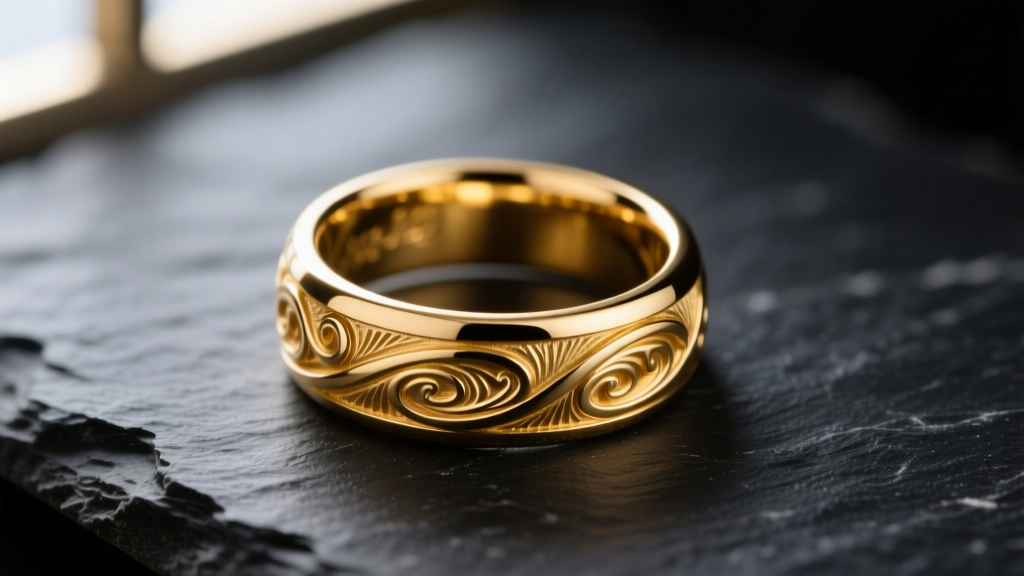
The Great Divide: Legacy Craftsmanship vs. Fast Fashion Metals
When navigating the vast landscape of personal adornment, understanding the metallurgical divide between legacy establishments and mass-market manufacturers is critical. The material integrity championed by traditional brick-and-mortar pillars like Kern's Fine Jewelry stands in stark contrast to the base alloys utilized in contemporary fast fashion. This is not merely a debate over brand prestige; it is a fundamental difference in material science, structural longevity, and dermatological safety. For the discerning collector or the everyday wearer, recognizing these disparities requires looking past the superficial polish and examining the exact alloy compositions, Vickers hardness ratings, and plating thicknesses that dictate a piece's lifespan.
In 2026, the jewelry market is more saturated than ever with 'demi-fine' and 'gold-plated' marketing terminology designed to blur the lines between costume and fine jewelry. To make informed purchasing decisions, we must deconstruct the materials themselves, comparing the solid precious metals that define traditional fine jewelry against the zinc, copper, and nickel alloys that form the backbone of the fashion jewelry industry.
The Benchmark: Traditional Fine Jewelry Standards
Establishments that uphold the archetype of traditional fine jewelry, such as Kern's Fine Jewelry, rely on standardized precious metal alloys that have been refined over centuries. These materials are chosen for their specific gravity, malleability, and resistance to environmental degradation.
Gold Alloys: 14k (Au585) and 18k (Au750)
Pure 24-karat gold is too soft for daily wear, boasting a Vickers hardness (HV) of merely 60. Therefore, fine jewelry relies on alloyed gold. 18k yellow gold (75% gold, 12.5% copper, 12.5% silver) offers a rich, warm hue with an HV of approximately 125, making it ideal for intricate settings and heirloom pieces. 14k gold (58.3% gold) increases the copper and zinc content, pushing the hardness to roughly 135 HV, providing superior scratch resistance for active lifestyles. According to the Gemological Institute of America (GIA), the specific ratio of copper to silver in these alloys is what dictates the final color, allowing for the creation of rose and white gold variations without sacrificing structural integrity.
Platinum 950 (Pt950/Ru)
Platinum is the undisputed king of durability in fine jewelry. Unlike gold, which loses microscopic layers of metal when scratched, platinum merely displaces. An alloy of 95% platinum and 5% ruthenium (Pt950/Ru) yields a dense, heavy metal with a specific gravity of 21.45 g/cm³—nearly double that of 14k gold. This extreme density ensures that prongs securing valuable gemstones remain secure for decades, a hallmark of legacy fine jewelry craftsmanship.
Fashion & Demi-Fine Alloys: What Lies Beneath the Plating
The fashion jewelry sector prioritizes low-cost manufacturing and high-volume casting, necessitating the use of base metals. While these pieces may look identical to fine jewelry on the day of purchase, their material properties dictate a much shorter lifecycle.
Brass and Bronze (Cu-Zn and Cu-Sn)
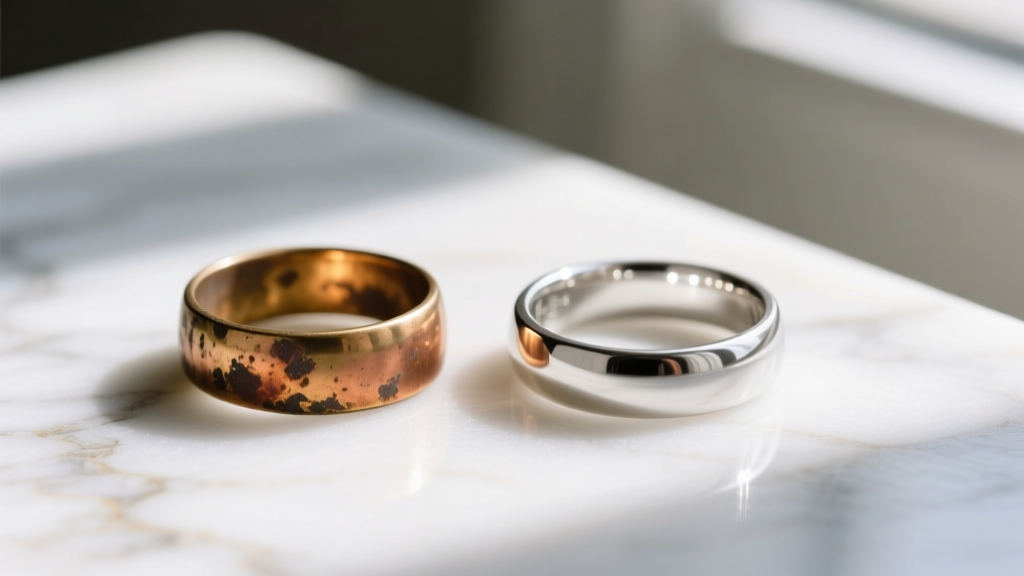
Brass is the most common base metal in fashion jewelry due to its low melting point and excellent casting properties. However, brass is highly susceptible to oxidation. When exposed to the sulfur compounds in human sweat and ambient air, the copper within the alloy reacts, forming copper sulfate—a green patina that stains the skin. Bronze, while slightly harder, shares this vulnerability.
Zamak and Zinc Die-Casting Alloys
Zamak (an alloy of zinc, aluminum, magnesium, and copper) is heavily utilized in mass-market statement pieces. While it allows for highly detailed, inexpensive castings, Zamak is inherently brittle. It lacks the tensile strength of precious metals, meaning a dropped Zamak ring or bracelet clasp is highly likely to shatter or snap rather than bend.
The Plating Reality: Flash vs. Vermeil
To mimic the look of fine jewelry, base metals are electroplated. 'Flash plating' involves a microscopic layer of gold (often less than 0.1 microns thick) that will wear away within weeks of daily friction. 'Gold vermeil,' governed by strict Federal Trade Commission (FTC) guidelines, requires a sterling silver base with a minimum of 2.5 microns of 10k gold plating. While vermeil is vastly superior to flash-plated brass, it remains a surface treatment that will eventually require professional re-plating.
Comparative Material Properties Table
To truly understand the gap between legacy fine jewelry and fashion alternatives, we must look at the empirical data. The following table outlines the core metallurgical properties that dictate how a piece will wear over time.
| Material / Alloy | Vickers Hardness (HV) | Specific Gravity (g/cm³) | Tarnish / Oxidation Resistance | Typical Market Tier |
|---|---|---|---|---|
| Platinum 950 (Pt950/Ru) | 125 - 135 | 21.45 | Exceptional (Patina only) | Ultra-Fine / Bridal |
| 14k Yellow Gold (Au585) | 135 - 145 | 13.20 | Excellent | Fine Jewelry |
| 18k Rose Gold (Au750) | 120 - 130 | 15.20 | Excellent | Fine Jewelry |
| Sterling Silver (925) | 60 - 75 | 10.36 | Moderate (Requires polishing) | Demi-Fine / Traditional |
| Gold Vermeil (2.5µm over 925) | 60 - 75 (Base) | 10.36 | Low (Plating wears off) | Demi-Fine |
| Jeweler's Brass (Cu-Zn) | 100 - 115 | 8.40 - 8.70 | Poor (Rapid oxidation) | Fashion / Costume |
| Zamak (Zinc Alloy) | 85 - 100 | 6.60 - 6.80 | Poor (Brittle, corrodes) | Mass-Market Costume |
The Economics of Material Density and Specific Gravity
One of the most immediate, tactile differences between a piece sourced from a traditional fine jeweler and a fashion brand is the weight. Specific gravity—the ratio of the density of a substance to the density of water—plays a massive role in perceived quality and material cost. Platinum and high-karat golds are incredibly dense. When you hold a solid 18k gold chain, the heavy, fluid drape is a direct result of its high specific gravity (approx. 15.2 g/cm³).
Conversely, fashion alloys like Zamak and aluminum-based mixtures are remarkably light. To compensate for this 'cheap' feel, some fast-fashion manufacturers artificially increase the thickness of the base metal casting, resulting in a piece that is bulky but still lacks the satisfying thermal conductivity and dense drape of true precious metals. Understanding this physical property allows consumers to identify base metals instantly, even without a hallmark stamp.
Real-World Wearability and Allergen Profiles
The most critical failure mode in fashion jewelry is not structural; it is dermatological. Contact dermatitis caused by nickel and copper allergies is a widespread issue. The European Union's Nickel Directive strictly regulates the amount of nickel that can be released from items intended for prolonged skin contact. Legacy fine jewelry adheres to these standards rigorously.
In white gold, alloyers use palladium or high-grade nickel, which is then sealed beneath a thick layer of rhodium plating, preventing skin contact. In fashion jewelry, 'nickel silver' (which contains absolutely no silver, but is a mix of copper, nickel, and zinc) is frequently used as a cheap, silvery-looking base metal. When the microscopic flash-plating wears off on a fashion ring, the raw nickel alloy is exposed directly to the skin's moisture, triggering severe allergic reactions. For individuals with metal sensitivities, investing in solid 14k gold, platinum, or titanium is not a luxury; it is a medical necessity.
Verifying Quality: A Shopper's Framework
When evaluating a piece, whether at an estate sale or a boutique, rely on empirical verification rather than marketing copy. Look for standardized hallmarks. According to the Birmingham Assay Office, a full hallmark includes the maker's mark, the metal purity (e.g., 750 for 18k gold), and the assay office mark. In the absence of a hallmark, professional jewelers utilize X-Ray Fluorescence (XRF) analyzers to determine the exact elemental composition of a piece in seconds, non-destructively identifying whether a 'gold' piece is solid Au750 or merely a brass core with a heavy gold electroplate.
Final Verdict on Material Selection
Fashion jewelry serves a purpose: it allows for trend-driven, high-impact styling without the capital investment of precious metals. However, it is fundamentally a depreciating, temporary good. The materials championed by traditional fine jewelry standards—solid gold alloys, platinum, and high-grade sterling silver—represent a permanent store of value and structural reliability. By understanding the exact metallurgical properties, hardness scales, and plating realities outlined above, you can build a collection that not only looks exceptional on the first day of wear but remains structurally and chemically stable for generations.


