Material Analysis Of Miriam Haskell Costume Jewelry Pieces
Discover the unique materials in Miriam Haskell costume jewelry. We analyze Russian gold plating, faux pearls, and wirework properties.

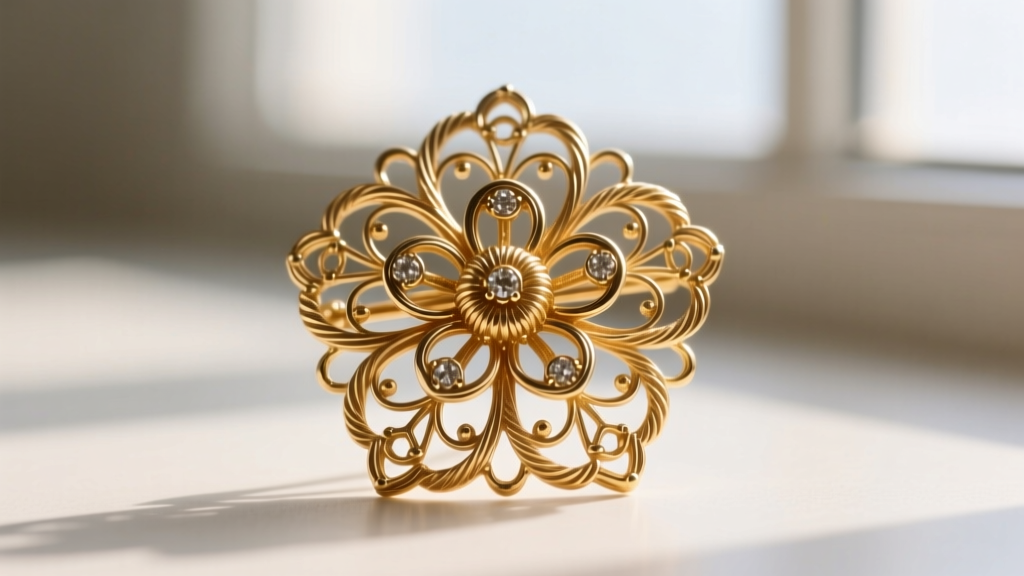
When evaluating the hierarchy of vintage adornments, Miriam Haskell costume jewelry occupies a rare echelon that blurs the line between mass-produced fashion accessories and fine art. Unlike mid-century contemporaries such as Trifari or Coro, which heavily utilized cast pot metal, rhodium plating, and prong-set rhinestones, the House of Haskell built its legacy on an entirely different metallurgical and structural foundation. As of 2026, with advanced XRF (X-ray fluorescence) scanners becoming accessible to serious collectors, the exact material composition of these mid-century masterpieces is under greater scrutiny than ever before. Understanding the specific properties of Haskell's base metals, proprietary plating techniques, and hand-wrapped structural elements is essential for authentication, restoration, and valuation.
The Alchemy of Haskell: Beyond Standard Costume Jewelry
Standard costume jewelry of the 1930s through 1950s relied on white metal alloys (often zinc, tin, and lead) that were cast in molds and finished with electroplating. Miriam Haskell, guided by the brilliant head designer Frank Hess, rejected this approach. Instead, Haskell pieces were built from the ground up using stamped brass filigrees, copper alloys, and hand-cut glass. The structural integrity of a Haskell piece does not come from a solid cast backing, but from a complex, layered architecture of wire and stamped findings. According to the Lang Antiques University, this dedication to hand-assembly over casting gave Haskell pieces a distinct flexibility and lightweight drape that cast pot metal simply could not achieve.
Russian Gold Plating: Composition and Tarnish Properties
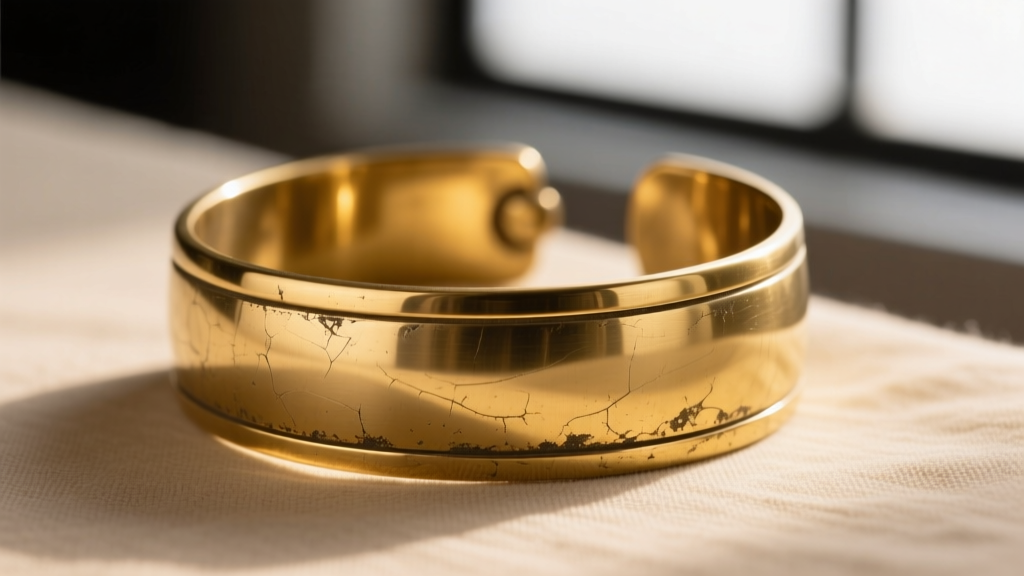
The most defining material characteristic of vintage Haskell is the legendary "Russian Gold" finish. Despite the moniker, this plating technique was not imported from Russia; rather, it was a proprietary electroplating process developed in the United States to mimic the rich, antique gold tones favored by Russian imperial jewelry. The base metal is typically a high-copper brass alloy. Over this base, a thick layer of 24-karat gold wash was applied.
Unlike modern gold vermeil (which requires a sterling silver base and a minimum of 2.5 microns of gold), Russian gold plating relied on a chemical antiquing process. The plated brass was treated with a mild acid or sulfur compound to darken the recesses, then hand-buffed on the high-relief areas to create a soft, matte, brushed finish.
- Base Metal: High-copper brass (provides warmth and prevents the greenish hue associated with high-zinc brass).
- Plating Thickness: Estimated between 1.5 to 3.0 microns, significantly thicker than standard 1940s commercial gold wash.
- Failure Mode: Because it lacks a clear protective lacquer (which would ruin the matte texture), Russian gold is highly susceptible to friction wear and acidic skin oils, leading to copper strike-through on high-contact edges.
The Anatomy of Haskell Faux Pearls
Haskell's use of faux pearls revolutionized the costume market. While competitors used lightweight plastic or hollow glass beads coated in cheap pearlescent paint, Hess sourced premium baroque and round glass beads, primarily from specialized glassmakers in Europe and later from the D'Orlan company in the US. The coating used was a high-grade lacquer infused with essence d'orient (a crystalline substance derived from herring scales) or advanced synthetic guanine alternatives. This gave the pearls a deep, luminous luster and a thermal conductivity that felt cool to the touch, closely mimicking cultured saltwater pearls.
| Property | Haskell Faux Pearls (1940s-1960s) | Modern Standard Glass Pearls | Cultured Freshwater Pearls |
|---|---|---|---|
| Core Material | Solid leaded/barium glass | Hollow or thin-walled glass | Calcium carbonate (nacre) |
| Coating | Guanine-infused lacquer | Synthetic pearlescent paint | Natural biological secretion |
| Weight | Heavy, substantial drape | Lightweight, artificial feel | Moderate, organic density |
| Degradation | Flaking/peeling from humidity | Chipping at drill holes | Etching from acids/perfumes |
Structural Wirework and Gauge Specifications
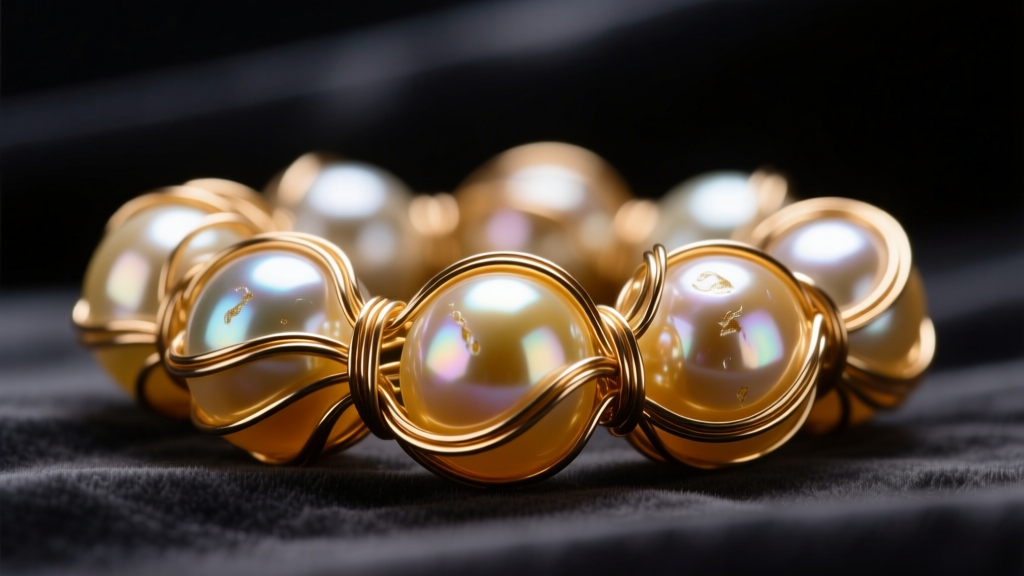
Perhaps the most labor-intensive material element in Miriam Haskell costume jewelry is the wirework. Frank Hess designed pieces that required master wire-wrappers to assemble tiny stamped brass filigrees, seed pearls, and glass beads without the use of solder. Soldering would have required heat that could shatter the glass stones, melt the pearl coatings, or blister the Russian gold plating.
Instead, structural integrity was achieved through tension and mechanical wrapping. Artisans primarily used 24-gauge, 26-gauge, and 28-gauge brass or copper wire. The 28-gauge wire was used for delicate bead wrapping, while the 22-gauge and 24-gauge wires formed the structural loops and jump rings. Over decades, the primary material failure point in Haskell jewelry is metal fatigue at these wire junctions. Repeated bending or improper storage causes the brass wire to undergo work hardening, eventually leading to microscopic stress fractures and snapping.
"The absence of solder in early Haskell pieces is a primary authentication marker. If you examine a 1940s Haskell brooch under a 10x loupe and find smooth, melted solder joints at the wire intersections, you are likely looking at a later reproduction or a heavily compromised repair." — Costume Jewelry Collectors International
Saphiret Glass, Rhinestones, and Stamped Findings
Beyond pearls, Haskell utilized an array of specialized glass and stones. In the 1950s, the brand incorporated Saphiret glass—a material containing trace amounts of gold chloride that yields a striking, iridescent blue-brown hue. The rhinestones used were predominantly high-lead-content glass imported from Austria (often early Swarovski) and Czechoslovakia, chosen for their high refractive index. Unlike prong-set stones in other brands, Haskell stones were frequently bead-set into stamped brass cups or glued using specialized hide glues that, while strong, are vulnerable to modern ultrasonic cleaning methods. The backings of the jewelry featured intricate, stamped brass filigree with floral or scroll motifs, which were then mechanically riveted or wired to the front-facing elements.
Material Degradation: A Collector's Troubleshooting Guide
For the 2026 collector, assessing the material health of a Haskell piece requires a specific diagnostic approach. The Kovels Antique Collecting archives note that improper restoration can easily destroy the historical value of these pieces. Here are the primary material degradation modes to look for:
- Verdigris (Copper Acetate): Appears as a powdery green crust around wire joints and clasp mechanisms. It is caused by the reaction of copper in the brass with moisture and skin acids. It must be mechanically removed with a dry, soft brush; liquid solvents will strip the Russian gold plating.
- Pearl Desquamation: The flaking of the pearl coating. This is irreversible. It is caused by prolonged exposure to high humidity or the natural breakdown of the organic binders in the essence d'orient.
- Hydrogen Embrittlement: Found in older brass clasps and pin stems. The metal becomes brittle and will snap under minimal pressure. Pin stems should always be tested gently before attempting to open the clasp.
Market Value Based on Material Integrity
In the current vintage market, the valuation of Miriam Haskell costume jewelry is inextricably linked to its material preservation. A 1940s unsigned Haskell bib necklace featuring pristine, unflaked baroque pearls, intact 26-gauge wirework, and zero copper strike-through on the Russian gold plating can command upwards of $2,500 to $4,000. Conversely, the exact same design suffering from severe verdigris, pearl peeling, and broken wire junctions may struggle to reach $250. For serious investors, prioritizing pieces with original, undisturbed metallurgical finishes and intact structural wirework remains the golden rule of Haskell acquisition.


