Modern Mourning Jewelry: The Ultimate Buyer's Guide
Discover what to look for in modern mourning jewelry. Our expert buyer's guide covers materials, ash encapsulation, pricing, and 2026 design trends.

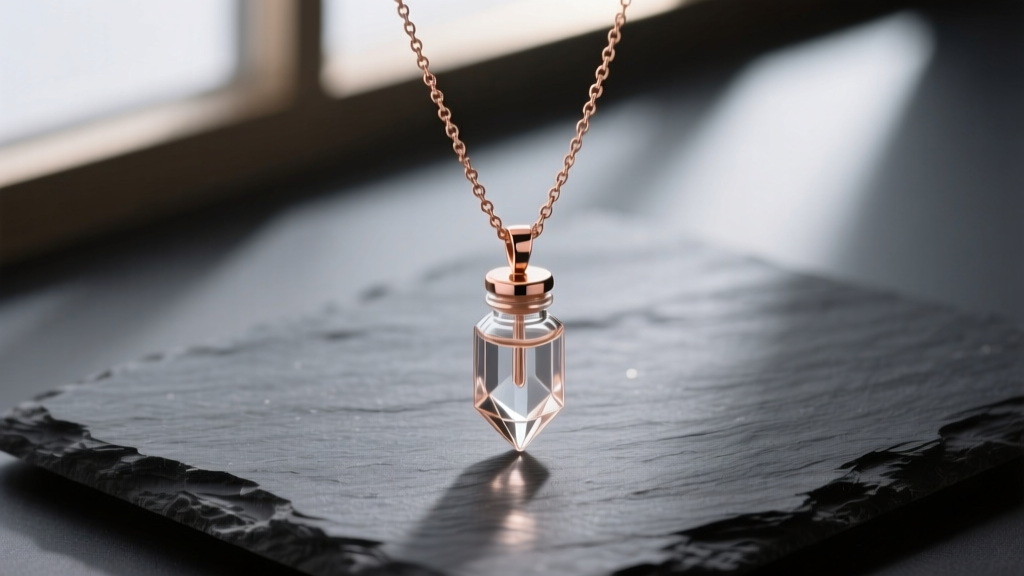
The landscape of remembrance has shifted dramatically. Gone are the days when memorial pieces were strictly somber, heavy, and overtly traditional. As we navigate 2026, the death positivity movement and a cultural shift toward personalized grief have propelled modern mourning jewelry into the mainstream. Today’s collectors and grieving families seek pieces that honor their loved ones while seamlessly integrating into their everyday wardrobes. However, the market is simultaneously flooded with mass-produced dropshipped trinkets and exquisite, artisan-crafted heirlooms. Navigating this space requires a discerning eye for material science, structural integrity, and artisan transparency.
This comprehensive buyer’s guide will equip you with the technical knowledge needed to evaluate modern mourning jewelry, ensuring your investment is as enduring as the memory it represents.
The Evolution of Remembrance: Defining the Modern Aesthetic
Historically, mourning jewelry—popularized during the Victorian era—relied on overt symbols of grief: weeping willows, urns, and woven hair. While beautiful, these pieces were explicitly designed to signal a state of mourning to society. Modern mourning jewelry flips this paradigm. According to the Order of the Good Death, contemporary grief culture emphasizes ongoing bonds and celebratory remembrance rather than performative sorrow.
When shopping for modern pieces, look for designs that prioritize subtlety and personal meaning over traditional funerary motifs. Geometric silhouettes, abstract topographical engravings, and minimalist glass vials are currently dominating the 2026 market. The goal is to find a piece that you feel comfortable wearing in a boardroom or at a dinner party, carrying your loved one close without inviting unsolicited inquiries from strangers.
Material Science: What Actually Lasts a Lifetime?
The most critical failure point in memorial jewelry is material degradation. Cremated remains (cremains) are highly alkaline, primarily consisting of calcium phosphates. When trapped against certain metals in the presence of moisture and body heat, cremains can accelerate tarnishing and corrosion. Choosing the right metal is non-negotiable for longevity.
Titanium vs. Surgical Steel vs. Precious Metals
Not all 'hypoallergenic' metals are created equal. Many commercial brands use 316L stainless steel, which is adequate for short-term wear but contains nickel and molybdenum that can react over decades. For lifelong wear, you must look for specific material grades.
| Metal Type | Grade to Look For | Durability & Reactivity | Best Use Case |
|---|---|---|---|
| Titanium | Grade 5 (Ti-6Al-4V) | Exceptional. 100% inert, will not react with cremains or skin acids. | Rings, heavy daily-wear pendants |
| Steel | ASTM F138 Implant Grade | High. Virtually nickel-free, highly corrosion-resistant. | Chains, minimalist bar necklaces |
| Gold | 14k or 18k Solid (No plating) | Excellent. Ensure the interior chamber is also solid gold, not brass. | Heirloom lockets, luxury rings |
| Silver | 925 Sterling (Rhodium plated) | Moderate. Prone to sulfide tarnishing; requires a sealed interior glass vial. | Occasional wear, traditional lockets |
Always verify that the metal meets the ASTM F138 standard if a brand claims their steel is 'implant grade.' If the interior chamber of a locket is made of brass or copper but plated in silver, the plating will eventually wear away, and the alkaline cremains will cause severe verdigris (green corrosion) that can ruin the ashes and stain your skin.
Ash Encapsulation & Resin Techniques: A Technical Breakdown
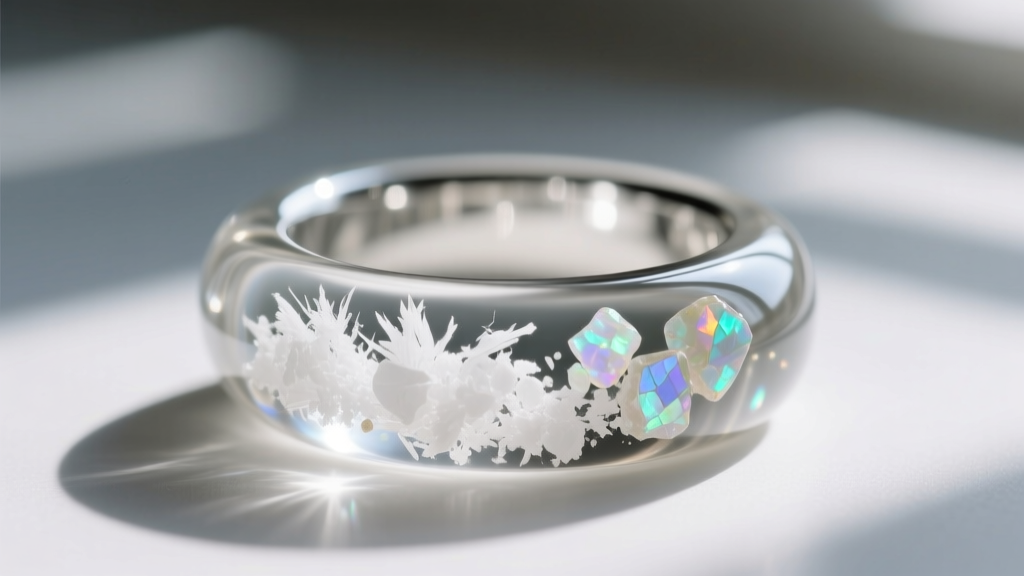
For rings and pendants where ashes are suspended in a clear medium, the type of resin or glass used dictates the piece's lifespan. The most common complaint in the memorial jewelry space is 'yellowing'—a photochemical reaction where UV exposure degrades the polymer chains in cheap resins.
The Resin Hierarchy
- Standard Epoxy Resin (Avoid): Cheap, mass-produced pieces use standard bisphenol-A (BPA) epoxies. These will inevitably yellow and become brittle within 12 to 24 months of daily sun exposure.
- Aliphatic Polyurethane Resin (Recommended): High-end artisans use UV-stabilized aliphatic polyurethanes. These possess superior optical clarity and resist yellowing for decades, maintaining a glass-like finish.
- Kiln-Fired Dichroic Glass (Premium): For absolute permanence, some jewelers fuse cremains directly into borosilicate or dichroic glass using a kiln. Glass is completely impervious to UV degradation and will outlast the metal setting itself.
Expert Tip: When commissioning a resin piece, explicitly ask the artisan: 'Do you use an aliphatic polyurethane resin with HALS (Hindered Amine Light Stabilizers) UV inhibitors?' If they don't know what that means, walk away.
Sizing, Ergonomics, and Daily Wear Considerations
Memorial jewelry is meant to be worn close to the heart or on the hands, meaning it must withstand the rigors of daily life. Structural failures usually occur not in the pendant itself, but in the findings—the bails, jump rings, and chains.
Chain Gauges and Clasp Security
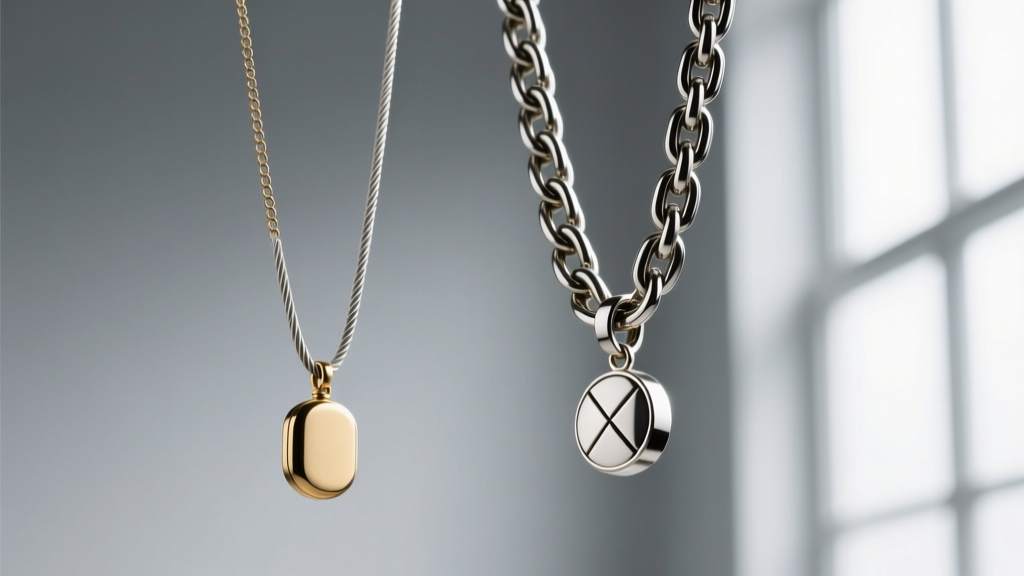
A heavy solid-gold or glass cremation pendant can easily weigh between 8 and 15 grams. Suspending this weight on a delicate chain is a recipe for catastrophic loss. Avoid standard 0.9mm cable chains or hollow-rope chains. Instead, opt for a minimum 1.5mm solid box chain, wheat chain, or rope chain. Furthermore, ensure the clasp is a locking mechanism, such as a lobster claw with a reinforced soldered jump ring, rather than a spring-ring clasp which is notorious for failing under tension.
Pricing Tiers: What You Should Actually Pay
The pricing for modern mourning jewelry varies wildly based on the manufacturing process. Understanding these tiers will protect you from being overcharged for dropshipped goods or underestimating the cost of true bespoke artistry.
- Tier 1: Mass-Produced / Dropshipped ($30 - $85)
These are typically hollow sterling silver or plated brass cylinders with a threaded screw-top. They do not encapsulate the ashes in resin; they merely store them. Quality control is low, and threading often strips after a few openings. - Tier 2: Artisan Resin & Custom Engraving ($150 - $450)
This is the sweet spot for modern mourning jewelry. You are paying for a professional who safely handles the cremains, casts them in UV-stable resin, and sets them in custom-fabricated bezels. This tier often includes personalized laser engraving and high-quality packaging. - Tier 3: High-End Glassblowing & Precious Metals ($600 - $2,500+)
At this level, you are commissioning a master glassblower or fine jeweler. Cremains are integrated into blown glass orbs or kiln-fired dichroic stones, then set in 14k/18k gold or platinum. These are true, multi-generational heirlooms.
Vetting the Artisan: Red Flags and Green Lights
Handing over a portion of your loved one's cremains requires immense trust. When evaluating a jeweler, look for strict chain-of-custody protocols. A reputable artisan will provide a video or photo update of your specific ashes being prepared and poured, ensuring no cross-contamination or mix-ups occur in the studio.
Red Flags: Artists who ask you to mail large quantities of ashes (a reputable jeweler needs less than a teaspoon), those who cannot clearly explain their resin UV-inhibitor process, or sellers who refuse to offer a replacement guarantee if the resin cracks during the curing process.
Green Lights: Clear turnaround times (custom encapsulation takes 4-8 weeks, not 3 days), transparent material sourcing, and a portfolio showing pieces that are several years old without yellowing.
Final Thoughts on Choosing Your Piece
Modern mourning jewelry is a profound intersection of metallurgy, chemistry, and deep emotional resonance. By prioritizing implant-grade metals, UV-stabilized encapsulation, and robust structural findings, you ensure that your memorial piece remains a beautiful, enduring tribute rather than a source of future heartbreak. Take your time, vet your artisans thoroughly, and choose a design that genuinely reflects the vibrant life of the person you are honoring.


