Mourning Jewelry Teeth: Material Guide for Safe Preservation
Discover the best encasement materials for mourning jewelry teeth. Compare resin, glass, and metal properties for safe dental preservation.

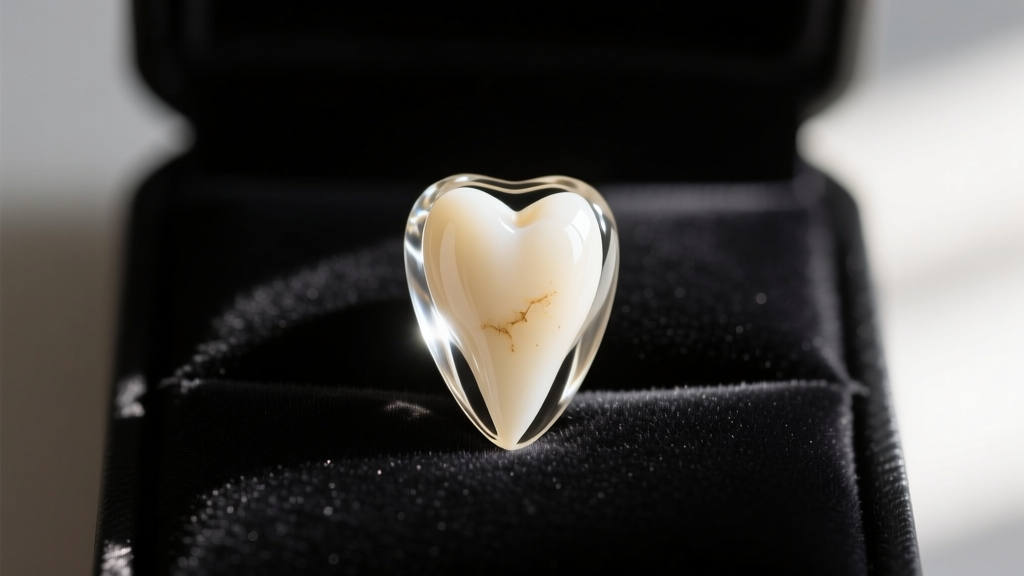
The creation of mourning jewelry teeth represents one of the most intimate and technically demanding niches within memorial craftsmanship. Whether preserving a beloved pet’s canine, a child’s shed milk tooth, or a historical family relic, the integration of dental matter into wearable art requires a profound understanding of material science. Unlike cremation ashes, which are essentially inert carbon and calcium phosphate, whole teeth are complex, semi-porous biological structures. They react to moisture loss, thermal shifts, and chemical exposure. Selecting the wrong encasement material can lead to catastrophic failure, including micro-fractures, discoloration, and complete structural collapse of the enamel.
The Biology of Remembrance: Enamel and Dentin Properties
To properly design mourning jewelry teeth, a jeweler must first understand the substrate they are working with. Dental enamel is the hardest substance in the mammalian body, composed of roughly 96% inorganic hydroxyapatite crystals, with the remaining 4% consisting of water and organic collagen matrices. Beneath the enamel lies the dentin, which is significantly more porous and contains a higher organic content.
The primary enemy of preserved teeth is dehydration. When a tooth is extracted and exposed to ambient air, the 4% water content slowly evaporates. This moisture loss causes the dentin to shrink, creating internal tensile stress that the rigid enamel shell cannot withstand. The result is a network of microscopic craze lines that eventually compromise the tooth's structural integrity. Furthermore, the optical properties of enamel—specifically its refractive index of approximately 1.62—mean that it interacts with light in a highly specific way. Encasement materials must be chosen not only for their protective qualities but also for their optical compatibility to prevent the tooth from looking dull or artificially opaque.
Pre-Treatment: Stabilization Before Encasement
Before any setting or pouring occurs, rigorous pre-treatment is mandatory. Many amateur jewelers make the fatal error of cleaning teeth with household bleach (sodium hypochlorite). Bleach rapidly destroys the organic collagen matrix within the dentin, turning the tooth chalky and brittle. Instead, professional conservators use distilled water and mild enzymatic cleaners to remove biological debris without compromising the crystalline structure.
Following cleaning, the tooth must undergo controlled dehydration and consolidation. This is typically achieved by submerging the specimen in a bath of Paraloid B-72, a conservation-grade acrylic resin widely used by museum archivists. Paraloid B-72 penetrates the microscopic pores of the dentin and replaces the water content, stabilizing the tooth from the inside out and preventing future shrinkage. According to preservation guidelines referenced by institutions like the British Museum's collection archive, acrylic consolidants provide long-term stability without the yellowing associated with commercial epoxies.
Material Comparison: Encasement Mediums
UV-Resistant Epoxy Resin
Epoxy resin is the most popular medium for mourning jewelry teeth due to its optical clarity and versatility. However, not all resins are created equal. Standard hardware-store epoxies cure with a high exothermic reaction, generating temperatures that can exceed 150°F (65°C). This heat can literally cook the residual organic matter inside the tooth, causing it to turn brown or fracture. Jewelers must use specialized, low-exotherm, slow-cure jewelry resins. Additionally, the refractive index of cured epoxy (typically around 1.50 to 1.55) is slightly lower than that of enamel (1.62). While this creates a beautiful, distinct boundary between the tooth and the resin, it requires careful lighting design in the piece to maximize brilliance. UV stabilizers and HALS (Hindered Amine Light Stabilizers) must be present in the resin formula to prevent the polymer matrix from degrading and yellowing under sunlight.
Borosilicate Glass and Kiln-Casting
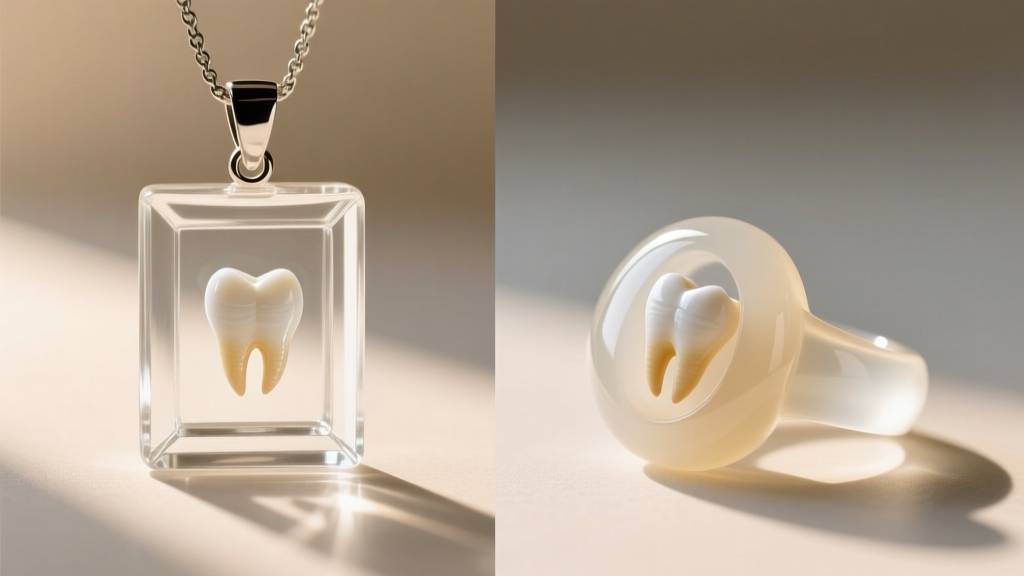
Glass offers an unparalleled, hermetic seal and a brilliant, scratch-resistant surface. However, incorporating teeth into glass is fraught with thermal peril. Borosilicate glass (COE 33) requires working temperatures in excess of 1,000°F (538°C). Direct flameworking over a real tooth will instantly calcine the hydroxyapatite, reducing it to ash and shattering the specimen due to thermal shock. Therefore, teeth cannot be directly fused inside traditional lampworked glass beads.
The only viable method for glass encasement is cold-joining or kiln-casting a glass "cap" or bezel that is later adhered to a metal setting holding the tooth. Alternatively, some master casters use a lost-wax casting technique where a high-temperature silicone mold is taken of the tooth, and a glass replica is cast. For preserving the *actual* biological tooth, glass must serve as an outer protective window (like a watch crystal) rather than a direct encasement matrix. The Gemological Institute of America (GIA) frequently notes the optical superiority of glass for displaying delicate inclusions, provided the thermal limits of the inclusion are respected.
Precious Metal Bezels and Mechanical Settings
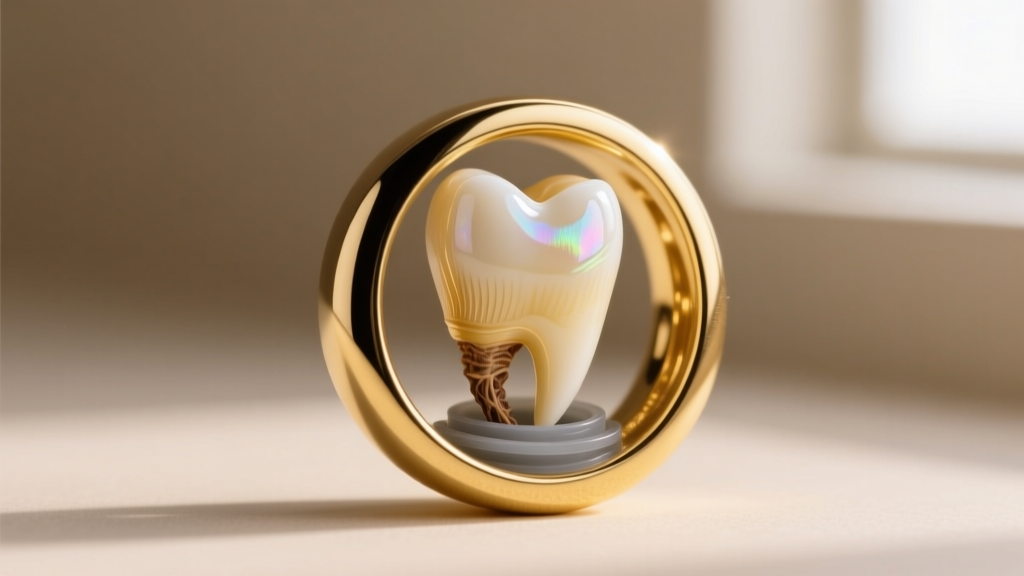
For clients who prefer the tooth to remain visible and unencased, precious metal settings are the standard. However, mechanical stress is a major failure mode. Traditional prong settings exert localized PSI (pounds per square inch) on the enamel, which is highly susceptible to cleavage and chipping under point-pressure. The superior approach is a custom-fitted bezel setting. Yet, even a bezel can crush a dehydrated tooth if rolled down too tightly.
Expert jewelers mitigate this by engineering a hidden shock-absorption layer. A thin gasket of medical-grade silicone or a thermoplastic elastomer (TPE) is placed between the inner wall of the 14k or 18k gold bezel and the tooth. This gasket absorbs daily kinetic impacts and accommodates microscopic expansions and contractions caused by body heat and environmental temperature shifts. Furthermore, the back of the setting should be sealed with a soldered metal plate or a glass crystal to prevent moisture, lotions, and skin acids from degrading the root structure of the tooth over decades of wear.
Failure Modes and Longevity Data
Understanding how different materials fail over time is critical for setting client expectations and designing heirloom-quality pieces. Below is a comparative breakdown of encasement and setting materials used in mourning jewelry teeth.
| Material / Method | Moisture Barrier | UV Resistance | Primary Failure Mode | Expected Longevity | Average Price Range |
|---|---|---|---|---|---|
| Low-Exotherm Epoxy | Excellent | Good (with HALS) | Surface scratching, eventual polymer yellowing | 20–40 Years | $150 – $400 |
| Borosilicate Glass Cap | Perfect | Perfect | Adhesive failure between glass and metal base | 100+ Years | $300 – $800 |
| 14k/18k Gold Bezel | Poor (unless sealed) | Perfect | Enamel fracture from mechanical tension or impact | Generational | $500 – $1,500+ |
| Sterling Silver Prong | Poor | Perfect | Silver tarnish transferring to porous dentin; prong snagging | 10–25 Years | $100 – $300 |
Historical Context and Modern Ethics
The use of biological remains in adornment is not a modern invention. During the Victorian era, mourning jewelry frequently incorporated human hair, and occasionally teeth, as tangible connections to the deceased. However, modern ethical and legal frameworks require strict provenance. When crafting mourning jewelry teeth, jewelers must ensure they are complying with local regulations regarding the handling of human and animal remains. For human teeth, documentation of consent and chain of custody is increasingly requested by high-end memorial ateliers to ensure the piece is an authentic family heirloom rather than sourced from unethical avenues. Transparency with the client regarding the origin, preparation, and expected lifespan of the materials used is a hallmark of professional E-E-A-T (Experience, Expertise, Authoritativeness, and Trustworthiness) in the memorial jewelry sector.
Final Recommendations for Jewelers and Families
Preserving mourning jewelry teeth is an exercise in balancing biology with metallurgy and polymer science. For families seeking a vibrant, three-dimensional display of the specimen, a low-exotherm, UV-stabilized epoxy resin poured into a deep bezel is the most practical and cost-effective choice. For those prioritizing generational longevity and absolute material permanence, a hermetically sealed borosilicate glass window over a stabilized, silicone-gasketed gold bezel offers the ultimate protection against the ravages of time, moisture, and wear. By respecting the delicate hydroxyapatite structure and choosing encasement materials based on empirical data rather than aesthetic trends, artisans can create memorial pieces that safely honor a life for centuries to come.


