Ray Griffiths Fine Jewelry: Troubleshooting Care & Repair
Expert troubleshooting for Ray Griffiths fine jewelry. Learn how to clean granulation, protect rose-cut diamonds, and authenticate pre-owned pieces.

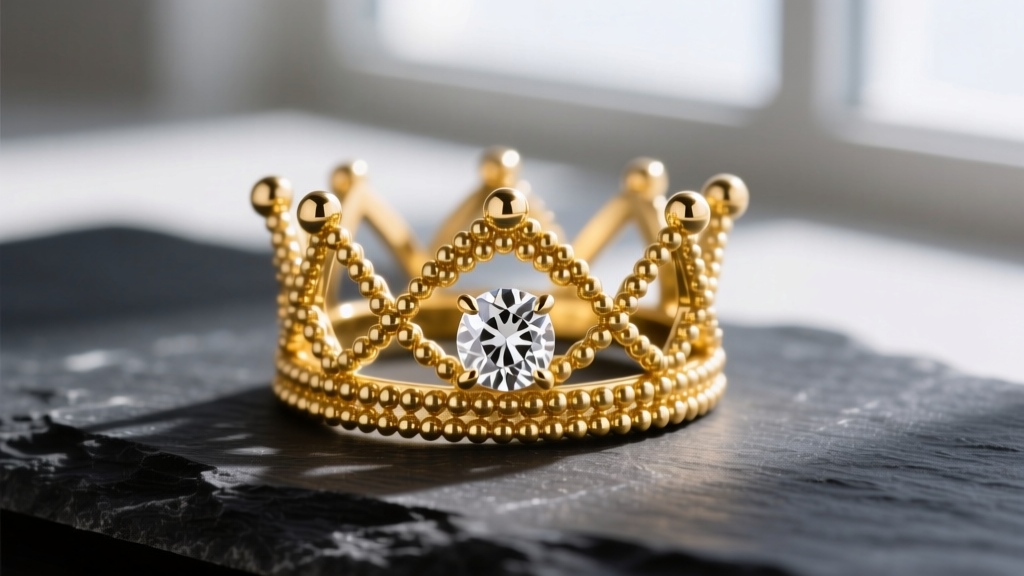
The Complexity of Artisanal Goldsmithing
When investing in Ray Griffiths fine jewelry, you are acquiring more than a decorative accessory; you are purchasing a piece of contemporary wearable sculpture. Renowned for his signature Crown Ring and mastery of ancient granulation techniques, Griffiths bridges the gap between historical goldsmithing and modern luxury. However, the very techniques that make his 18k gold pieces so visually arresting also introduce unique maintenance challenges. As the secondary market for artisanal jewelry surges in 2026, collectors and new owners alike frequently encounter issues regarding cleaning, prong wear, and authentication. This guide provides deep, technical troubleshooting for maintaining and verifying high-end artisanal jewelry.
Troubleshooting 1: Cleaning Intricate Granulation & Beadwork
Granulation is the process of fusing tiny spheres of gold to a base metal without the use of traditional, heavy solder. Historically, this was achieved using a eutectic alloy—a precise mixture of gold and copper salts that melts at a lower temperature than the base metal, creating a microscopic metallic bond. While Griffiths utilizes modern bench techniques to ensure durability, the intricate topography of beadwork creates hundreds of microscopic crevices that trap skin oils, lotions, and environmental dust.
The Danger of Ultrasonic Cleaners
The most common mistake owners make is placing textured 18k gold pieces into commercial ultrasonic cleaners. The high-frequency cavitation bubbles can force moisture deep into the eutectic bonds. Over time, or if the piece has suffered microscopic stress fractures from daily wear, this trapped moisture can lead to localized oxidation of the copper alloy within the 18k gold, resulting in a dull, darkened patina that is nearly impossible to polish out without professional refinishing.
Expert Rule of Thumb: Never use steam cleaners on any piece featuring porous gemstones or complex beadwork. The sudden thermal shock can fracture stones, while the pressurized steam forces impurities deeper into the gold texture.
The Safe Manual Cleaning Protocol
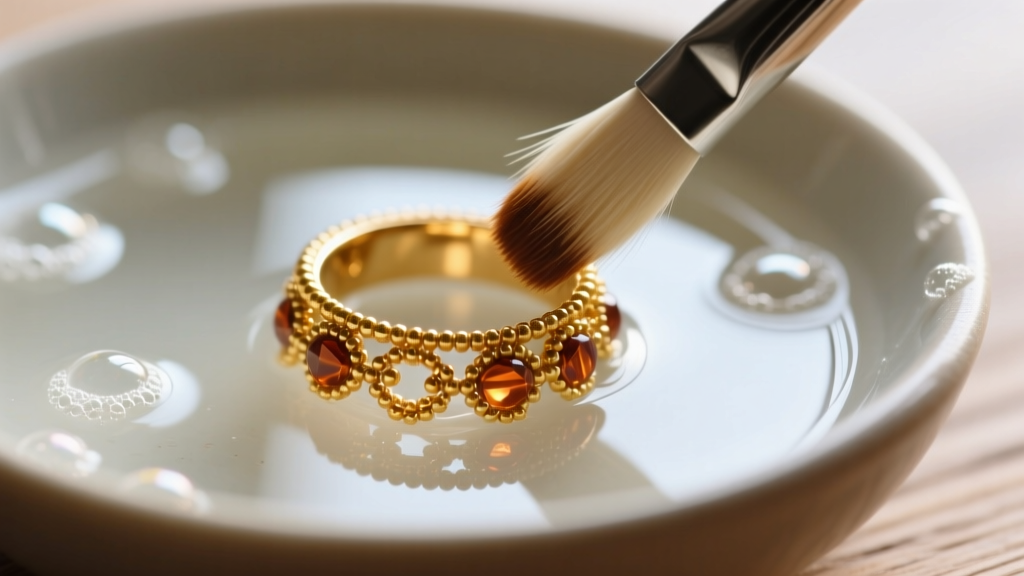
- Step 1: Prepare a solution of lukewarm water and a few drops of pH-neutral dish soap (avoid harsh detergents with added moisturizers or citrus acids).
- Step 2: Submerge the piece for exactly 3 to 5 minutes to loosen surface lipids.
- Step 3: Use a soft-bristled baby toothbrush or a specialized jewelry brush with extra-soft nylon bristles. Brush in a single direction across the beadwork, never in aggressive circles, to avoid bending delicate gold wires.
- Step 4: Rinse under a gentle stream of distilled water to prevent hard water spots.
- Step 5: Dry immediately with a lint-free microfiber cloth, followed by a cool setting on a hair dryer to evaporate moisture trapped between the granules.
Troubleshooting 2: Prong Wear on Rose-Cut & Custom Gemstones
Ray Griffiths frequently utilizes unconventional gemstone cuts, most notably the rose cut and custom-faceted boulder opals. While beautiful, these stones require highly specialized setting mechanics that are prone to specific failure modes if not monitored.
Rose-Cut Diamond Vulnerabilities
Unlike brilliant-cut diamonds that feature a deep pavilion, rose-cut diamonds have a flat bottom and a shallow, domed top typically featuring 24 facets. Because they lack depth, the girdle (the outer edge) is extremely thin. According to the GIA Diamond Anatomy Guide, securing a shallow stone requires the bench jeweler to carve a very precise, low-profile bearing inside the prong. If the prong wears down by even a fraction of a millimeter due to friction against clothing, the stone can easily slip out of the setting. Perform the 'snag test' monthly: run a piece of silk fabric over the ring. If the silk catches on a prong, the metal has lifted and requires immediate professional retipping.
Boulder Opal and the Ironstone Matrix
Queensland boulder opals are prized for their vibrant play-of-color against a dark, natural ironstone backing. While the opal itself is relatively stable, the ironstone matrix is susceptible to chemical degradation. Exposure to chlorine (in pools or tap water) or harsh household cleaners can cause the ironstone to oxidize, leading to a rusty discoloration that bleeds into the gemstone's visual field. For comprehensive care guidelines on porous and matrix-backed stones, the Gemological Institute of America (GIA) strongly recommends removing opal jewelry before any aquatic or chemical exposure.
Material-Specific Care & Risk Matrix
| Material / Component | Primary Risk Factor | Troubleshooting Solution |
|---|---|---|
| 18k Yellow Gold Granulation | Trapped moisture causing copper alloy oxidation | Cool air-drying post-wash; avoid ultrasonics |
| Rose-Cut Diamonds | Shallow girdle slipping from worn prong bearings | Bi-annual loupe inspections; silk snag test |
| Boulder Opal (Ironstone) | Chemical oxidation of the natural iron matrix | Strict avoidance of chlorine and acids |
| Matte/Satin Gold Finishes | Polishing cloths inadvertently buffing away texture | Use only liquid soap and soft brush; no rubbing |
Authenticating Pre-Owned Ray Griffiths Fine Jewelry
With the brand's legacy cemented, the secondary market for vintage and estate Ray Griffiths fine jewelry has become highly active. However, this also invites sophisticated counterfeits and 'frankenstein' pieces (where authentic stones are set in replica mountings). Authenticating these pieces requires looking beyond basic visual appraisal.
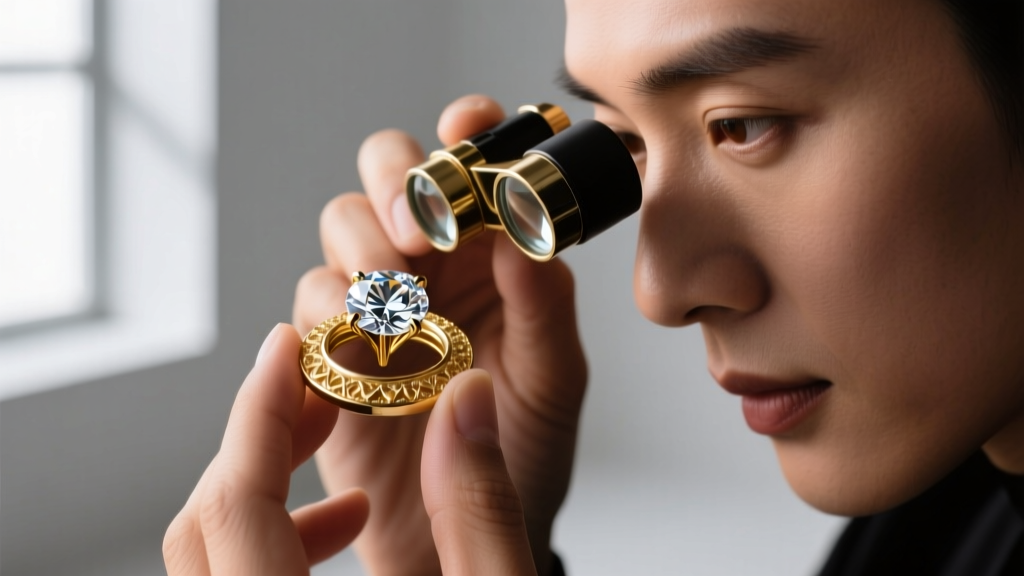
- Hallmark Verification: Authentic pieces are typically stamped with 'RG', '18k', and often feature a microscopic crown motif. However, stamps alone are insufficient. Use a 10x triplet loupe to examine the stamp's edges; genuine artisanal stamps are laser-sharp or deeply hand-engraved, whereas cast replicas often show rounded, muddy edges or 'orange peel' texture inside the stamp.
- Granulation Consistency: Examine the beadwork under magnification. Hand-finished and individually fused granules will show microscopic variations in size and slight asymmetries in their placement. Cast imitations will feature beads that are perfectly uniform, often with visible flow lines or porosity (tiny pits) where the molten metal failed to fill the mold completely.
- Weight and Specific Gravity: Griffiths' pieces are renowned for their substantial, luxurious weight without being bulky. A counterfeit cast in 14k gold or brass with heavy gold plating will have a noticeably different specific gravity and acoustic resonance when gently tapped against a hard surface.
- Provenance and Documentation: Always request the original certificate of authenticity or purchase receipt. Cross-reference the piece's design with the Ray Griffiths Official Archives to ensure the model matches the brand's historical production eras.
When to Seek Professional Artisan Repair
Standard mall kiosks and basic bench jewelers are generally ill-equipped to handle the repair of high-end artisanal jewelry. If a granulated 18k gold ring requires resizing, the heat from a traditional jeweler's torch can easily melt the delicate eutectic bonds, causing entire sections of beadwork to detach or fuse together into an unrecognizable lump.
For structural repairs, resizing, or prong retipping on rose-cut diamonds, you must seek out a master bench jeweler who specializes in laser welding. Laser welders allow for pinpoint heat application, fusing gold without raising the ambient temperature of the surrounding granulation or risking thermal shock to the gemstones. Always ask to see a portfolio of the jeweler's previous work on textured or granulated surfaces before handing over an heirloom piece. Proper troubleshooting and specialized care ensure that these masterworks of contemporary goldsmithing remain pristine for generations.


