The Engineering of Cremation Jewelry for Ashes: A Technical Guide
Discover the technical specs of cremation jewelry for ashes. Learn about sealing mechanisms, material grades, and ash capacities for secure keepsakes.

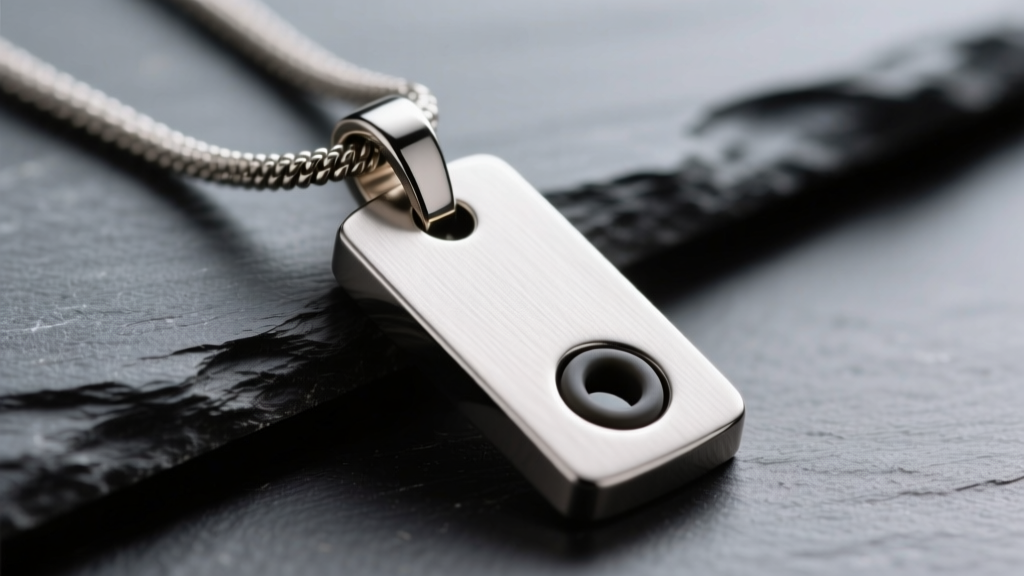
When selecting a memorial keepsake, consumers often focus purely on aesthetics. However, the engineering behind high-quality cremation jewelry for ashes involves rigorous material science, precision machining, and fluid dynamics. Unlike standard pendants, these vessels must securely contain pulverized calcium phosphate (bone ash) while resisting environmental degradation, thermal expansion, and galvanic corrosion. This technical deep dive explores the metallurgical and mechanical specifications that separate secure, heirloom-grade memorial pieces from novelty items prone to catastrophic failure.
The Material Science of Ash Retention
The internal environment of an ash vessel is highly alkaline and completely desiccated. The outer environment, however, is exposed to human sweat (chlorides and urea), cosmetics, and atmospheric moisture. Selecting the correct alloy is the first line of defense against micro-corrosion and structural degradation.
316L vs. 304 Stainless Steel
While 304 stainless steel is common in budget jewelry, expert jewelers specify 316L surgical stainless steel for cremation vessels. The addition of 2-3% molybdenum in 316L drastically increases resistance to pitting and crevice corrosion in chloride-rich environments (like sweat or seawater). According to MatWeb Material Property Data, 316L also exhibits superior weldability and lower magnetic permeability, making it ideal for precision laser-welded seals.
Grade 5 Titanium (Ti-6Al-4V)
For wearers with nickel sensitivities or those seeking ultra-lightweight durability, Grade 5 Titanium is the premium standard. It boasts a strength-to-weight ratio far exceeding steel and is entirely biocompatible. However, titanium's galling tendency makes machining internal threads difficult, requiring specialized tooling and precise tolerances to prevent the threaded bail from seizing during opening and closing.
Borosilicate Glass Vessels
When ashes are encapsulated in glass, the material must be COE 33 borosilicate. Unlike soft soda-lime glass, borosilicate offers extreme thermal shock resistance and chemical durability. As noted by Bullseye Glass Co., COE 33 glass withstands rapid temperature changes without micro-fracturing, ensuring the structural integrity of the pendant when transitioning from cold outdoor air to body heat.
Sealing Mechanisms: Threaded vs. Friction vs. Welded
The seal is the most critical mechanical component of any ash vessel. A compromised seal leads to moisture ingress (which degrades the ashes) or total loss of the remains.
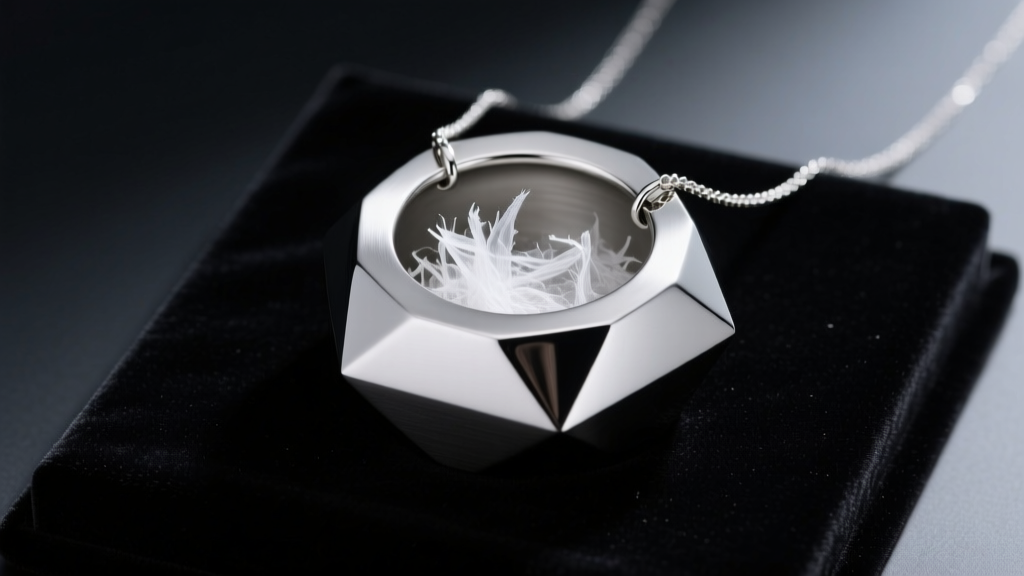
Threaded Bails with Fluoroelastomer O-Rings
The gold standard for user-serviceable cremation jewelry for ashes is a precision-machined threaded bail paired with a Viton (FKM) O-ring. Viton is a fluoroelastomer that resists degradation from UV light, ozone, and body oils far better than standard Buna-N (Nitrile) rubber. The threads must be cut to a minimum depth of 0.5mm with a 60-degree flank angle to ensure adequate clamping force without stripping the soft metal of the pendant body.
Friction Fit and Tapered Stoppers
Friction-fit designs utilize a tapered silicone stopper pressed into a smooth bore. While aesthetically seamless, these are highly susceptible to thermal expansion failure. If the metal pendant heats up in direct sunlight, the internal air volume expands, creating positive pressure that can eject the stopper. These designs require a secondary mechanical lock or high-tack silicone adhesive to remain secure.
Permanent Laser Welding
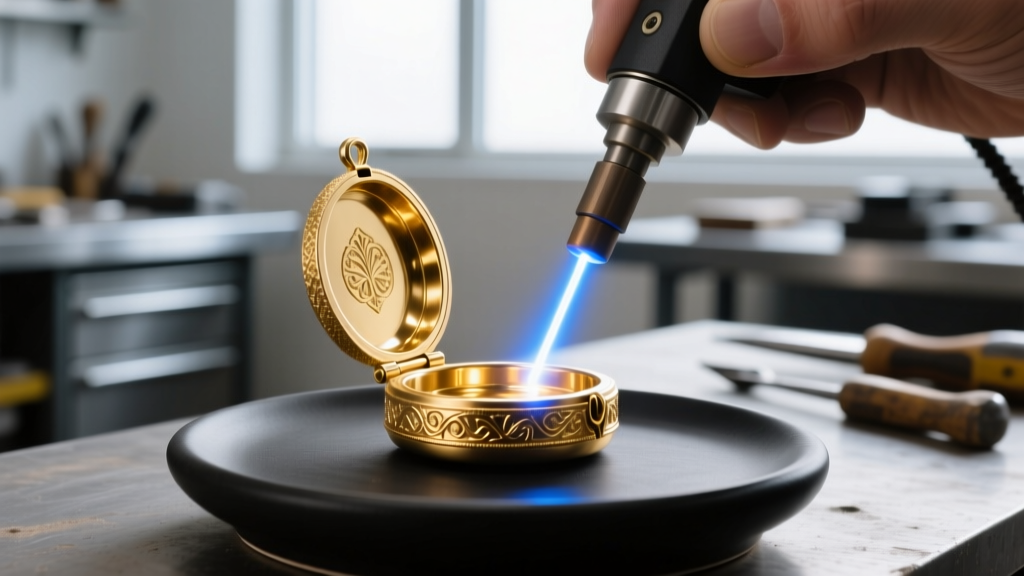
For maximum security, many jewelers offer permanent sealing via pulsed Nd:YAG laser welding. This process fuses the metal cap to the vessel body without introducing filler wire. Crucially, the heat-affected zone (HAZ) must be strictly managed; excessive thermal transfer can scorch the organic carbon remnants inside the ashes, altering their color and odor.
Volumetric Capacity and Ash Preparation
A common point of failure occurs when consumers attempt to load unprocessed cremated remains into micro-vessels. Cremains are not uniform powder; they consist of bone fragments that must be mechanically processed.
| Vessel Type | Internal Volume | Max Particle Size | Recommended Seal |
|---|---|---|---|
| Micro-Cylinder Pendant | 0.3 mL - 0.5 mL | < 75 microns | Threaded Bail (M3) |
| Standard Urn Locket | 1.0 mL - 1.5 mL | < 150 microns | Friction + Silicone |
| Glass Teardrop Core | 2.0 mL - 3.0 mL | < 500 microns | Flame-Sealed / Welded |
| Heavy Gauge Ring | 0.1 mL - 0.2 mL | < 50 microns | Set-Screw with Loctite |
To achieve the necessary particle size (typically under 150 microns for standard pendants), the remains must be processed using a ceramic mortar and pestle. The Cremation Association of North America (CANA) notes that standard cremulator machines reduce bone to a gravel-like consistency, which is far too coarse for the narrow 2mm to 4mm apertures found in high-quality cremation jewelry for ashes. Loading must be done using a micro-funnel and a stainless steel tamping rod to eliminate air pockets and maximize volumetric efficiency.
Environmental Degradation and Waterproofing
Memorial jewelry is worn daily, subjecting it to harsh chemical environments. Understanding how these factors interact with the vessel's seals is vital for long-term preservation.
- Chlorine Exposure: Swimming pools contain high levels of free chlorine, which rapidly degrades standard rubber gaskets and attacks the grain boundaries of lower-grade stainless steels. Viton O-rings and 316L steel are mandatory for swimmers.
- Ultraviolet Resin Breakdown: Some budget pendants use UV-cured epoxy resin to seal threaded caps. Prolonged UV exposure causes the resin to yellow, embrittle, and shrink, ultimately breaking the waterproof seal.
- Cosmetic Solvents: Perfumes, hairsprays, and lotions contain volatile organic compounds (VOCs) and alcohols that can dissolve silicone friction gaskets over time, leading to a loss of compression seal.
Expert Troubleshooting: Common Failure Modes
Even with premium materials, improper handling can compromise the integrity of the vessel. Here are the most frequent technical failures and their solutions:
Cross-Threading the Bail: Because the threads on ash pendants are exceptionally fine (often M3x0.35 or M4x0.5), forcing the bail when misaligned will strip the internal female threads. Solution: Always back-thread (turn counter-clockwise) until you feel the 'click' of the threads aligning, then tighten clockwise by hand only. Never use pliers.
O-Ring Pinching and Shearing: If the O-ring rolls out of its designated groove during assembly, tightening the bail will shear the rubber, creating a microscopic channel for moisture. Solution: Apply a microscopic dab of food-grade silicone grease to the O-ring before assembly. This holds it in the groove and reduces friction-induced tearing.
Moisture Ingress and Ash Clumping: If ashes are sealed in a high-humidity environment, trapped moisture will cause the calcium phosphate to clump and expand slightly, putting outward pressure on the vessel walls. Solution: Load and seal the jewelry in a climate-controlled room (under 40% relative humidity), or include a 1mm silica gel desiccant bead inside the chamber if volume permits.
Final Verification Before Sealing
The creation and maintenance of cremation jewelry for ashes is a discipline that bridges metallurgy, precision mechanics, and profound emotional significance. By prioritizing 316L or Grade 5 materials, insisting on Viton-sealed threaded mechanisms, and properly preparing the remains to the correct micron specification, you ensure the physical security of the memorial. Always verify the torque of the seal, inspect the O-ring for micro-abrasions annually, and avoid chemical solvents to guarantee the vessel remains a permanent, secure tribute for decades to come.


