Troubleshooting Cremation Jewelry for Pets Ashes: A Repair Guide
Learn how to troubleshoot common issues with cremation jewelry for pets ashes, from yellowing resin and leaking compartments to tarnished metals.

The Emotional Toll of Memorial Jewelry Failure
Losing a beloved animal companion is an agonizing experience, and the physical keepsakes we choose to honor them carry immense emotional weight. When you invest in cremation jewelry for pets ashes, you expect a durable, lifelong tribute. However, the reality of daily wear combined with the unique chemical properties of cremated remains can lead to frustrating failures. From compromised seals leaking precious ashes to resin inclusions turning an unsightly yellow, these issues require immediate, precise intervention.
As a senior jewelry analyst, I frequently consult with grieving pet owners who believe their memorial piece is permanently ruined. In most cases, the damage is reversible, or at least preventable moving forward. This comprehensive troubleshooting guide will walk you through the exact mechanical and chemical failures common in pet memorial jewelry and provide actionable, professional-grade solutions to restore and protect your keepsake.
Problem 1: Ashes Leaking from the Compartment
Discovering that your pendant is slowly losing its contents is a nightmare scenario. Leakage almost always stems from a failure in the sealing mechanism, which is typically either a friction-fit plug or a threaded screw cap.
Diagnosing the Seal Failure
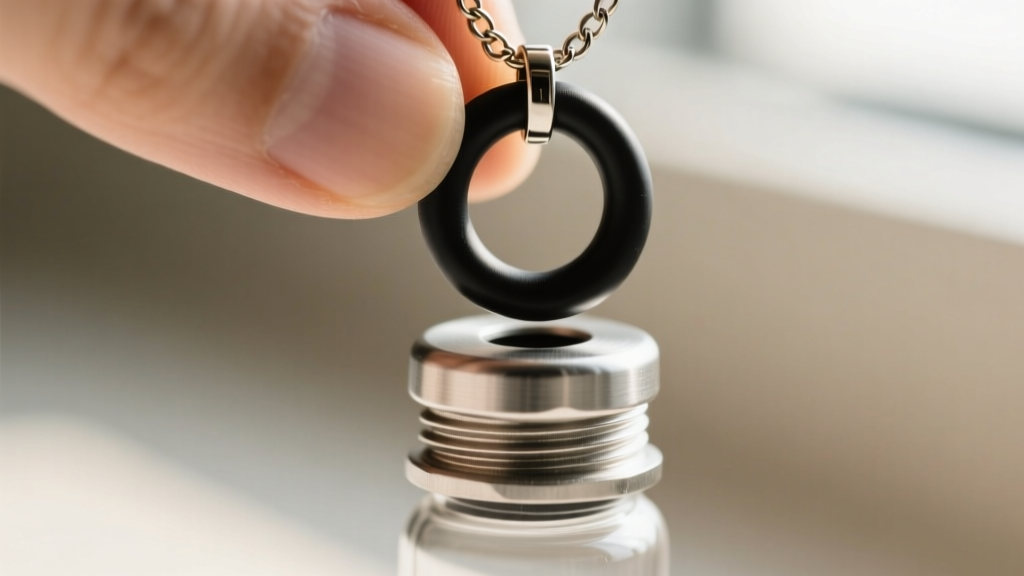
Friction-fit stoppers rely entirely on the precision of the metal or glass machining. Over time, body heat, sweat, and minor impacts cause microscopic expansions and contractions, loosening the fit. Threaded caps are more secure but rely on an internal O-ring that degrades, flattens, or snaps.
The O-Ring and Thread Sealant Fix
If your threaded pendant is leaking, do not simply tighten it harder; you risk stripping the micro-threads or cracking the vial. Instead, perform a seal replacement:
- Identify the O-Ring Size: Most standard pet ash pendants use a metric O-ring with a 1.5mm inner diameter (ID) and a 0.5mm cross-section. You can purchase a nitrile (Buna-N) O-ring assortment to find the exact match.
- Apply PTFE Tape: For metal-on-metal threaded caps that lack an O-ring groove, wrap the male threads with exactly one layer of plumber’s PTFE (Teflon) thread seal tape. This fills the microscopic gaps without requiring permanent adhesives.
- Avoid Liquid Threadlockers: Never use Loctite or superglue on the threads of an ash compartment. If you ever need to add more ashes or transfer them to a larger urn, a chemical bond will permanently seal the piece, forcing you to destroy it to retrieve the contents.
Problem 2: Resin Inclusions Turning Yellow or Cloudy
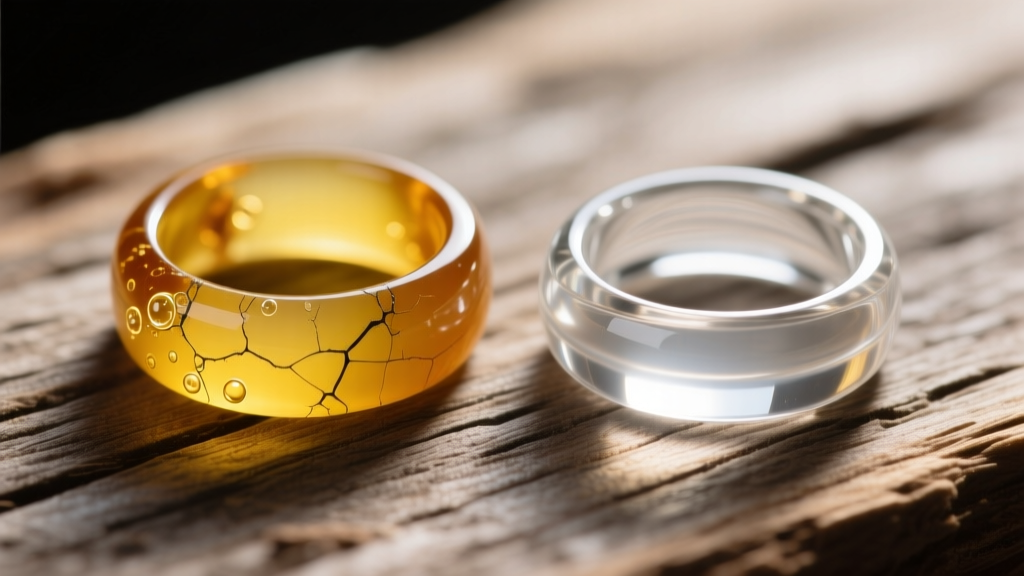
Resin encapsulation is a popular method for integrating pet ashes into rings and pendants. However, many owners report their crystal-clear resin turning cloudy, milky, or deep yellow within the first year. This is rarely a defect in the ashes themselves, but rather a chemical reaction within the polymer matrix.
UV Degradation vs. Moisture Trapping
Cloudiness is almost always caused by trapped moisture. Cremated remains are highly hygroscopic, meaning they absorb humidity from the air. If ashes are encapsulated while damp, the moisture vaporizes slightly under the exothermic heat of the curing resin, creating microscopic bubbles that scatter light, resulting in a milky appearance.
Yellowing, on the other hand, is a photochemical reaction. Standard epoxies break down when exposed to ultraviolet light. To combat this, professional jewelers use resins formulated with HALS (Hindered Amine Light Stabilizers) and UV absorbers. According to polymer experts at ArtResin, even UV-stabilized resins will eventually yellow if exposed to direct, unfiltered sunlight for prolonged periods, but the timeline is extended from months to decades.
The Pre-Encapsulation Baking Protocol
If you are commissioning a custom piece or doing a DIY pour, you must neutralize the moisture in the ashes. Spread the ashes thinly on a ceramic baking sheet and bake them in an oven at 200°F (93°C) for two hours. Allow them to cool in a sealed desiccator or an airtight container with silica gel packets before mixing them with the resin.
| Resin Type | UV Resistance | Moisture Tolerance | Cure Time | Best Application |
|---|---|---|---|---|
| Standard Epoxy | Poor (Yellows in 6-12 mos) | Low (Clouds easily) | 24-48 Hours | Temporary/Display only |
| UV-Stabilized Epoxy | Excellent (HALS additives) | Moderate | 24-72 Hours | Daily wear rings/pendants |
| Polyurethane Resin | Moderate | High (Moisture cures it) | 10-15 Minutes | Opaque, solid-color casts |
| UV-Cure Resin | Good | Low | 2-5 Minutes (per layer) | Thin surface coatings |
Problem 3: Metal Tarnishing and Skin Discoloration
Memorial jewelry is worn close to the skin, constantly exposed to sweat, lotions, and natural body oils. If your pet memorial pendant is turning your skin green or developing a dark, oxidized patina, you are likely dealing with base metal alloys or unsealed sterling silver.
Identifying Your Metal Grade
The Federal Trade Commission (FTC) Jewelry Guides strictly regulate metal stamping. If your piece is stamped "925," it is sterling silver, which contains 7.5% copper. Copper reacts with sulfur and moisture, causing tarnish. If your piece has no stamp or is labeled "Tibetan Silver" or "Alpaca," it is likely a zinc or nickel alloy that will corrode and cause contact dermatitis.
Cleaning and Polishing Protocols
Warning: Never use liquid silver dip solutions on cremation jewelry. These harsh chemical baths can seep into microscopic gaps in the compartment seals, reacting with the alkaline nature of the ashes and creating irreversible internal staining.
Instead, use a dry, treated polishing cloth (such as a Sunshine cloth) to gently buff the exterior. For deep crevices, use a soft-bristled baby toothbrush with a drop of mild dish soap and warm water, ensuring the compartment seal is tightly closed and dried immediately with a microfiber towel. For long-term wear without maintenance, consider upgrading to 316L surgical stainless steel or 14k solid gold, which are entirely immune to standard environmental tarnishing.
Problem 4: Glass and Crystal Vials Cracking
Glass cremation vials, particularly those shaped like hearts or teardrops, are prone to spontaneous cracking. This is rarely due to dropping the piece; rather, it is a result of thermal shock and internal pressure.
Many mass-produced glass pendants are made from soda-lime glass that has not been properly annealed (slowly cooled to relieve internal stresses). When worn against the body, the localized heat can cause the stressed glass to fracture. Furthermore, if ashes were sealed inside while the air inside the vial was warm, cooling down causes a vacuum effect, while heating up causes internal pressure expansion.
The Fix: If you are purchasing a glass vial, insist on borosilicate glass (the same material used in laboratory beakers), which has a near-zero coefficient of thermal expansion. If a soda-lime glass vial cracks, the ashes cannot be safely extracted without risking contamination from glass shards. You must carefully place the entire broken vial into a larger, secure metal urn or a secondary sealed vessel.
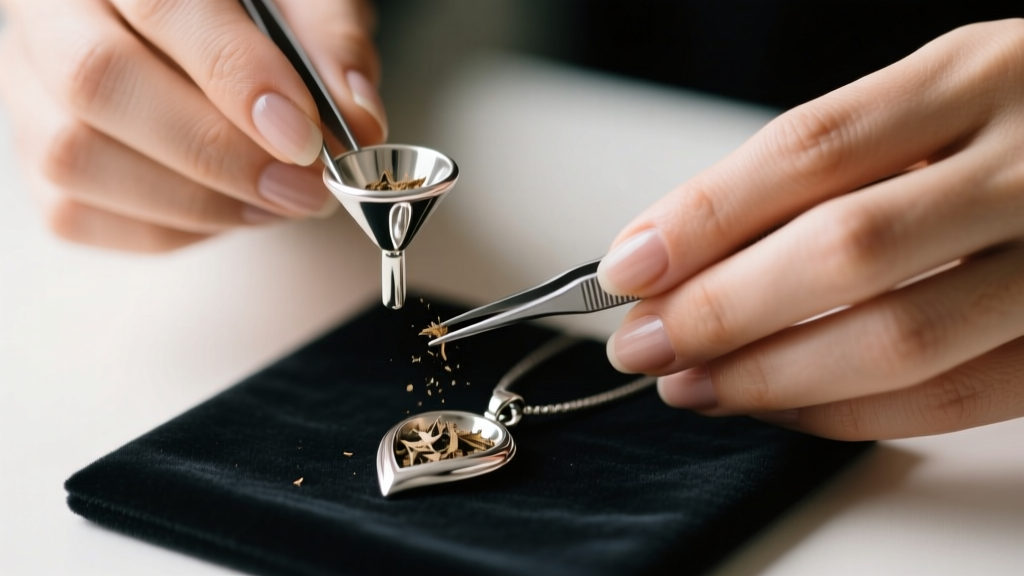
DIY Filling Troubleshooting: Avoiding the "Ash Spill"
The most common point of failure for pet owners occurs before the jewelry is even worn: the filling process. Pet ashes are incredibly fine, resembling powdered sugar, and are highly susceptible to static electricity. A slight breeze or a shaky hand can result in the tragic loss of remains.
Follow this professional protocol for a clean fill:
- Neutralize Static: Wipe the outside of your filling funnel and the jewelry piece with an unscented dryer sheet. This eliminates the static charge that causes ashes to cling to the sides of the funnel and fly away.
- Use the Right Tools: Discard the cheap plastic scoops that come with most kits. Use a miniature stainless steel micro-spatula or a folded piece of heavy cardstock to create a controlled chute.
- Work Over a Catch Tray: Always perform the transfer over a large, clean, dark-colored ceramic plate or a piece of dark velvet. If you spill, the contrast makes it easy to see, and the non-porous surface allows you to carefully funnel the ashes back into the primary container without losing a single particle.
- Do Not Pack the Ashes: Fill the compartment to about 80% capacity. Packing the ashes tightly can cause them to bind the threads when you attempt to screw the cap back on, leading to cross-threading and a compromised seal.
When to Call a Professional Jeweler
While many issues with cremation jewelry for pets ashes can be resolved at home, certain failures require professional intervention. If the bail (the loop that holds the chain) has snapped off a sterling silver or gold piece, a jeweler can easily laser-weld it back on without applying the high heat of a traditional torch, which could damage the ashes inside. Similarly, if a resin inclusion has severely yellowed or chipped, a professional lapidary or resin artist can often carefully drill out the old resin, clean the metal setting, and pour a fresh, UV-stabilized inclusion, saving the sentimental metalwork.
By understanding the material science behind your pet's memorial piece, you can ensure it remains a pristine, secure, and beautiful tribute for decades to come. Treat the jewelry with the same specialized care you would afford any high-end heirloom, and it will faithfully carry your companion's memory forward.


