What Is Fine Jewelry? Material Grades & Alloy Properties
Discover what is fine jewelry by comparing precious metal alloys, karat weights, and gemstone grades. Learn to identify true quality beyond the price tag.

Defining the Boundary: What Is Fine Jewelry Really?
When navigating the vast landscape of adornments, consumers frequently ask: what is fine jewelry and how does it differ from fashion or costume pieces? The distinction is not merely a marketing construct; it is a strict material classification rooted in metallurgy and gemology. Fine jewelry is defined by its use of solid precious metals—such as gold, platinum, palladium, and sterling silver—and genuine, naturally occurring or lab-grown precious and semi-precious gemstones.
Unlike fashion jewelry, which relies on base metals like brass, copper, or zinc alloys coated in thin metallic washes, fine jewelry possesses intrinsic material value and structural longevity. A piece of fine jewelry is engineered to withstand decades of daily wear, resist oxidation, and be passed down as an heirloom. Understanding the precise material properties, alloy compositions, and gemological tiers is essential for making informed investments and avoiding overpriced demi-fine imitations.
The Precious Metal Matrix: Karats, Alloys, and Durability
Pure gold (24K) is exceptionally malleable, registering a mere 25 on the Vickers hardness scale (HV). This makes it entirely unsuitable for structural jewelry components like ring shanks or prongs, as it will deform under minimal pressure. To achieve the durability required for everyday wear, gold is alloyed with other metals, fundamentally altering its color, tensile strength, and scratch resistance.
Gold: 14K vs. 18K vs. 24K
- 24K Gold (99.9% Pure): Rich, orange-yellow hue. Too soft for gemstone settings. Primarily used in investment bullion or specific cultural bridal traditions.
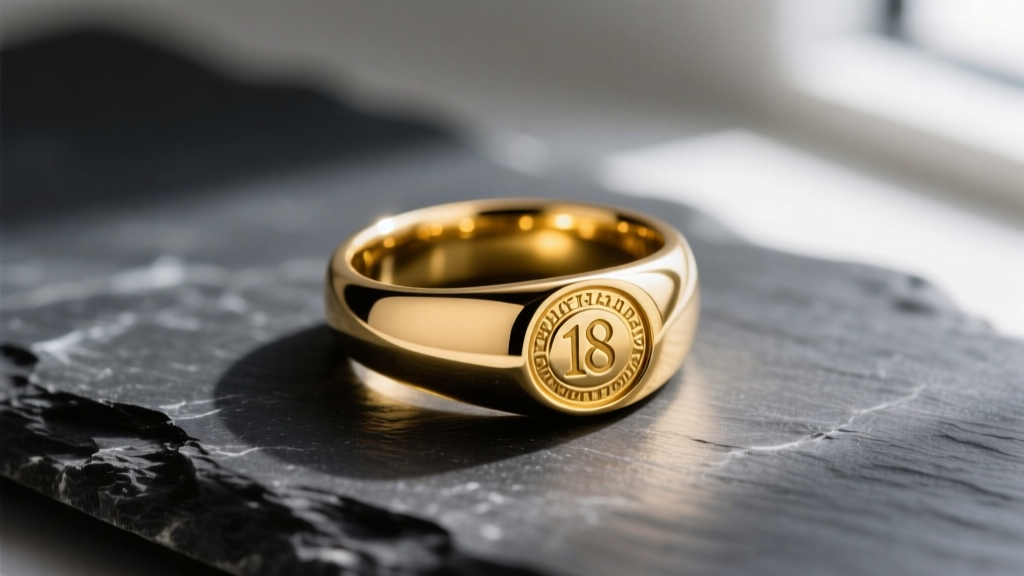
- 18K Gold (75% Gold, 25% Alloy): The global standard for high-end fine jewelry. It offers a warm, saturated color and a Vickers hardness of approximately 125 HV. It is ideal for necklaces, earrings, and occasional-wear rings.
- 14K Gold (58.3% Gold, 41.7% Alloy): The workhorse of the American fine jewelry market. With a hardness of roughly 140 HV, it provides superior resistance to scratching and bending, making it the optimal choice for everyday engagement rings and wedding bands.
The White Gold and Platinum Dilemma
White gold is not a naturally occurring metal; it is an alloy of yellow gold mixed with white metals like nickel, palladium, or silver. Nickel-based white gold is harder and cheaper but causes contact dermatitis in roughly 10-15% of the population. Palladium-based white gold is hypoallergenic and naturally whiter but commands a premium. Regardless of the alloy, white gold is almost universally plated with rhodium (a platinum group metal) to achieve a brilliant, mirror-like white finish. This plating wears off over time, requiring re-rhoding every 12 to 24 months.
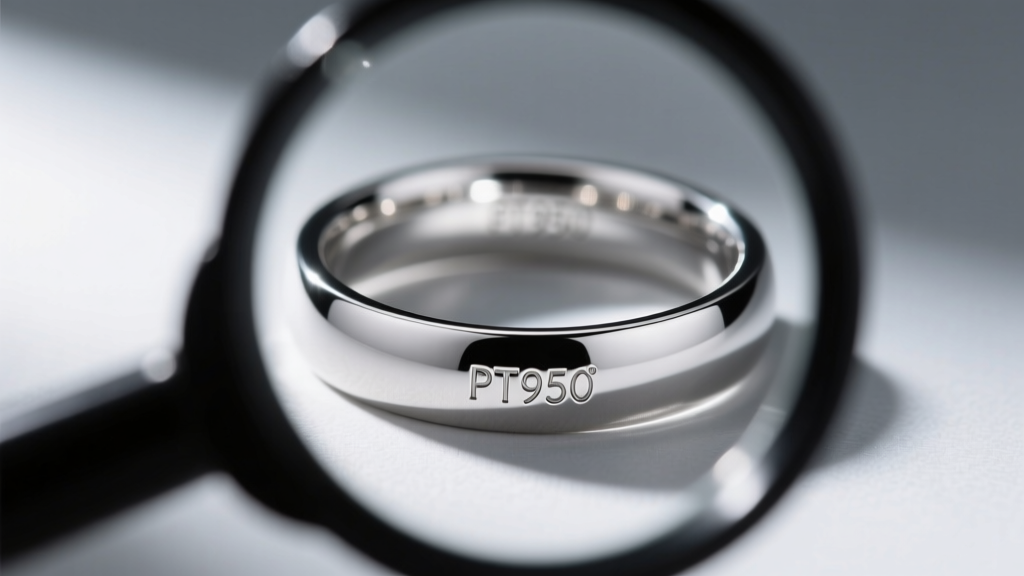
Platinum, conversely, is naturally white and does not require plating. Standard fine jewelry platinum is stamped PT950, meaning it is 95% pure platinum and 5% ruthenium or iridium. Platinum is incredibly dense (21.45 g/cm³ compared to 18K gold's 15.6 g/cm³). When platinum scratches, the metal is displaced rather than lost, developing a soft, satin-like 'patina' over time that many collectors covet.
Gemstone Tiers: Hardness, Toughness, and Stability
To fully answer what is fine jewelry, one must examine the stones set within the metal. Gemstones are evaluated on three distinct durability metrics: hardness (resistance to scratching), toughness (resistance to chipping and breaking), and stability (resistance to heat, light, and chemicals).
The Mohs scale of mineral hardness is logarithmic, not linear. A diamond (Mohs 10) is not just slightly harder than a sapphire (Mohs 9); it is exponentially harder, which is why diamonds are used to polish corundum.
| Gemstone | Mohs Hardness | Toughness | Best Application |
|---|---|---|---|
| Diamond | 10 | Good to Excellent | Everyday rings (avoid hard blows to the girdle due to cleavage planes) |
| Ruby / Sapphire | 9 | Excellent | Everyday rings (no cleavage planes, highly resistant to chipping) |
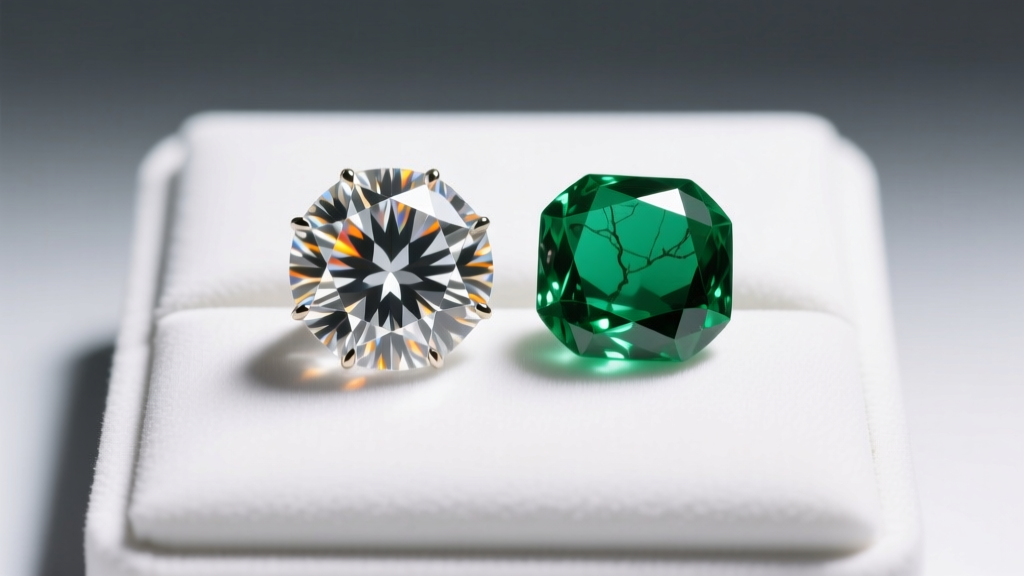
| Emerald | 7.5 - 8 | Poor to Fair | Necklaces, earrings, or bezel-set rings (highly included and brittle) |
| Opal | 5.5 - 6.5 | Fair | Occasion wear (contains water, prone to crazing and cracking) |
| Pearl | 2.5 - 4.5 | Very Poor | Necklaces and earrings (highly sensitive to acids, perfumes, and sweat) |
According to the Gemological Institute of America (GIA), understanding the difference between hardness and toughness is critical. An emerald may resist scratching better than an opal, but its internal 'jardin' (natural inclusions) makes it highly susceptible to shattering if dropped on a tile floor. Fine jewelers will typically recommend bezel settings for emeralds, while prong settings are reserved for diamonds and sapphires.
Hallmarks and Stamps: Verifying Authenticity
A true piece of fine jewelry will almost always bear a hallmark—a microscopic stamp indicating its metal purity. In the United States, the National Stamping Act requires that any item stamped with a karat mark must also bear the trademark of the manufacturer or retailer, ensuring accountability. Here are the critical hallmarks to look for when authenticating precious metals:
- 750 or 18K: 18-karat gold (75% pure gold).
- 585 or 14K: 14-karat gold (58.3% pure gold).
- 417 or 10K: 10-karat gold (41.7% pure gold, the minimum legal standard for 'gold' in the US).
- 925: Sterling silver (92.5% pure silver, 7.5% copper).
- PT950 or PLAT: Platinum (95% pure platinum).
Be wary of stamps like '18K HGE' (Heavy Gold Electroplate) or '14K GP' (Gold Plated). These indicate fashion jewelry disguised with fine jewelry terminology. The base metal underneath is usually brass or copper, which will inevitably oxidize and turn the wearer's skin green once the microscopic outer layer wears away.
The Demi-Fine Gray Area: Vermeil and Gold-Filled
The modern market has seen an explosion of 'demi-fine' jewelry, a category that bridges the gap between disposable fashion jewelry and solid fine jewelry. While not technically 'fine' by traditional gemological standards, high-quality demi-fine pieces offer excellent longevity if manufactured to strict specifications.
Gold Vermeil (pronounced ver-may) is a specific type of plating where the base metal must be solid sterling silver (925), and the gold plating must be at least 10K purity and a minimum of 2.5 microns thick, according to US Federal Trade Commission guidelines. This is significantly thicker than standard 'gold-plated' brass jewelry, which often features less than 0.5 microns of gold.
Gold-Filled jewelry is a step above vermeil. It involves mechanically bonding a solid sheet of gold to a brass core using heat and pressure. By law, gold-filled items must contain at least 5% gold by weight (often stamped as 1/20 14K GF). Because the gold layer is roughly 100 times thicker than standard electroplating, gold-filled chains and findings can last decades without flaking or tarnishing, making them a highly practical alternative for everyday chain necklaces and hoop earrings.
Investment vs. Everyday Wear: A Practical Decision Framework
Ultimately, understanding what is fine jewelry empowers you to match the material to the use-case. For heirloom investment pieces and daily-wear rings that will never be removed, platinum and 14K/18K gold paired with diamonds or sapphires are non-negotiable. The Jewelers of America recommends annual professional inspections for these pieces to ensure prongs remain secure and shanks have not thinned from friction.
For trend-driven pieces, layered necklaces, or statement earrings that experience less physical trauma, high-quality gold vermeil or gold-filled alternatives provide the aesthetic of fine jewelry at a fraction of the metallurgical cost. By prioritizing material integrity over brand markup, you can curate a collection that retains its beauty, structural soundness, and intrinsic value for a lifetime.


