French Gothic Jewelry Materials: Oxidized Silver vs Black Gold
Explore the metallurgy of French Gothic jewelry. Compare oxidized silver, black rhodium gold, and vitreous enamel for durability and dark aesthetics.

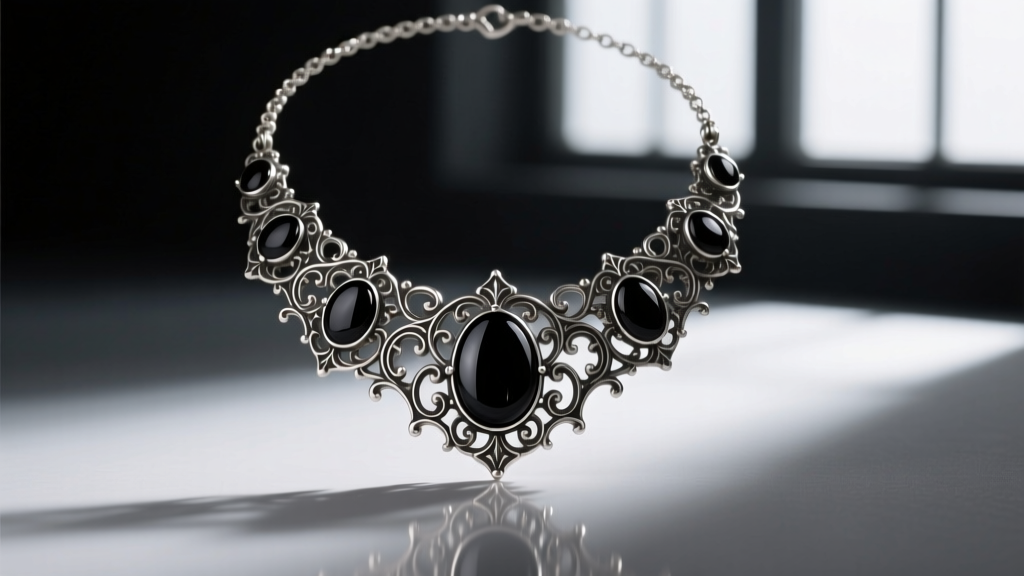
The Metallurgical Soul of French Gothic Jewelry
French Gothic jewelry represents a pinnacle of dark romanticism and architectural precision. Originating from the 19th-century Troubadour style and championed by master jewelers like Jules Wièse and François-Désiré Froment-Meurice, this aesthetic relies heavily on intricate filigree, gargoyles, trefoils, and melancholic motifs. However, the true essence of French Gothic jewelry does not merely lie in its silhouette; it is fundamentally defined by its metallurgy and surface treatments. The interplay of light and shadow on a Gothic cross or a chimera ring is entirely dependent on how the base metals are oxidized, plated, or enameled.
For collectors, designers, and enthusiasts navigating the alternative luxury market in 2026, understanding the material properties of these pieces is critical. A visually stunning blackened gold ring can become a faded disappointment within months if the plating is too thin, while improperly treated oxidized silver can lose its deliberate patina with a single wash. This guide provides a deep-dive metallurgical comparison of the primary materials used in authentic French Gothic jewelry, evaluating their chemical properties, failure modes, and long-term durability.
Oxidized Sterling Silver: The Foundation of Darkness
Sterling silver (92.5% pure silver, 7.5% copper alloy) is the undisputed backbone of Gothic silversmithing. The copper is added to increase the Mohs hardness from 2.5 (pure silver) to roughly 3.0, allowing for the deep undercutting and high-relief carving required for Gothic architectural motifs. However, it is the intentional oxidation of this alloy that gives French Gothic jewelry its signature brooding contrast.
The Chemistry of the Patina
According to The Silver Institute, silver does not tarnish from oxygen; it tarnishes from sulfur. In a studio environment, jewelers use 'liver of sulfur' (a mixture of potassium sulfide, potassium polysulfide, and potassium thiosulfate) to accelerate this reaction. When the sterling silver is submerged in a heated liver of sulfur bath, the copper in the alloy reacts first, followed by the silver, creating a layer of silver sulfide (Ag2S) on the surface.
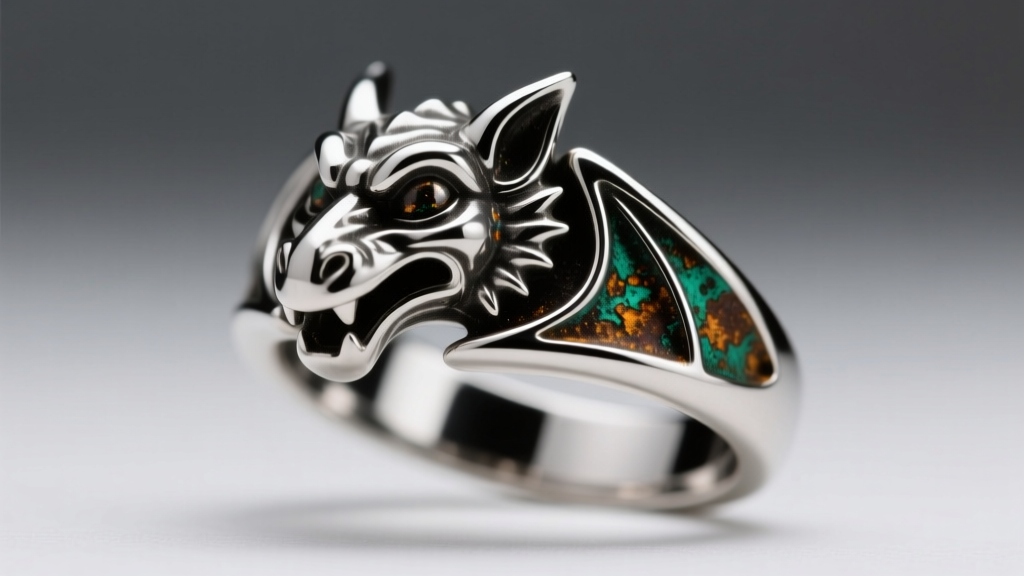
This silver sulfide layer is jet black. The jeweler then uses a polishing cloth or a mild abrasive to remove the black oxidation from the high points of the carving (the raised edges of a gargoyle's wings or the facets of a cross), leaving the deep recesses pitch black. This technique, known as 'antiquing,' creates a three-dimensional depth that is impossible to achieve with flat, high-polish metals. The primary failure mode of oxidized silver is friction; rings and bracelets will naturally lose their dark patina on the high points over time, though this is often considered a desirable 'worn' aesthetic in punk and Gothic circles.
Blackened Gold and Ruthenium Plating: Luxury with a Catch
While silver is traditional, high-end French Gothic jewelry frequently utilizes 18k gold (75% pure gold) as a base for blackened finishes. Gold provides superior tensile strength for delicate prongs holding dark gemstones like black diamonds, garnets, and onyx. To achieve the black color, jewelers historically relied on black rhodium plating, but modern material science has introduced new variables.
Micron Thickness and Plating Failure
Rhodium is a platinum-group metal that is naturally silvery-white. To create 'black rhodium,' jewelers introduce darkening agents, often ruthenium, into the electroplating bath. The durability of blackened gold jewelry is entirely dictated by the thickness of this plating, measured in microns (µm).
- Flash Plating (0.1 - 0.25 µm): Common in mass-market alternative jewelry. This microscopic layer will wear through to the yellow or white gold base within 3 to 6 months of daily wear, particularly on rings.
- Standard Luxury Plating (0.75 - 1.0 µm): The industry standard for reputable Gothic jewelers. This provides 1 to 3 years of wear before the edges begin to show the base metal.
- Heavy Build (1.5 - 2.5 µm): Reserved for high-end, bespoke French Gothic houses. This thickness can last 5+ years but significantly increases the retail price due to the cost of ruthenium and extended tank time.
Expert Insight: As of 2026, advanced PVD (Physical Vapor Deposition) and DLC (Diamond-Like Carbon) coatings are increasingly used in the broader alternative jewelry market to create scratch-resistant black metals. However, purist French Gothic houses largely avoid PVD on gold because it alters the thermal conductivity and specific gravity that luxury collectors expect from heavy 18k gold pieces.
Enamel Techniques: Vitreous Glass vs. Cold Resin
No discussion of French Gothic jewelry is complete without addressing enamel. The Victorians and the French Gothic revivalists used enamel to introduce deep, blood-red (pigeon blood garnet tones) and abyssal black accents into their metalwork. Today, the market is split between two vastly different materials: vitreous enamel and cold enamel.
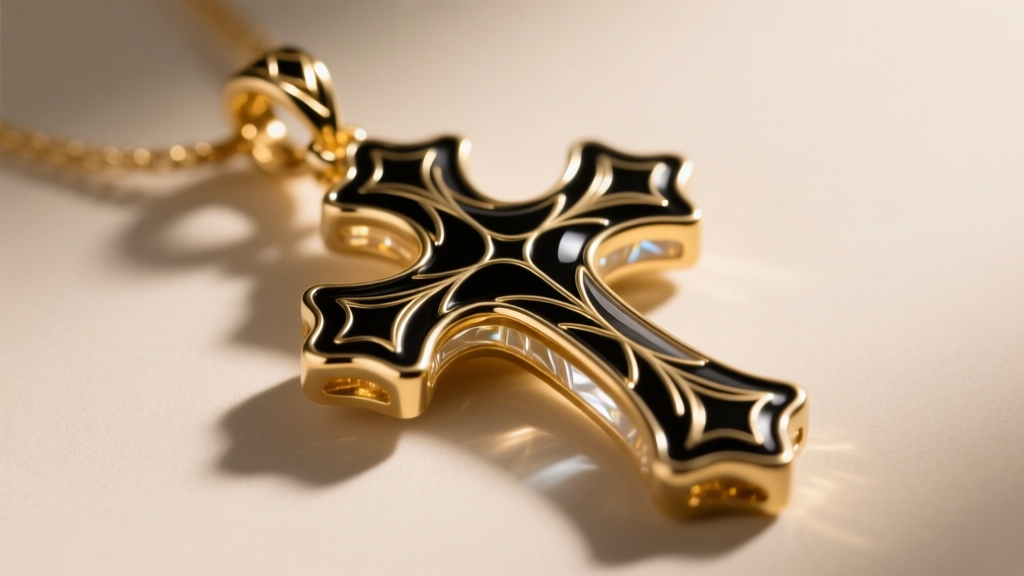
Vitreous Enamel (Pâte de Verre)
Vitreous enamel is essentially fused glass (silica-based). According to the Gemological Institute of America (GIA), vitreous enamel possesses a Mohs hardness of 5.5 to 6.5, making it highly resistant to scratching. In techniques like guilloché (where translucent enamel is fired over engine-turned metal patterns) or champlevé (where enamel fills carved troughs), the piece must be fired in a kiln at approximately 750°C to 850°C.
The Base Metal Restriction: Because of these extreme temperatures, vitreous enamel can only be applied to high-melting-point metals like 18k gold (melts at 1064°C) or fine silver (melts at 961°C). If you encounter a 'French Gothic' enameled piece made of brass or copper, it cannot be vitreous enamel; brass melts and deforms at roughly 900°C, which is too close to the enamel's firing point to risk in a kiln.
Cold Enamel (Epoxy Resin)
Cold enamel is a two-part epoxy resin that cures at room temperature. While it allows for vibrant, opaque colors and can be applied to cheaper base metals like brass or pewter, it has a Mohs hardness of only 2.0 to 3.0. It is highly susceptible to micro-scratches, chemical degradation from perfumes, and UV yellowing over time. For investment-grade French Gothic jewelry, vitreous enamel is the only acceptable standard.
Material Properties & Durability Matrix
To synthesize the metallurgical data, the following matrix compares the core materials used in dark aesthetic jewelry, highlighting their physical properties and maintenance requirements.
| Material / Treatment | Base Composition | Mohs Hardness | Wear Resistance | Maintenance & Failure Mode |
|---|---|---|---|---|
| Oxidized Sterling Silver | 92.5% Ag, 7.5% Cu | 3.0 (Base) | Moderate | Patina wears off on high points. Requires re-oxidation (liver of sulfur) every 2-5 years. |
| Blackened 18k Gold (Rhodium) | 75% Au, 25% Alloy | 2.5-3.0 (Base) | Low to Moderate | Plating wears through (0.75µm lasts ~2 yrs). Requires electroplating tank re-dip. |
| Vitreous Black Enamel | Silica / Fused Glass | 5.5 - 6.5 | High (Scratch) | Shatters under blunt force/thermal shock. Cannot be repaired at home. |
| Cold Enamel (Epoxy) | Polymer Resin | 2.0 - 3.0 | Low | Yellows under UV light, chips easily, degrades with alcohol/perfume contact. |
| Black Onyx (Inlay) | Chalcedony (Quartz) | 7.0 | Very High | Dyed agate. Stable, but can crack if struck against hard surfaces. |
Care and Maintenance for Dark Patinas
The very treatments that give French Gothic jewelry its dark allure are often the most vulnerable to improper care. The Victoria and Albert Museum notes that historical revival pieces require highly specific conservation methods. Modern wearers must adhere to strict protocols to preserve these finishes:
- Avoid Ultrasonic Cleaners: The high-frequency cavitation bubbles in ultrasonic baths will strip black rhodium plating and can cause microscopic fractures in vitreous enamel and black onyx inlays.
- Never Use Silver Dip: Commercial liquid silver cleaners contain thiourea, a chemical that instantly dissolves silver sulfide. Dipping an oxidized Gothic ring in these solutions will strip the intentional black patina from the deep crevices in seconds, leaving the piece flat and bright white.
- Protect from Chlorine: Swimming pools and hot tubs contain chlorine, which reacts aggressively with the copper in sterling silver and the alloys in 18k gold, causing irreversible structural weakening and a pale, chalky surface discoloration that cannot be polished out.
- Proper Storage: Store oxidized silver in a dry, airtight environment with silica gel packets. While sulfur causes the desired black patina, excessive moisture combined with airborne pollutants can lead to 'bronze disease' or severe pitting in the copper alloy over decades.
Final Verdict on Material Selection
When investing in French Gothic jewelry, the material dictates not just the price, but the generational longevity of the piece. Oxidized sterling silver offers the most authentic, low-maintenance dark aesthetic, as the patina can be easily reapplied at home with basic chemistry. Blackened gold provides unmatched luxury and structural integrity for gemstone settings, but buyers must demand plating thickness documentation (minimum 1.0 µm) to avoid premature wear. Finally, always scrutinize enameled pieces; the presence of vitreous glass over engine-turned gold is the hallmark of true master craftsmanship, separating heritage-quality Gothic revival art from fleeting, mass-produced costume alternatives.


