African American Jewelry: 2026 Trend & Style Analysis
Explore 2026 African American jewelry trends, from Adinkra motifs and bamboo earrings to Fulani twists, with expert material and pricing analysis.

The 2026 Renaissance: Heritage Meets High Jewelry
African American jewelry has transcended its historical categorization as mere 'streetwear' or 'subculture' accessories, firmly establishing itself as the vanguard of global luxury and high jewelry in 2026. Today's market is defined by a profound reclamation of heritage, where ancestral motifs are re-engineered using elite metallurgical standards. No longer satisfied with mass-produced, hollow-cast base metals, modern collectors and style connoisseurs are demanding structural integrity, ethical sourcing, and deep cultural resonance. From the architectural brilliance of bamboo earrings to the spiritual weight of Adinkra signets, African American jewelry is currently experiencing a renaissance that honors the past while pushing the boundaries of contemporary fine jewelry design.
This shift is not merely aesthetic; it is deeply economic and cultural. According to recent industry analyses featured in JCK Magazine, Black-owned jewelry ateliers and heritage-focused independent designers are seeing unprecedented growth, driven by consumers who view these pieces as both wearable art and generational investments. To truly understand the 2026 landscape, we must deconstruct the specific styles, material grades, and structural mechanics that define modern African American jewelry.
Motif Deep-Dive: Adinkra, Cowrie, and Fulani Twists
The integration of West African iconography into fine jewelry has evolved significantly. In the early 2000s, Adinkra symbols like the Sankofa bird and Gye Nyame were frequently stamped into thin, low-karat gold sheets or cheap alloys. In 2026, the standard has shifted to heavy, lost-wax cast signet rings and pendants crafted in solid 14k and 18k yellow gold. The lost-wax method allows for the deep, three-dimensional relief required to capture the intricate geometry of these symbols, resulting in pieces that weigh between 16 and 22 grams. This substantial weight provides a premium tactile experience and ensures the piece can be passed down as an heirloom.
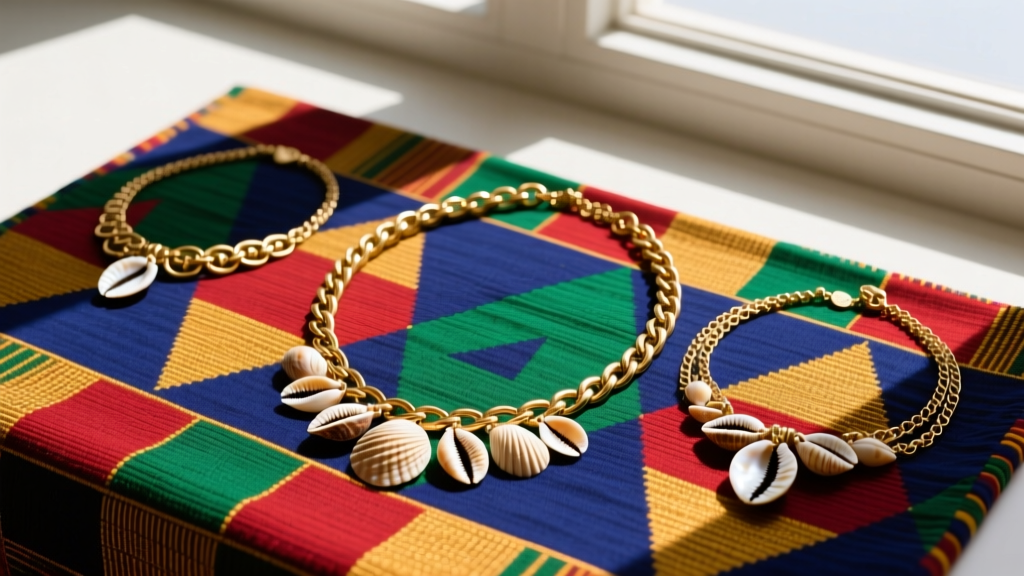
Cowrie shells, historically utilized as currency and spiritual talismans across the African diaspora, are being reimagined through a luxury lens. Rather than gluing natural shells to chains, top-tier artisans are now casting individual cowries in recycled brass and ethically sourced 14k gold. The Smithsonian National Museum of African American History and Culture notes the profound historical continuity of the cowrie shell in Black adornment, representing wealth, protection, and connection to the divine. Modern jewelers honor this by using articulated links, allowing the metal cowries to move fluidly against the collarbone without tangling or snapping.
The Mechanics of Fulani-Inspired Twists
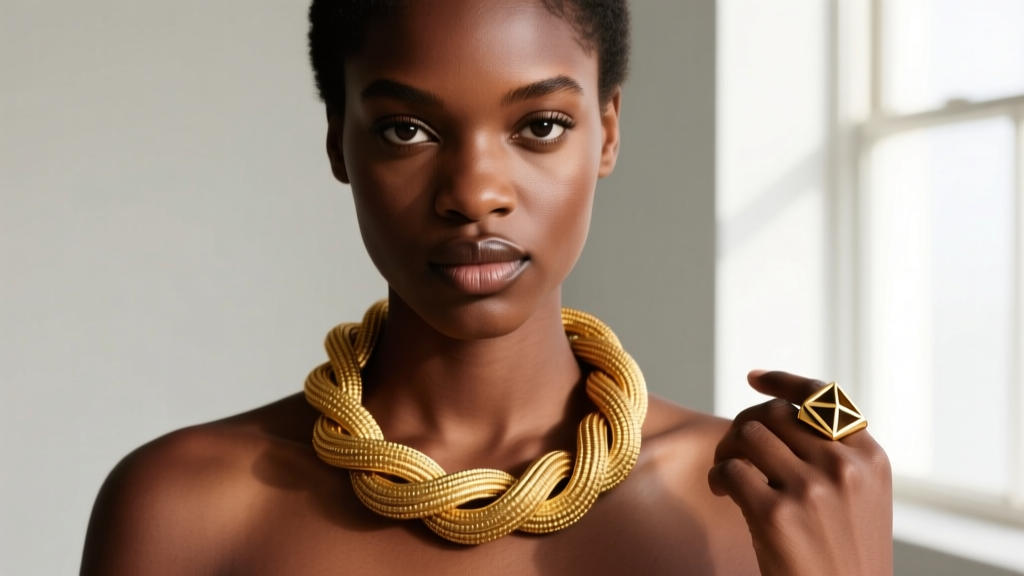
Fulani earrings and torque necklaces, characterized by their elongated, twisted geometric forms, require master-level metalsmithing. The 2026 trend favors hand-forged twisting over machine-milled wire. Artisans must repeatedly anneal the gold or brass during the twisting process to prevent metal fatigue and micro-fractures. A genuine hand-twisted Fulani-inspired torque necklace in 18k gold will feature a seamless gradient of tension, ensuring the piece rests comfortably against the clavicle without warping over time.
Structural Evolution of the Bamboo Earring
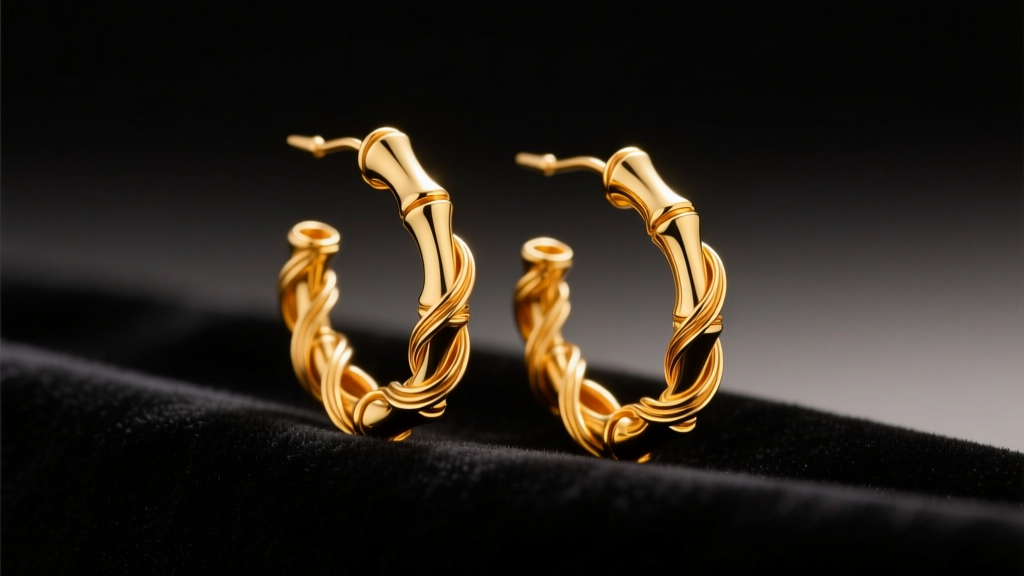
The bamboo earring is arguably the most iconic silhouette in African American jewelry, popularized during the 1980s and 1990s hip-hop era. However, vintage bamboo earrings were notoriously flawed: they were often hollow, lightweight, and prone to crushing, while larger sizes caused severe earlobe stretching due to poor weight distribution. The 2026 iteration of the bamboo earring is a masterclass in structural engineering.
Modern luxury bamboo earrings are crafted in solid or semi-solid 14k yellow gold. The Gemological Institute of America (GIA) notes that 14k gold, alloyed with specific ratios of copper and silver, offers superior tensile strength compared to softer 18k or 24k gold. This makes 14k the ideal material for large hoops that must maintain their circular tension when clasped. Furthermore, contemporary designers have optimized the wire thickness and segment spacing. A standard 2.5-inch bamboo hoop now features a 3.5mm wire thickness with reinforced, laser-welded knots at the joints. This engineering reduces the overall weight to a lobe-friendly 12 to 14 grams per pair, making them safe for standard 14-gauge or 12-gauge piercings without risking tissue tearing.
Nameplate Typography & Dimensional Shifts
While the cursive 'Carrie' nameplate remains a nostalgic staple, the 2026 African American jewelry market has heavily pivoted toward Old English, Gothic, and block typography. This shift reflects a broader cultural embrace of bold, unapologetic streetwear aesthetics merging with high-end luxury. Dimensionally, these pieces are no longer flimsy. High-end nameplates are now water-jet cut from 1.5mm to 2.0mm thick sheets of solid 14k gold, featuring diamond-cut bevel edges that catch ambient light without the need for pavé stones. The addition of a reinforced, hidden bail behind the center letter prevents the chain from pulling the necklace into an awkward 'V' shape, ensuring the typography sits perfectly flat against the sternum.
2026 Market Pricing & Material Matrix
Understanding the investment value of African American jewelry requires analyzing the intersection of material costs, artisanal labor, and cultural premium. Below is a comprehensive breakdown of the current market landscape for authentic, high-quality heritage pieces.
| Style Motif | Material Specification | Average Weight | 2026 Price Range | Durability Rating |
|---|---|---|---|---|
| Bamboo Hoop (2.5 inch) | 14k Yellow Gold, Solid/Semi-Solid | 12g - 14g | $850 - $1,600 | High |
| Adinkra Signet Ring | 18k Yellow Gold, Lost-Wax Cast | 16g - 22g | $1,800 - $3,500 | Very High |
| Articulated Cowrie Choker | Recycled Brass / Ethical Gold Vermeil | 45g - 60g | $150 - $450 | Moderate |
| Gothic Nameplate | 14k Gold, 1.5mm Depth, Beveled | 8g - 14g | $900 - $2,200 | High |
| Fulani Twisted Torque | 18k Gold, Hand-Forged & Annealed | 28g - 35g | $3,200 - $5,800 | High |
Sourcing Authentically: The Economics of Black Artisans
As African American jewelry continues to dominate global trend forecasts, the issue of cultural appropriation and mass-market dilution remains a critical concern. Fast-fashion conglomerates frequently replicate Adinkra symbols and bamboo silhouettes using toxic lead-alloys and exploitative labor, stripping the designs of their cultural context. For the discerning collector, sourcing authentically is paramount.
In 2026, the most sought-after pieces are acquired directly from Black-owned ateliers, Harlem-based heritage brands, and artisan collectives that reinvest in their local communities. When evaluating a piece, buyers should look for hallmarks of authentic craftsmanship: laser-engraved karat stamps, seamless laser welds on hoop joints, and verifiable provenance regarding the sourcing of gemstones and recycled metals. By prioritizing these creators, collectors not only acquire structurally superior jewelry but also participate in the vital economic empowerment of the African diaspora's creative class.
True luxury in African American jewelry is not just about the karat weight of the gold; it is about the intentionality of the design, the mastery of the metalsmith, and the unbroken thread of cultural memory woven into every link and cast.


