Authentic American Indian Jewelry: A Technical Guide to Silver & Stone
Master the technical details of authentic American Indian jewelry. Learn to grade turquoise, read silver hallmarks, and spot imported fakes.

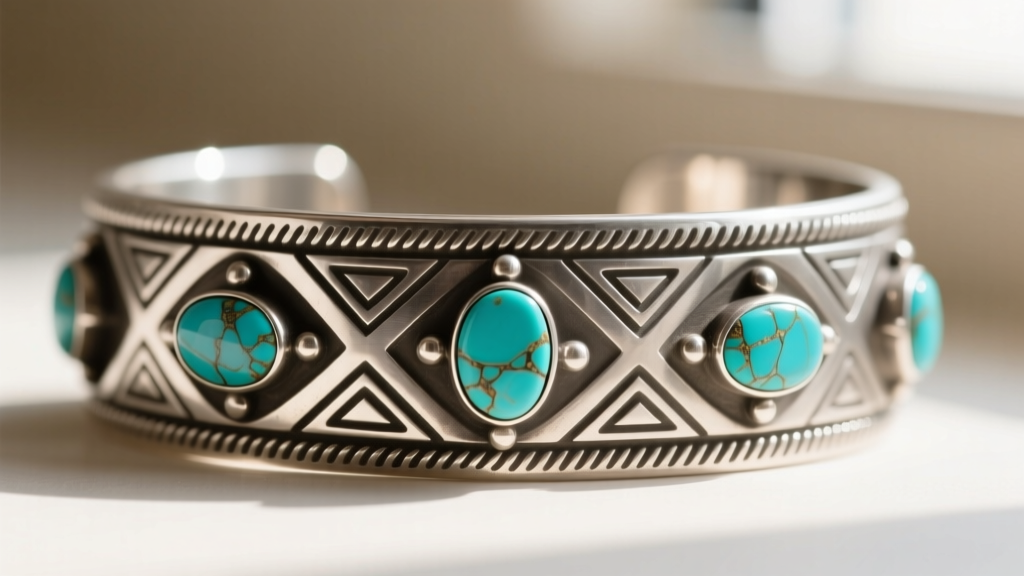
When evaluating American Indian jewelry, collectors and enthusiasts must look far beyond superficial aesthetics. The market is currently saturated with mass-produced, overseas-manufactured imitations that mimic the iconic styles of the Navajo, Zuni, and Hopi tribes. Under the Indian Arts and Crafts Act of 1990, it is illegal to offer or sell any art or craft product in a manner that falsely suggests it is Indian-produced. Yet, deceptive marketing persists. To navigate this landscape in 2026, buyers must adopt a metallurgical and gemological approach, analyzing silver purity, stone treatments, and hallmark displacement with forensic precision.
The Metallurgy of Authentic American Indian Jewelry
The foundation of Southwestern Native American silverwork relies on two distinct alloys: Sterling Silver and Coin Silver. Understanding the difference is critical for dating and authenticating vintage and contemporary pieces.
Sterling Silver (925) vs. Coin Silver (900)
Modern authentic pieces are predominantly crafted from .925 sterling silver (92.5% silver, 7.5% copper). However, vintage pieces—particularly those predating the 1930s—were often forged from coin silver. Early Navajo and Pueblo silversmiths melted down U.S. silver coins, which were minted with a 90% silver and 10% copper composition. This higher copper content makes coin silver slightly harder and more resistant to bending, while developing a distinct, warm, dark patina over decades of wear. If a piece from the early 20th century tests at exactly 92.5% purity via X-ray fluorescence (XRF), it is likely a modern reproduction or a recast.
Tufa Casting and Annealing Signatures
Traditional Navajo tufa casting involves carving a design into a block of volcanic tuff (tufa stone), binding two halves together, and pouring molten silver into the mold. The resulting jewelry features a smooth, polished front but retains a distinct, porous, and pitted texture on the reverse where the silver met the stone. Mass-produced castings made via rubber-mold centrifugal casting will show uniform, sandblasted, or perfectly smooth backs. Furthermore, authentic hand-stamped silver undergoes repeated annealing (heating and quenching) to keep the metal malleable. Under magnification, authentic stamp work shows slight silver displacement at the edges of the strike, whereas laser-engraved or machine-pressed fakes exhibit perfectly uniform depth with zero displacement.
Turquoise Grading and Treatment Matrix
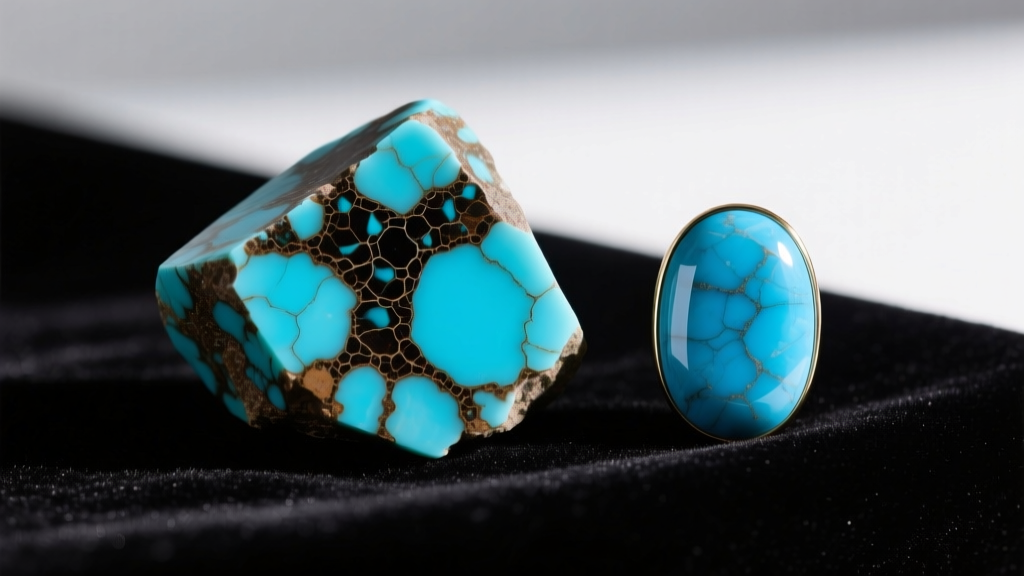
Turquoise is the lifeblood of Southwestern jewelry, but less than 10% of all mined turquoise is hard enough to be cut and set without treatment. The Gemological Institute of America (GIA) notes that the vast majority of commercial stones undergo some form of enhancement. For serious collectors, distinguishing between natural, stabilized, and reconstituted stones dictates the value of the piece.
| Treatment Type | Process & Composition | Mohs Hardness | Market Value Impact | Identification Method |
|---|---|---|---|---|
| Natural | Unaltered; cut and polished directly from the rough. | 5.0 - 6.0 | Premium (Highest) | UV fluorescence; porous feel; absorbs skin oils and changes color over time. |
| Stabilized | Soft chalk turquoise infused with clear epoxy resin under high pressure. | 6.0 - 7.0 | Moderate (Standard) | Hot point test emits a plastic odor; lacks the natural 'chalky' inclusions. |
| Zachery Treated | Proprietary non-polymer chemical bath that reduces porosity without adding plastic. | 5.5 - 6.5 | High (Near Natural) | Requires XRF or EDXRF testing to detect elevated potassium/zinc levels. |
| Dyed / Block | Reconstituted turquoise dust mixed with epoxy and artificial dyes. | 4.0 - 5.0 | Low (Costume Grade) | Uniform color; unnatural black 'matrix' lines; acetone swab may pull color. |
When evaluating high-end American Indian jewelry, provenance of the mine is paramount. Stones from closed or depleted mines—such as Lander Blue (Nevada), Bisbee (Arizona), and Number 8 (Nevada)—command massive premiums. Lander Blue, known for its tight, black spiderweb matrix over deep blue stone, can fetch upwards of $300 per carat in top grades, heavily influencing the final retail price of a squash blossom necklace or concho belt.
Decoding Hallmarks and Shop Stamps
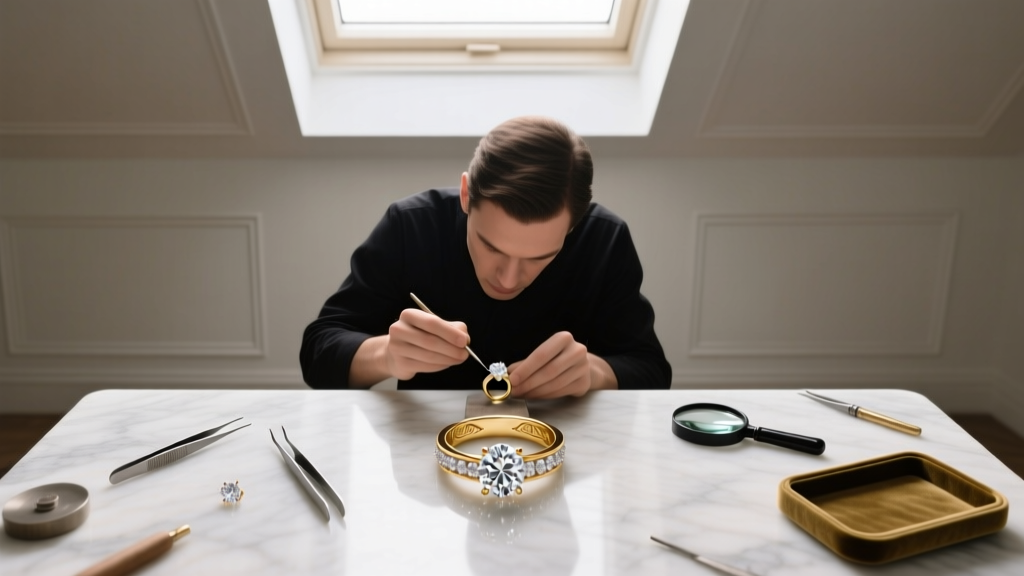
A hallmark is an artist's signature, but it is also the most frequently forged element in the American Indian jewelry market. Understanding the evolution of these marks is essential for authentication.
- The Shop Stamp Era (Pre-1970s): Before the Native American jewelry boom of the 1970s, many pieces were stamped with the trading post's mark rather than the individual artist's. Marks like "T.R." (Toadlena Trading Post) or "C.G." (C.G. Wallace) are common. However, these were often struck by anyone working in the shop, making individual artist attribution difficult.
- The Artist Hallmark Era (1970s-Present): As artists gained individual recognition, they began using unique die stamps or engraved initials. According to the Smithsonian National Museum of the American Indian, hallmarks became a vital tool for artists to protect their intellectual property and build personal brands.
- Spotting Forgeries: Imported fakes often feature laser-etched or electroplated hallmarks. A genuine hallmark is struck with a steel punch and a heavy mallet. Under a 10x loupe, you should see the silver displaced and slightly raised around the edges of the lettering. If the hallmark is perfectly flush, recessed with sharp, uniform walls, or shows signs of digital font kerning, it is highly likely to be a counterfeit.
The 2026 Market: Pricing and Valuation Framework
Valuing American Indian jewelry requires a matrix-based approach that weighs material costs, labor intensity, and artist lineage. In 2026, the market has bifurcated sharply between tourist-grade goods and master-crafted investment pieces.
- Tourist / Import Grade ($50 - $250): Usually cast via rubber molds, featuring stabilized or dyed turquoise, and bearing fake or misleading hallmarks. Often sold in gas stations and non-specialized gift shops.
- Mid-Tier Authentic ($300 - $1,500): Hand-stamped or hand-cut overlay work by emerging or mid-career Navajo and Zuni artists. Utilizes .925 sterling silver and high-quality stabilized or mid-grade natural turquoise.
- Master / Investment Grade ($2,500 - $25,000+): Pieces by recognized masters (e.g., Yazzie family, Charlie Johns, or historic figures like Charles Loloma). Features heavy-gauge coin or sterling silver, complex tufa casting, and premium, un-treated stones from legendary closed mines.
"The value of authentic Native American jewelry is not just in the precious metals and stones, but in the generational knowledge, cultural significance, and hours of meticulous hand-labor embedded in every stamp and bezel." — Appraisal Standards for Southwestern Indigenous Art, 2025 Edition.
Caring for High-Grade Natural Stones and Patinas
Improper cleaning is the fastest way to destroy the value of authentic American Indian jewelry. The intentional oxidation (darkening) applied to the recesses of stamped silver provides contrast and depth. Using commercial liquid silver dips or ultrasonic cleaners will strip this patina instantly, leaving the piece flat, stark white, and significantly devalued.
Best Practices for Maintenance
- Silver Polishing: Use only a soft, untreated microfiber cloth or a lightly treated silver polishing cloth. Rub only the high points of the silver, avoiding the recessed stamp work and the bezels.
- Turquoise Care: Natural turquoise is highly porous. It will absorb lotions, perfumes, and even the natural oils and acids from your skin, which can alter its color from sky blue to a deep, muddy green over time. Always put your jewelry on after applying cosmetics.
- Storage: Store pieces individually in anti-tarnish flannel bags. Do not store turquoise in airtight plastic bags with silica gel packets, as extreme dehydration can cause the stone's matrix to crack or spiderweb internally.
By mastering these technical details—from the copper content in coin silver to the specific gravity of Zachery-treated turquoise—collectors can confidently navigate the market, ensuring their acquisitions honor the true legacy and unmatched craftsmanship of American Indian jewelers.


