Ancient Chinese Jewelry: 2026 Trend & Style Analysis
Explore the 2026 resurgence of ancient Chinese jewelry. We analyze modern jade grading, ethical filigree techniques, and how to style historical motifs.

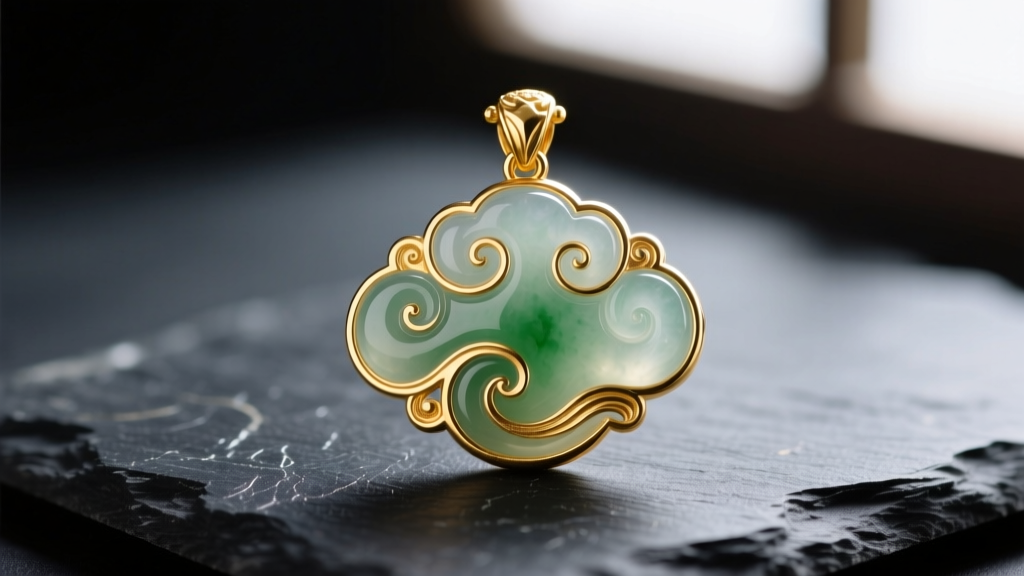
The Resurgence of Ancient Chinese Jewelry in 2026
The global jewelry market in 2026 is witnessing a profound shift toward heritage-driven design, with ancient Chinese jewelry emerging as a dominant force in both high jewelry houses and independent artisan studios. Driven by the 'Guochao' (national trend) movement, contemporary collectors and fashion-forward consumers are moving beyond superficial Orientalist tropes. Instead, they are demanding rigorous historical accuracy, master-level craftsmanship, and ethical material sourcing. Ancient Chinese jewelry is no longer relegated to museum archives or costume replicas; it is being re-engineered for modern wearability while retaining the profound philosophical and metallurgical depth of the Han, Tang, and Ming dynasties.
As a style analyst, I have tracked how historic silhouettes—such as the dangling 'buyao' hairpins and the intricate 'ruyi' scepter motifs—are being translated into everyday luxury. This analysis breaks down the material science, ethical evolutions, and structural adaptations defining the ancient Chinese jewelry trend in 2026.
Material Evolution: Hetian Nephrite vs. Burmese Jadeite
To understand the current market, one must first distinguish between the two primary stones that define Chinese lapidary history: Hetian nephrite and Burmese jadeite. While Western markets often conflate the two under the umbrella term 'jade,' they are mineralogically distinct, and their 2026 pricing structures reflect this divergence.
Nephrite, an amphibole silicate, has been the cornerstone of Chinese carving since the Neolithic era. The most coveted variety, 'mutton fat' (yangzhi) nephrite, is prized for its greasy luster and high translucency. Jadeite, a pyroxene mineral introduced to China primarily during the Qing Dynasty, offers a glassy luster and vivid emerald-green hues. According to the Gemological Institute of America (GIA), nephrite possesses a higher toughness (resistance to breaking) than jadeite, making it historically superior for intricate, thin-walled carvings and delicate filigree inlays.
| Material | Mineral Class | Mohs Hardness | Specific Gravity | 2026 Avg. Premium Price |
|---|---|---|---|---|
| Hetian Nephrite (Mutton Fat) | Amphibole | 6.0 - 6.5 | 2.95 - 3.03 | $2,500 - $5,000+ / gram |
| Burmese Jadeite (Imperial Green) | Pyroxene | 6.5 - 7.0 | 3.30 - 3.38 | $10,000+ / gram |
| Nephrite (Celadon/Spinach) | Amphibole | 6.0 - 6.5 | 2.95 - 3.03 | $50 - $300 / gram |
In 2026, contemporary designers are increasingly utilizing high-grade celadon nephrite for daily-wear pieces, reserving the astronomically priced mutton fat and imperial jadeite for investment-grade high jewelry collections.
The Engineering of Huasi Xiangqian (Filigree Inlay)
The hallmark of ancient Chinese goldsmithing is 'Huasi Xiangqian,' or filigree inlay. Historically, artisans would draw gold into threads as fine as a human hair, twist them into ropes, and solder them into elaborate three-dimensional lattices. However, traditional 24-karat (999 purity) gold is far too soft to withstand the tensile stress of modern daily wear, leading to crushed lattices and lost gemstones.
The 2026 solution lies in metallurgical hybridization. Master jewelers now construct the structural armature and prongs using 18-karat (750) or 22-karat (916) gold alloys, which provide the necessary yield strength to secure heavy jade cabochons. The decorative filigree overlay is then executed in 24-karat gold foil or fine wire, preserving the unmistakable warm, rich yellow hue of imperial gold without compromising structural integrity. This technique ensures that a modern filigree jade ring can survive a dropped impact without the basket warping.
Ethical Reimagining of Tian-Tsui (Kingfisher Enamel)
Perhaps the most visually striking element of ancient Chinese court jewelry is 'Tian-Tsui,' the art of inlaying iridescent kingfisher feathers into gold cloisons. Historically, this required the culling of thousands of kingfishers, a practice that led to severe ecological depletion and eventual legal bans.
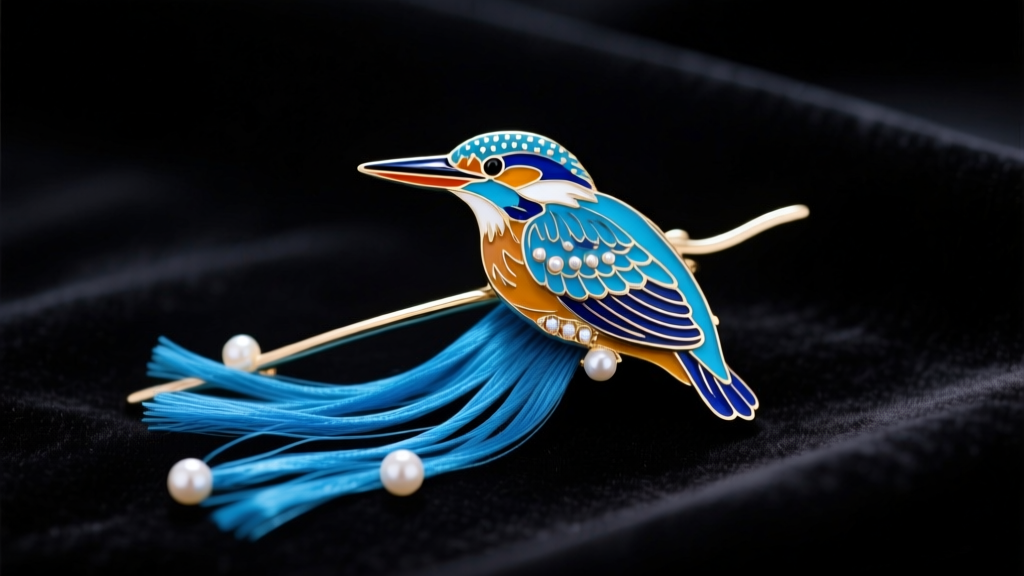
In 2026, the aesthetic of Tian-Tsui is experiencing a massive revival, but entirely through ethical, cruelty-free alternatives. High-end studios are now utilizing three primary substitutes:
- Bleached and Dyed Goose Feathers: By carefully stripping the natural pigment from ethically sourced molted goose feathers and applying structural color dyes, artisans can mimic the cyan and ultramarine shifts of the kingfisher.
- Cold Enamel and Guilloché: For pieces requiring higher durability, jewelers use translucent cold enamel layered over engine-turned guilloché silver. This creates a similar optical interference pattern, yielding a shimmering, feather-like depth without organic degradation.
- Woven Silk Ribbon: Micro-pleated blue silk ribbons are pressed into gold cells, offering a matte, textile-like interpretation of the ancient aesthetic that pairs beautifully with matte-finished nephrite.
Motif Translation: Wearing the Dragon and the Ruyi
Styling ancient Chinese motifs requires a careful balance to avoid looking costumey. The 2026 trend favors micro-motifs and negative space over heavy, maximalist carvings. The 'Ruyi' (as-you-wish) scepter head, characterized by its cloud-like, curved silhouette, is currently dominating pendant and clasp designs. Rather than carving the Ruyi directly into a massive block of jade, modern lapidaries are slicing the stone into 2mm wafers and framing them in asymmetrical 18k gold Ruyi borders.
Similarly, the imperial dragon motif has been abstracted. Instead of literal, five-clawed dragons wrapping around a bangle, designers are utilizing the dragon's scales as a textural pattern on gold cuffs, or using the 'chi' (hornless dragon) as a subtle, geometric clasp mechanism. This abstraction allows the wearer to incorporate profound cultural symbolism into minimalist, contemporary wardrobes.
Structural Wearability: Gauges, Clasps, and Weight Distribution
One of the most critical failures in commercial 'Asian-inspired' jewelry is the neglect of weight distribution and gauge sizing. Authentic jade and solid gold are exceptionally dense. A standard 20-gauge (0.8mm) earring wire will quickly bend and tear the earlobe when supporting a 15-gram jade drop.
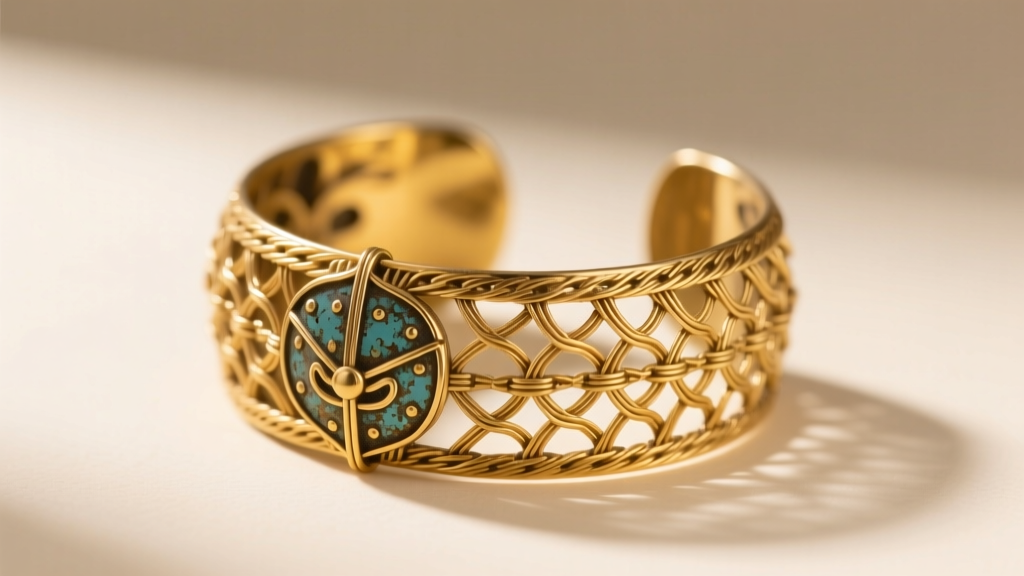
For 2026 collections, ergonomic engineering is paramount:
- Earring Posts and Wires: Heavy jade drops are now fitted with 16-gauge (1.2mm) or 14-gauge (1.6mm) ear wires. For clip-ons and ear cuffs, silicone tension pads are integrated into the gold backing to distribute the weight across a wider surface area of the cartilage.
- Necklace Chains: Delicate cable chains are replaced by woven 'box' chains or reinforced 'wheat' chains in 1.5mm to 2.0mm thicknesses, capable of supporting 50+ gram pendants without kinking at the bail.
- Hairpin Conversions: Antique 'buyao' hairpins, which feature dangling, spring-loaded ornaments, are being retrofitted with heavy-duty French wire hooks or magnetic convertible brooch-backs, allowing them to be worn as statement lapel pins without damaging modern, lightweight fabrics.
Buyer’s Framework: Authenticating 2026 Homages vs. Antiques
When acquiring ancient Chinese jewelry or its modern homages, buyers must exercise rigorous due diligence. The secondary market is flooded with artificially polymer-impregnated jade (Type B and Type C) masquerading as antique pieces. According to the Victoria and Albert Museum's jewelry archives, understanding historical construction methods is key to authentication.
For antique pieces, look for hand-cut cloisons, slight asymmetries in filigree soldering, and the characteristic 'orange peel' surface texture on older jade carvings caused by traditional abrasive polishing. For contemporary 2026 homages, demand a gemological certificate from a reputable lab (such as GIA or Gubelin) verifying that the jade is 'Type A' (untreated). Furthermore, ensure the gold purity is clearly hallmarked, as the structural integrity of the piece relies heavily on the precise alloy mix used by the modern artisan.
Conclusion
The 2026 landscape of ancient Chinese jewelry is a masterclass in respecting heritage while embracing modern material science and ethical standards. By understanding the mineralogical nuances of nephrite, the structural requirements of gold filigree, and the ergonomic necessities of heavy gemstone wear, collectors can confidently invest in pieces that are not only culturally resonant but engineered to last generations.


