Roman Glass Jewelry: A Beginner's Guide to Authentic Ancient Pieces
Discover how to buy, authenticate, and care for authentic Roman glass jewelry. Learn about iridescence, settings, and pricing in this guide.

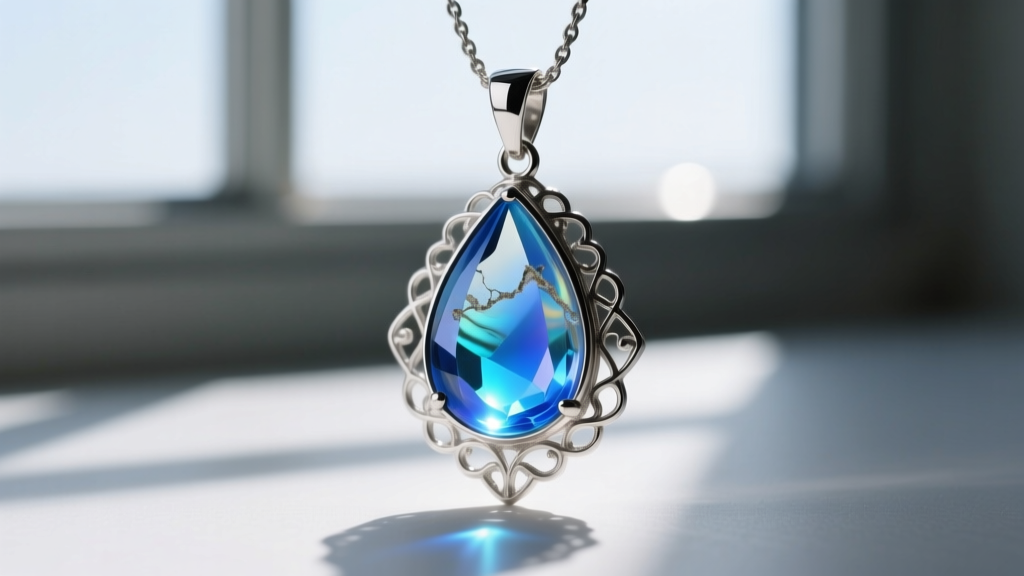
When you first encounter Roman glass jewelry, the shimmering, oil-slick iridescence of the material looks almost otherworldly. As we navigate the vintage and antique jewelry markets in 2026, the demand for wearable antiquities has surged, bringing this ancient art form into the modern spotlight. However, the intersection of ancient archaeology and modern jewelry making can be confusing for newcomers. How do you know if the glass is truly 2,000 years old? Why does it shimmer like a soap bubble? And how do you clean it without destroying its fragile surface?
This beginner-friendly explainer will demystify Roman glass jewelry, providing you with a practical, expert-level framework for buying, authenticating, and caring for these remarkable historical artifacts.
What Exactly Is Roman Glass Jewelry?
Roman glass jewelry utilizes authentic, excavated glass fragments originating from the Roman Empire, primarily dating between the 1st and 4th centuries AD. During this era, the invention of glassblowing (around the 1st century BC) revolutionized the industry, transforming glass from a luxury item reserved for the elite into an everyday material used for vessels, bowls, and perfume bottles across the Mediterranean, the Levant, and Egypt.
Today, The Metropolitan Museum of Art notes that countless fragments of these ancient vessels are unearthed in archaeological sites. Rather than discarding these broken shards, artisans carefully extract, clean, and shape them, setting them into modern sterling silver or gold mounts. The result is a striking juxtaposition: an ancient, weathered artifact cradled in contemporary precious metal.
The Science of Iridescence: Why It Shimmers
The most defining characteristic of Roman glass is its brilliant iridescence—a shimmering rainbow effect that shifts between vivid blues, greens, purples, and golds depending on the angle of light. But this wasn't an intentional design choice by ancient Roman glassblowers. It is the result of a 2,000-year chemical reaction.
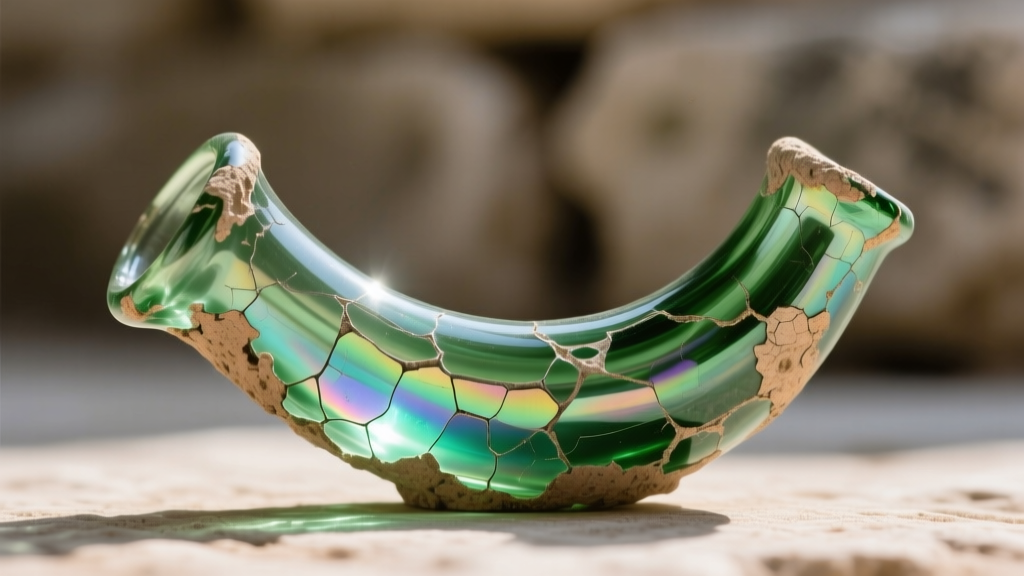
According to The Corning Museum of Glass, ancient glass was made with high levels of alkali fluxes (like natron). When buried in slightly acidic, damp soil for millennia, water leaches the alkali ions from the surface of the glass. This process leaves behind microscopic, alternating layers of silica and air. When light hits these ultra-thin layers, it undergoes thin-film interference—the exact same optical phenomenon that creates the colors on a soap bubble or an oil slick. The iridescence is literally a record of the glass's burial environment.
How to Authenticate Ancient Glass vs. Modern Fakes
Because of its rising popularity, the market has seen an influx of counterfeit Roman glass. Unscrupulous sellers often take modern glass, tumble it to simulate wear, and coat it with iridescent resins or even crushed pearl powders. To protect your investment, use this practical authentication framework:
| Feature | Authentic Roman Glass | Modern Fake / Treated Glass |
|---|---|---|
| Surface Texture | Microscopic pitting, crizzling (fine cracks), and flaking layers. | Smooth, or uniformly tumbled with artificial, rounded scratches. |
| Acetone Test | Unaffected by acetone; iridescence is mineral-based. | Coating becomes tacky, dissolves, or wipes off, revealing clear glass. |
| Earthen Deposits | Hardened silica or calcite crusts in crevices that resist fingernail scratching. | Packed with soft dirt, glue, or completely devoid of natural crust. |
| Color Depth | Iridescence shifts dynamically and has a metallic, pearlescent depth. | Looks like a surface spray; color is flat, overly uniform, or glittery. |
The Tactile Tooth Test
Gently run a wooden toothpick (never metal) over the surface. Authentic weathered glass often has a slight tooth or gritty texture due to the microscopic silica flakes. Modern glass coated in clear resin will feel perfectly smooth and plasticky.
Understanding Settings and Metal Pairings
The way ancient glass is set is critical to its longevity. Because the weathered surface is incredibly fragile, the setting must protect the edges without putting undue pressure on the glass.
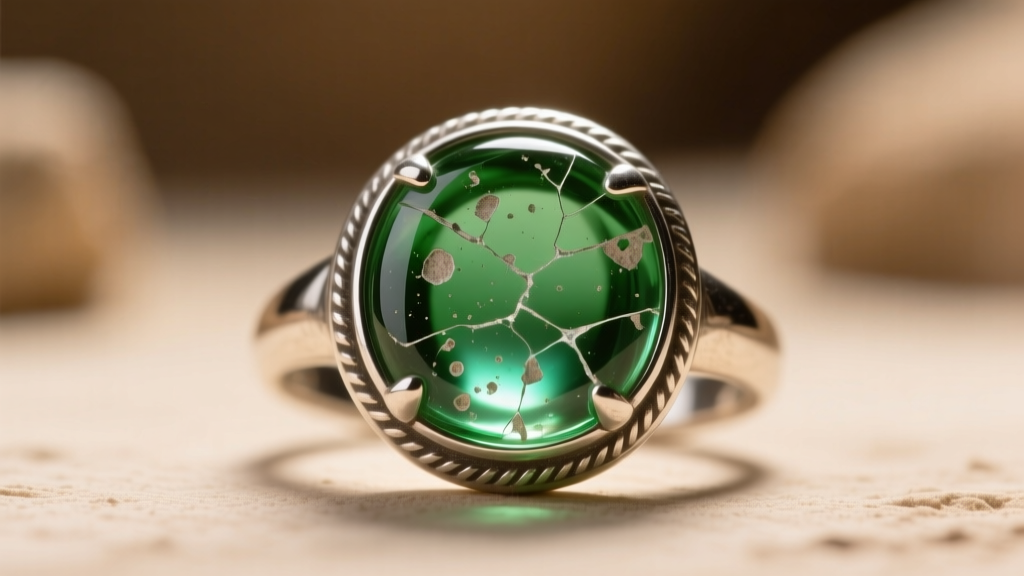
- Bezel Settings: The gold standard for Roman glass. A continuous metal rim wraps around the perimeter of the shard, protecting the fragile edges from chipping and securing the piece without relying on pressure points.
- Prong Settings: Generally discouraged for ancient glass. Prongs exert localized pressure that can cause the brittle, weathered glass to crack or snap over time.
- Wire Wrapping: Popular in artisan markets, but risky. If the wire is pulled too tight, it will slice into the soft, weathered edges of the glass.
Most high-quality pieces are set in 925 sterling silver, which provides a neutral, bright backdrop that enhances the cool blues and greens of the glass. For a warmer contrast, 14k gold vermeil is frequently used, though buyers must ensure the gold plating is at least 2.5 microns thick to prevent rapid wear.
Pricing Guide: What Should You Actually Pay?
Pricing Roman glass jewelry depends on three main factors: the size of the shard, the rarity of the color, and the quality of the metal setting. Here is a realistic pricing framework for the current market:
- Small Stud Earrings (6mm - 9mm): $35 – $75. These use smaller, more common shards, often pale green or aqua.
- Standard Pendants (15mm - 20mm): $80 – $160. The most popular category, featuring distinct iridescence and sterling silver bezels.
- Large Statement Pieces (25mm+): $180 – $350. Large, intact shards with vibrant, multi-colored iridescence are rarer and command a premium.
- Rare Colors (Cobalt Blue, Deep Red, Purple): $400+. Ancient red and cobalt blue glass were historically expensive to produce (requiring gold or copper additives) and are highly sought after by collectors today.
Essential Care and Maintenance Rules
Caring for Roman glass requires a complete departure from standard jewelry maintenance. The ancient glass has a Mohs hardness of around 5.5, but the iridescent, weathered surface is as fragile as a butterfly's wing.
The Golden Rule of Roman Glass Care: Never expose your jewelry to water, chemicals, or ultrasonic vibrations. The iridescence is a delicate mineral layer that can be permanently stripped away.
- No Ultrasonic Cleaners: The high-frequency vibrations will literally shake the microscopic layers of iridescence off the glass, leaving you with a dull, chalky white shard.
- No Silver Dips: Liquid silver polishes (like Tarn-X) contain harsh acids. If the liquid touches the glass, it will instantly dissolve the weathered surface and destroy the shimmer.
- Safe Cleaning Method: Use a dry, clean makeup brush or a soft microfiber cloth to gently dust the glass. To clean the silver setting, apply a tiny amount of silver polish paste to a Q-tip, carefully rub only the metal, and immediately buff it away without letting it touch the glass.
- Storage: Store pieces in a dry environment. High humidity can accelerate the degradation of the glass. Keep them in individual anti-tarnish pouches to prevent the silver from scratching the soft glass surface.
Where to Buy Reputable Pieces
When purchasing Roman glass jewelry, provenance and transparency are paramount. Always buy from dealers who provide a Certificate of Authenticity (COA) that details the approximate date (e.g., 1st-3rd Century AD) and the region of origin (e.g., Levant, Eastern Mediterranean).
Reputable dealers will also clearly state if a piece has been stabilized (a common conservation practice where a clear, reversible archival resin is applied to prevent the glass from flaking further). Avoid mass-market dropshippers who use stock photos; authentic ancient glass is inherently asymmetrical, and the exact piece you receive should match the unique shard photographed in the listing. By understanding the history, science, and proper care of these artifacts, you can confidently wear a genuine piece of the ancient world.


