How to Grade and Authenticate American Indian Jewelry Stones
Learn how to identify, grade, and authenticate American Indian jewelry stones like turquoise and coral with our step-by-step buyer's guide.

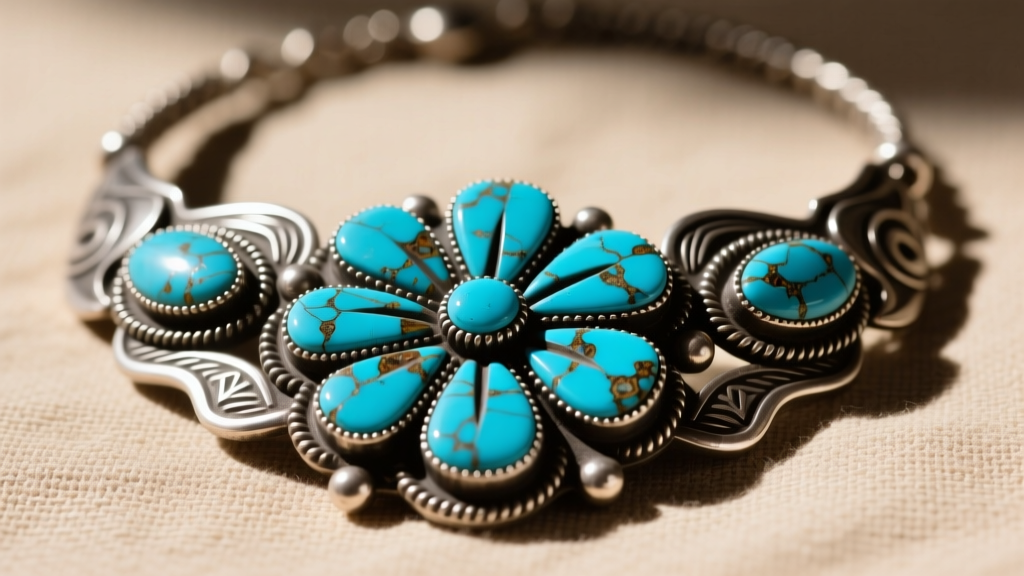
The Foundation of Native American Lapidary Art
Collecting and wearing indigenous jewelry is a profound way to honor the rich cultural heritage of North America. However, as the market for these exquisite pieces has grown, so has the proliferation of counterfeits, dyed simulants, and mass-produced imports. When evaluating american indian jewelry stones, understanding the geological and lapidary nuances is no longer optional—it is essential. Whether you are examining a vintage Navajo squash blossom necklace or a contemporary Zuni inlay ring, the stones tell a story of origin, treatment, and artistry.
According to the Indian Arts and Crafts Board (IACB), it is illegal to market art as 'Indian-made' if it is not crafted by a member of a state or federally recognized tribe. Yet, the stones themselves are subject to a different set of geological and market rules. This step-by-step guide will equip you with the gemological frameworks needed to grade, authenticate, and confidently purchase indigenous lapidary art in today's market.
Step 1: Decoding Turquoise Matrix and Hardness
Turquoise is the undisputed cornerstone of Native American jewelry. However, not all turquoise is created equal. The value of a cabochon is dictated by its mine of origin, color saturation, matrix (the host rock webbing), and whether it has been stabilized. Natural, untreated turquoise with a Mohs hardness of 5 to 6 is rare and commands premium prices, often exceeding $30 per carat for high-grade material.
Mine Identification and Grading
Authenticating the stone begins with recognizing the distinct visual signatures of legendary Southwestern mines. Master lapidaries select stones based on these unique profiles:
- Sleeping Beauty (Arizona): Prized for its pure, robin's-egg blue color with little to no matrix. The mine closed in 2012, making untreated, natural Sleeping Beauty exceptionally rare and valuable.
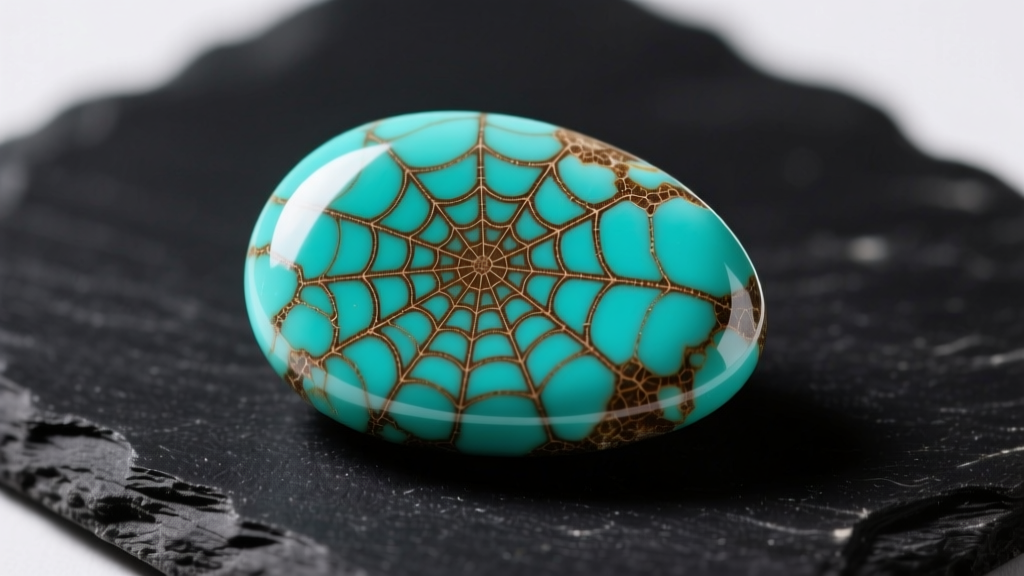
- Kingman (Arizona): Famous for its deep, vibrant blue colors contrasted by striking black or brown spiderweb matrix. High-grade Kingman often features a metallic pyrite gleam within the webbing.
- Number 8 (Nevada): Highly sought after for its golden-brown to black webbing set against a bright green-blue background. The 'spiderweb' pattern here is often thicker and more graphic than Kingman.
- Bisbee (Arizona): Renowned for its deep blue hue and distinct chocolate-brown matrix, sometimes accompanied by rare lavender or purple webbing caused by specific mineral oxidations in the copper mines.
The Stabilization Reality
It is a gemological fact that up to 90% of all mined turquoise is too soft (Mohs 3-4) and porous to be cut into cabochons without shattering. Therefore, stabilization—the process of infusing the stone with clear epoxy resin (like Opticon) under a vacuum—is an accepted industry standard. It hardens the stone and locks in the color. As detailed by the Gemological Institute of America (GIA), stabilization is not inherently deceptive unless the stone is also dyed or sold as 'natural.' Always ask the seller if the stone is natural, stabilized, or enhanced (such as the proprietary Zachery treatment, which hardens the stone without polymers).
| Mine Origin | Color Profile | Matrix Characteristics | Avg. Market Value (Cabochon) |
|---|---|---|---|
| Sleeping Beauty | Sky Blue / Robin's Egg | None to very sparse black | $15 - $50+ / carat (Natural) |
| Kingman | Deep Blue / Green-Blue | Black / Brown Spiderweb, Pyrite | $8 - $25 / carat |
| Number 8 | Green to Blue-Green | Thick Golden-Brown Webbing | $10 - $30 / carat |
| Bisbee | Dark Blue | Chocolate Brown, Lavender hints | $15 - $40 / carat |
Step 2: Verifying Organic and Imported Stones
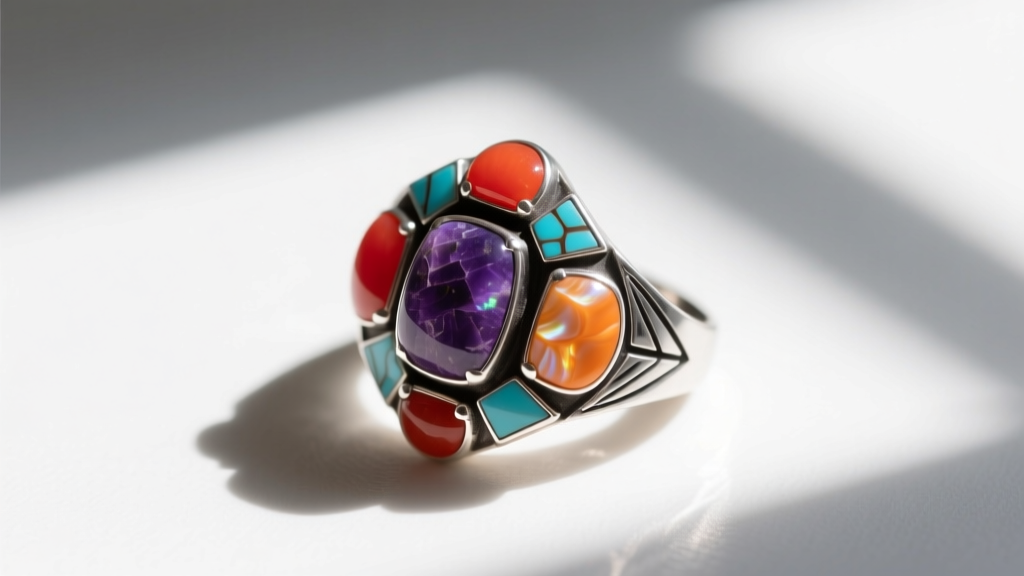
Beyond turquoise, Native American jewelers—particularly the Zuni and Hopi—masterfully incorporate organic materials and vibrant imported gems into channel and needlepoint inlay work. Authenticating these requires a different set of observational skills.
Red Coral: Precious vs. Bamboo
Genuine Mediterranean or deep-water red coral (Corallium rubrum) is dense, uniform in color, and takes a high polish. However, due to environmental protections and high costs, many modern pieces utilize bamboo coral. Bamboo coral is naturally white or grey and is heavily dyed red. You can identify dyed bamboo coral by looking for longitudinal striations (tiny parallel lines) and concentrated dye pooling in the natural pores of the stone. While bamboo coral is widely used and accepted in affordable jewelry, it should not be priced or marketed as precious red coral.
Spiny Oyster Shell and Sugilite
Spiny oyster (Spondylus) shell provides brilliant shades of orange, red, and purple. To verify it is natural shell and not plastic or glass, examine the back of the cabochon. Natural spiny oyster will almost always show a white, chalky calcite base or distinct white streaks. Sugilite, a vibrant purple gemstone imported primarily from South Africa, is heavily featured in Zuni inlay. Genuine sugilite ranges from translucent jelly-like purple to opaque dark violet, often with black or grey host rock inclusions. Fakes are usually dyed quartz or glass, which will lack the natural granular inclusions seen under a 10x jeweler's loupe.
Step 3: The Acetone and Scratch Tests for Fakes
When you are evaluating a piece in person, a few non-destructive and semi-destructive tests can save you from purchasing dyed howlite or reconstituted 'turquoise' dust.
The Acetone Swab Test
Dyed howlite and magnesite are the most common turquoise simulants. Take a cotton swab dipped in pure acetone (nail polish remover) and rub it vigorously on an inconspicuous area of the stone or the back of the cabochon. If the swab turns blue or green, the stone has been surface-dyed. Note: This will not damage natural or properly stabilized turquoise, but it will strip the dye from a fake.
The Copper Coin Scratch Test
Howlite has a Mohs hardness of roughly 3.5, while a copper coin is about 3.0, and a steel knife is 5.5. Natural turquoise (5-6) will easily scratch a copper coin and will resist a light scrape from a steel blade. Dyed howlite will feel waxy, may scratch with a steel needle, and will reveal a stark white interior beneath the dyed surface layer. Reconstituted turquoise (a mix of turquoise dust and epoxy) often has a plastic-like warmth to the touch and lacks the natural thermal conductivity of genuine stone.
'Always examine the bezel setting. A master silversmith crafting a piece with $500 worth of natural Bisbee turquoise will not set it in flimsy, low-grade silver or use sloppy, uneven bezel wire. The metalwork is the first indicator of the stone's authenticity.' — Master Lapidary Appraiser
Step 4: Checking Hallmarks and Silver Settings
While the focus is on the stones, the metalwork provides critical context for authentication. Authentic Native American jewelry is traditionally crafted in Sterling Silver (.925). Older, vintage pieces (pre-1970s) may utilize Coin Silver (.900), which has a slightly different oxidation patina and is softer. Look for the artist's hallmark, usually stamped on the inside of a cuff or the back of a pendant. Cross-reference this hallmark with established databases like the Native American Jewelry Hallmarks archives.
Furthermore, examine how the stone interacts with the silver. Navajo artisans often use heavy, hand-stamped bezels and 'shadowbox' techniques that protect the edges of softer stones. Zuni artisans are famous for 'petit point' (small, teardrop-shaped stones) and 'needlepoint' (long, slender, sharply pointed stones). The precision required to cut and set dozens of tiny needlepoint stones is a hallmark of genuine Zuni craftsmanship, rarely replicated well by overseas mass-producers.
Sourcing Authentically in the Modern Market
Protecting yourself from fakes ultimately comes down to provenance. When purchasing american indian jewelry stones, always buy directly from the artist, reputable tribal-owned cooperatives, or established galleries that provide a written certificate of authenticity detailing the artist's tribal affiliation, the mine of origin (if known), and any stone treatments. Avoid 'bargain' tourist trap shops near national parks, where imported simulants are frequently mislabeled. By applying these gemological steps, you ensure that the jewelry you acquire is a genuine, respectful investment in indigenous artistry.


