A Guide to Sourcing and Authenticating Old Egyptian Jewelry
Learn how to authenticate, source, and care for old Egyptian jewelry. Discover key markers of antiquities versus revival pieces in this expert guide.

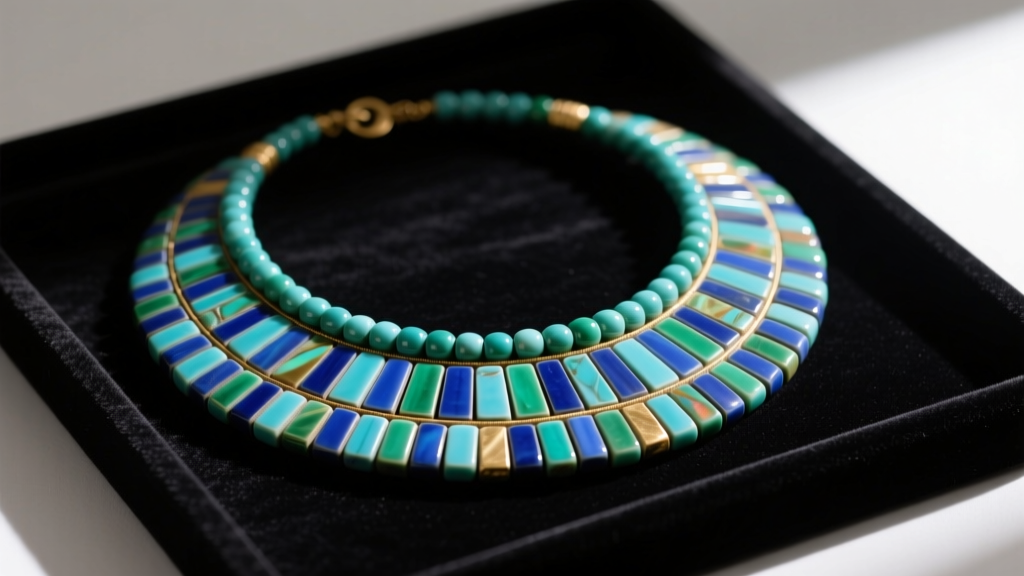
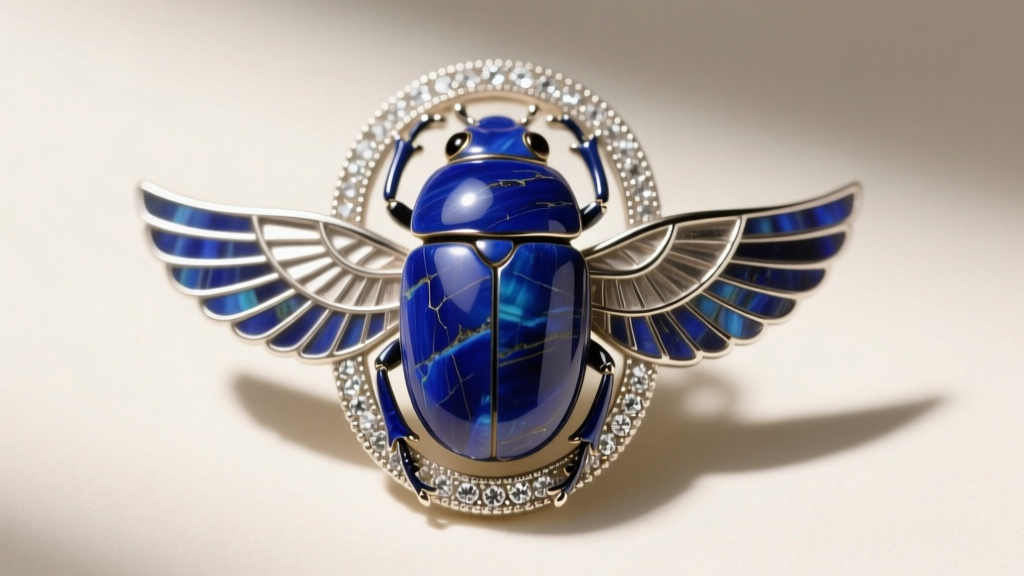
When collectors and enthusiasts search for old Egyptian jewelry, they are typically navigating two vastly different, yet equally fascinating, markets. The first comprises genuine archaeological artifacts dating from the Early Dynastic Period through the Ptolemaic era (circa 3000 BCE to 30 BCE). The second encompasses the highly coveted 1920s Egyptian Revival pieces, sparked by Howard Carter’s 1922 discovery of Tutankhamun’s tomb, crafted by legendary houses like Cartier, Boucheron, and Van Cleef & Arpels. Navigating this landscape requires a sharp eye for material forensics, construction techniques, and international antiquities law. This step-by-step guide will equip you with the domain expertise needed to authenticate, legally source, and properly conserve these historical treasures.
Step 1: Material Forensics and Gemological Analysis
Authenticating old Egyptian jewelry begins with a rigorous examination of the materials used. Ancient Egyptian artisans relied heavily on a specific triad of semi-precious stones and synthetic ceramics, each with distinct gemological properties that modern forgers often fail to replicate accurately.
Identifying True Faience
Faience is not a clay-based ceramic; it is a sintered quartz composite. The iconic turquoise and blue hues were achieved by introducing copper oxide into the quartz sand matrix before firing. Under a 10x jeweler's loupe, genuine ancient faience will often exhibit crazing (a network of fine, microscopic cracks in the glaze) and a subtle iridescence caused by centuries of burial in mineral-rich soil. Modern tourist-trade replicas are typically molded from uniform clay or glass, lacking the granular quartz core visible at the drill holes of ancient beads.
Lapis Lazuli and Carnelian Sourcing
The Egyptians sourced their finest lapis lazuli from the Sar-e-Sang mines in modern-day Afghanistan. Genuine ancient lapis will naturally contain calcite (white streaks) and pyrite (metallic gold flecks). If a piece features perfectly uniform, deep blue "lapis" with no pyrite inclusions, it is likely dyed howlite, synthetic spinel, or glass. Similarly, ancient carnelian was often heat-treated in ash to deepen its red-orange hue, resulting in a slightly cloudy translucency that differs from the laser-clear precision of modern flame-fused synthetic carnelian.
Step 2: Construction Techniques and Tooling Markers
The way a piece is assembled is often a more reliable indicator of age than the materials themselves. Manufacturing technology has evolved drastically, leaving distinct microscopic signatures on the metalwork.
Wire Drawing vs. Hammering
In antiquity, gold and silver wire was created by hammering metal strips into cylindrical shapes, not by drawing them through a draw plate. Consequently, ancient wire will have a slightly uneven, flattened cross-section and may show subtle longitudinal hammer marks. If the wire is perfectly round and uniform, it was machine-drawn, indicating a modern or revival-era origin.
Colloidal Hard Soldering
Ancient Egyptian goldsmiths utilized a technique known as colloidal hard soldering. They mixed copper salts (like malachite) with an organic glue and applied it to the joints. When heated, the organic material burned away, reducing the copper salts to pure copper, which alloyed with the gold to lower its melting point locally. Under magnification, this creates a distinct, slightly pitted solder line that differs entirely from the smooth, flowing seams of modern torch-soldered joints or the lead-heavy soft solders used in cheap replicas.
Step 3: Authentication Matrix and Market Valuation
To streamline your evaluation process, use the following comparison chart to categorize potential acquisitions. Understanding these distinctions is vital for accurate valuation and historical preservation.
| Feature | Ancient Artifact (Pre-Roman) | 1920s Egyptian Revival | Modern Tourist Replica |
|---|---|---|---|
| Wire Type | Hammered, uneven cross-section | Machine-drawn, perfectly round | Machine-drawn, often plated base metal |
| Soldering | Colloidal hard solder (pitted) | Modern torch solder, French Eagle Head hallmark | Soft lead/tin solder or laser-welded |
| Lapis Lazuli | Sar-e-Sang origin, heavy pyrite/calcite | High-grade, sometimes backed with foil | Dyed howlite or glass with painted flecks |
| Price Range (2026) | $5,000 - $250,000+ | $15,000 - $500,000+ | $20 - $150 |
Step 4: Legal Sourcing and Provenance Requirements
The acquisition of ancient artifacts is heavily regulated to combat the illicit antiquities trade. As a collector, you must be intimately familiar with international treaties and local laws. According to the Metropolitan Museum of Art's guidelines on provenance research, any artifact lacking a clear paper trail prior to 1970 is considered high-risk and potentially illegal to import into most Western nations.
The 1970 UNESCO Convention and Egyptian Law
The 1970 UNESCO Convention established the global framework for preventing the illicit export of cultural property. More specifically, you must understand Egypt's Law No. 117 of 1983. This law declared that all antiquities discovered in Egypt after 1983 are the exclusive property of the state, making their export a severe criminal offense. Therefore, any genuine old Egyptian jewelry on the open market must possess documented provenance proving it was exported from Egypt prior to 1970, or at the absolute latest, before 1983. Always demand original auction house catalogs, old export licenses, or estate inventory lists. Reputable auction houses like Sotheby's and Bonhams rigorously vet these documents before offering ancient jewelry for sale.
Step 5: Conservation and Daily Care Protocols
Preserving old Egyptian jewelry requires abandoning modern jewelry cleaning habits. The materials used in antiquity are highly reactive and fragile compared to modern gemstones.
Handling Porous Stones and Glazes
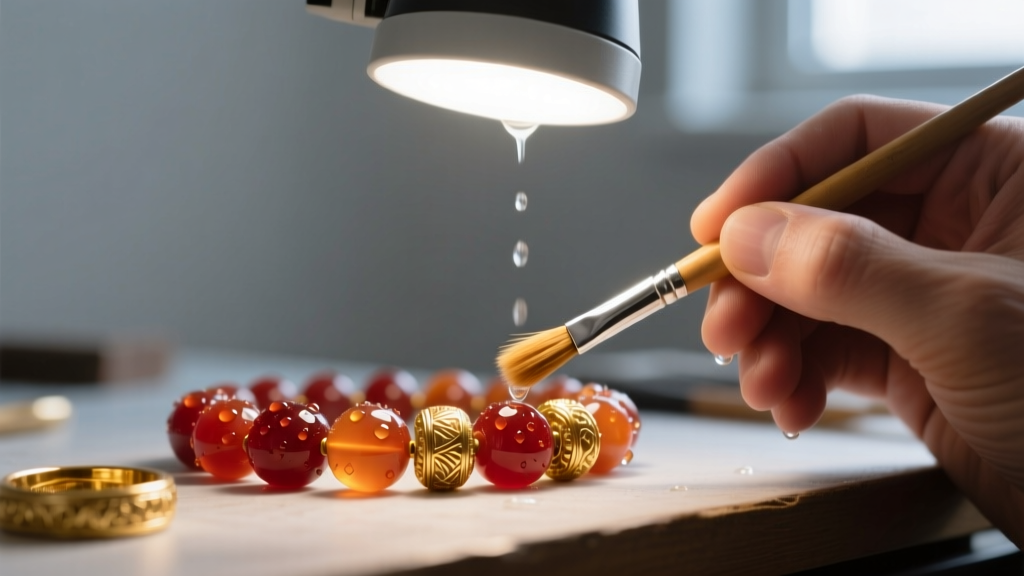
Never use ultrasonic cleaners, steamers, or commercial chemical dips on ancient jewelry. Lapis lazuli is highly porous (Mohs hardness 5-5.5) and will absorb chemicals, leading to permanent discoloration. Faience glazes are notoriously fragile and can flake or delaminate if subjected to rapid temperature changes or harsh surfactants. Carnelian, while harder (Mohs 7), is often strung on degraded ancient fibers or early 20th-century silk that will snap when wet.
The Dry Cleaning Method
For routine maintenance, use a soft, natural-bristle makeup brush to gently sweep away dust from bead holes and cloisonné cells. If soil removal is absolutely necessary for study, conservators use a cotton swab lightly dampened with distilled water—never tap water, as the chlorine and dissolved minerals can react with ancient copper alloys and degrade faience glazes. Always store these pieces in acid-free tissue paper within a climate-controlled environment, maintaining a relative humidity of 40-50% to prevent the desiccation of ancient organic backing materials.
Expert Insight: "When evaluating a piece of old Egyptian jewelry, always look at the reverse side. Ancient artisans often left the back of pectorals and broad collars relatively plain or backed them with linen and resin. Modern forgers frequently over-finish the backs or apply artificial patinas that smell sharply of sulfur or ammonia when gently warmed."
Conclusion
Collecting old Egyptian jewelry is an exercise in historical stewardship. Whether you are pursuing a genuine Middle Kingdom amulet or a spectacular Art Deco scarab brooch by Cartier, success relies on rigorous material analysis, respect for international heritage laws, and meticulous conservation practices. By applying these step-by-step authentication frameworks, you can build a collection that is not only visually breathtaking but historically legitimate and legally unassailable.


