How to Curate and Style Roman Brand Jewelry Collections
Learn how to authenticate, curate, and style Roman brand jewelry. Discover material grades, historical motifs, and step-by-step styling guides.

As we navigate the fashion landscape of 2026, historical maximalism has firmly taken root, with ancient aesthetics dominating both runways and everyday wardrobes. Among the most sought-after categories is roman brand jewelry—pieces produced by contemporary brands that draw direct inspiration from the Roman Empire. However, the market is heavily saturated. For every museum-grade artisan brand crafting historically accurate replicas, there are dozens of fast-fashion labels mass-producing hollow, historically inaccurate trinkets. This comprehensive guide will walk you through the exact steps to authenticate, curate, and style high-quality Roman cultural jewelry, ensuring your collection is both historically respectful and structurally enduring.
Decoding Core Roman Cultural Motifs
Before investing in any roman brand jewelry, you must understand the historical function and symbolism of the motifs being replicated. Roman jewelry was deeply tied to social status, protection, and civic duty. When evaluating a brand's collection, look for these foundational silhouettes:
The Bulla
Originally a hollow, locket-like amulet worn by freeborn Roman youth to ward off evil spirits, the bulla was typically made of gold for patricians and leather or base metals for plebeians. Modern high-end brands replicate the bulla as a heavy, oversized pendant. Authentic cultural brands will often include a hidden compartment or intricate repoussé detailing on the dome, staying true to the artifact's original purpose as a protective vessel.
The Fibula
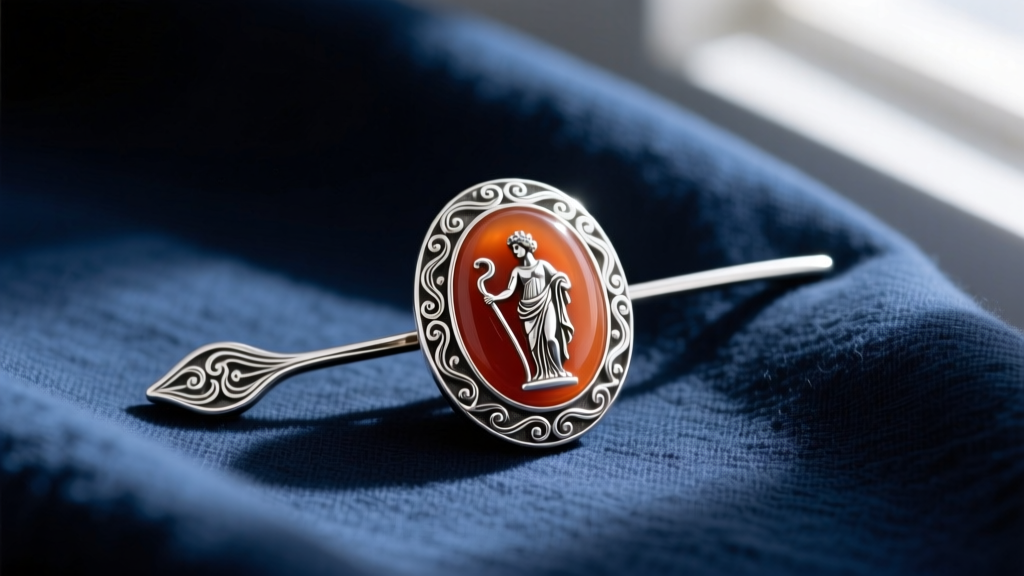
The ancient equivalent of the safety pin, the fibula was used to secure heavy garments like the toga or chlamys. In modern jewelry, a functional fibula requires serious structural engineering. Look for brands that utilize 12-gauge to 14-gauge wire for the pin mechanism. Anything thinner (like 18-gauge) will easily bend under the weight of heavy wool or tweed fabrics, rendering the piece purely decorative rather than functional.
The Intaglio Signet
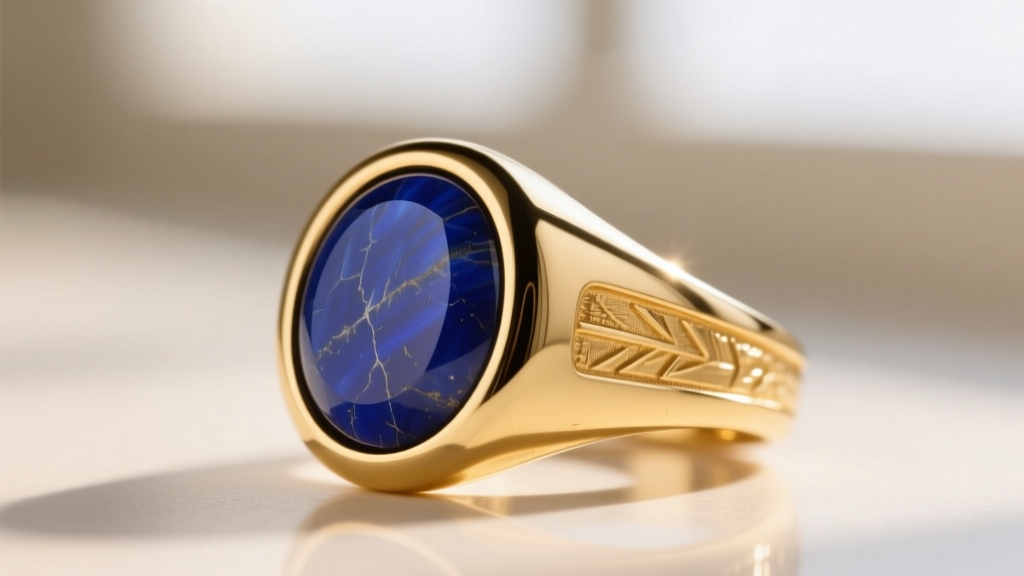
Romans used signet rings carved with intaglios (recessed carvings) to seal documents with wax. A culturally accurate brand will use hard, historically relevant gemstones like carnelian, onyx, or lapis lazuli, rather than soft, modern stones like opal or turquoise which were not prevalent in Roman ring-making.
Step 1: Verifying Material Authenticity and Quality
Not all roman brand jewelry is created equal. The difference between a piece that will last a lifetime and one that will turn your skin green within a week lies in the metallurgy and plating thickness. Use this comparison chart to evaluate the brands you are considering.
| Feature | Museum-Grade & Artisan Brands | Mass-Market Fashion Brands |
|---|---|---|
| Base Metal | 925 Sterling Silver or Cast Bronze | Brass, Zinc Alloy, or Nickel-Silver |
| Gold Plating | 18k Vermeil (Minimum 2.5 microns) | Flash Plated (Less than 0.5 microns) |
| Gemstones | Natural Carnelian, Onyx, Lapis Lazuli | Dyed Glass, Resin, or Synthetic Spinel |
| Price Range | $150 - $450+ | $25 - $75 |
| Tarnish Resistance | High (with proper care) | Low (prone to rapid oxidation) |
According to the curatorial guidelines at The Metropolitan Museum of Art, ancient Roman gold was highly alloyed for durability, but modern replicas should prioritize hypoallergenic bases like 925 sterling silver to prevent contact dermatitis, especially for heavy pieces worn close to the pulse points.
Step 2: Authenticating Carved Intaglios
One of the most critical skills when buying roman brand jewelry is distinguishing between hand-carved gemstone intaglios and molded glass imitations. Mass-market brands often use cast glass to mimic the look of carved carnelian. Here is how to perform a rapid authentication check using a standard 10x jeweler's loupe:
- Inspect the Edges: Hand-carved stones feature sharp, distinct undercuts where the carving tool met the stone. Molded glass will have soft, rounded, 'melted' looking edges.
- Look for Inclusions: Natural carnelian and onyx possess internal crystalline structures, color banding, or microscopic inclusions. Glass is often perfectly uniform or contains tiny, spherical air bubbles.
- Check the Tool Marks: Authentic lapidary work leaves microscopic, parallel striations inside the recessed grooves. Glass molds are perfectly smooth inside the grooves.
Step 3: Sizing and Fitting Historical Silhouettes
Roman jewelry was designed to be bold, heavy, and imposing. Translating these proportions to modern wearability requires specific sizing adjustments.
Sizing Wide-Band Signet Rings
Roman signet rings often feature wide shanks (8mm to 12mm). Because wide bands displace more skin and lack the flexibility of thin bands, they fit much tighter. Always size up by 0.25 to 0.5 sizes when purchasing a wide-band Roman ring to ensure comfortable circulation, especially in warmer climates where fingers naturally swell.
Fitting Rigid Torcs
The Roman torc (a rigid neck ring) was historically a symbol of military valor. Modern brands construct these from thick, semi-rigid wires (typically 3mm to 5mm). Never attempt to bend a solid bronze or silver torc to fit your neck, as work-hardening will cause the metal to snap. Instead, seek out brands that engineer a hidden tension-hinge at the back or utilize a flexible, multi-strand twisted wire design that contours to the collarbone without structural stress.
Step 4: Styling Roman Pieces for Contemporary Wardrobes
The key to wearing roman brand jewelry in 2026 without looking like you are wearing a theatrical costume is mastering the 'Rule of One.' Roman pieces are inherently heavy and visually complex. They demand negative space to breathe.
When styling historical maximalism, let the artifact be the anchor. If you are wearing a heavy, 4-inch fibula on your lapel, your ear styling should be minimal—perhaps a simple 18-gauge gold hoop. Balance is the bridge between historical homage and modern elegance.
Step-by-Step Layering Framework
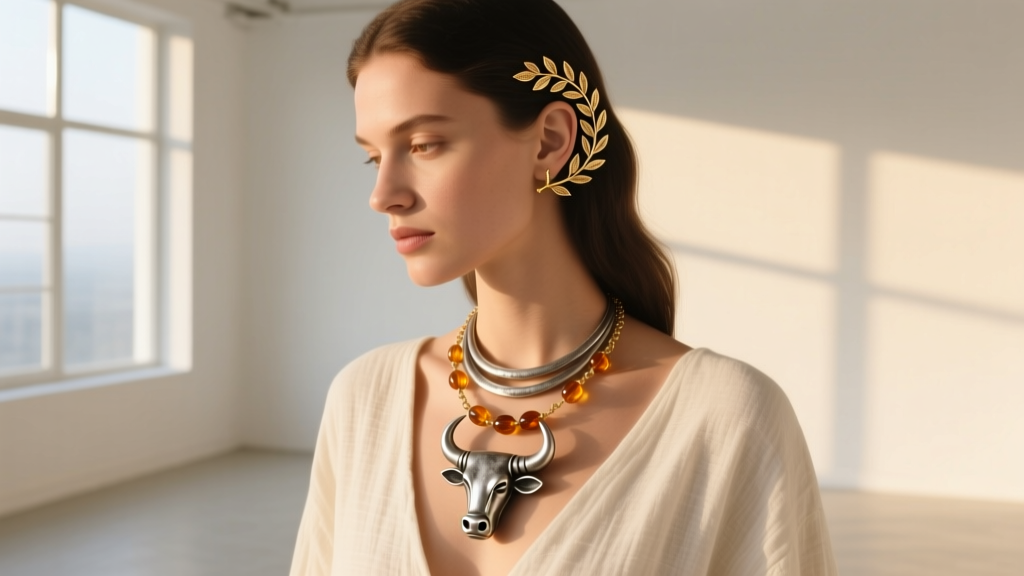
- The Anchor: Start with your heaviest piece. If it is a Bulla pendant, ensure the chain is a robust 2.5mm to 3mm rolo or curb chain. Delicate chains will snap under the weight of a solid silver bulla.
- The Secondary Layer: Add a shorter, lighter chain (1.5mm) featuring a simple, unadorned bronze or silver coin replica. Keep the drop length at least 2 inches above the anchor piece to prevent tangling and metal-on-metal scratching.
- The Accent: Finish with an asymmetrical ear arrangement. A laurel wreath ear cuff on the upper cartilage (16-gauge wire) paired with a simple carnelian stud on the lobe perfectly frames the face without competing with the neckline.
Step 5: Caring for Patina and Gemstone Inlays
Maintaining roman brand jewelry requires abandoning modern, aggressive cleaning habits. The porous nature of historical gemstones and the intentional oxidation used by artisan brands to highlight relief carvings mean that standard cleaning methods will ruin your pieces.
- Avoid Ultrasonic Cleaners: These machines vibrate at frequencies around 40kHz. This intense vibration will easily fracture the delicate epoxy or bezel settings holding intaglios in place, and can shatter natural stones with internal inclusions.
- Preserve the Patina: Many high-end Roman replica brands use liver of sulfur to darken the recessed areas of the metal, creating contrast. Silver dip polishes will strip this intentional oxidation in seconds, leaving the piece looking flat and overly shiny.
- The Proper Cleaning Method: Mix a few drops of mild, phosphate-free dish soap in lukewarm water. Use a soft horsehair brush to gently agitate dirt from the carved grooves. Rinse with distilled water (to prevent hard water spots) and pat dry with a microfiber cloth.
For further research on the historical context of these pieces, the The British Museum Collection offers an extensive digital archive of Roman antiquities, allowing you to compare your modern brand purchases directly against excavated artifacts. By prioritizing structural integrity, material authenticity, and mindful styling, your Roman jewelry collection will serve as a wearable, enduring tribute to one of history's most influential civilizations.


