How to Authenticate Traditional Chinese Jewelry: A Buyer's Guide
Learn how to authenticate traditional Chinese jewelry with our step-by-step guide on grading Hetian jade, testing gold filigree, and avoiding fakes.

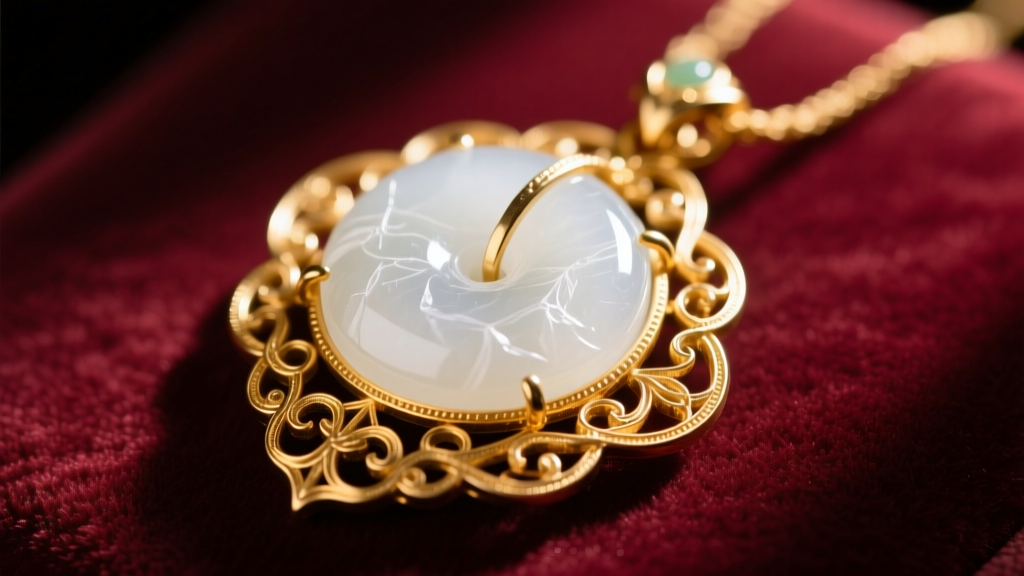
The Heritage of Chinese Adornment
When collecting traditional chinese jewelry, buyers are engaging with a continuous artistic lineage spanning over 5,000 years. Unlike Western traditions that historically prioritize the refractive brilliance of faceted gemstones, Chinese aesthetics emphasize the tactile warmth, symbolic resonance, and intricate metalwork of materials like Hetian nephrite, high-karat gold, and kingfisher feathers. Whether you are bidding at an international auction house or navigating antique markets in Beijing, distinguishing authentic heritage pieces from modern tourist-trade replicas requires a rigorous, multi-step approach.
This guide provides domain-level expertise on how to physically inspect, authenticate, and evaluate the three pillars of historic Chinese adornment: nephrite jade, gold filigree, and feather inlay.
Step 1: Identifying Authentic Hetian Jade (Nephrite)
While jadeite (Feicui) became popular during the Qing Dynasty (1644–1911), true traditional chinese jewelry from antiquity through the Ming Dynasty is overwhelmingly crafted from nephrite, specifically Hetian jade sourced from the Kunlun Mountains. According to the Gemological Institute of America (GIA), nephrite is a calcium and magnesium-rich amphibole, distinctly different from the pyroxene composition of jadeite.
The Density and Refractive Index Tests
Before relying on visual inspection, gemological testing is paramount. If you are evaluating a high-value piece, request or perform the following baseline tests:
- Specific Gravity (SG): Authentic Hetian nephrite will consistently measure between 2.95 and 3.17. If a hydrostatic weighing test yields an SG below 2.90, the piece is likely serpentine, quartzite, or glass.
- Refractive Index (RI): Using a spot reading on a refractometer, nephrite should display an RI of 1.606 to 1.632 (typically around 1.62).
- Mohs Hardness: Nephrite sits at 6.0 to 6.5. It should easily scratch glass (5.5) but will be scratched by a steel file (6.5). Note: Never perform destructive scratch tests on antique carvings; rely on SG and RI instead.
Visual Inspection: The "Mutton Fat" Standard
The most prized category of Hetian jade is Yangzhi, or "mutton fat" jade. This is not purely a color grade, but a textural one. Authentic mutton fat nephrite possesses a dense, fibrous interlocking crystalline structure that scatters light, giving it a greasy, lustrous sheen rather than a glassy or vitreous shine. Hold the piece to a strong LED flashlight; you should see a cloudy, felt-like internal matrix. If the stone is perfectly transparent or exhibits a glassy, uniform glow, it is likely synthetic glass or heavily bleached/polymer-impregnated jadeite (Grade B or C).
Step 2: Evaluating Traditional Gold Filigree (Huasi)
Gold in Chinese history was rarely used for simple cast bands; it was manipulated into breathtakingly complex wirework known as Huasi or Jinsiqian (gold thread inlay). The Metropolitan Museum of Art notes that Chinese goldsmiths achieved wire diameters as fine as 0.1 millimeters during the Han and Tang dynasties, a technique that peaked during the Ming era.
What to Look For Under Magnification
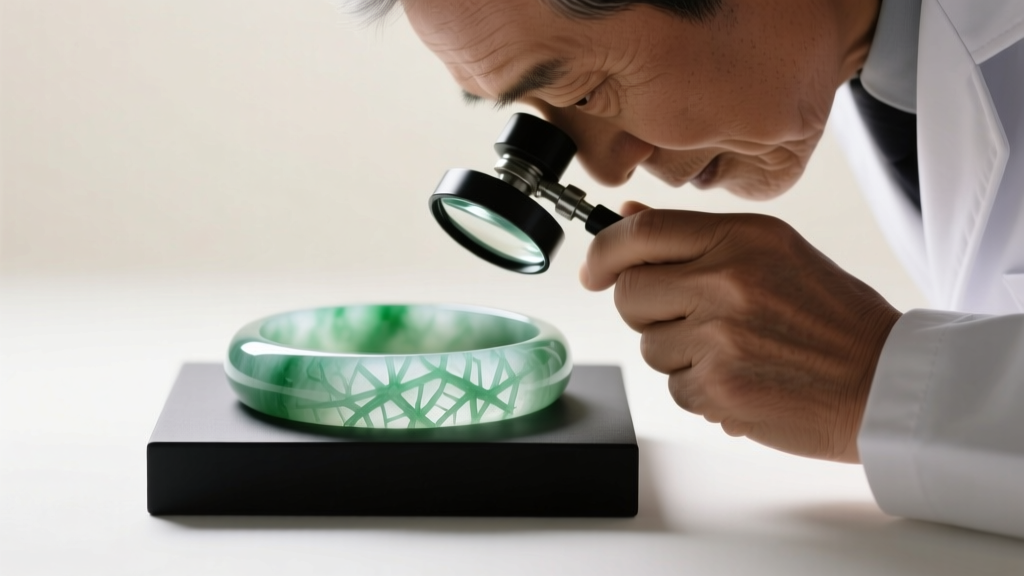
When authenticating gold filigree hairpins, belt hooks, or pendants, use a 10x or 20x jeweler's loupe to inspect the structural integrity and soldering points:
- Wire Uniformity: Antique wires were drawn by hand through metal drawplates. Under magnification, you will see microscopic variations in thickness and slight tooling marks. Modern mass-produced replicas use machine-extruded wire, which appears perfectly uniform and lacks historical character.
- Granulation and Soldering: Traditional soldering often utilized a copper-gold alloy mixture or natural resins that leave a slightly darker, oxidized patina in the crevices. Modern laser welding or cheap lead-based solders will appear overly bright, smooth, or silvery in the joints.
- Karat Purity: Historic Chinese gold jewelry was typically crafted in 22K to 24K (91.6% to 99.9% pure). Because pure gold is soft, antique filigree will often show gentle, organic warping or compression marks from centuries of wear. If a piece is rigid, perfectly symmetrical, and stamped "18K" or "14K", it is likely a modern commercial export.
Step 3: Navigating Kingfisher Feather (Tian-Tsui) vs. Enamel
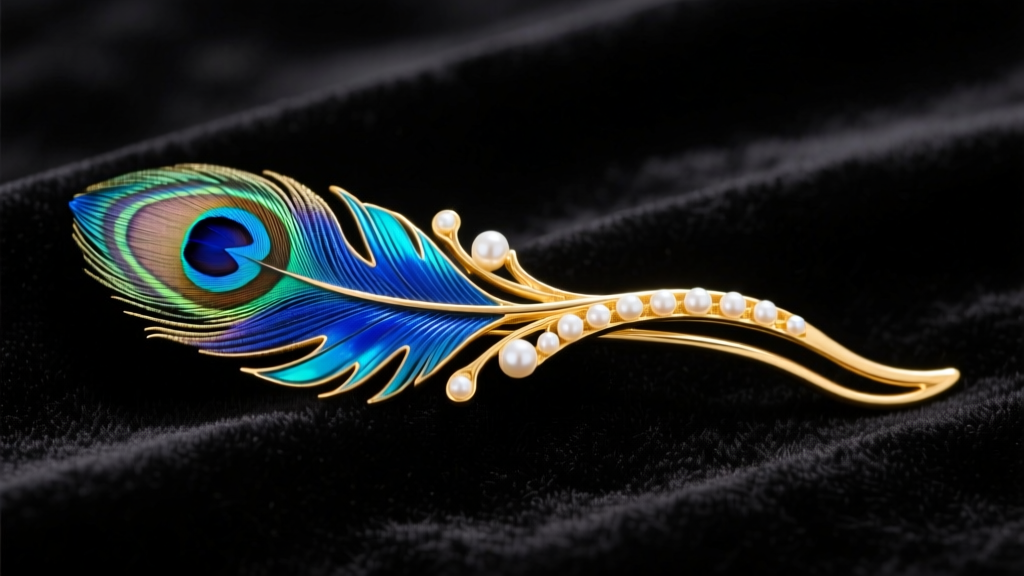
Perhaps the most visually striking element of traditional Chinese court jewelry is Tian-tsui, the meticulous application of iridescent kingfisher feathers onto gold or silver-gilt bases. Due to strict conservation laws and the CITES Species Database restrictions, the harvesting of kingfisher feathers is heavily regulated, making antique pieces highly valuable and heavily counterfeited.
Spotting the Fakes
Modern forgers often use dyed goose feathers, synthetic films, or cold enamel to mimic the electric blue hue of the kingfisher. To authenticate:
- Microscopic Barbs: Under 30x magnification, real kingfisher feathers reveal distinct, microscopic barb and barbule structures that interlock. Dyed goose feathers have a much coarser, visible grain that lacks the microscopic iridescent lattice.
- Color Shift: Genuine Tian-tsui exhibits a dichroic color shift, moving from deep cobalt blue to vibrant turquoise depending on the angle of light. Enamel and synthetic films remain a flat, static color regardless of the viewing angle.
- Aging and Wear: Authentic antique feather inlay will show slight lifting, micro-tears, or localized fading where the piece was exposed to skin oils and UV light. Perfectly pristine, uniform blue inlay on an allegedly "Qing Dynasty" piece is a major red flag for modern enamel.
Step 4: Sourcing and Pricing Framework
Understanding the market value of traditional chinese jewelry requires distinguishing between imperial provenance, scholar-class craftsmanship, and provincial folk art. Below is a generalized pricing matrix for authenticated, antique pieces (pre-1912) in the current market.
| Material / Category | Defining Characteristics | Estimated Market Range (USD) |
|---|---|---|
| Mutton Fat Hetian Nephrite | Flawless white, dense fibrous matrix, Ming/Qing carving | $5,000 – $50,000+ per piece |
| Commercial Grade Nephrite | Celadon/green hues, visible inclusions, folk carvings | $200 – $1,500 |
| Imperial Gold Filigree (Huasi) | 22K-24K, complex granulation, gem-set, court provenance | $10,000 – $100,000+ |
| Authentic Tian-Tsui (Feather) | Intact kingfisher inlay, silver-gilt base, minimal loss | $3,000 – $25,000 |
| Enamel / Paste Replicas | 20th-century tourist trade, brass base, static blue enamel | $50 – $300 |
Expert Sourcing Tip: When purchasing high-value antique jade or gold, always request a provenance dossier. Pieces with documented history from recognized auction houses (e.g., Sotheby's, Christie's, or Bonhams) or established dealers in the Panjiayuan Antique Market carry a premium but offer vital protection against the saturated market of high-quality modern replicas.
Step 5: Proper Storage and Maintenance
Preserving the integrity of these cultural artifacts requires specific environmental controls. Nephrite is tough but can suffer from micro-fractures if subjected to thermal shock. Never clean antique jade in an ultrasonic cleaner or with harsh chemical solvents; instead, wipe gently with a damp microfiber cloth and distilled water.
For pieces featuring Tian-tsui or complex gold filigree, humidity control is critical. Store these items in a climate-controlled environment maintaining 45% to 55% relative humidity (RH). Excessive moisture will cause the silver-gilt bases to corrode and the natural adhesives holding the feathers to degrade, while overly dry conditions will cause the feathers to become brittle and flake. Always store filigree and feather pieces flat in acid-free tissue paper to prevent the delicate gold wires from snagging and warping under their own weight.


