Indian Head Jewelry Name Guide: Maang Tikka Value & Budget Tips
Discover every indian head jewelry name, from Maang Tikka to Passa. Learn how to assess material value, avoid pricing traps, and buy smart.

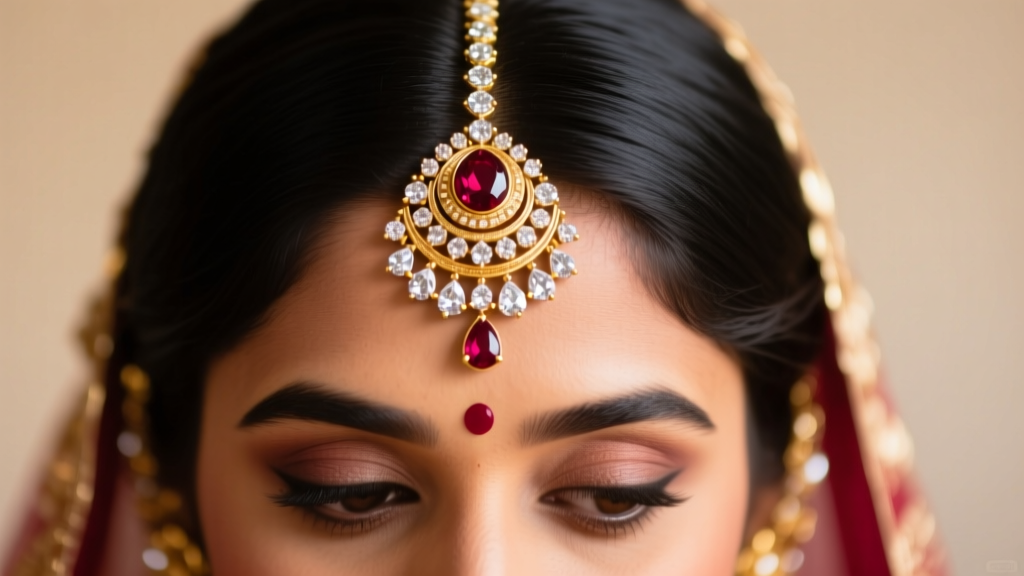
When shopping for traditional South Asian bridal or festive accessories, searching for the correct indian head jewelry name often leads to a confusing maze of regional terminology, wildly varying price tags, and ambiguous material descriptions. Whether you are a bride building a trousseau or a collector investing in heritage pieces, understanding the exact nomenclature and the intrinsic value of these ornaments is critical to avoiding severe overpayment. In 2026, the market for traditional Indian jewelry has seen a surge in both high-end investment pieces and mass-produced imitations, making a rigorous budget and value assessment more important than ever.
The Definitive Indian Head Jewelry Name Glossary
Before assessing value, you must accurately identify the piece. The term 'head jewelry' encompasses several distinct silhouettes, each with its own regional roots and structural requirements. Misidentifying these can lead to buying the wrong style for your facial structure or overpaying for a simpler design.
- Maang Tikka: The most universally recognized piece. It consists of a single chain that rests along the central parting of the hair, terminating in a pendant that sits precisely on the forehead's center (the ajna chakra).
- Matha Patti: An evolution of the Maang Tikka that includes additional chains extending laterally along the hairline, framing the face. It requires more metal and stones, inherently raising the baseline cost.
- Jhoomar (or Passa): A side-swept, fan-shaped or chandelier-style headpiece with distinct Mughal and Islamic origins, traditionally worn on the left side of the head.
- Bor (or Borla): A Rajasthani and Gujarati staple featuring a spherical, bell-like pendant that hangs over the center of the forehead, often heavily enameled on all sides.
- Sheeshphool: A highly elaborate, full-coverage headpiece that drapes over the entire head and hair, usually reserved for royal or highly traditional bridal ensembles.
Material Value: Decoding Polki, Kundan, and Imitation
The most common budget trap occurs when buyers misunderstand material terminology. According to the Gemological Institute of America (GIA), the terms 'Polki' and 'Kundan' are frequently misused by retail jewelers to inflate prices on synthetic stones.
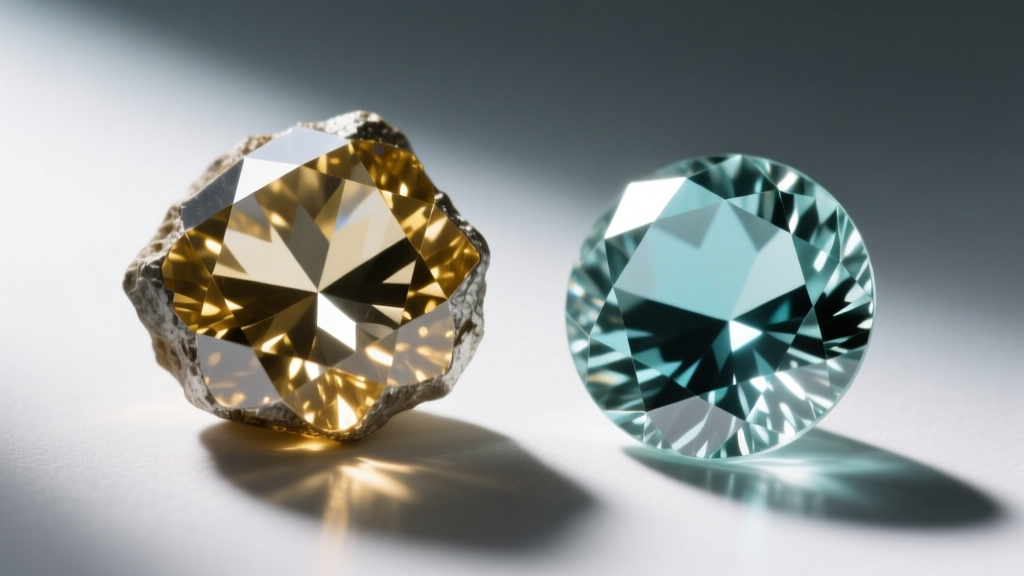
Polki refers specifically to uncut, unfaceted natural diamonds. Because they are not faceted, they rely on a silver or gold foil backing to reflect light. Polki holds genuine intrinsic value due to the carat weight of the natural diamonds used. Kundan, conversely, does not refer to a stone at all. Kundan is the ancient technique of setting stones using highly refined, pliable 24-karat gold strips. The stones set in Kundan jewelry can be anything from precious emeralds to cheap glass. When a jeweler advertises a 'Kundan Maang Tikka' at a premium price without specifying the stones, you are likely overpaying for glass set in gold foil.
Meenakari is the art of enameling the reverse side of the jewelry. Authentic Jaipur Meenakari uses vitreous enamel fused to gold at high temperatures, which adds significant artisan value. Budget pieces use cold-painted resin or synthetic lac, which chips easily and holds zero resale value.
2026 Market Pricing Matrix: What Should You Pay?
To conduct a proper budget assessment, you must align the material grade with the current market pricing. The table below outlines realistic price brackets for a standard Maang Tikka and Matha Patti set based on material composition.
| Tier | Base Metal | Stone Type | Price Range (USD) | Value Retention |
|---|---|---|---|---|
| Imitation / Fashion | Brass or Copper Alloy | Cubic Zirconia, Glass, Resin | $25 - $120 | Near Zero (Costume) |
| Semi-Fine / Vermeil | 925 Sterling Silver (Gold Plated) | Synthetic Kundan, CZ, Semi-Precious | $150 - $450 | Low (Melts down to silver value) |
| Fine Heritage | Solid 18k or 22k Gold | Real Polki, Natural Emeralds/Rubies | $1,800 - $6,500+ | High (Tracks with gold/diamond markets) |
The Weight, Purity, and Hallmarking Trap
Head jewelry must withstand the tension of being pinned into thick hair, meaning structural integrity is paramount. However, this necessity for weight is often exploited. Unscrupulous jewelers will use a thick brass or copper core, electroplate it with a heavy layer of 22k gold, and sell it by the gram as if it were solid gold. This practice, sometimes deceptively marketed as 'gold-filled' or 'heavy plated', can result in buyers paying $800 for a piece containing only $40 worth of actual gold.
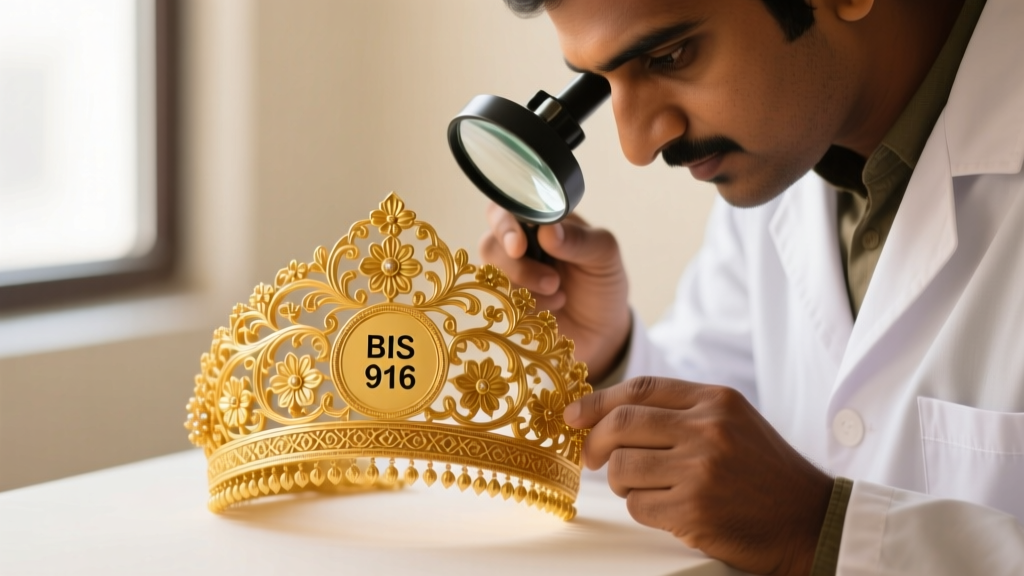
Always demand the net gold weight versus the gross weight (which includes stones and enamel). Furthermore, if you are purchasing in India or from an Indian exporter, insist on the Bureau of Indian Standards (BIS) 916 hallmark for 22k gold. The hallmark must be laser-engraved or stamped directly onto the main structural loop of the Matha Patti or the primary hook of the Maang Tikka, not just on a detachable charm.
Smart Sourcing: Where to Buy Without Overpaying
Geography dictates price. The Victoria and Albert Museum notes that different regions in India have historically specialized in distinct jewelry techniques, a fact that still governs wholesale pricing today.
- Jaipur (Johari Bazaar): The undisputed global capital for authentic Meenakari and Kundan setting. Buying directly from Jaipur artisans yields the highest quality enamel and gold-foil work for 30% less than Mumbai or Delhi retail showrooms.
- Mumbai (Zaveri Bazaar): The best market for Polki and diamond-heavy pieces. The diamond merchants here control the supply chain for uncut diamonds, offering better carat-weight transparency.
- Hyderabad (Laad Bazaar): Famous for lac bangles and pearl-studded Jhoomars and Passas. If you want a traditional Mughal-style side headpiece featuring Basra pearls, sourcing from Hyderabad prevents the massive markups applied by international boutiques.
Online Red Flags to Avoid
When sourcing Indian head jewelry online in 2026, be highly skeptical of listings that use the word 'Antique' without providing provenance or high-resolution macro photography of the stone settings. True antique Polki will show natural inclusions, uneven color zoning, and hand-beaten silver foil backing. If the foil looks perfectly uniform and mirror-like, it is a modern laser-cut synthetic backing. Additionally, avoid sellers who refuse to provide a breakdown of the gemstone carat weight separate from the gold weight; this is a deliberate tactic to obscure the use of cheap glass fillers.
Ultimately, mastering the correct indian head jewelry name is only the first step. True value lies in your ability to dissect the metallurgy, question the stone origins, and align the piece's structural weight with its actual market worth. By applying these assessment frameworks, you can build a breathtaking, culturally authentic collection that respects both your heritage and your financial boundaries.


