Every Name of Indian Head Jewelry: 2026 Gift Guide
Discover every name of Indian head jewelry, from Maang Tikka to Passa. Our 2026 gift guide matches regional styles to weddings and festivals.

Gifting jewelry is an intimate act, but navigating the rich lexicon of South Asian adornments can be overwhelming for the uninitiated. When buyers search for the specific name of Indian head jewelry, they are often met with a beautiful but confusing array of regional terms, varying weights, and distinct cultural significances. In 2026, the trend of gifting culturally rooted, heritage-inspired pieces has surged, making it essential to understand not just what these pieces are called, but how they function, what materials they require, and which occasions they suit best.
This comprehensive gift guide decodes the terminology, material grades, and practical wearing mechanics of traditional Indian headpieces, ensuring your next gift is both culturally resonant and structurally sound.
The Maang Tikka & Matha Patti: Classic Bridal Staples
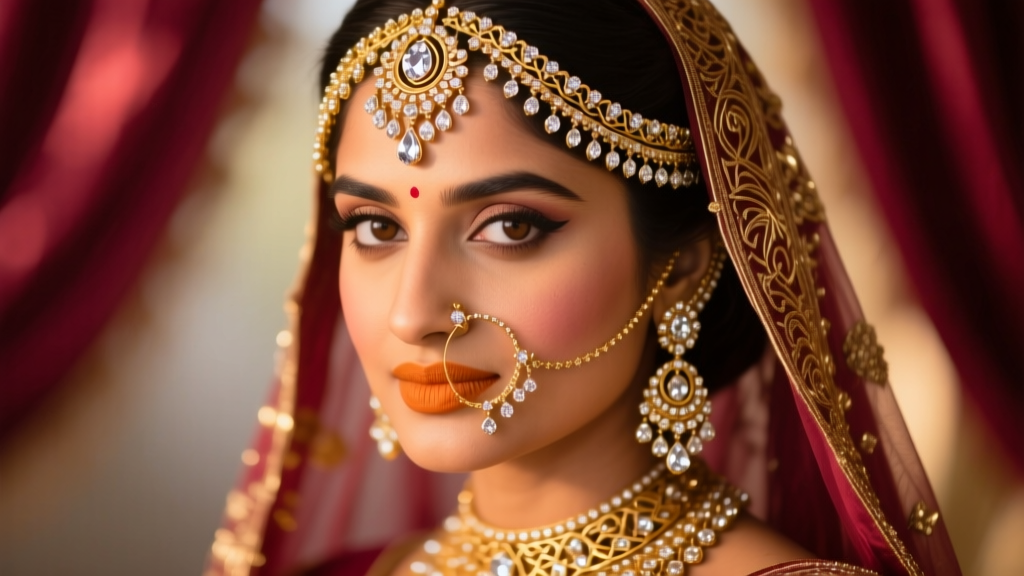
The most globally recognized name of Indian head jewelry is the Maang Tikka. Worn centrally along the hair parting (the maang), it rests on the forehead and symbolizes the union of masculine and feminine energies. A Matha Patti is an elevated version that includes additional chains extending along the hairline, framing the face.
Expert Sizing & Weight Mechanics
When gifting a Maang Tikka, weight distribution is the most critical factor. A piece exceeding 20 grams will cause tension headaches and slip forward during long wedding ceremonies.
- Under 10g: Ideal for Sangeet (dance nights) and reception parties. Can be secured with a standard S-hook.
- 10g - 25g: Standard bridal weight. Must feature a lobster clasp with a 2-inch extender chain for adjustable tension.
- Over 25g: Heavy heritage Polki pieces. Require an 18-gauge stainless steel hairpin anchor hidden beneath the hair, rather than relying solely on the rear chain hook.
According to the Victoria and Albert Museum's archives on Indian jewellery, the central pendant of the Tikka is designed to rest precisely on the Ajna Chakra (the third eye), making the chain's adjustability vital for proper anatomical placement.
Regional Specialties: Jhoomar, Passa, and Bor
If you are looking for a highly specific regional name of Indian head jewelry to gift a bride with distinct cultural ties, look beyond the central parting. Regional headpieces carry deep historical weight and require specific styling.
| Jewelry Name | Region / Community | Design Characteristics | Best Occasion for Gifting |
|---|---|---|---|
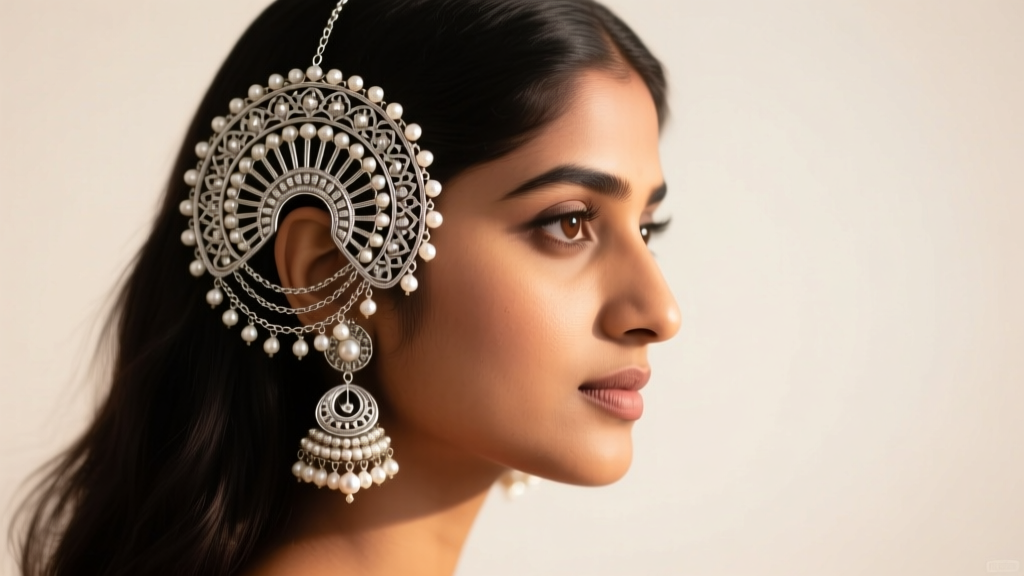
| Passa / Jhoomar | Hyderabadi / Muslim Bridal | Fan-shaped or chandelier, worn on the left side of the head. Often features pearls and uncut diamonds. | Nikkah (wedding ceremony) or formal Eid gifting. |
| Bor / Bhor | Rajasthan / Gujarat | A spherical, bell-shaped 3D pendant resting on the forehead. Highly architectural. | Traditional Rajasthani weddings, cultural festivals. |
| Sehra | Punjabi / North Indian (Groom) | A headdress of flowers, pearls, or beads that veils the groom's face. | Groom's wedding day (Baraat procession). |
The Passa: A Masterclass in Side-Profile Elegance
The Passa (or Jhoomar) is a spectacular gift for a bride embracing her South Asian Muslim heritage. Unlike the Maang Tikka, the Passa is pinned to the left side of the hair. Because it hangs laterally, gravity is its enemy. High-quality Passas feature a dual-anchor system: a primary comb that slides into the hair volume, and a secondary micro-chain that hooks to the back of the head. When buying, ensure the base metal is at least 925 sterling silver to prevent the heavy pearl clusters from bending the frame.
Material Grades & Pricing Tiers for 2026
Understanding the material composition is crucial when evaluating the price and longevity of your gift. The Gemological Institute of America (GIA) notes that the market for Polki (uncut, natural diamonds) requires careful verification, as glass imitations (Kundan) are frequently passed off to inexperienced buyers.
Tier 1: Fine Heritage Investment ($2,500 - $10,000+)
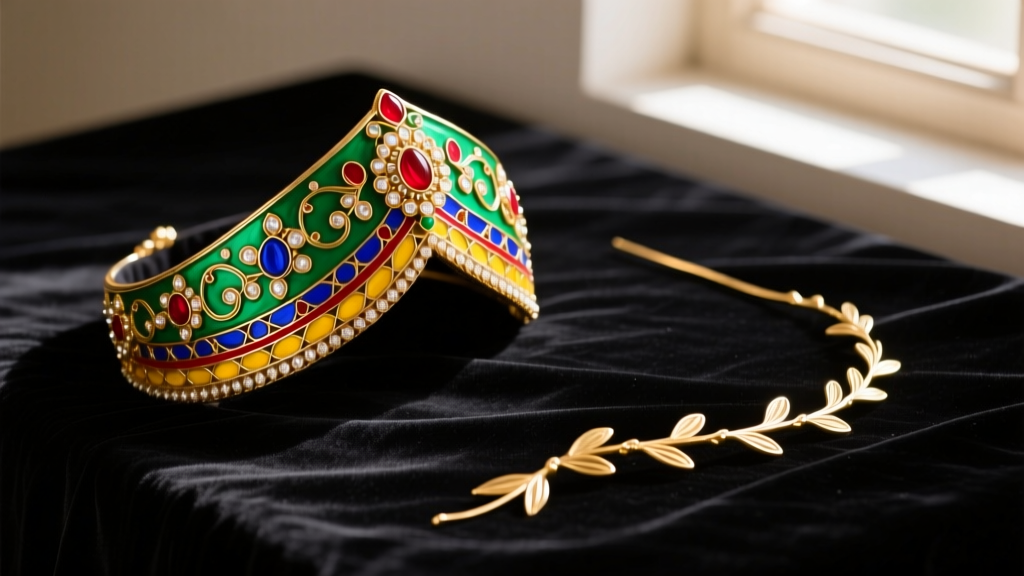
Crafted in solid 22k gold, featuring natural uncut Polki diamonds and authentic Meenakari (vitreous enamel) on the reverse. These are heirloom pieces meant to be passed down. The enamel backing is not just decorative; it prevents the gold from scratching and protects the skin from metal allergies.
Tier 2: Premium Bridal ($400 - $1,500)
Typically set in 18k gold or heavy gold vermeil over a sterling silver base. These pieces often use lab-grown diamonds, cubic zirconia, or high-grade glass Kundan. They offer the visual weight and brilliance of Tier 1 without the investment-grade price tag, making them perfect for bridesmaids' gifts or secondary wedding events.
Tier 3: Fashion & Festival ($35 - $120)
Brass or copper bases with gold plating and acrylic stones. While visually striking in photographs, these pieces carry a high risk of nickel-induced contact dermatitis. If gifting Tier 3, always ensure the back of the pendant is coated in a hypoallergenic resin or enamel.
Gifting Framework: Matching the Piece to the Occasion
To ensure your gift is worn and cherished, use this decision framework to match the jewelry name to the recipient's specific event:
- The Sangeet / Cocktail Party: Gift a lightweight, contemporary Matha Patti with geometric motifs. The recipient will be dancing, so the piece must weigh under 15 grams and feature secure screw-back or lobster clasps to prevent loss in crowded venues.
- The Haldi / Mehndi Ceremony: These are daytime, outdoor, and highly tactile events (involving turmeric pastes and henna). Avoid expensive Polki. Instead, gift a floral-inspired Maang Tikka made of oxidized silver or gold-plated brass that can withstand humidity and accidental staining.
- The Main Wedding Ceremony: This is the moment for the heavy, traditional Maang Tikka paired with a Passa (the combination is known as a Tikra). Opt for 22k gold and authentic Meenakari work that complements the heavy bridal lehenga.
Expert Troubleshooting: Avoiding Common Pitfalls
Even the most beautiful headpiece will be relegated to a jewelry box if it is structurally flawed. As a buyer, inspect these three failure modes before purchasing:
- The S-Hook Hair Snag: Traditional S-hooks are notorious for tangling in fine, silky hair, causing painful pulling when the wearer tries to remove the piece. Fix: Look for modernized pieces that use a flat lobster clasp, or coat the inside of a traditional S-hook with a layer of clear, jewelry-safe resin.
- The Forehead Slip: Smooth skin and foundation makeup cause the central pendant to slide upward. Fix: Gift the piece with a small tube of theatrical spirit gum or double-sided fashion tape, which is the industry standard for keeping heavy Bor and Tikka pendants anchored to the skin.
- Oxidation on Silver Bases: Many premium pieces use a silver base that can tarnish when exposed to the acidic pH of human sweat. Fix: Ensure the piece is rhodium-plated or heavily enameled on the skin-facing side to create an impermeable barrier.
Conclusion
Knowing the correct name of Indian head jewelry is only the first step in selecting a meaningful gift. Whether you are choosing a sweeping Hyderabadi Passa, a regal Rajasthani Bor, or a classic diamond Maang Tikka, understanding the weight mechanics, material grades, and regional contexts transforms a simple purchase into a deeply informed, culturally respectful gift. By prioritizing structural integrity—like secure clasps and hypoallergenic backings—you ensure the piece remains a comfortable, cherished part of the recipient's heritage for decades to come.


