Indian Headpiece Jewelry Buying Guide: Maang Tikka & Passa
Discover how to choose the perfect Indian headpiece jewelry. Our buying guide covers Maang Tikka, Passa, metals, weight, and secure fitting tips.

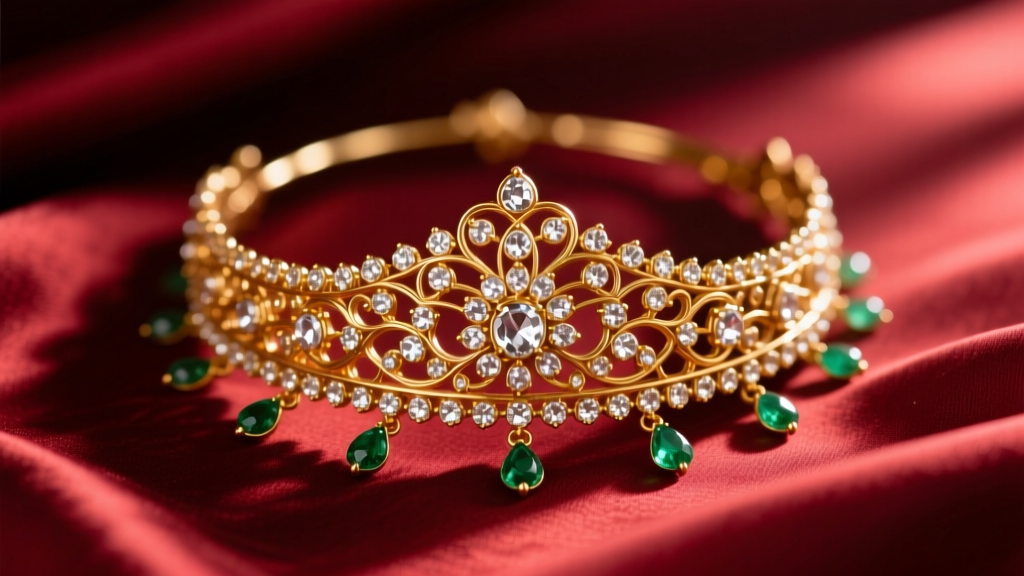
Introduction to Indian Headpiece Jewelry
When navigating the vibrant world of South Asian adornments, indian headpiece jewelry stands out as the most culturally significant and visually striking category. Whether you are a bride planning your wedding trousseau, a stylist working on editorial shoots, or a collector of regional artifacts, understanding the mechanics, materials, and history of these pieces is crucial. Unlike necklaces or bangles, headpieces must balance intricate artistry with structural engineering, as they are anchored entirely by hair and skin tension. This comprehensive buying guide breaks down exactly what to look for when investing in a Maang Tikka, Matha Patti, or Passa, ensuring your purchase is both authentic and wearable.
Decoding the Anatomy of Traditional Headpieces
Before evaluating materials, you must understand the architectural components of a traditional headpiece. A standard Maang Tikka consists of three primary elements:
- Sirphool (The Medallion): The central focal piece that rests on the forehead. In high-quality pieces, the Sirphool is slightly domed or flexible to contour to the curvature of the skull rather than sitting flat and rigid.
- Dandi (The Stem/Chain): The connecting chain that runs through the hair parting. For heavy medallions, the Dandi should be crafted from a reinforced box-chain or a thick wire (minimum 1.2mm gauge) to prevent snapping under tension.
- Jhoomka or Tassel: The decorative drop hanging from the Sirphool. Ensure the jump rings connecting the tassel to the medallion are soldered shut; open jump rings are a common failure point that leads to lost components during wear.
For side-swept styles like the Jhoomar or Passa (traditionally worn by Muslim brides and in Mughal-inspired styling), the anatomy shifts to a broader, fan-shaped base that requires lateral support rather than a central parting chain.
Material Grades and Stone Authenticity
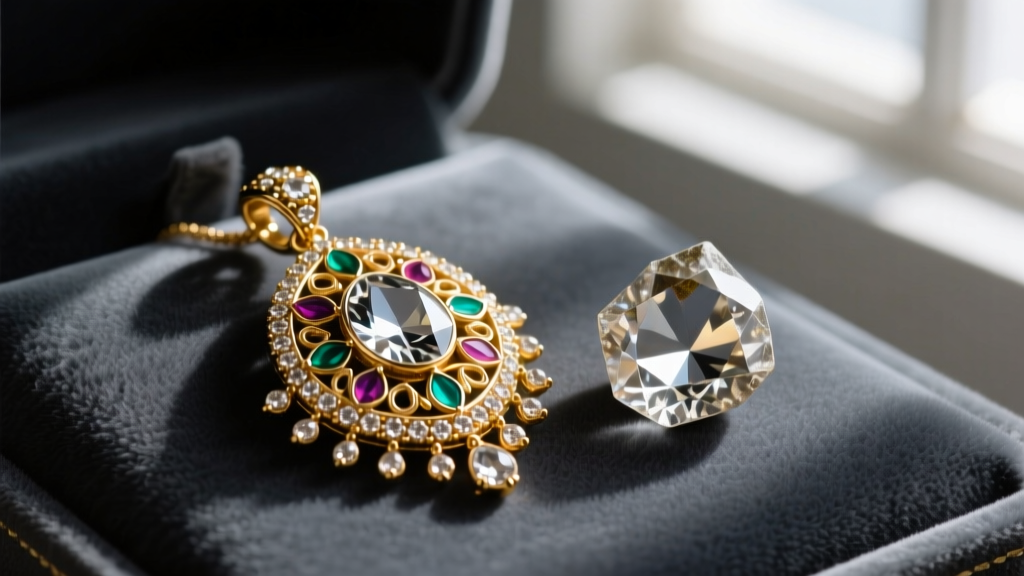
The most critical aspect of buying indian headpiece jewelry is distinguishing between stone-setting techniques. The market is flooded with terms like Kundan, Polki, and American Diamond, which are often misused by retailers.
Kundan vs. Polki: The Jadau Technique
According to the Victoria and Albert Museum, traditional Jadau jewelry involves embedding stones into a gold base using highly purified, malleable gold foil (Kundan) rather than metal prongs.
Kundan technically refers to the refined gold foil used to hold the stone, but in modern retail, it denotes jewelry set with glass or semi-precious stones using this foil technique.
Polki, on the other hand, refers to uncut, naturally faceted diamonds. The Gemological Institute of America (GIA) notes that true Polki utilizes raw diamonds that are polished but not faceted, giving them a softer, more organic sparkle compared to brilliant-cut diamonds. When buying, ask the jeweler for a loupe inspection: if the stone has sharp, geometric internal facets, it is likely glass or Cubic Zirconia (CZ), not true Polki.
Base Metals and Plating Quality
The base metal dictates the longevity and skin-compatibility of the headpiece:
- Brass/Copper Base: The traditional choice for heavy bridal sets. It provides excellent weight and durability but requires high-quality gold plating to prevent oxidation and green skin discoloration.
- Sterling Silver (925): The premium standard for semi-fine jewelry. Silver is hypoallergenic, lighter than brass, and holds intricate Meenakari (enamel) work on the reverse side much better.
- White Metal/Zinc Alloys: Common in fast-fashion headpieces. Avoid these for long-term wear, as they are brittle, prone to snapping at the S-hook joint, and cannot be re-plated easily.
Pro-Tip: Always look for "micron plating" (usually 1.5 to 2.5 microns of 22k gold over a nickel barrier). Flash-plated pieces will fade within weeks of exposure to hair oils and humidity.
Weight Distribution and Secure Attachment
The most frequent complaint regarding indian headpiece jewelry is discomfort and slippage. A beautifully crafted 80-gram Sirphool is useless if the attachment mechanism fails. The hook must be matched to the weight of the piece and the density of the wearer's hair.
| Weight Category | Gram Range | Required Attachment Mechanism | Best For |
|---|---|---|---|
| Lightweight | 10g - 25g | Standard S-Hook (Soldered) | Daily wear, small Maang Tikkas, lightweight Passa |
| Medium | 26g - 50g | Reinforced S-Hook with Hairpin Loop | Standard bridal Tikkas, medium Matha Pattis |
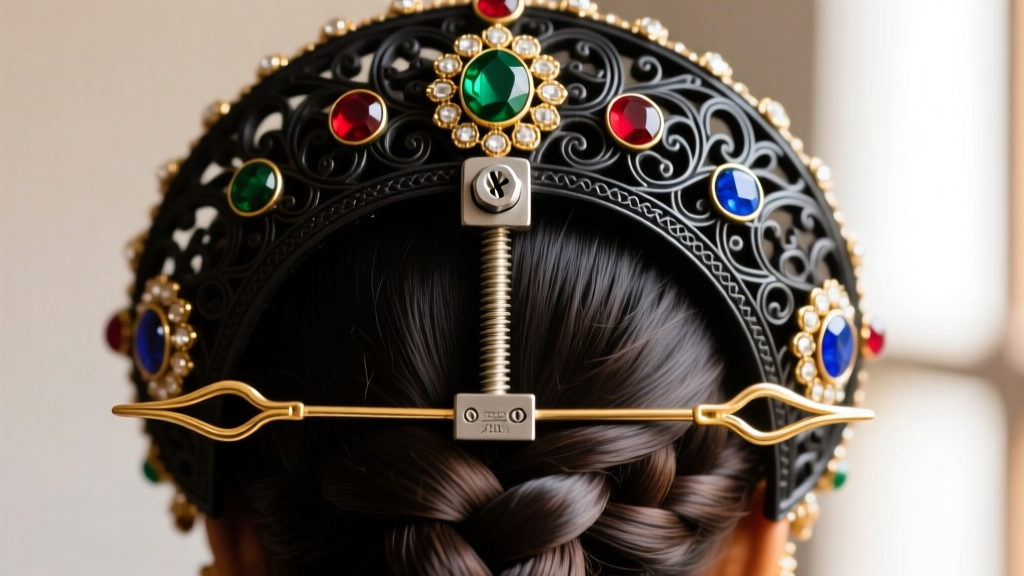
| Heavy | 51g - 90g | Screw-in Clasp or Dual-Anchor Chain | Heritage Jhoomars, heavy Polki bridal sets |
| Ultra-Heavy | 90g+ | Leather Strap Anchor or Wig Integration | Temple jewelry, elaborate theatrical pieces |
For medium to heavy pieces, ensure the Dandi chain includes a small loop near the S-hook. This allows the stylist to weave a bobby pin or a specialized hair anchor through the loop, pinning it directly to the hair braid or bun, transferring the weight off the delicate front hairline.
Pricing Framework: What Should You Pay?
Pricing in this category varies wildly based on material authenticity and artisan labor. Use this framework to benchmark your purchases in 2026:
- Fashion / Imitation ($30 - $120): Brass or alloy base, CZ stones, epoxy resin instead of real enamel. Suitable for single-use events or cosplay. Expect flash plating.
- Semi-Fine / Silver-Base Kundan ($250 - $800): Sterling silver base with 2-micron gold plating, glass or quartz Kundan stones, and real Meenakari enamel on the back. The sweet spot for modern brides who want heirloom quality without the fine jewelry price tag.
- Fine / Heritage Polki ($3,000 - $20,000+): 18k or 22k solid gold, set with genuine uncut Polki diamonds and natural emeralds or rubies. These are investment pieces that retain intrinsic metal and stone value.
Styling and Face Shape Considerations
Beyond materials, the visual proportion of the Sirphool must complement the wearer's facial structure.
Round and Square Faces
Opt for elongated, teardrop, or oval-shaped Sirphools. Avoid broad, circular medallions, as they will widen the appearance of the forehead. A longer Jhoomka drop (1.5 to 2 inches) helps draw the eye vertically, creating a lengthening illusion.
Oval and Heart-Shaped Faces
These face shapes can carry the weight of broad, sunburst, or circular Matha Pattis. A wider Sirphool (1.5 inches or more) balances a broader forehead, while a shorter tassel keeps the features from looking overly drawn out.
Final Fitting and Maintenance Tips
When you receive your headpiece, inspect the reverse side. High-quality indian headpiece jewelry will feature a smooth, enameled, or polished back to prevent the metal from catching on fine hair strands. Store your headpiece flat in a padded box, wrapped in acid-free tissue paper. Never hang a heavy Maang Tikka by its chain, as the constant gravitational pull will stretch the jump rings and weaken the Dandi over time. By prioritizing structural integrity, authentic materials, and proper weight distribution, you can secure a headpiece that is as comfortable as it is breathtaking.


