Indian Wedding Jewelry Materials: Gold, Polki and Kundan Compared
Compare gold purities, Polki, Kundan, and regional styles in Indian wedding jewelry. Expert material breakdowns, pricing, and buying tips.

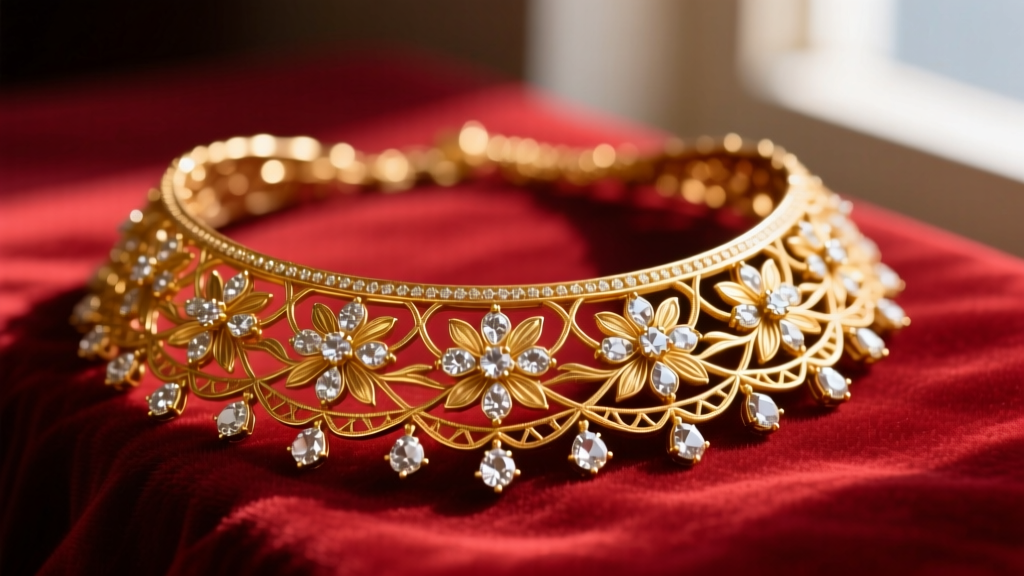
The Metallurgical Foundation: Decoding Gold Purity
When investing in Indian wedding jewelry, understanding the metallurgical properties of the base metal is just as critical as appreciating the artistry. Unlike Western bridal jewelry, which frequently utilizes 14K or 18K gold for maximum structural rigidity, traditional Indian bridal sets are predominantly crafted in 22-karat gold. According to the Bureau of Indian Standards (BIS), 22K gold—stamped as BIS 916—contains exactly 91.67% pure gold, with the remaining 8.33% comprising alloy metals like copper, silver, and zinc.
The 22K vs. 18K Durability Debate
Why is 22K the undisputed standard for Indian bridal wear? The answer lies in cultural valuation and skin biocompatibility. Pure 24K gold (99.9%) is too malleable for intricate stone settings; it will warp under the weight of heavy bridal chokers. By alloying it to 22K, jewelers achieve a Vickers hardness of approximately 90 HV, which is sufficient to hold heavy cabochons while retaining the rich, buttery yellow hue that signifies prosperity in Hindu weddings.
However, for highly structured, diamond-heavy contemporary Indian bridal pieces, jewelers are increasingly shifting to 18K gold (75% purity). 18K gold offers a higher tensile strength and better prong retention for faceted diamonds. If you are purchasing a heavy Jadau necklace with a complex clasp mechanism, ensure the structural joints and clasps are reinforced with 18K gold, even if the main body is 22K.
Polki, Kundan, and Jadau: Clearing the Material Confusion
The most common pitfall for brides shopping for heritage-style Indian wedding jewelry is confusing Polki, Kundan, and Jadau. These terms are frequently (and incorrectly) used interchangeably by retail sales staff. From a gemological perspective, they represent entirely different material classifications.
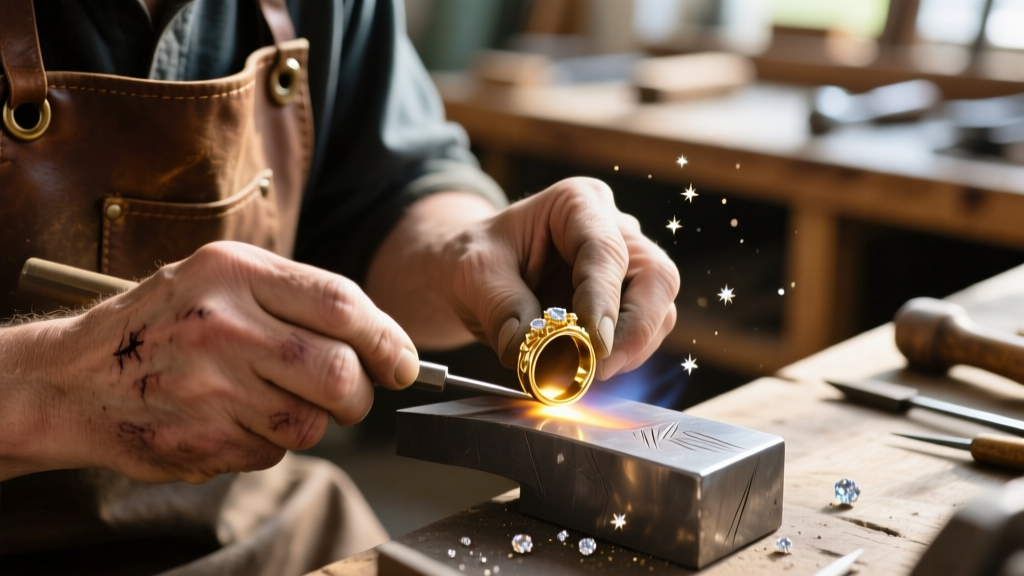
Material Breakdown: Uncut Diamonds vs. Glass Foil
Jadau is not a material; it is the ancient Mughal-era technique of embedding stones into a gold base without the use of prongs or claws. The stones are held in place by Kundan—highly refined, pure 24K gold foil that is burnished around the stone's girdle at room temperature.
- Polki: Refers specifically to the stones used. Polki diamonds are natural, uncut, and unpolished diamonds. They retain their original crystalline structure, meaning they do not possess the refractive brilliance of faceted diamonds. Instead, they offer a soft, organic luster. On the Mohs hardness scale, they remain a 10, making them highly scratch-resistant, though their natural inclusions can make them prone to cleavage if struck sharply.
- Kundan: Refers to the setting material (the 24K gold foil). However, in modern commercial parlance, 'Kundan jewelry' refers to pieces where the stones are not diamonds, but rather glass, quartz, or semi-precious cabochons set using the Kundan foil technique. Glass sits at a 5.5 on the Mohs scale and requires careful storage to avoid abrasion.
Comparative Material Properties Chart
| Material Style | Base Metal | Primary Stone Material | Mohs Hardness | Avg. Bridal Set Price (2026) |
|---|---|---|---|---|
| Polki Jadau | 22K Gold | Uncut Natural Diamonds | 10 | $8,000 - $35,000+ |
| Kundan Jadau | 22K Gold / Silver | Glass, Quartz, Onyx | 5.5 - 7 | $1,200 - $4,500 |
| Temple Jewelry | 22K Gold | Kempu (Ruby) Cabochons | 9 (Corundum) | $3,500 - $15,000 |
As noted by the Gemological Institute of America (GIA), uncut Polki diamonds often exhibit heavy internal inclusions that would render a faceted diamond structurally unsound. However, because Polki is set flush into the gold backing, these inclusions do not compromise the jewelry's integrity. Always request a loupe inspection to verify that the 'Polki' is indeed natural diamond and not polished glass or synthetic cubic zirconia, which are increasingly common in lower-tier markets.
Regional Material Signatures: Temple vs. Thewa
Indian wedding jewelry is deeply regional, and the materials utilized shift dramatically depending on the geographic origin of the bride's heritage. Understanding these regional material signatures is vital for authentic curation.
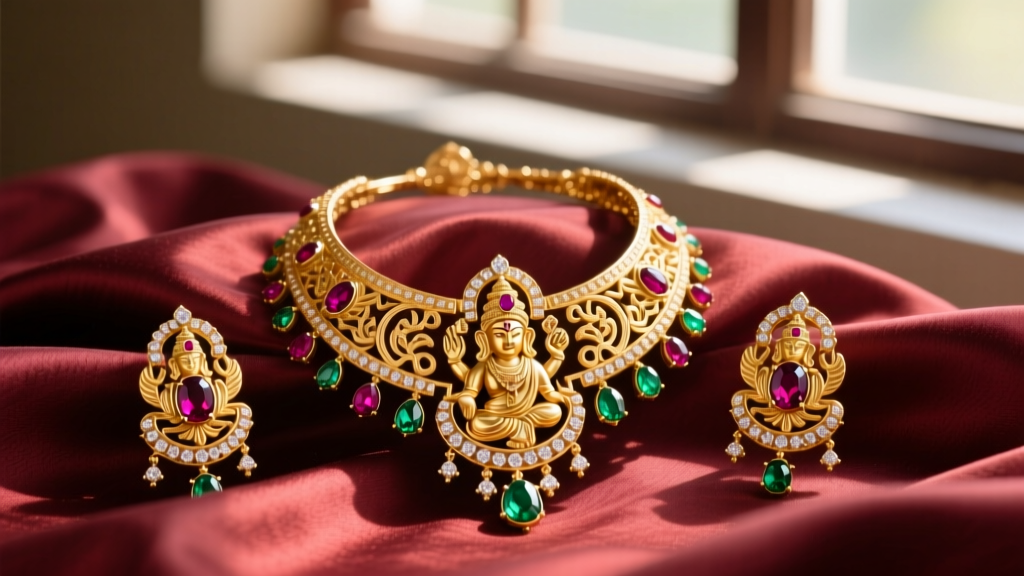
South Indian Temple Jewelry Properties
Originating in the Chola and Pandya empires, traditional Temple jewelry is characterized by its matte 22K gold finish and the use of Kempu stones. Kempu refers to uncut or lightly polished rubies and synthetic corundum, often backed with red foil to intensify the crimson hue. The gold used in authentic Temple jewelry is heavily worked, often utilizing the Nakshi technique, where molten gold is cast into intricate molds of deities like Lakshmi and Yali. The specific gravity of these pieces is exceptionally high; a standard Temple bridal necklace (Addigai) can weigh between 80 to 150 grams, requiring a reinforced silk thread (Kuchu) rather than a metal chain to support the tensile load on the neck.
Rajasthani Thewa and Meenakari Enameling
In contrast to the heavy gold of the South, Rajasthani bridal jewelry often features Thewa and Meenakari. Thewa is a highly specialized material composite: a wafer-thin sheet of 23K gold foil is intricately pierced and fused onto a piece of Belgian glass. The thermal expansion coefficients of the gold and glass must be perfectly matched to prevent shattering during the firing process.
Meenakari involves enameling the reverse side of the jewelry. Gem-quality enamels are essentially powdered glass mixed with metallic oxides (cobalt for blue, copper for green) and fired at temperatures exceeding 700°C. A high-quality Meenakari piece will feel completely smooth to the touch, with no pitting or bubbling in the enamel surface. According to the World Gold Council, the fusion of gold and enamel in Indian heritage pieces represents one of the most complex metallurgical applications in global jewelry history.
Practical Buying Framework for 2026 Brides
Navigating the market for Indian wedding jewelry requires a systematic approach to material verification. Use this framework to ensure structural integrity and fair market valuation:
- Demand the BIS Hallmark: Never accept 'store purity guarantees.' Insist on the laser-etched BIS 916 hallmark on every individual component of the set, including the earrings and maang tikka.
- Check the Silver Backing: Many heavy Kundan and Polki chokers are crafted on a 92.5% sterling silver base with a thick 22K gold plating (known as 'gold-plated silver' or chandbali style). This reduces weight and cost but requires careful maintenance to prevent the silver from oxidizing and tarnishing the skin.
- The Foil Test for Kempu: If buying South Indian Temple jewelry, inspect the back of the cabochons. Authentic traditional pieces use natural lac and metallic foil backing. If the stone appears uniformly red from all angles without a visible backing chamber, it is likely a solid synthetic corundum.
- Weight Deductions: When calculating the gold value of a Jadau piece, remember that the weight of the Kundan foil, lac (resin), and stones must be deducted from the gross weight. Reputable jewelers will provide a net gold weight certificate.
Expert Insight: The longevity of your Indian wedding jewelry depends heavily on post-wear care. Polki diamonds are porous compared to faceted diamonds and can absorb oils, lotions, and turmeric (haldi) from wedding rituals, leading to a permanent cloudy appearance. Always have your Polki pieces professionally cleaned with a mild, non-ultrasonic solution immediately after the wedding festivities.
By prioritizing material science over fleeting aesthetic trends, brides can build an Indian wedding jewelry trousseau that not only honors cultural heritage but also stands up to the rigorous physical and chemical demands of generational wear.


