Japanese Jewelry Trends 2026: Wabi-Sabi & Modern Minimalism
Explore 2026 Japanese jewelry trends, blending Wabi-Sabi aesthetics, Mokume-gane metallurgy, and Keshi pearls into modern minimalist designs.

The 2026 Paradigm Shift in Japanese Jewelry
As the global luxury market pivots towards "quiet luxury" and hyper-personalization, Japanese jewelry has emerged as a dominant force in 2026. Moving far beyond the mass-produced Akoya pearl strands of the late 20th century, contemporary Japanese jewelry is defined by a profound synthesis of ancestral metallurgy and avant-garde minimalism. Designers in Tokyo and Kyoto are leveraging centuries-old techniques to create pieces that speak to a modern desire for texture, narrative, and understated elegance.
This shift is not merely aesthetic; it is deeply philosophical. The integration of Wabi-Sabi principles into fine jewelry has redefined how collectors view imperfections, raw materials, and asymmetric silhouettes. For the discerning buyer, understanding the nuances of Japanese metalworking, pearl cultivation, and hallmarking is essential to navigating this sophisticated market.
Wabi-Sabi and the Embrace of Imperfection
Wabi-Sabi, the Japanese worldview centered on the acceptance of transience and imperfection, has profoundly influenced 2026 jewelry design. Unlike Western traditions that prioritize flawless symmetry and high-polish finishes, Wabi-Sabi jewelry celebrates the organic and the incomplete.
Material and Textural Choices
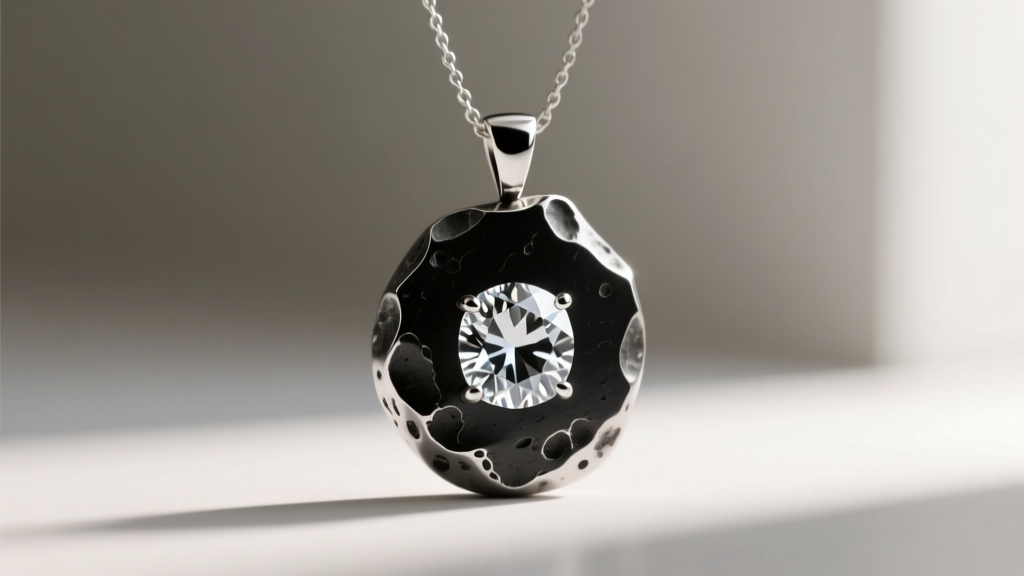
Designers are increasingly utilizing hand-hammered finishes (tsuchime) on 18k yellow gold and platinum to create light-diffusing, organic surfaces. Raw, uncut diamonds and included sapphires are now being set in matte black rhodium-plated white gold, highlighting the stone's natural inclusions rather than masking them. This approach requires a masterful understanding of prong tension, as irregular stones demand custom-fitted bezels or tension settings that secure the gem without compromising its natural edges.
The beauty of Wabi-Sabi jewelry lies in its refusal to conform to rigid geometries. A hand-forged cuff that bears the subtle marks of the artisan's hammer is valued precisely for its unique, unrepeatable topography.
Master Metallurgy: Shakudo, Shibuichi, and Mokume-Gane
Japan's historical isolation allowed its metalworkers to develop highly specialized alloys that remain unparalleled in global jewelry making. In 2026, high-end artisans are reviving these Edo-period techniques for contemporary wearable art.
| Alloy / Technique | Composition | Patina Color | Modern Application |
|---|---|---|---|
| Shakudo | 96% Copper, 4% Gold | Deep Purple-Black | Inlay work, contrasting bezels, signet rings |
| Shibuichi | 75% Copper, 25% Silver | Silver-Grey to Olive | Mokume-gane layers, textured band shanks |
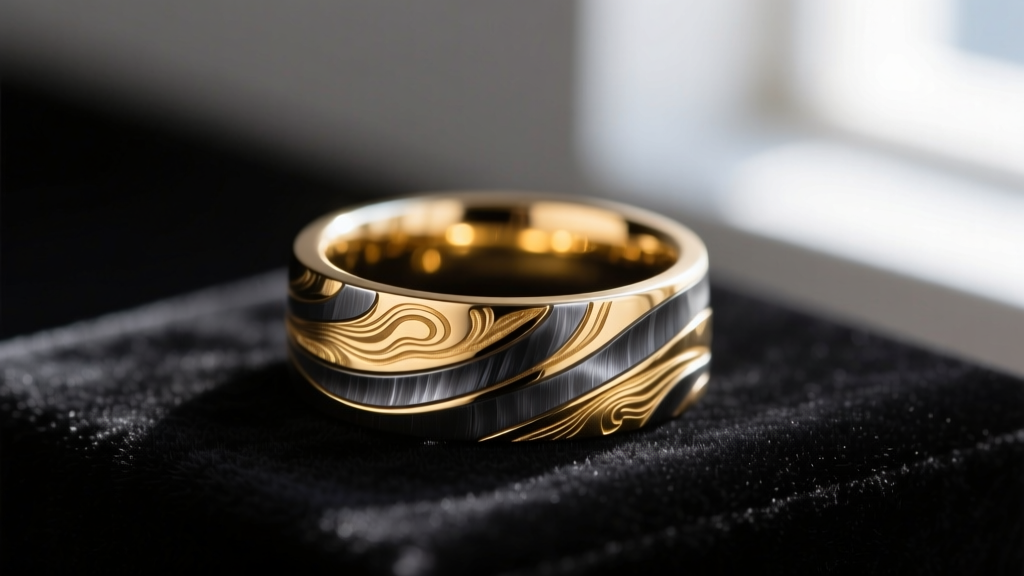
| Mokume-Gane | Laminated billets (Au, Pd, Shibuichi) | Wood-grain contrast | Wedding bands, statement cuffs, dials |
Britannica notes that Mokume-gane (translated as "wood grain metal") requires the fusing of multiple precious metal sheets under immense heat and pressure, followed by meticulous carving and forging to reveal the internal layers. A high-quality Mokume-gane wedding band in 2026 typically features a 2.5mm to 3mm shank thickness to ensure the structural integrity of the laminated layers, with prices starting around $3,500 for authentic, hand-forged pieces.
Shakudo, meanwhile, achieves its iconic purple-black hue through a chemical bath of rokusho (copper acetate). Because the patina can wear off with prolonged exposure to skin oils and friction, modern jewelers often recess Shakudo elements within protective 18k gold bezels or use them exclusively on pendant faces and earring drops.
The Pearl Renaissance: Beyond the Perfect Akoya
While Japan remains the undisputed master of the perfectly round, mirror-luster Akoya pearl, the 2026 trend radar shows a massive surge in demand for Keshi and Baroque pearls. These non-nucleated, irregularly shaped pearls offer a rebellious counterpoint to traditional strands.
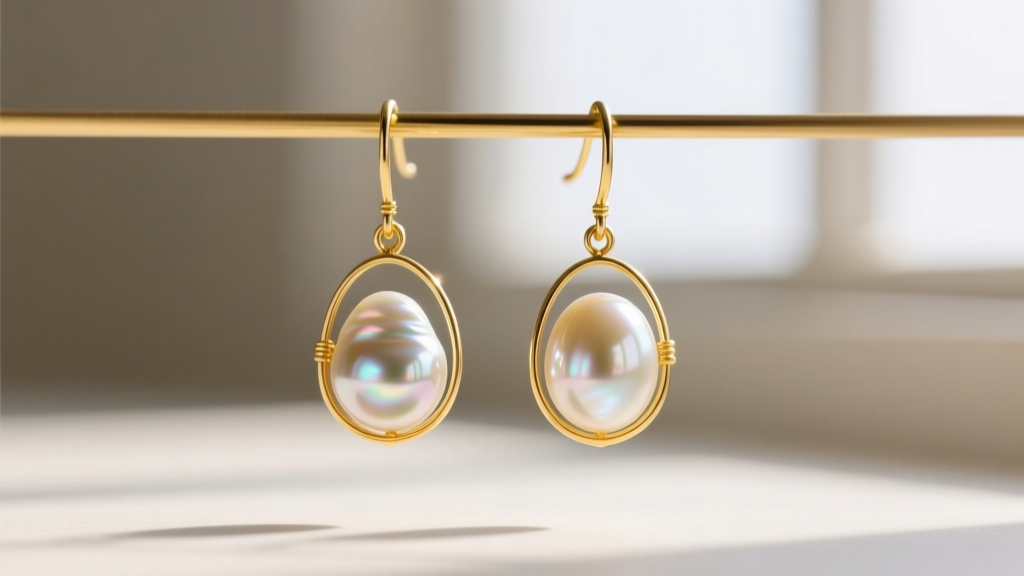
Keshi pearls, formed when the oyster rejects the implanted nucleus but continues to secrete nacre, are 100% solid nacre. This results in an extraordinary, deep-seated luster that outshines even the finest bead-nucleated pearls. According to the Gemological Institute of America (GIA), the unique orient and overtone of solid-nacre pearls make them highly sought after by avant-garde designers.
Setting and Gauge Specifications
Because Keshi pearls lack a uniform drill hole, they are rarely strung. Instead, they are mounted using specialized cup-and-post settings or wrapped in ultra-fine 22-gauge to 24-gauge 18k gold wire. Designers at brands like Star Jewelry frequently pair dark, peacock-green Keshi pearls with blackened silver or oxidized titanium to amplify their moody, iridescent overtones.
Decoding Japanese Hallmarks and Purity Standards
Unlike the UK or Switzerland, Japan does not have a centralized, government-mandated assay office for precious metals. Instead, the industry relies on the Japanese Industrial Standards (JIS) and maker's marks. Understanding these stamps is critical for authentication:
- K18 or 18K: Denotes 75% pure gold. Japanese manufacturers heavily favor 18k over 14k for its rich color and hypoallergenic properties.
- Pt900: While Pt950 is the Western standard for platinum, Japan overwhelmingly prefers Pt900 (90% platinum, 10% alloy—usually palladium or ruthenium). The higher alloy content provides superior tensile strength, which is vital for securing diamonds in Japan's signature micro-pavé and ultra-delicate prong settings.
- TOKU / Maker Marks: Many heritage houses stamp their pieces with a registered maker's mark or the Toku symbol, indicating exceptional domestic quality.
Market Leaders and 2026 Pricing Tiers
Navigating the Japanese jewelry market requires an understanding of its distinct brand echelons. Here is a practical decision framework for buyers:
Entry-Level & Everyday Elegance ($200 - $600)
Brands like Ahkah and 4°C dominate this space. Expect ultra-fine 18k yellow gold chains (often 0.8mm to 1.0mm thickness), delicate bezel-set diamond solitaires (0.05ct to 0.10ct), and minimalist Akoya pearl studs. These pieces are engineered for daily wear and layering.
Mid-Tier & Fashion-Forward ($800 - $2,500)
Labels such as Star Jewelry and Vendome Aoyama offer bolder silhouettes, incorporating Keshi pearls, colored gemstones (like tsavorite and pink sapphires), and mixed-metal textures. This tier is where the Wabi-Sabi aesthetic becomes highly visible, with asymmetric drops and hand-hammered gold cuffs.
High-End Artisan & Heritage ($5,000 - $20,000+)
At the apex sits Gimel, a brand renowned for its hyper-realistic, gem-encrusted animal motifs and mastery of Mokume-gane. Pieces in this tier are not merely jewelry; they are wearable sculptures. Furthermore, independent Kyoto-based artisans crafting bespoke Shakudo and Shibuichi pieces command premium prices due to the hundreds of hours required for billet lamination and patina development.
For collectors and style enthusiasts in 2026, Japanese jewelry offers a masterclass in restraint, material science, and philosophical depth. By prioritizing texture over sheer carat weight, and heritage techniques over mass production, these designs provide a timeless anchor in an ever-accelerating fashion landscape.


