Decoding the Roman Stamp on Jewelry: Purity & Alloy Guide
Discover what a Roman stamp on jewelry means. Learn to decode Italian hallmarks, Roman numeral purity marks, and the metallurgical properties of the alloys.

The Mystery of the Roman Stamp on Jewelry
When evaluating estate pieces, vintage finds, or luxury imports, encountering a 'Roman stamp on jewelry' can be a source of immense confusion for both collectors and casual buyers. The term is frequently used to describe two entirely different markings: the modern Italian maker's hallmark (often purchased in Rome or other Italian provinces) and traditional Roman numeral stamps denoting gold karatage. Understanding the metallurgical properties and material science behind these stamps is crucial for authenticating your jewelry and understanding its structural integrity.
Unlike the British hallmarking system, which uses distinct pictorial symbols for assay offices, the Italian system relies on a strict alphanumeric code paired with a star polygon. Meanwhile, Roman numeral stamps (such as XVIII or XIV) harken back to classical antiquity but are used today to denote precise gold-to-alloy ratios. In this comprehensive guide, we will decode these stamps, compare the material properties of the alloys they represent, and provide actionable frameworks for verifying your jewelry's authenticity.
Modern Italian Hallmarks: The 'Roman' Maker's Mark
If you purchased a piece of jewelry in Italy, or from an Italian luxury house, the 'Roman stamp' you are looking at is likely the official Italian state hallmark. Regulated by the Decreto Legislativo 251/1999, this system guarantees both the purity of the precious metal and the identity of the manufacturer.
Anatomy of the Italian Star Stamp
The modern Italian hallmark consists of three distinct elements enclosed in a lozenge or geometric shape:
- The Star Polygon: A multi-pointed star representing the Italian Republic. This confirms the piece was assayed and registered within Italy.
- The Maker's Number: A unique numerical code assigned to the specific manufacturing company (e.g., '123').
- The Province Code: A two-letter abbreviation indicating the province where the manufacturer is registered. For example, 'RM' stands for Rome, 'AR' for Arezzo (a massive hub for gold manufacturing), and 'VI' for Vicenza.
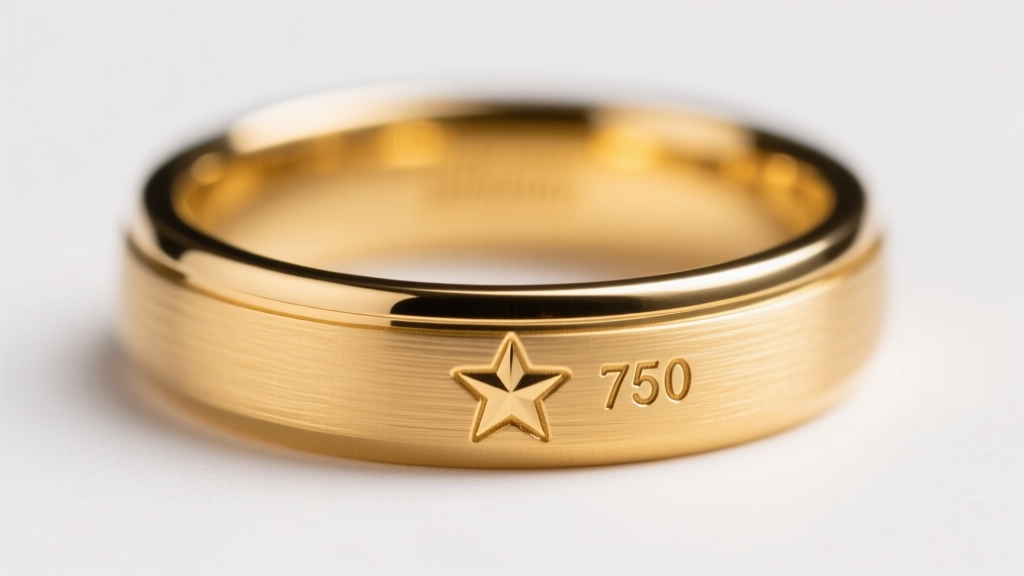
When buyers refer to a 'Roman stamp,' they are often pointing to a piece bearing the 'RM' province code alongside the star. This stamp is almost always accompanied by a millesimal purity mark, such as '750' for 18-karat gold or '925' for sterling silver. According to the Gemological Institute of America (GIA), the millesimal system is the most precise way to denote precious metal content, representing the parts per thousand of pure metal in the alloy.
Roman Numeral Stamps: Decoding Karatage and Purity
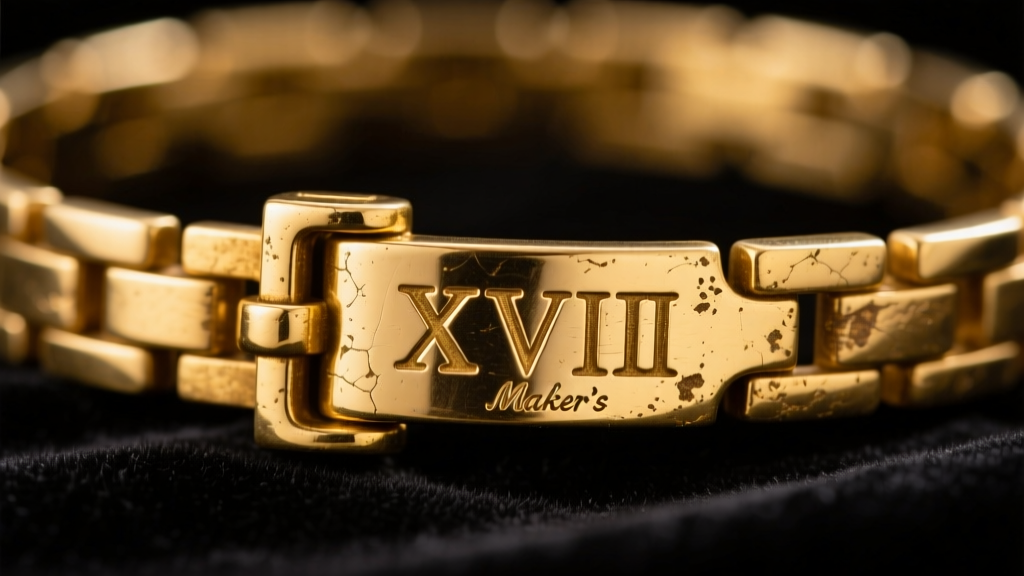
Long before the adoption of the decimal system, Roman numerals were the standard for mathematics and commerce. Today, many heritage jewelers and European assay offices still utilize Roman numerals to stamp gold purity. The most common iterations you will encounter are XVIII (18k), XIV (14k), and X (10k).
Material Properties of XVIII (18k) vs. XIV (14k) Gold
Pure gold (24k) is exceptionally soft, with a Vickers hardness rating of merely 60 HV. It is entirely unsuitable for daily-wear jewelry like rings or bracelets. To create durable jewelry, gold is alloyed with metals like copper, silver, zinc, and palladium. The Roman numeral stamp tells you exactly what percentage of the alloy is pure gold, which directly dictates the material's tensile strength, tarnish resistance, and color.
XVIII (18-Karat / 750 Stamp): Composed of 75% pure gold and 25% alloy metals. This is the standard for high-end Italian and Roman jewelry. It offers a rich, saturated yellow hue (when alloyed with equal parts silver and copper) and excellent tarnish resistance. However, its Vickers hardness sits around 120-140 HV, making it more prone to micro-scratches than lower karats.
XIV (14-Karat / 585 Stamp): Composed of 58.5% pure gold and 41.5% alloy metals. The higher copper and zinc content increases the Vickers hardness to approximately 150-170 HV. This makes XIV stamped jewelry significantly more resistant to deformation and scratching, which is why it is preferred for prong settings and active-wear rings.
Alloy Comparison Chart
| Roman Stamp | Millesimal | Gold Content | Vickers Hardness (HV) | Primary Use Case |
|---|---|---|---|---|
| XXII | 916 | 91.6% | ~85 HV | Investment, ceremonial, soft bezels |
| XVIII | 750 | 75.0% | ~125 HV | Luxury rings, necklaces, Italian exports |
| XIV | 585 | 58.5% | ~160 HV | Daily wear rings, secure gemstone prongs |
| X | 417 | 41.7% | ~180 HV | Budget-friendly, high-stress clasps |
Ancient Roman Metallurgy vs. Modern Alloys
It is a common misconception that ancient Roman jewelers stamped their pieces with purity marks. In antiquity, the concept of standardized karatage stamping did not exist. When archaeologists discover a 'Roman stamp' on an ancient artifact, it is typically a maker's signature or a municipal mark punched into silver ingots, bronze vessels, or lead pipes, rather than a guarantee of gold purity.
Ancient Roman gold jewelry was predominantly crafted from nearly pure gold (22k to 24k) or electrum (a natural alloy of gold and silver). Because the material was so soft, Roman goldsmiths relied on structural design—such as hollow tubing, granulation, and intricate wirework—to provide rigidity without relying on the hardness of the alloy itself. According to research documented by the World Gold Council, the historical manipulation of gold alloys was largely driven by the scarcity of pure gold and the desire to mimic its color, rather than the modern need for scratch resistance.
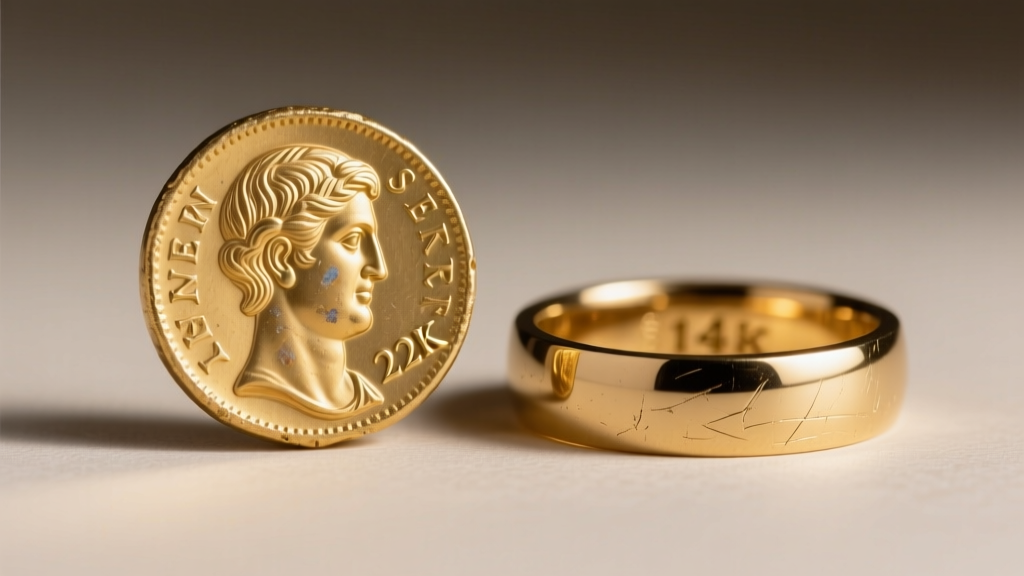
If you are purchasing a piece marketed as 'Ancient Roman' with a purity stamp like '750' or 'XVIII', it is a modern reproduction or a contemporary piece inspired by Roman aesthetics. True antiquities are authenticated through provenance, thermoluminescence testing, and metallurgical X-ray fluorescence (XRF) analysis, not through modern purity stamps.
Troubleshooting and Authenticating Your Stamped Piece
Stamps can be faked, worn away, or misinterpreted. To truly verify the material properties of a piece bearing a Roman numeral or Italian star stamp, you must move beyond visual inspection and employ material testing frameworks.
The Acid Test Framework
The traditional touchstone acid test remains a highly effective, low-cost method for verifying the alloy ratios indicated by Roman numeral stamps. By rubbing the jewelry on a basalt stone and applying nitric acid of varying strengths, you can observe the chemical reaction:
- Testing XVIII (18k): Apply 18k acid (a mix of nitric acid and distilled water). If the mark remains bright and unchanged, the piece is at least 75% gold. If it turns milky or dissolves, it is a lower karat or gold-plated.
- Testing XIV (14k): Apply 14k acid. A genuine 14k piece will hold its line, while an 18k piece will also pass this test (which is why you must always test from the lowest karat up or use specific gravity testing).
X-Ray Fluorescence (XRF) Spectrometry
For high-value Italian hallmark pieces, non-destructive XRF testing is the gold standard. An XRF spectrometer bombards the metal with X-rays and measures the fluorescent radiation emitted, providing an exact elemental breakdown down to the decimal point. This will instantly reveal if a piece stamped 'XVIII' is actually 75% gold, or if it contains hazardous levels of cadmium or lead, which are sometimes found in unregulated vintage alloys. While XRF machines cost upwards of $20,000, most reputable estate jewelers and assay offices offer this testing for a nominal fee.
Expert Insight: Always check the clasp and jump rings on vintage Italian chains. Counterfeiters often solder a genuine '750 RM' stamped clasp onto a base-metal or gold-plated chain. Use a strong neodymium magnet; while gold and silver are diamagnetic (non-magnetic), the internal steel springs in lobster clasps will react. If the chain links themselves pull toward the magnet, the piece is a fake, regardless of the stamp.
Conclusion
Whether you are examining a modern Italian star hallmark from the province of Rome or deciphering a classical XVIII Roman numeral stamp, understanding the material science behind the marking is essential. These stamps are not mere decorations; they are metallurgical promises regarding the exact ratio of precious metals to alloying elements. By combining visual hallmark identification with modern testing methodologies like XRF and acid assays, you can confidently authenticate your jewelry and appreciate the precise material properties that allow it to endure for generations.


