Decoding 2026 Men's Jewelry News: The Ultimate Styling Guide
Analyze the latest men's jewelry news for 2026. Learn how to style industrial metals, baroque pearls, and perfect your chain proportions.

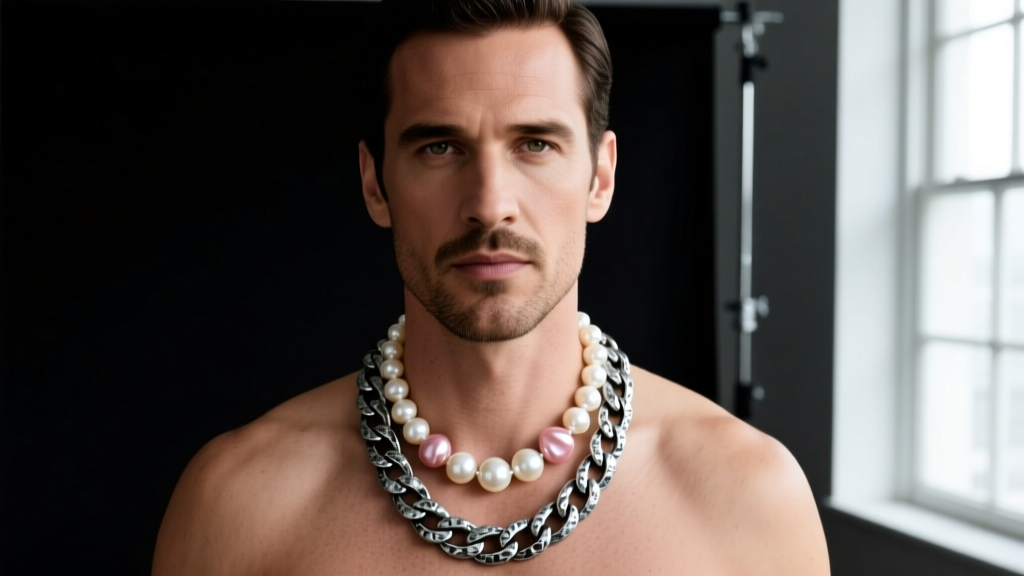
Keeping up with men's jewelry news is no longer just about tracking celebrity red-carpet appearances; it is about understanding the fundamental shifts in metallurgy, proportion, and menswear integration. As we move through 2026, the styling landscape has pivoted away from the ultra-minimalist 'quiet luxury' of previous years into a new era of 'industrial romanticism.' This means heavier textures, mixed material grades, and a deliberate embrace of asymmetry. For the modern man, interpreting these trend reports requires a practical framework. You cannot simply buy what is trending; you must know how to scale it to your anatomy and integrate it with your existing wardrobe.
In this comprehensive styling guide, we decode the prevailing men's jewelry news and translate runway concepts into actionable, everyday styling rules. From aerospace-grade titanium to the mathematics of chain layering, here is how to master the 2026 aesthetic.
The Metallurgical Shift: Titanium and Tungsten Take Over
If you have been scanning recent industry publications like JCK Online, you will notice a massive surge in alternative metals dominating the market. While 925 sterling silver and 14k gold remain staples, 2026 is defined by the rise of high-grade titanium and tungsten carbide. This is not merely a durability trend; it is a styling choice that allows for architectural, CNC-milled textures that softer precious metals simply cannot hold.
Understanding Material Grades for Styling
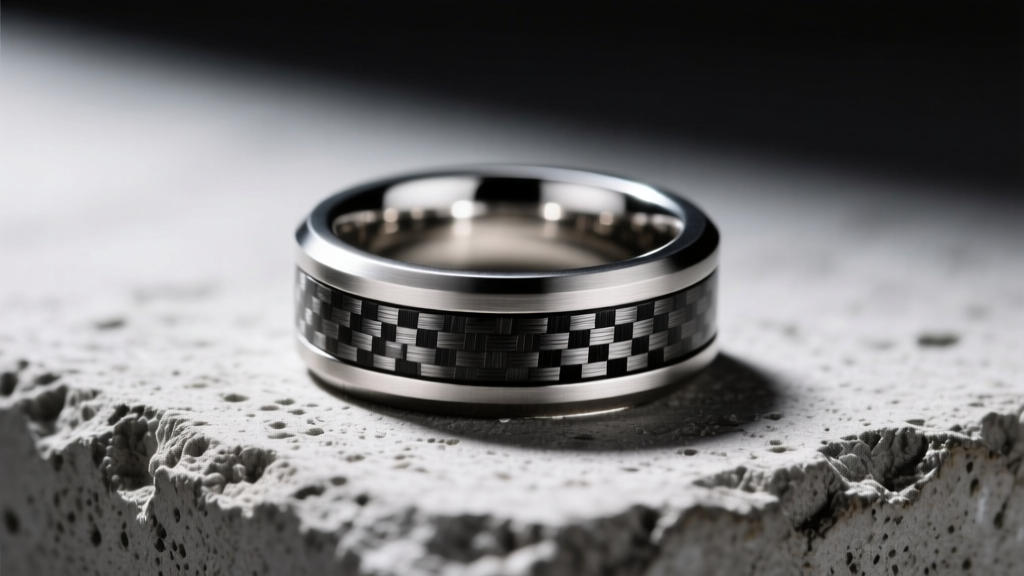
When shopping for titanium, the grade dictates the finish and weight. Most mass-market jewelry uses Grade 2 commercially pure titanium, which is lightweight but limits intricate detailing. The 2026 trend relies heavily on Grade 5 Titanium (Ti-6Al-4V). This aerospace-grade alloy offers a tensile strength of 1170 MPa, allowing jewelers to carve deep, sharp geometric channels and achieve a mirror polish that rivals white gold. Styling-wise, Grade 5 titanium pieces carry a visual 'heaviness' and coldness that pairs exceptionally well with raw denim, heavyweight cotton tees, and unstructured blazers.
Tungsten carbide is also evolving. Look for pieces with an 85/15 ratio (85% tungsten, 15% carbon/nickel binder). This specific formulation provides maximum scratch resistance without the extreme brittleness that causes cheaper rings to shatter upon impact. Style these dark, gunmetal-finished bands on your index or middle finger to create a stark, industrial contrast against softer fabrics like merino wool or cashmere.
The Pearl Paradigm: Sizing and Styling the New Classics
Perhaps the most persistent headline in recent men's fashion news is the mainstream acceptance of pearls. However, the styling rules have matured. The perfectly spherical, matched-strand necklace of 2023 has been replaced by raw, asymmetrical, and baroque silhouettes. The key to pulling this off without looking costumey lies entirely in sizing and clasp hardware.
| Pearl Type | Ideal Size for Men | Styling Vibe & Application |
|---|---|---|
| Baroque (Irregular) | 9mm - 13mm | Edgy, organic. Best worn as a single 18-inch strand over a crewneck sweater or open camp-collar shirt. |
| Coin (Flat/Disc) | 8mm - 11mm | Modern, architectural. Stacks well with silver chains; the flat profile prevents bulkiness when layered. |
| Round Akoya | 6mm - 8mm | Refined, traditional. Use sparingly as a subtle accent woven into a thicker 4mm oxidized silver rope chain. |
When integrating pearls into your daily rotation, pay strict attention to the clasp. The 2026 standard demands oversized, industrial barrel clasps or matte-black magnetic closures. A delicate lobster clasp on a masculine pearl necklace creates a jarring visual disconnect that ruins the aesthetic.
Proportion and Gauge: The Mathematics of Layering
The most common failure point in men's jewelry styling is ignoring gauge and width proportions. Layering is not about piling on metal; it is about creating deliberate negative space and visual hierarchy. The latest styling directives emphasize a strict mathematical progression in chain widths and ring band sizes.
The Chain Width Progression
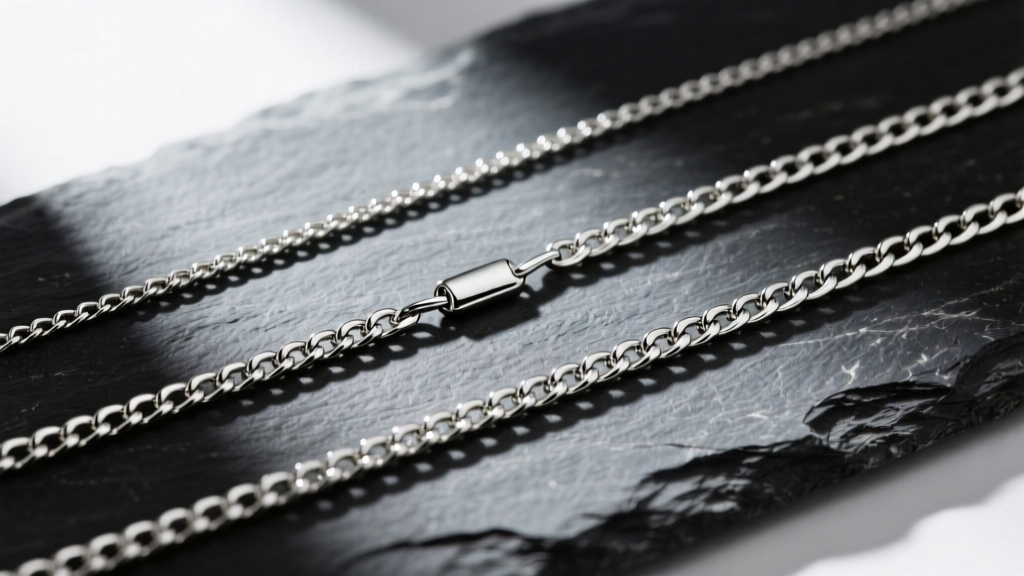
To build a cohesive layered look, you must adhere to the 'Rule of Two.' Each subsequent chain in your stack should be at least 2mm wider than the last, and the length should drop by a minimum of 2 inches.
- The Base Layer (18-20 inches, 2mm-3mm width): This is your anchor. A simple box or wheat chain in this gauge sits close to the collarbone and provides a subtle glint without overwhelming the neckline.
- The Mid Layer (22-24 inches, 4mm-6mm width): This is the workhorse of your stack. A 5mm Cuban link or Figaro chain at this length rests perfectly on the upper sternum. This is also the ideal gauge for suspending medium-weight pendants (like a 15mm signet or talisman).
- The Statement Layer (26+ inches, 8mm+ width): Reserved for outerwear. An 8mm to 10mm rope or heavy curb chain worn over a jacket or heavy knit acts as a structural garment accessory rather than mere jewelry.
Ring Band Widths by Finger
Ring styling in 2026 is highly anatomical. A band that looks perfect on a ring finger will look comically oversized on a pinky. Follow these width guidelines for a tailored appearance:
- Index Finger: 5mm to 8mm. The index finger can support massive, wide-band signets or heavy geometric rings. This is the prime real estate for your boldest pieces.
- Middle Finger: 4mm to 6mm. Keep the profile slightly lower here to avoid interfering with your grip and daily hand movements.
- Ring Finger: 3mm to 5mm. Traditional territory. Stick to comfort-fit bands with rounded interiors for all-day wearability.
- Pinky Finger: 2mm to 3mm. The pinky requires delicate, low-profile bands. A 2mm oxidized silver band with a single flush-set black diamond offers maximum impact without looking like a mobility hazard.
Practical Framework: Building a 2026 Trend-Forward Capsule
Translating men's jewelry news into a functional wardrobe requires a strategic purchasing framework. Do not blow your entire budget on a single trend-heavy statement piece. Instead, allocate your capital across three distinct tiers to build a versatile, future-proof capsule collection.
Tier 1: The High-Wear Basics ($50 - $150)
Allocate this budget to your base-layer chains and everyday bands. Focus on materials like 316L surgical stainless steel or rhodium-plated sterling silver. These pieces take the brunt of daily friction, sweat, and environmental exposure. Buying high-quality basics in this tier ensures your foundation doesn't tarnish or degrade, saving your investment pieces for intentional styling moments.
Tier 2: The Textural Mid-Tier ($150 - $500)
This is where you invest in the 2026 industrial trends. Purchase your Grade 5 titanium signets, tungsten carbide bands, and baroque pearl strands in this bracket. Look for independent jewelers who utilize CNC-milling and hand-brushing techniques. The mid-tier should represent your 'personality' pieces—the items that draw a second glance and spark conversation.
Tier 3: The Investment Anchors ($500+)
Reserve this tier for 14k or 18k solid gold, but interpret it through a modern lens. Instead of traditional high-polish gold, seek out 'sandblasted' or 'hammered' gold finishes. The current styling ethos dictates that precious metals should look lived-in and organic, not like they just came out of a velvet display box. A heavily textured 14k yellow gold chain or a raw-cast signet ring bridges the gap between luxury and the rugged industrialism defining the year.
Ultimately, staying informed on industry trends is only half the battle. True style emerges when you take the raw data of the season's men's jewelry news and filter it through the lens of your own proportions, lifestyle, and material preferences. By respecting the mathematics of gauge, understanding metallurgical grades, and embracing intentional asymmetry, you can confidently navigate the 2026 jewelry landscape.


