Troubleshooting Tarnish in Popular Women's Jewelry Brands
Discover why your favorite pieces tarnish and learn expert troubleshooting tips to restore and protect popular women's jewelry brands from alloy oxidation.

The Metallurgy Behind the Marketing
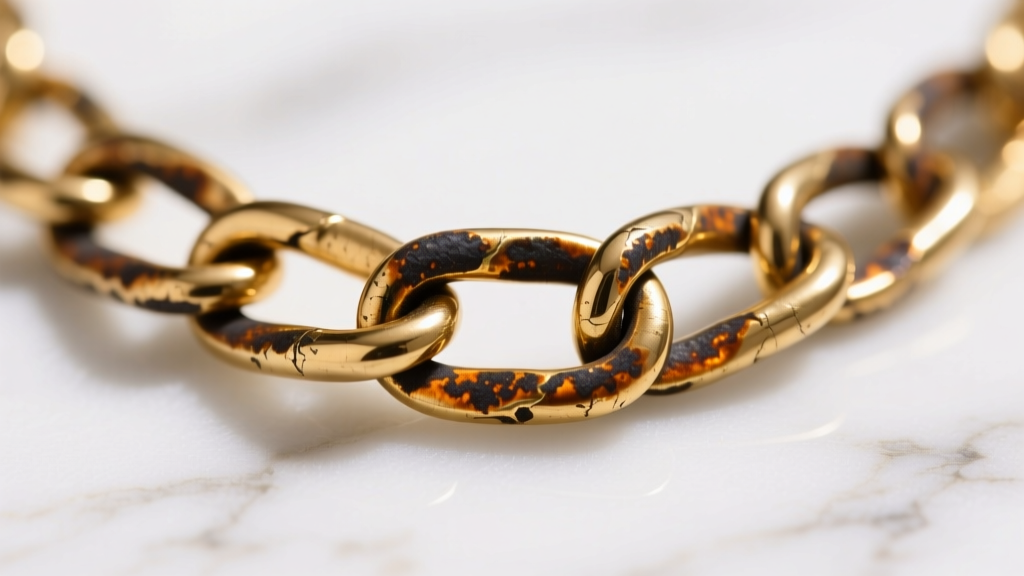
When investing in popular women's jewelry brands, consumers often assume a higher price tag or a trendy direct-to-consumer label guarantees immunity from tarnish. However, the reality of modern jewelry manufacturing is rooted in metallurgy, not marketing. As of 2026, the vast majority of accessible luxury and fashion jewelry relies on layered construction—meaning a base metal is coated with a precious metal. When that microscopic barrier is compromised, chemical reactions begin. Understanding the exact alloy composition of your favorite pieces is the first step in troubleshooting and reversing oxidation, green skin, and structural degradation.
Vermeil vs. Gold-Filled vs. PVD: The 2026 Standards
To troubleshoot effectively, you must identify the plating method. According to the FTC Jewelry Guides, 'gold vermeil' strictly requires a sterling silver base plated with at least 2.5 microns of gold. If your vermeil necklace is developing dark, stubborn spots at the clasp or link joints, you are not seeing the gold tarnish; you are witnessing the sterling silver base reacting with hydrogen sulfide in the air to form silver sulfide, which bleeds through the porous gold layer.
Conversely, gold-filled jewelry features a much thicker mechanical bond of gold (at least 5% of the total weight) over a brass or copper core. Gold-filled pieces rarely tarnish unless the gold layer is physically worn away by friction. Meanwhile, the latest trend among popular women's jewelry brands is PVD (Physical Vapor Deposition) coating on stainless steel. PVD uses titanium nitride or zirconium nitride to create a hyper-dense, waterproof surface. While highly durable, PVD fails catastrophically when exposed to galvanic corrosion from salt water or chlorine, resulting in micro-pitting that cannot be polished out.
Troubleshooting Matrix: Diagnosing Your Jewelry's Specific Failure Mode
Use the diagnostic table below to identify the root cause of your jewelry's deterioration based on its visual symptoms and base material.
| Base Metal | Plating Type | Common Failure Mode | Chemical Culprit | Reversibility |
|---|---|---|---|---|
| Sterling Silver | Gold Vermeil (2.5μm) | Dark spotting at joints and recesses | Silver Sulfide (Ag2S) | High (Electrochemical) |
| Brass / Copper | Flash Plated Gold | Skin turning green; metallic odor | Copper Chelates / Chlorides | Moderate (Acid Wash) |
| Stainless Steel | PVD Titanium Nitride | Dull, chalky white patches; pitting | Galvanic Chlorine Corrosion | Low (Requires Re-coating) |
| Zinc Alloy | Rhodium / Silver Tone | Bubbling, flaking, or 'white rust' | Zinc Oxide / Moisture Trapping | None (Structural Failure) |
Step-by-Step Restoration Protocols by Base Material
Protocol A: Reversing Silver Sulfide Tarnish (Sterling Bases)
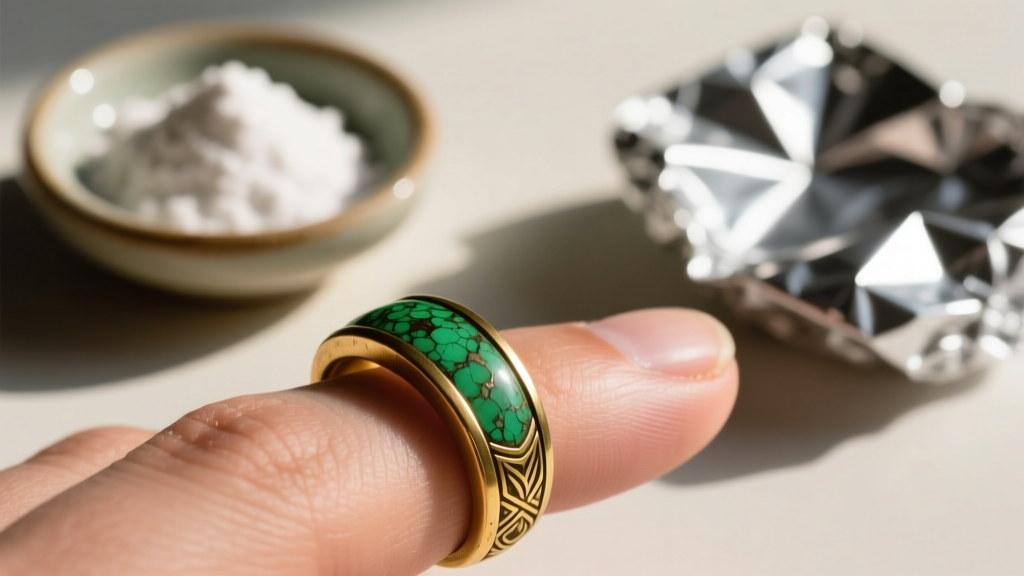
If your gold vermeil piece from a popular brand is showing dark oxidation, do not use abrasive polishing cloths. Abrasives will strip the 2.5-micron gold layer right off the silver base. Instead, use an electrochemical reduction bath. Line a glass bowl with aluminum foil (shiny side up). Place the jewelry on the foil. Boil water and dissolve two tablespoons of sodium bicarbonate (baking soda) per cup of water. Pour the solution over the jewelry. The chemical reaction will transfer the sulfur from the silver to the aluminum foil, lifting the tarnish without removing a single atom of gold. Rinse thoroughly with distilled water and pat dry with a microfiber cloth.
Protocol B: Neutralizing Copper Chlorides (Brass Bases)
The dreaded 'green finger' effect occurs when the copper in a brass base metal reacts with the lactic acid, urea, and salts in your sweat. This creates copper chelates and copper chlorides. To strip these salts from the jewelry, create a mild acid wash using equal parts white vinegar and fine sea salt. Submerge the piece for exactly 60 seconds—no longer, or you risk etching the remaining flash plating. Immediately neutralize the acid by transferring the piece to a baking soda and water bath. Rinse with distilled water. To prevent future skin reactions, apply a micro-thin layer of clear nail polish or a specialized jewelry sealing polymer to the interior band of rings or the back of pendants.
Preventative Maintenance: Extending Plating Lifespans
The World Gold Council notes that the longevity of layered gold jewelry is directly tied to environmental exposure rather than chronological age. To protect your investment in popular women's jewelry brands, you must control the micro-climate of your storage and wear habits.
- Activated Carbon Storage: Store vermeil and silver-based pieces in airtight polyethylene bags with activated carbon anti-tarnish strips. These strips absorb atmospheric hydrogen sulfide before it can reach your jewelry.
- Moisture Control: Never store jewelry in a bathroom. The high humidity and fluctuating temperatures accelerate the oxidation of base metals. Use silica gel packets in your jewelry boxes to maintain a relative humidity below 40%.
- Chemical Avoidance: Skincare products containing sulfur compounds (common in acne treatments and keratolytics) will instantly tarnish sterling silver bases. Always apply lotions, perfumes, and sunscreens at least 15 minutes before putting on your jewelry to allow the volatile organic compounds to evaporate.
Proper jewelry maintenance is not about avoiding wear; it is about understanding the chemical environment your alloys are exposed to daily. Treat your jewelry like a reactive element, not an inert stone.
When to Seek Professional Re-Plating

There is a definitive line between surface tarnish that can be reversed at home and structural plating failure that requires professional intervention. If your gold-filled or vermeil jewelry has worn down to the base metal on high-friction areas (such as the bottom of a ring shank or the edges of a pendant bail), no amount of cleaning will restore the color. At this stage, the base metal is permanently exposed.
Take the piece to a professional bench jeweler for re-plating. For sterling silver bases, request a fresh layer of 2.5-micron gold plating or a protective rhodium flash to seal the silver. For brass bases, ensure the jeweler applies a nickel barrier layer before the final gold plating; this prevents the copper from migrating through the new gold layer and causing future discoloration. By understanding the exact metallurgy of your favorite brands, you can transition from a passive consumer to an informed custodian of your collection, ensuring your pieces remain vibrant for decades.


