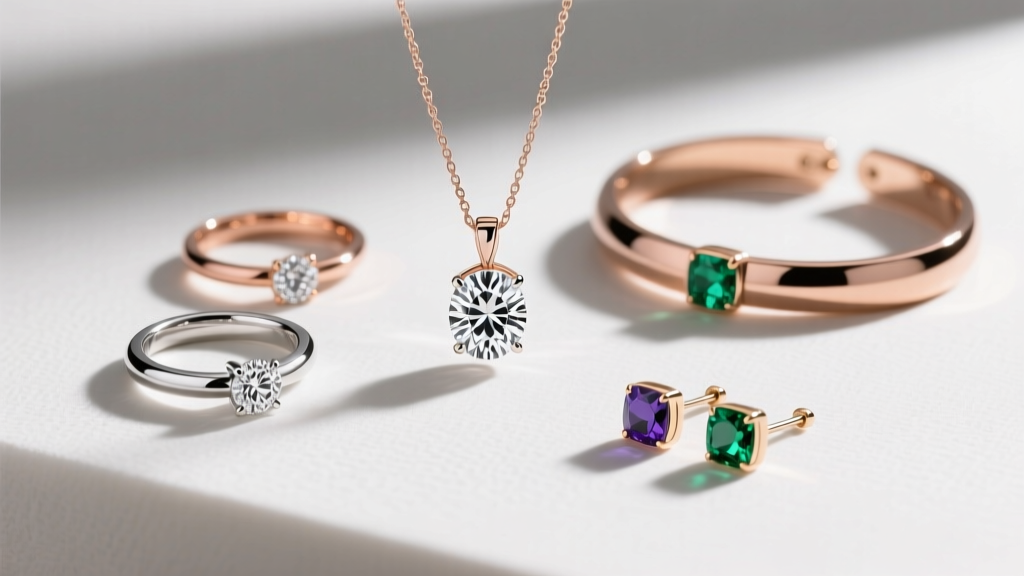
How to Choose Jewelry for a First Date: The Expert Guide
Learn how to choose jewelry for a first date using biomechanics, acoustic profiling, and material grades. Expert styling advice for 2026.

The Biomechanics of First Date Jewelry: Sweat, Friction, and Skin pH
When figuring out how to choose jewelry for a first date, most style guides offer superficial advice about matching metals to your outfit. However, as a domain expert, I approach date-night styling through the lens of biomechanics and metallurgy. First dates induce physiological changes: elevated heart rate, increased core temperature, and the activation of eccrine sweat glands. This nervous sweat has a different chemical composition than thermal sweat, often featuring a lower pH (higher acidity) and higher concentrations of urea and lactic acid.
This acidic environment is highly reactive to base metals and porous alloys. If you wear standard 925 sterling silver (which contains 7.5% copper), the copper will rapidly oxidize when exposed to nervous sweat, leaving a green or black residue on your skin—a disastrous optical failure for a first date. Instead, opt for Argentium Silver (960 grade). As of 2026, Argentium has largely become the benchmark for high-end silver jewelry because it replaces some of the copper with germanium, creating a transparent, self-healing oxide layer that is virtually impervious to tarnish and acidic sweat.
Similarly, avoid gold vermeil for high-stakes dates. Vermeil requires a minimum of 2.5 microns of gold plating over sterling silver. While beautiful, the friction from nervous fidgeting (like touching your necklace or adjusting your earrings) combined with acidic skin oils can degrade the micron plating at the contact points, revealing the silver underneath. For guaranteed stability, stick to solid 14k or 18k gold, which are alloyed with metals like palladium or zinc to withstand chemical degradation. For more on gold alloy standards, refer to the Gemological Institute of America (GIA).
Visual Weight and the 'Triangle of Focus' Framework
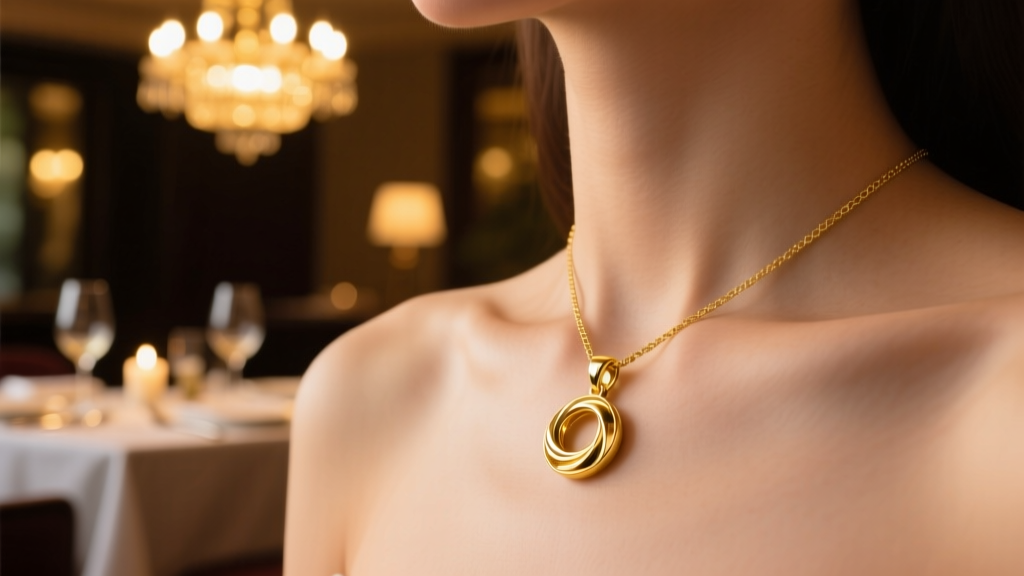
Beyond material science, the visual impact of your jewelry is governed by gram weight and spatial distribution. The human eye is naturally drawn to the 'Triangle of Focus'—the geometric zone connecting the outer corners of the eyes down to the hollow of the throat. Jewelry placed within this zone commands psychological attention.

To avoid overwhelming your facial features during an intimate conversation, apply the 3-Gram Rule for earrings and the 10-Gram Rule for pendants. Earrings exceeding 4 grams per ear can cause lobe fatigue and physically pull the ear downward, altering how your face is framed in dim lighting. A 14k gold huggie hoop typically weighs between 1.5 and 2.5 grams, providing a premium metallic flash without the structural drag of a heavy chandelier earring. For necklaces, a 5 to 8-gram pendant on an 18-inch 1.2mm cable chain sits perfectly at the clavicle notch, drawing the eye naturally without looking like a heavy statement piece meant for a gala.
Acoustic Profiling: Why Your Bracelets Might Be Sabotaging You
An often-ignored variable in jewelry styling is acoustic profiling. The sound your jewelry makes contributes to the subconscious atmosphere of the date. Stacked metal bangles or loose charm bracelets generate high-frequency clinking (typically in the 2000Hz to 4000Hz range) every time you move your hands to gesture, hold a wine glass, or reach across the table.
In a quiet, intimate restaurant, this repetitive metallic percussion can be deeply distracting and subconsciously signal nervous fidgeting to your date. If your date involves a quiet dinner or a private setting, eliminate acoustic variables. Swap stacked bangles for a single, tension-set cuff or a seamless torque bangle that rests flush against the skin. For rings, avoid styles with loose pavé diamonds or high-profile cathedral settings that 'click' against glassware. Opt for bezel-set stones or flush-mount bands, which offer a smooth, silent exterior profile.
Material Grade Matrix: What to Wear Based on Venue & Nerves
To systematize your decision-making process, use the following matrix to align your jewelry material with the specific environmental and physiological demands of your date venue.
| Material | Grade/Standard | Sweat Resistance | Acoustic Profile | Best Date Scenario |
|---|---|---|---|---|
| Argentium Silver | 960 Grade | High (Germanium alloy) | Silent (if solid) | Casual coffee, outdoor walks, daytime dates |
| Solid Gold | 14k or 18k | Excellent | Low resonance | Fine dining, evening cocktails, high-stress |
| Implant Titanium | ASTM F136 | Impervious | Silent | Active dates, hiking, fresh body piercings |
| Gold Vermeil | 2.5 micron plating | Poor (degrades with friction) | Variable | Avoid for high-stress or active dates |
| Platinum | 950 Pt/Ru | Impervious | Dense, low ping | Anniversary dates, formal evening events |
Piercing Protocol: Navigating Fresh Heals on a Date
If you are sporting a relatively fresh piercing (such as a conch, daith, or rook that is less than 9 months old), the golden rule is do not swap your jewelry for aesthetic reasons right before a date. Removing and reinserting jewelry causes micro-tears in the fistula (the piercing channel), triggering an immediate inflammatory response. A swollen, red ear cartilage piercing is far more distracting than a simple, utilitarian stud.
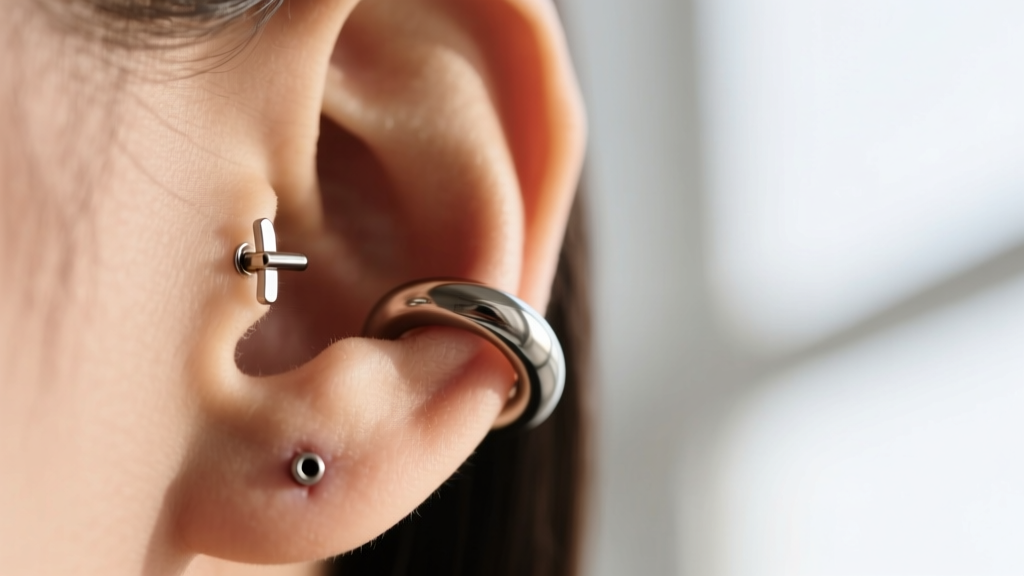
Ensure your jewelry is made from ASTM F136 implant-grade titanium. Unlike 316L surgical steel, which contains up to 14% nickel that can leach into the skin when exposed to the acidic pH of nervous sweat, F136 titanium is entirely nickel-free and biologically inert. If you must wear a hoop for a healed cartilage piercing, choose a 16-gauge or 14-gauge segment ring with a flush hinge closure. Avoid captive bead rings (CBRs), as the tension required to pop the bead out can traumatize the tissue if accidentally snagged on a sweater or hair. The Association of Professional Piercers (APP) provides extensive documentation on why F136 titanium remains the undisputed standard for sensitive and healing tissue.
The Pre-Date Jewelry QA Checklist
Before you leave for your date, run your selected pieces through this 3-point Quality Assurance checklist to prevent mid-date mechanical failures:
- The Prong Tension Test: If wearing pavé or prong-set diamonds, run a piece of silk fabric or a microfiber cloth over the stones. If it snags, a prong is lifted. A snagged prong will catch on your date's clothing or your own hair, potentially resulting in a lost stone or a torn garment.
- Clasp Spring Fatigue: Inspect your necklace clasps. Spring ring clasps are notorious for losing their internal spring tension over time, causing them to slide open when the chain shifts. For a first date, always opt for a lobster clasp or a magnetic neodymium clasp with a minimum pull-force rating of 5 lbs to ensure the chain stays securely around your neck.
- Ultrasonic Cleaning Warnings: If you plan to clean your jewelry before the date, never put emeralds, opals, pearls, or turquoise in an ultrasonic cleaner. The high-frequency cavitation bubbles will shatter the internal crystalline structure of these porous or heavily included gems. Instead, use a soft baby toothbrush with a drop of mild dish soap and lukewarm water, drying immediately with a lint-free cloth.
Ultimately, mastering how to choose jewelry for a first date is about minimizing variables. By selecting chemically stable metals, acoustically silent profiles, and mechanically secure clasps, you remove the physical distractions of your accessories. This allows your jewelry to serve its true purpose: framing your features and subtly communicating your attention to detail, leaving you free to focus entirely on the connection across the table.