The 2026 Antique and Jewelry Show: Material Testing Guide
Master the 2026 antique and jewelry show circuit with our expert guide to testing vintage metals, gemstones, and organic materials on the floor.


Walking the floor of a major antique and jewelry show in 2026 is an exercise in both historical appreciation and forensic scrutiny. Whether you are navigating the aisles of the Miami Beach Antique Jewelry & Watch Show or browsing the curated booths at The Pier Antique Show, the sheer volume of estate pieces, Art Deco marvels, and Victorian relics can be overwhelming. For serious collectors and seasoned buyers, aesthetic appeal is only the first metric of evaluation; the true value of any vintage piece lies in its material authenticity. Fakes, composite restorations, and misidentified alloys are prevalent in high-traffic show environments, making a deep understanding of material properties your most vital asset.
This guide bypasses generic buying advice to deliver a rigorous, material-focused framework for evaluating vintage and antique jewelry on the show floor. By understanding the specific gravity, hallmarking conventions, and chemical properties of era-defining materials, you can confidently authenticate pieces, negotiate with authority, and avoid costly misattributions.
Precious Metals: Decoding Alloys and Hallmarks on the Floor
The foundation of any antique piece is its metalwork. However, visual inspection under a dealer's halogen lighting can easily mask base metals, heavy gold plating, or later-period alloy substitutions. When evaluating metals at an antique and jewelry show, you must look beyond color and focus on hallmarks, wear patterns, and specific gravity.
Platinum vs. White Gold: The Art Deco Dilemma
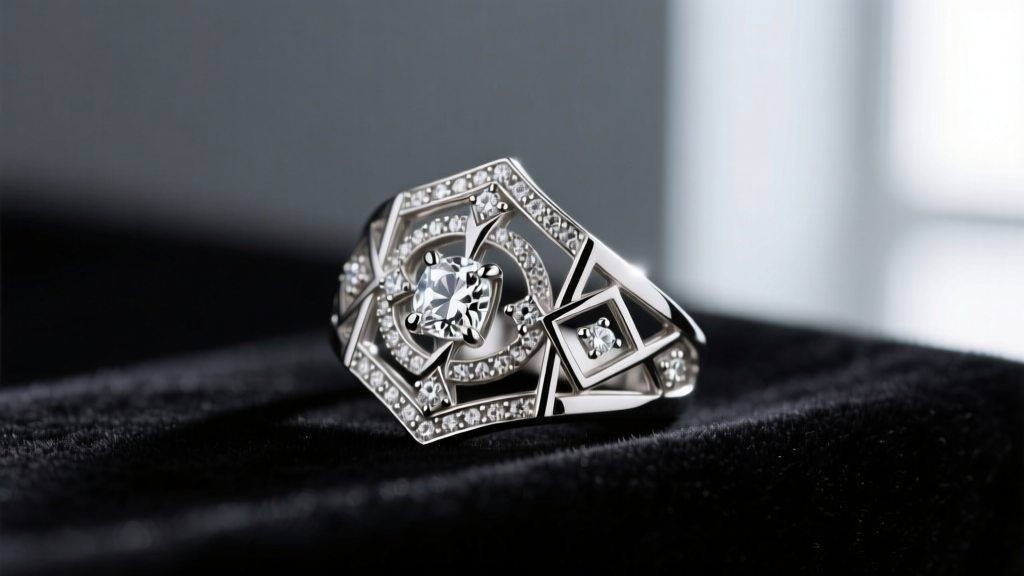
Distinguishing between platinum and white gold is a frequent challenge when examining 1920s and 1930s Art Deco pieces. Platinum, typically alloyed with 5% to 10% iridium or ruthenium for hardness, possesses a specific gravity of 21.45, making it significantly heavier than 14k or 18k white gold. On the show floor, the 'heft test' is your first indicator. Furthermore, platinum does not tarnish and wears by displacement rather than loss; therefore, the filigree edges of a genuine platinum ring will remain sharp and crisp even after a century of wear. White gold, conversely, is an alloy of yellow gold and bleaching metals (like nickel or palladium), usually plated with rhodium. Inspect the prongs and the interior of the shank with a 10x loupe. If you detect a warm, yellowish undertone where the metal has experienced friction, you are looking at rhodium-plated white gold, not platinum. According to the Lang Antique Jewelry University, genuine Art Deco platinum pieces will almost always bear the stamps 'PT', 'PLAT', or '950', whereas white gold from the same era may be stamped '14K' or '18K' and will show microscopic flaking rather than smooth displacement.
Rose Gold Carat Variations and Regional Hallmarks
Rose gold derives its pink hue from a higher copper-to-zinc ratio. However, the exact shade and durability vary wildly by carat and origin. Russian antique jewelry often features a distinct, deep salmon-pink 56-zolotnik gold (roughly 14k), while French 18k rose gold leans toward a softer, peachier tone due to strict government alloy mandates. When examining European pieces, rely on the GIA News & Research guidelines for international hallmarks. Look for the French Eagle's head (18k gold guarantee) or the Minerva head (950 silver). Be highly suspicious of unmarked 'rose gold' pieces from the Victorian era; many modern reproductions use copper-heavy alloys that lack the nuanced patina of century-old copper-gold oxidation.
Gemstone Material Properties: Natural vs. Synthetic Era Markers
The evolution of gemology directly impacts the valuation of antique jewelry. A major pitfall for novice buyers at an antique and jewelry show is assuming that all vintage stones are natural. Synthetic gemstones have been integrated into fine jewelry since the late 19th century, and their presence is actually a crucial dating tool rather than an automatic devaluation.
The Verneuil Process and Art Deco Synthetics
Invented in 1902, the Verneuil flame-fusion process made synthetic rubies and sapphires commercially viable by the 1920s. It is incredibly common to find genuine Art Deco platinum rings featuring natural diamonds accented by synthetic calibré-cut sapphires. Under a 10x loupe, Verneuil synthetics will reveal curved striae (growth lines) and occasional gas bubbles, whereas natural corundum will show angular growth zoning and crystalline inclusions. Identifying these synthetics is essential; while they do not ruin the historical integrity of an Art Deco piece, they drastically alter the insurance appraisal value compared to natural sapphires.
| Era | Common Gemstone Material | Key Identification Marker | Show-Goer Test |
|---|---|---|---|
| Georgian (1714-1837) | Foil-Backed Glass/Paste | Sealed Collet Backing, High Refractivity | Visual Loupe Inspection (Never submerge in water!) |
| Victorian (1837-1901) | Mine-Cut Diamonds | High Crown, Small Table, Visible Culet | 10x Loupe for open culet and asymmetrical facets |
| Art Deco (1920-1935) | Synthetic Sapphires/Rubies | Curved Striations (Verneuil Process) | Magnification for curved growth lines and bubbles |
| Retro (1935-1950) | Large Aquamarines & Citrines | Step Cuts, Heavy Gold Mounts, High Clarity | UV Light (Citrines often inert, some quartz fluoresces) |
The Danger of Georgian Foil-Backs
Georgian and early Victorian jewelry frequently utilized closed-back collet settings with metallic foil behind the gemstone to enhance brilliance in candlelight. The material property to remember here is extreme water sensitivity. If a dealer at a show offers to 'clean' a Georgian ring in an ultrasonic machine or a bowl of soapy water to show you the stone's clarity, stop them immediately. Moisture will seep into the backing, oxidize the foil, and turn the stone permanently black or cloudy. Authentication relies entirely on dry visual inspection of the foil's condition through the table of the stone.
Organic and Ephemeral Materials: The High-Risk Categories
Organic materials like Bakelite, Vulcanite, Gutta Percha, and Jet were highly popular in the Victorian and Art Deco periods. Because these materials are essentially early plastics or fossilized organics, they are the most frequently faked categories at any antique and jewelry show.
Bakelite vs. Modern Celluloid and Resin
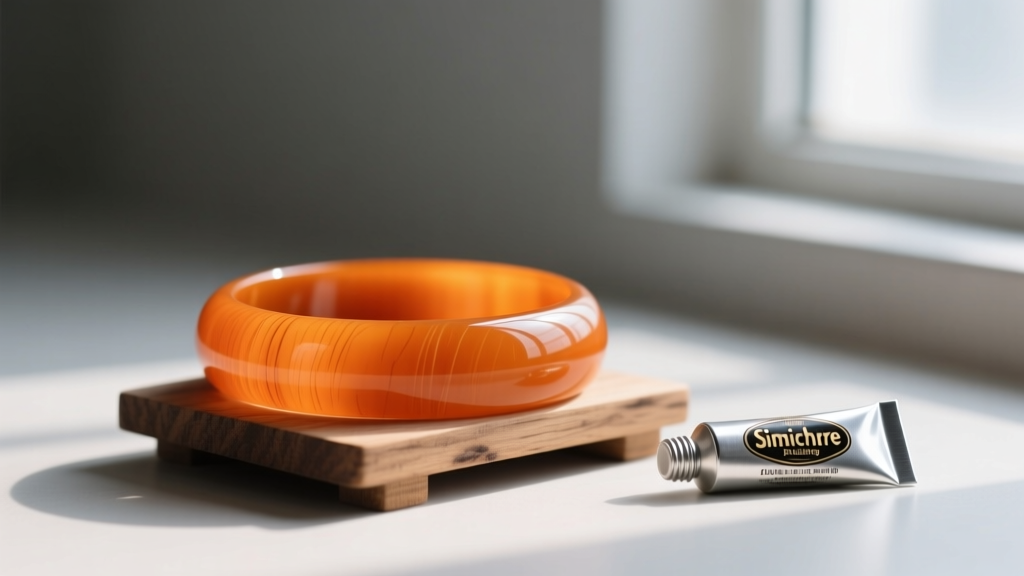
Bakelite, a phenol formaldehyde resin invented in 1907, peaked in jewelry production during the 1930s. It is heavier, harder, and more heat-resistant than modern plastics. The most reliable, non-destructive test you can perform on the show floor is the Simichrome polish test. Rub a small amount of Simichrome metal polish on a hidden area of the bangle or pin with a cotton swab. Genuine Bakelite will oxidize the polish, turning it a distinct, vibrant yellow. Modern celluloid or 3D-printed resins will leave the polish white or pink. Furthermore, Bakelite has a distinct, sharp chemical odor when subjected to friction; rubbing the piece briskly with your thumb until it warms up should release a scent reminiscent of formaldehyde or old camphor.
Jet vs. Vulcanite and French Jet
Whitby Jet, a fossilized wood used extensively in Victorian mourning jewelry, is lightweight, warm to the touch, and leaves a brown streak when rubbed gently on unglazed porcelain (though this test is rarely permitted by dealers). Vulcanite, a vulcanized rubber, was a cheaper alternative that feels slightly warmer and more rubbery, often developing a brownish-green patina over time, whereas Jet remains deep black. Beware of 'French Jet,' which is simply black glass. Glass is cold to the touch, significantly heavier, and will produce a high-pitched clink when tapped against a tooth, whereas genuine Jet produces a dull, dead thud.
The Show-Goer's Material Testing Toolkit
To execute these material evaluations effectively, you must arrive at the antique and jewelry show equipped with a specialized, non-destructive testing kit. Leave the destructive acid tests at home; dealers will not allow you to scratch or file their merchandise. Instead, build a kit around the following tools:
- 365nm UV Flashlight: Essential for detecting later-period epoxy repairs, which will fluoresce brightly under long-wave UV light, while original shellac or natural resins will not. It also helps identify certain synthetic spinels and diamonds based on fluorescence patterns.
- Neodymium Magnet (Rare Earth): A powerful, small magnet is crucial for detecting gold-filled or gold-plated base metals. While pure gold, silver, and platinum are non-magnetic, a piece that exhibits even a slight magnetic pull likely contains a steel core or iron alloy, instantly disqualifying it as solid precious metal.
- Chelsea Filter: A specialized optical filter that transmits only deep red and yellow-green light. It is invaluable for quickly separating natural emeralds from green glass or synthetic green spinels on a crowded showroom floor.
- Presidium Gem Tester (Portable): For high-ticket gemstone purchases, a battery-operated thermal conductivity tester can instantly differentiate between natural diamonds, moissanite, and glass simulants without requiring a power outlet.
- Simichrome Polish & Cotton Swabs: The undisputed king of on-the-spot Bakelite and early plastic authentication.
Final Thoughts on Material Negotiation
Armed with a deep understanding of material properties, your role at an antique and jewelry show shifts from passive observer to informed appraiser. When you identify a rhodium-plated white gold ring mislabeled as platinum, or spot the curved striae of a Verneuil synthetic sapphire in an Art Deco bracelet, you possess the leverage to negotiate the price down to its true material value. As noted by the Bonhams Jewelry Department, the most successful collectors are those who view historical jewelry not just as art, but as an assembly of specific, datable, and testable materials. Approach the 2026 show circuit with your loupe, your UV light, and your material knowledge, and you will secure pieces that are as authentic in their atomic structure as they are in their historical provenance.


