Antique Mosaic Jewelry: 2026 Style & Trend Analysis
Discover 2026 trends in antique mosaic jewelry. Learn to identify, value, and style Roman micro-mosaics, pietra dura, and Scottish agate pieces.

The Resurgence of Historical Revivalism
As we navigate the style landscape of 2026, the jewelry market has seen a definitive pivot away from hyper-minimalism toward what historians and stylists are calling "curated maximalism." At the epicenter of this movement is antique mosaic jewelry. Far from being relegated to dusty estate cases, these intricate wearable artifacts—spanning Roman micro-mosaics, Florentine pietra dura, and Scottish agate pebble jewelry—are being reclaimed by a new generation of collectors who value narrative, craftsmanship, and the "quiet luxury" of historical provenance. According to archival research from the Victoria and Albert Museum, mosaic jewelry originally surged in popularity during the 18th and 19th centuries as the ultimate souvenir for aristocrats completing the Grand Tour. Today, these pieces are experiencing a massive valuation spike, driven by a scarcity of high-density tesserae work and a renewed appreciation for pre-industrial artistry.
The Anatomy of Authenticity: Three Distinct Traditions
To participate in the 2026 market, one must first distinguish between the three primary categories of antique mosaic jewelry. Each requires a different eye for detail and commands vastly different price points.
1. Roman Micro-Mosaic (Smalti Filati)
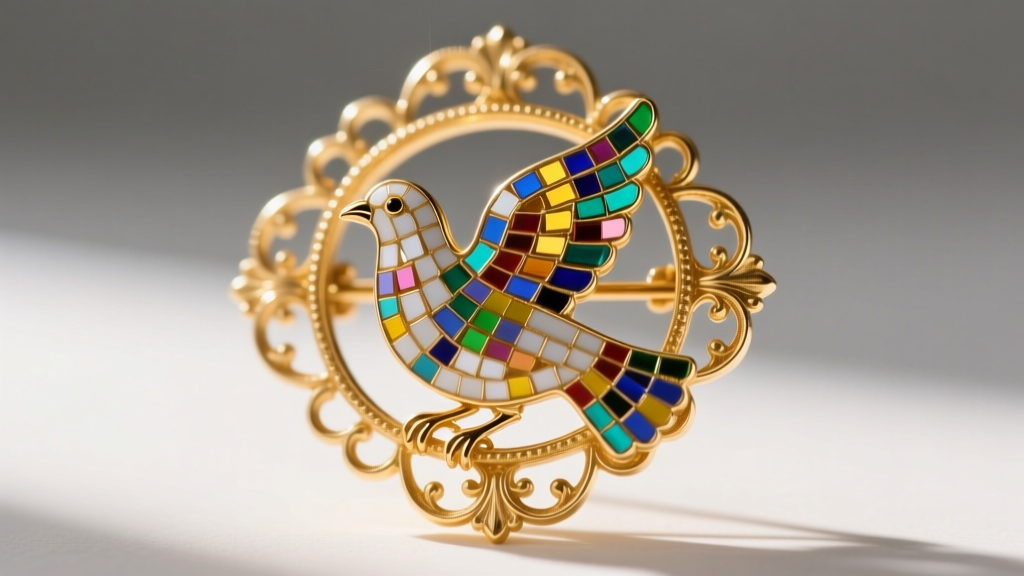
Originating largely from the Vatican Mosaic Workshop (Studio Vaticano del Mosaico) and private Roman ateliers, micro-mosaics are constructed from smalti filati—spun glass enamel rods snipped into microscopic tesserae. A high-quality mid-19th-century piece will feature between 1,500 and 5,000 individual glass pieces per square inch. The hallmark of a masterwork is the near-invisible mastic (a traditional resin or wax adhesive) holding the stones, creating an illusion of a painted surface.
2. Florentine Pietra Dura
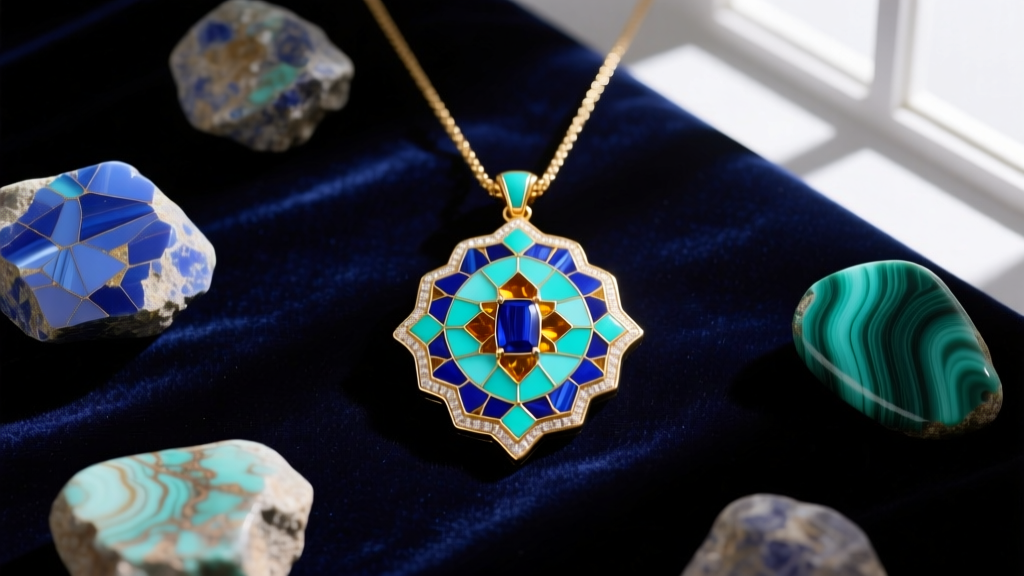
Translating to "hard stone," pietra dura relies on precision-cut semi-precious stones like lapis lazuli, malachite, jasper, and agate, inlaid into a black slate or marble backing. Unlike the pixelated look of micro-mosaics, pietra dura offers sweeping, seamless gradients and floral or avian motifs. The Metropolitan Museum of Art highlights how 19th-century masters like Castellani elevated these pieces by encasing them in intricate, Etruscan-revival gold granulation frames.
3. Scottish Pebble Mosaic
Popularized by Queen Victoria’s love for Balmoral Castle, Scottish mosaic jewelry utilizes native agates, jaspers, and cairngorm quartz set into silver or gold. These pieces are highly geometric, often featuring tartan-inspired grids or concentric circles, and remain the most accessible entry point for modern collectors.
2026 Market Valuation & Pricing Matrix
The pricing of antique mosaic jewelry in 2026 is heavily dictated by tesserae density, the karat of the mounting, and the condition of the backing. Below is a current market framework for estate buyers and stylists.
| Mosaic Type | Era / Origin | Material & Mounting | 2026 Price Range (USD) | Key Value Drivers |
|---|---|---|---|---|
| Scottish Agate | Victorian (c. 1850-1890) | Agate, Jasper, Silver/9k Gold | $350 – $1,200 | Color contrast, presence of rare cairngorm quartz, intact silver hinges. |
| Pietra Dura | Grand Tour (c. 1820-1880) | Hardstones, Black Slate, 15k/18k Gold | $1,500 – $6,500 | Seamless stone joins, use of rare lapis or red jasper, Etruscan-revival goldwork. |
| Standard Micro-Mosaic | Roman (c. 1840-1900) | Smalti Glass, Brass/Gilt Metal | $400 – $1,800 | Recognizable motifs (doves, ruins), minimal tesserae loss, original brass frames. |
| Masterwork Micro-Mosaic | Roman/Vatican (c. 1800-1860) | High-Density Smalti, 18k Gold | $8,000 – $35,000+ | 3,000+ tesserae/sq inch, signed by masters (e.g., Raffaelli), museum-quality condition. |
Styling Frameworks: Integrating Mosaics into Modern Wardrobes
The biggest styling mistake collectors make is treating antique mosaic jewelry as a costume piece. In 2026, the prevailing trend is juxtaposition—pairing heavy, historical artifacts with sharp, modern tailoring.
The "Quiet Luxury" Pendant Strategy
Many Roman micro-mosaics were originally crafted as brooches, which see limited wear in contemporary fashion. The current trend involves utilizing non-destructive 18k gold bale adapters that clip onto the original C-clasp, converting the brooch into a heavy pendant. Stylists recommend suspending these pieces on minimalist, 2mm to 3mm solid gold wheat chains. The visual weight of the mosaic against a stark, modern chain creates a striking focal point that reads as bespoke rather than vintage.
Stacking Scottish Agate Bracelets
Scottish agate link bracelets are highly sought after for stacking. When curating a stack, mix the geometric agate links with modern, high-polish 14k gold curb chains. The contrast between the matte, earthy tones of the 19th-century agates and the reflective, liquid look of modern gold bridges the gap between heritage and contemporary edge.
Preservation & Failure Modes: What to Avoid
Antique mosaic jewelry is inherently fragile due to the organic adhesives used in the 19th century. Understanding the failure modes is critical for any serious collector.
- The Ultrasonic Trap: Never place micro-mosaic or pietra dura jewelry in an ultrasonic cleaner. The high-frequency vibrations will shatter the brittle glass tesserae and dissolve the 150-year-old mastic backing, causing immediate stone loss.
- Tesserae Pop and Mastic Desiccation: Over time, the original wax or resin mastic dries out and turns to powder. If you notice a "rattle" when gently shaking a micro-mosaic brooch, the backing has failed. This requires immediate stabilization by a specialist using reversible conservation-grade adhesives like Paraloid B-72, never modern cyanoacrylate (Super Glue) or epoxy.
- Moisture Damage in Pietra Dura: The black slate backing of Florentine pietra dura is porous. Prolonged exposure to water or high humidity can cause the slate to delaminate from the gold frame. Always remove these pieces before washing hands or applying heavy lotions.
Expert Insight: "When evaluating a micro-mosaic for purchase, always inspect the piece under a 10x jeweler's loupe. Look for the uniformity of the glass cuts. If the tesserae appear irregular, chipped, or if you see a cloudy, white residue between the stones, it is likely a mid-20th-century tourist reproduction using cement rather than a true 19th-century artisan piece utilizing traditional mastic."
The Verdict for 2026 Collectors
Antique mosaic jewelry offers an unparalleled intersection of history, art, and wearable design. Whether you are hunting for a high-density Vatican micro-mosaic as an investment-grade asset or sourcing Scottish agate pieces for daily structural styling, the key lies in rigorous authentication and respectful preservation. As the market continues to reward rarity and historical narrative, these miniature masterpieces remain some of the most compelling acquisitions in the vintage jewelry sector.


