Art Deco Jewelry Identification and Value Guide: Care & Cleaning
Master Art Deco jewelry care with expert cleaning protocols. Learn to safely maintain platinum, enamel, and fragile stones to preserve antique value.

The Intersection of Preservation and Valuation
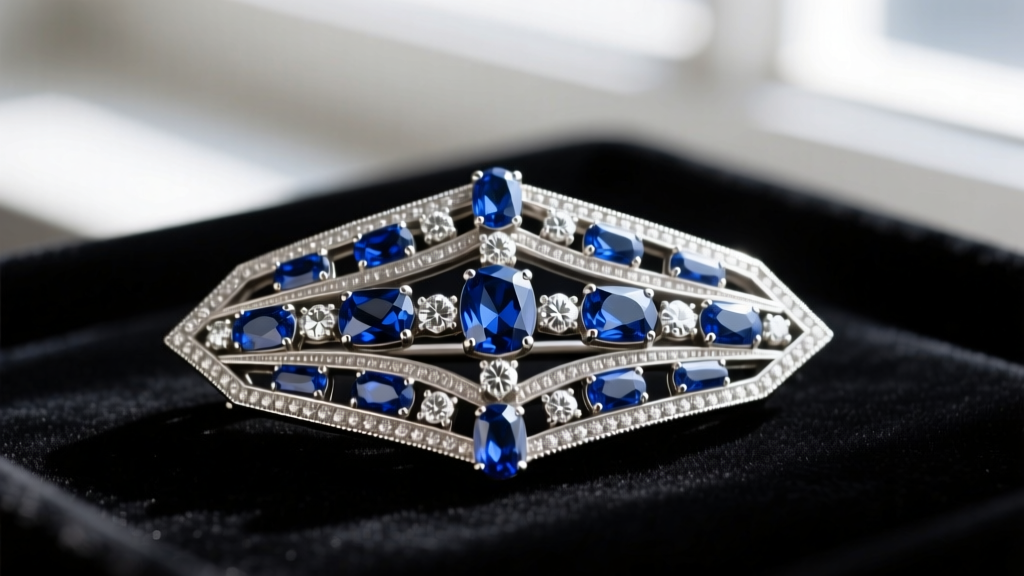
When collectors and appraisers consult a comprehensive art deco jewelry identification and value guide, the primary multiplier of price is invariably the piece's structural and aesthetic condition. The Art Deco era (roughly 1920 to 1939) introduced revolutionary jewelry manufacturing techniques, including die-struck platinum filigree, intricate guilloché enamel, and precise calibré-cut gemstone settings. However, these same geometric masterpieces are uniquely vulnerable to modern cleaning methods. Improper maintenance does not merely dull a piece; it actively destroys historical integrity, potentially reducing a brooch or bracelet's market value by 20% to 40%. Preservation is not just about removing dirt; it is about stabilizing century-old materials without stripping their original patina or compromising fragile tension settings.
Material-Specific Cleaning Protocols
Art Deco jewelry is defined by its high-contrast material combinations. A single piece might feature platinum, black onyx, carved jade, and pavé diamonds. Because these materials possess vastly different Mohs hardness ratings and chemical porosities, a one-size-fits-all cleaning approach is a recipe for disaster. According to conservation standards outlined by the Victoria and Albert Museum, cleaning must always be dictated by the most fragile material present in the assembly.
Platinum and White Gold Filigree
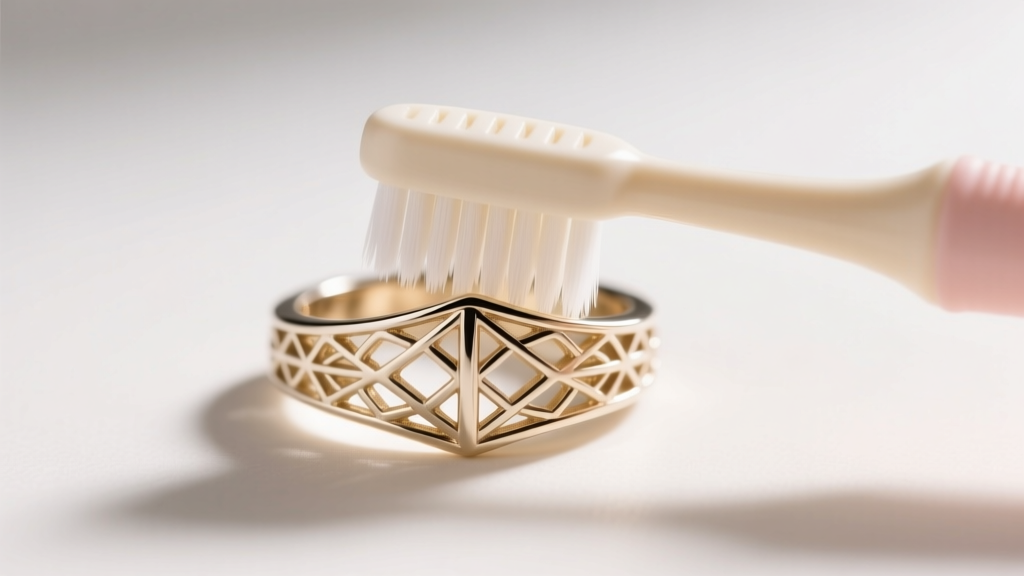
Die-struck platinum from the 1920s possesses incredible tensile strength but features delicate milgrain edges and microscopic pavé beads. Over time, platinum develops a soft, desirable patina that authenticates its age. Aggressive polishing strips this patina, rounds off crisp geometric edges, and wears down milgrain detailing. For routine cleaning, use a solution of distilled water and a few drops of non-ionic surfactant (such as a mild, non-detergent Castile soap). Avoid ionic detergents, which can leave microscopic residue in the filigree galleries. Use an extra-soft baby toothbrush with 0.1mm bristles to gently dislodge sebum and cosmetic buildup from beneath the diamond girdles.
Fragile Organics and Opaque Stones
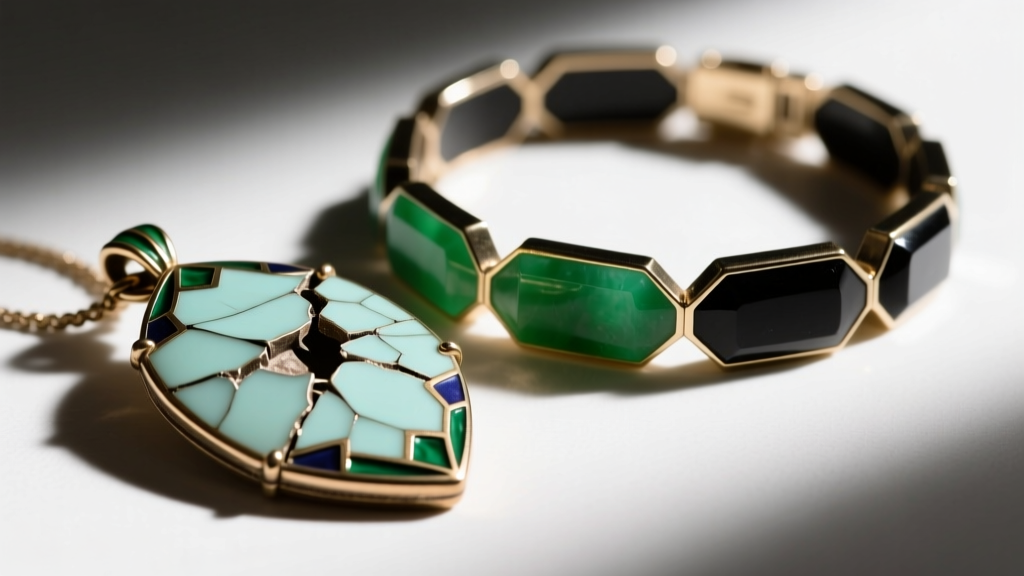
Art Deco designers heavily utilized coral, lapis lazuli, jade, and turquoise to create bold blocks of color. These materials are highly porous and chemically sensitive. Ammonia-based cleaners, alcohol, and ultrasonic waves will strip the natural oils from coral and turquoise, causing them to craze, crack, and fade. The GIA Gem Encyclopedia explicitly warns against submerging porous organics. Instead, lightly dampen a microfiber cloth with distilled water and gently wipe the surface of the stone, avoiding the metal settings entirely. Never use a brush on carved jade or coral, as the bristles can catch in microscopic tool marks and cause chipping.
Enamel and Marcasite Inlay Work
Guilloché and champlevé enamels are essentially fused glass applied over engine-turned metal. They are highly susceptible to thermal shock. Plunging an enameled Art Deco pendant into hot water can cause the enamel to craze or pop off the metal backing. Furthermore, marcasite (iron pyrite) is often set with tiny beads of silver or white gold and relies on a dark, oxidized background for contrast. Liquid silver dips contain thiourea, which will instantly strip this intentional oxidation, leaving the marcasite looking flat, gray, and lifeless—a flaw that severely impacts valuation.
The Forbidden Tools: What Destroys Art Deco Value
Many well-intentioned collectors destroy their estate pieces by utilizing modern jewelry cleaning technology on antique settings. Below is a breakdown of common tools and their specific damage mechanisms.
| Cleaning Tool / Chemical | Target Material | Damage Mechanism | Estimated Value Impact |
|---|---|---|---|
| Ultrasonic Cleaners (40kHz) | Emeralds, Opals, Calibré-cuts | Cavitation shatters oil-treated emeralds and vibrates tightly fitted calibré stones out of bezels. | -30% to -50% |
| Thiourea Silver Dip | Marcasite, Oxidized Silver | Strips intentional dark patina, leaving flat, gray metal and loosening marcasite adhesive. | -20% to -40% |
| Ammonia Solutions | Coral, Pearls, Turquoise | Chemical burn strips organic nacre and dehydrates porous stones, causing irreversible crazing. | -40% to -60% |
| Steam Cleaners | Guilloché Enamel, Jade | Sudden thermal shock causes glass-like enamel to fracture and pop off the metal substrate. | -50% (Requires expensive restoration) |
| Jewelry Polishing Cloths | Platinum Filigree, Milgrain | Abrasive compounds round off crisp geometric edges and erase authentic age patina. | -15% to -25% |
Step-by-Step Safe Cleaning Routine
For standard Art Deco pieces featuring diamonds, sapphires, rubies, and platinum or 18k white gold (without porous stones or enamel), follow this meticulous, museum-grade cleaning protocol:
- Inspection: Use a 10x jeweler's loupe to inspect all prongs and bezel walls. If any calibré-cut stones are loose or if the silk threading on a pearl sautoir is frayed, do not clean the piece. Take it to a specialist.
- Preparation: Mix 1 cup of lukewarm distilled water with 3 drops of non-ionic, phosphate-free soap in a glass bowl. Never use a metal or plastic bowl that could scratch the piece.
- Soaking: Submerge the jewelry for exactly 3 to 5 minutes. This softens hardened lotions and sebum without risking prolonged moisture exposure to hidden backing foils.
- Agitation: Using an extra-soft (0.1mm bristle) baby toothbrush, gently sweep the bristles across the metalwork. Always brush away from the stone settings to avoid pushing dirt under the girdle. Use a wooden toothpick to gently lift stubborn debris from deep filigree galleries—never use metal needles.
- Rinsing: Rinse under a gentle stream of lukewarm distilled water. Ensure the drain is securely plugged with a silicone mat.
- Drying: Pat dry with a lint-free microfiber cloth. Use a can of compressed air (held at least 6 inches away) to blow moisture out of the intricate under-gallery settings.
Storage and Maintenance for Estate Pieces
Proper storage is the second half of the preservation equation. Art Deco jewelry, particularly pieces featuring silver alloys or tension-set stones, requires specific environmental controls. As noted in the educational archives of Lang Antiques, how a piece rests when not being worn dictates its longevity.
Humidity and Atmospheric Control
Maintain a relative humidity (RH) of 40% to 50% in your storage environment. High humidity accelerates the tarnishing of white gold alloys and silver settings, while excessively dry conditions (below 30% RH) can cause organic materials like ivory, tortoiseshell, and opals to desiccate and crack. Store pieces in acid-free, unbleached cotton pouches or archival-quality polyethylene bags. Avoid PVC plastics, which off-gas hydrogen chloride as they degrade, causing rapid and severe metal corrosion.
Preventing Mechanical Stress
The geometric, rigid nature of Art Deco design means that pieces do not always fold or bend gracefully. Bracelets with hidden box clasps and safety chains should be stored flat in padded, compartmentalized boxes to prevent the links from warping under their own weight. Brooches with double-clip mechanisms (like the iconic Cartier Tutti Frutti or diamond clip brooches) should have their spring tensions checked annually by a master jeweler to ensure the tension springs have not fatigued over the last century.
Conclusion
Owning Art Deco jewelry is an exercise in historical stewardship. The sharp lines, bold contrasts, and masterful engineering of the 1920s and 30s demand a level of care that respects the era's craftsmanship. By abandoning harsh modern chemicals in favor of gentle, material-specific protocols, you ensure that these wearable works of art retain both their structural integrity and their premium market valuation for generations to come. Always prioritize the preservation of original surfaces over the pursuit of artificial brilliance.


