Troubleshooting Vintage Kramer Jewelry: Repair & ID Guide
Learn how to authenticate, clean, and repair vintage Kramer jewelry. Expert troubleshooting for missing rhinestones, broken clasps, and worn marks.

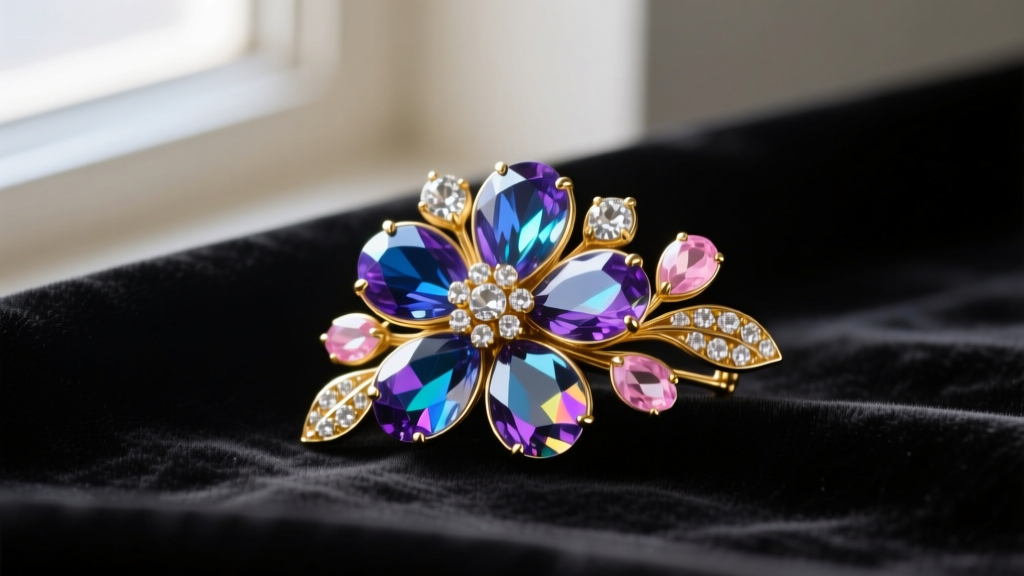
The Legacy of Kramer: Why Provenance and Precision Matter
When navigating the secondary market for mid-century costume pieces, vintage Kramer jewelry stands out for its exceptional craftsmanship, intricate metalwork, and high-quality Austrian and Czech rhinestones. Founded by Louis Kramer in 1943 in New York City, the company quickly became a powerhouse in the American costume jewelry industry. Kramer pieces were not merely mass-produced trinkets; they were meticulously assembled, often featuring hand-set prong stones, rich rhodium or gold plating, and complex enamel work.
However, because these pieces are now 60 to 80 years old, collectors and dealers frequently encounter structural failures, missing stones, and authentication dilemmas. Troubleshooting vintage Kramer jewelry requires a deep understanding of mid-century manufacturing techniques. Using modern jewelry repair methods on these delicate artifacts can permanently destroy their historical and monetary value. This guide provides expert-level problem-solving frameworks for identifying, repairing, and preserving your Kramer collection.
Authentication Troubleshooting: Spotting Fakes and Altered Marks
The most common issue collectors face is verifying the authenticity of a piece, especially given the rise of sophisticated counterfeits targeting high-value Dior collaboration pieces. According to the Vintage Fashion Guild, hallmark evolution is your first line of defense in authentication.
Decoding the Kramer Hallmarks
Kramer's signatures evolved over the decades. If a piece features a hallmark that does not align with its manufacturing style, it is likely a marriage (a fake mark stamped onto an unsigned piece) or an outright forgery.
- "Kramer" (Block Letters): Used primarily in the 1940s and early 1950s. Often stamped directly into the metal or on a small, soldered rectangular plaque.
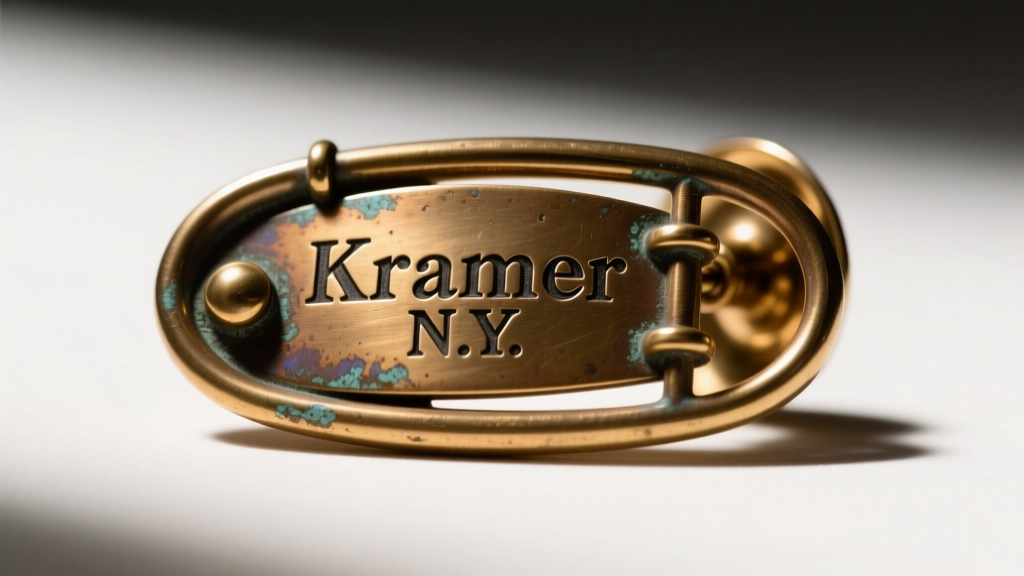
- "Kramer N.Y.": The most common mark from the 1950s to the early 1960s. Usually found in a script or clean block font on an oval or rectangular cartouche.
- "Kramer of New York": Prevalent in the late 1960s and 1970s. The font often became more stylized or cursive during this era.
- "Christian Dior by Kramer" / "Kramer for Dior": Used during the 1950s and 1960s when Kramer was licensed to produce jewelry for the House of Dior. These are the most counterfeited marks. Authentic pieces will feature premium Swarovski or top-tier Czech stones, flawless soldering, and a distinct, deep stamp. Fakes often feature shallow laser etching and inferior acrylic stones.
Repairing Common Kramer Failures: Rhinestones and Clasps
Kramer jewelry was built to last, but the materials of the era have specific failure modes. Addressing these requires specialized tools and period-correct materials.
Replacing Missing Rhinestones
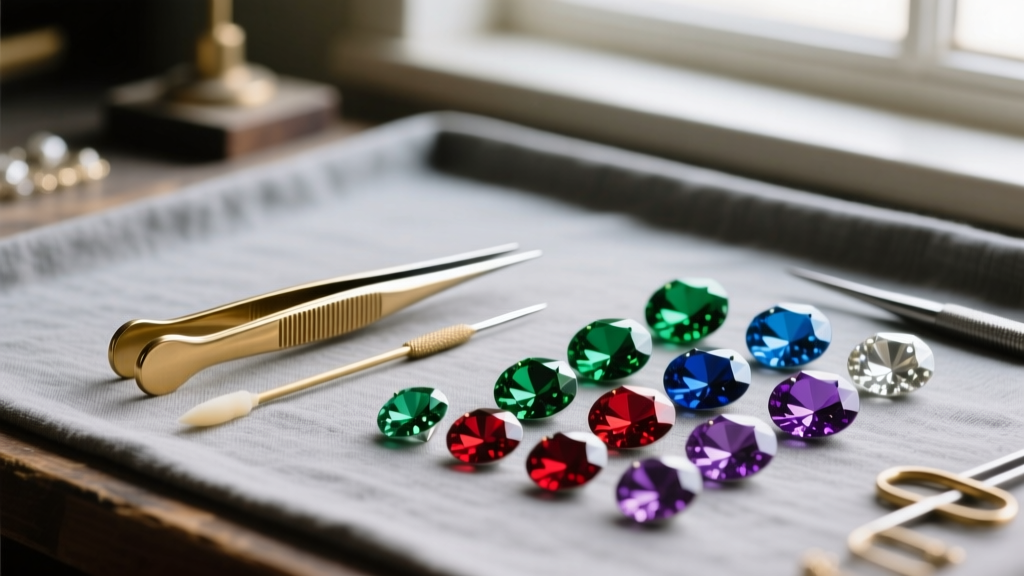
Unlike cheaper competitors that glued stones into place, Kramer predominantly used prong-set rhinestones. If a stone is missing, never use E6000 or superglue to secure a replacement. Glue will seep into the prongs, ruin the base metal patina, and make future professional repair impossible. Instead, source period-correct foil-backed glass stones and use a jeweler's pusher or bezel roller to gently tighten the existing metal prongs over the new stone's girdle.
According to Illusion Jewels, matching the exact cut and foil backing is critical. Kramer frequently used Aurora Borealis (AB) coatings introduced in the mid-1950s. A modern replacement stone will look glaringly obvious if the AB coating is too thick or the glass lacks the high-lead content of vintage Czech stones.
| Millimeter Size | Stone Size (SS) | Common Kramer Application |
|---|---|---|
| 3.0 - 3.2mm | SS11 | Pavé floral centers, tight cluster settings |
| 4.0 - 4.2mm | SS16 | Standard round accents, baguette borders |
| 5.0 - 5.2mm | SS20 | Primary marquise/navette stones, focal points |
| 6.0 - 6.2mm | SS24 | Large teardrop pendants, statement brooch centers |
Fixing Trombone and Fold-Over Clasps
Early Kramer brooches utilized trombone clasps, while later pieces transitioned to fold-over safety clasps. A common failure is a loose trombone pin that no longer locks securely. Do not simply bend the pin, as this weakens the brass and leads to snapping. The internal tension wire inside the barrel is likely fatigued. A proper repair involves carefully opening the barrel with a jeweler's saw, replacing the internal spring mechanism, and resoldering. If soldering is required, always use low-temperature stay-brite solder and a heat sink (like a wet cloth or specialized tweezers) to prevent the heat from traveling to the rhinestones and melting their delicate foil backings.
Cleaning Protocols: Preserving Rhodium Plating and Foil Backs
Improper cleaning is the leading cause of value destruction in vintage Kramer jewelry. The foil backing that gives vintage rhinestones their brilliance is highly susceptible to moisture. Once water gets trapped behind the stone, the foil oxidizes and turns black—a condition collectors call "stone death," which is entirely irreversible.
Expert Warning: Never place foiled vintage rhinestones in an ultrasonic cleaner, and never submerge them in liquid silver dips, ammonia, or alcohol. The vibrations will shatter the glass, and the liquids will penetrate the settings and destroy the foil.
For safe, effective cleaning, follow this dry-to-damp protocol:
- Dry Dusting: Use a clean, soft-bristled makeup brush to gently sweep away loose dust and skin cells from the settings and pavé work.
- Targeted Grime Removal: For stubborn dirt on the metal (avoiding the stones), use a wooden toothpick or a dry cotton swab to gently scrape the crevices. Wood is softer than brass and gold plating, preventing micro-scratches.
- Damp Wiping: If the metal requires deeper cleaning, lightly dampen a microfiber cloth with a drop of mild, phosphate-free dish soap and distilled water. Wipe the metal surfaces only, then immediately dry with a second microfiber cloth.
- Polishing: Use a dry, untreated jeweler's polishing cloth to gently buff the rhodium or gold-plated surfaces. Avoid treated polishing cloths (like Sunshine cloths) on plated costume jewelry, as the mild abrasives will strip the plating down to the base pot metal.
Valuation and Market Realities
As of 2026, the market for vintage Kramer jewelry remains robust, heavily driven by condition and provenance. Standard 1950s floral or geometric brooches in excellent condition typically trade between $75 and $250. Complete parures (necklace, earrings, and brooch) featuring rare enamel work or elaborate aurora borealis stones can fetch $300 to $600.
However, the true blue-chip assets are the Dior collaborations. An authenticated "Christian Dior by Kramer" necklace or elaborate sautoir in pristine condition can command anywhere from $800 to over $3,500 at auction, as noted by estate jewelry appraisers. When troubleshooting a potential purchase, always factor in the cost of professional restoration; a missing custom-cut baguette stone or a heavily worn rhodium finish can reduce a piece's value by 50% or more. By mastering these identification and repair techniques, you can confidently rescue, preserve, and wear these masterpieces of mid-century American design. For further research on mid-century makers, Morning Glory Antiques offers excellent visual archives of period-correct construction.


